All posts by Mira


About Mira

Mira Dessy is The Ingredient Guru. A holistic nutrition professional, author, and a popular public speaker, she knows that it's not just what you eat, but what's in what you eat. She is the author of The Pantry Principle: how to read the label and understand what’s really in their food. Dessy is a Board Certified Holistic Health Practitioner whose mission is to educate and empower consumers. She curates the Lean Clean Green Subscription box, the premier, organic, earth-friendly, healthy, sustainable subscription box which can be found online at https://theingredientguru.memberbox.com

What Is It?

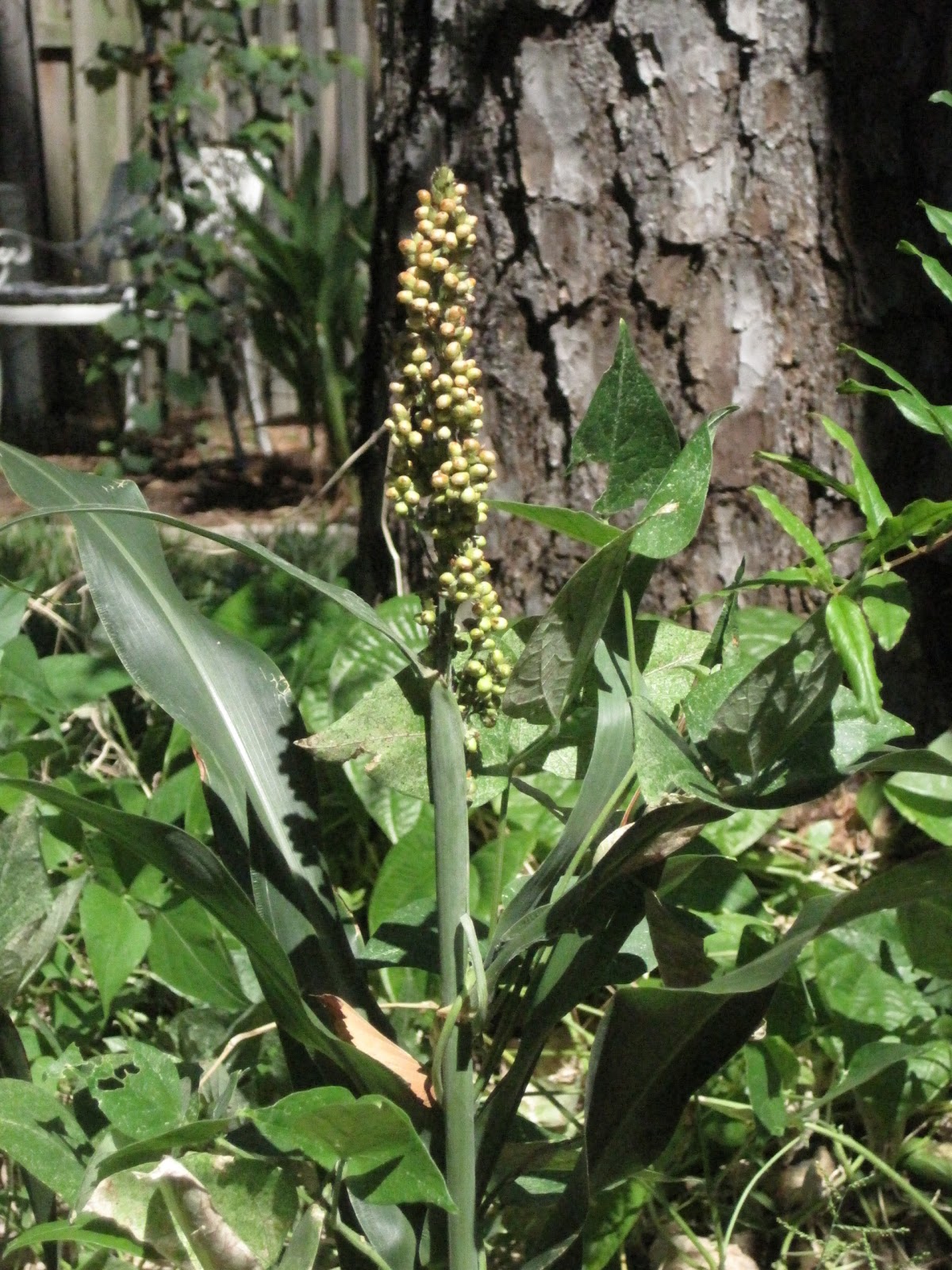
The birds are very messy and tend to throw seeds everywhere when picking through the large feeder.  I assume they do this because they are looking for their favorite bits.  Having been lazy not weeded very well I found a few large plants growing under the feeder.  At first I thought it was corn which was pretty cool.  So we left them.

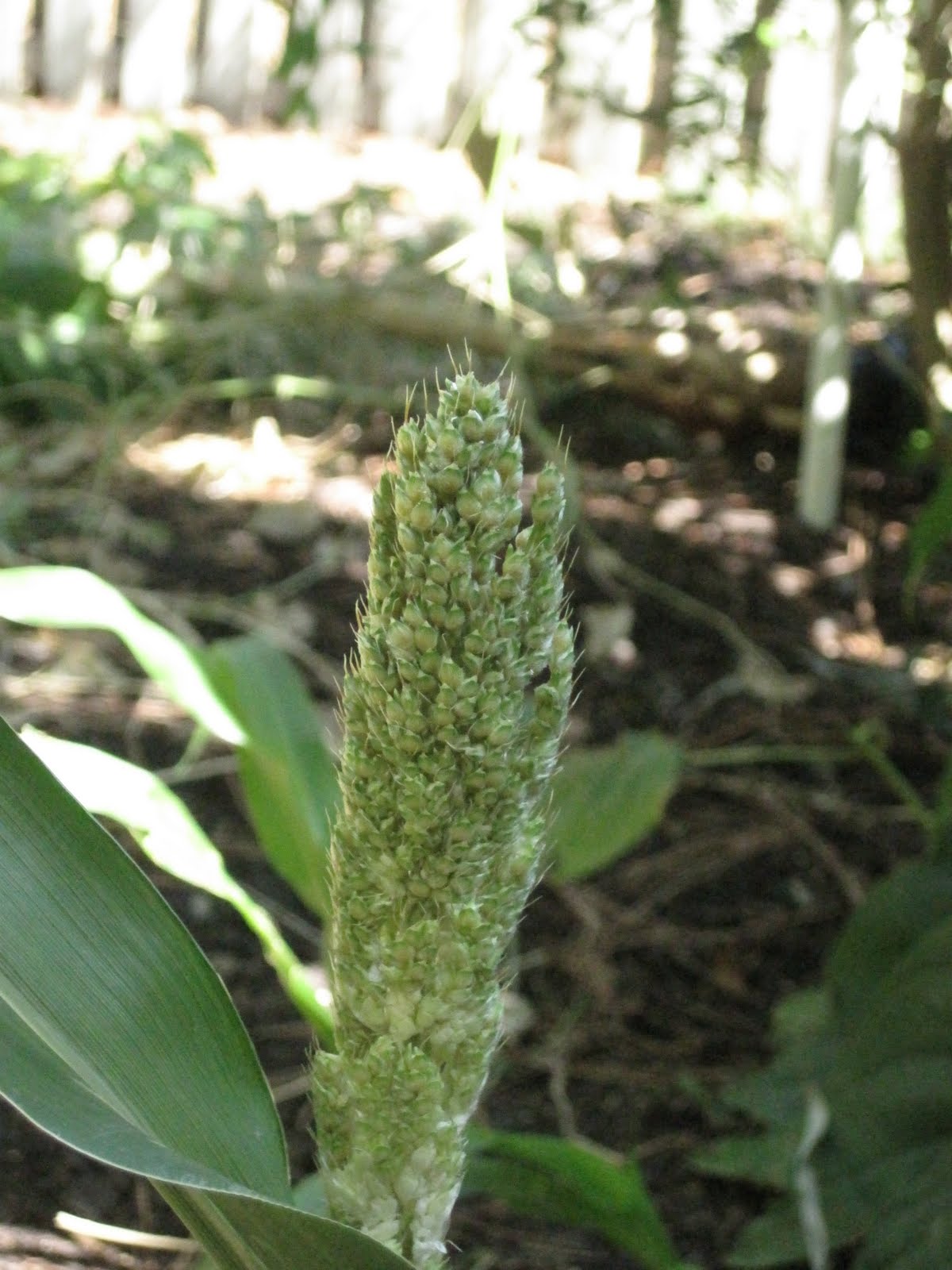
Obviously from these pictures, this is most definitely not corn.  I’m not really sure what it is.  It doesn’t look like my pictures of either amaranth or millet so I’m stumped.

Unfortunately I don’t have the label from the birdseed so I can’t even pick it out from there.  Wondering if I should harvest it for the birds for winter or if it’s edible by humans.  Anyone able to identify it?

Cherry Jam

Cherries were very reasonably priced at the grocery store leading me to buy an extra five pounds to make cherry jam.  I like making my own jam because then I know exactly what’s in it.  And I manage to avoid all of the nasty ingredients that I do not want in my pantry, HFCS, artificial flavors, artificial colors, etc.  that I complained about in a recent post on grape jelly.

Jam is very easy to make.  I’ve taught a lot of people how to make it and invariably the response is, “That’s it?”  Yes.  That’s really it.  It’s not that hard, it just seems complicated because most of us don’t can food anymore.  Honestly I don’t even make that much these days.  Now that the kids are older and most of them out of the house we just don’t go through jelly, jam, chutneys, and pickles the way we used to.  So I tend to save my efforts for the more expensive items.  Like cherries.

After washing and draining the cherries comes the task of pitting them.  Without fail every single time I make cherry jam I wonder why the heck I have never invested in a cherry pitter.

I need one because, first it takes a doggone long time to pit five pounds of cherries.  Second if you’ve ever tried to get cherry juice out of a white blouse you’ll appreciate that my fingernails look none too clean for at least a day or two afterwards.

Another challenge is trying to pit the cherries without attracting the attention of other people in the house.  Invariably five pounds of cherries turns into a fair amount less after certain unnamed people start eating them faster than you can pit them.

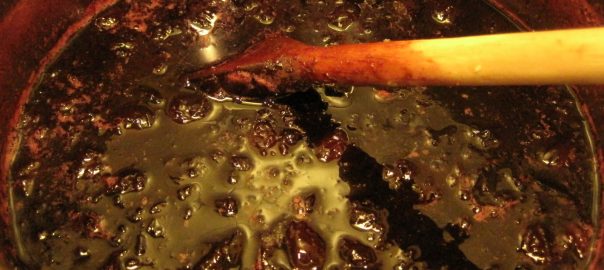
To make the jam simply combine the cherries with lemon peel, lemon juice, sugar, and pectin and let it cook for a while on the stovetop until it thickens.  There are lots of great recipes for cherry jam out there.  The one I use comes from the Ball Blue Book which is a great resource for recipes and information on preserving all kinds of things.

My other favorite canning/preserving book are:

Once you’ve created jam you put it into sterilized jars, hot water bath it and then you’re done.  One of my favorite sounds is the little plinking noises made by the lids sealing after their hot water bath.
 
The jars will keep for up to two years in the pantry.  Each time we take one out and eat it we are reminded of the sweet, juicy taste of summer.  Believe me, in the middle of winter the hot, steam-filled kitchen and huge pots a-boiling on the stove are a far distant memory.  It’s all worth it.


Affirmations

Most of us are very hard on ourselves.  No matter how hard we think the world around us is, we are tougher on ourselves than just about anyone else out there.  I work with a lot of people who feed themselves lots of negative messages about their relationship with food, their body or their self-image.  It doesn’t have to be this way.

I recently saw the movie “The Help” and while I loved the move as a whole there was one scene that keeps repeating itself for me.  In this scene, Aibilene, the maid, is sitting in a rocking chair with Mae Mobley, her young charge, in her lap.  Aibilene says to Mae Mobley, “You is kind, you is smart, you is important” and Mae Mobley repeats it along with her.  This is such a wonderful affirmation.

We often forget to give ourselves, and our children, positive affirmations.  We give praise, hopefully often and mindfully, but we don’t teach that skill of affirmation.  I believe it’s never too late to start and want to encourage all of you to think about what affirmations you could incorporate into your life.  If you’d like to share them that would be even better, the we could all certainly use more positive messages.

In the meantime I’ve started a collection, you can see them on my Affirmation Pinboard.

We all deserve to believe in ourselves, to be kind to ourselves, and to teach our children to feel the same. Make it a habit, a healthy habit, to share positive affirmations with yourself and your loved ones on a daily basis.

Food Storage

Becky wrote and asked about storing food.  She’s starting to make more of her own foods and would like to purchase in bulk but is not sure how to store things.  This is a brief post but one that shares my experience and what I do.  The storage that I am talking about here is dry storage, I’m assuming that if you have a freezer or even two freezers you are already using them to full capacity.

dry beans in jars | photo: dancesincreek

For smaller items (seeds, beans, herbs, etc) I collect glass jars.  Lots of them.  I confess that I have aspirations of being one of those wonderfully well organized people who has all their jars coordinated and they are the same so they all fit neatly on the shelf.  The truth is, well, let’s just say a little more practical.  It’s a mis-matched hodgepodge of jars.  I use smaller jars for smaller things and bigger jars for larger quantities.

If it is something that requires a good seal (such as agar agar) I will sometimes cut a piece of wax paper to put over the top of the jar before placing the lid on it.  Obviously things kept in jars do better stored in a cool dark place.

I like using glass jars, even though they are more breakable, because I feel that they are the best, least contaminating containers.

For large quantities I use five gallon buckets.  Although they are plastic, it is not possible to store very large quantities in other containers.  Many people can get five gallon buckets for free from their local grocery store.  In the bakery section simply ask for their buckets; the grocery stores throw them away.  These are food safe buckets.  Sometimes they come with some of the contents (frosting, etc) still stuck to the inside, but washing them out is a small price to pay.

For the lid I use something called a gamma seal.  This is a great thing to create a water-tight, air-tight, vermin-proof seal.  I like them in part because they are spin-on/spin-off rather than a rip-off-your-fingernails-prying-the-lid-open.  Essentially there is a threaded plastic ring which snaps onto the rim of the bucket.  The lid then threads into the ring.  If I am planning on very long term storage (more than six months) for the contents of a bucket I will add oxygen absorbers to help the contents last longer.  The trick with the oxygen absorbers is to figure out how much airspace is left in the bucket so you know how many absorbers to use.

I find that a five gallon bucket easily stores twenty-five pounds of dry goods.  I use mine to store grains such as hard wheat, barley, oats, and buckwheat.  I also use these buckets to store sucanat and evaporated cane juice crystals.  Due to the weight I don’t stack them more than three high.

In order to make sure that I am staying on top of my large scale dry goods I write the contents of the bucket on a piece of scotch tape with weight and the date it needs to be used by.  This piece of tape is placed on the rim of the lid.  This way the buckets are clearly marked and when I go into them and I can see how much I still have left.  The tape sticks well enough to be used but comes off easily enough if the information needs to be changed.

Energy What?

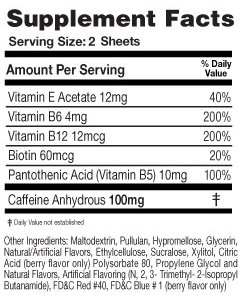
I am horrified by an ad I just saw.  Remember the mouthwash strips invented years back?  The ones that you put on your tongue to dissolve that left your breath minty fresh?  Well someone has taken them to the next level and created an energy strip or sheet that works the same way.  Remove from the package, place on your tongue, and poof, instant energy.

It’s bad enough that there are hyper-caffeinated beverages on the market, it’s really awful that there are mini-shots of energy product, and let’s not forget all the other atrocious caffeine products such as caffeinated soap and panty hose.  Now we have this?  I’m truly astounded and upset.

How much caffeine do people think they need?  And if they need that much isn’t it time to consider perhaps that they are trying to do too much?  If someone is not awake enough during the day perhaps it’s time for them to look at how much sleep they’re getting.  Maybe their bedroom is not restful enough, is it a dark, cozy, no-tv, no-computer, no-gaming system space?  Poor sleep, or not enough sleep are key reasons that people feel tired and then reach out for caffeine or sugar as a way to boost their flagging energy.  Getting good quality sleep, and enough of it, can often reduce the extreme fatigue that seems to be plaguing us.

So why am I so against this product?  For adults caffeine is generally considered safe up to 300 mg per day.  This product contains 100 mg of caffeine, plus high doses of B vitamins.  Oh yeah, they also come loaded with artificial flavors, sucralose, polysorbate 80, artificial colors, plus some other chemicals thrown in for good measure.

One of my big worries about this product, aside from the nasty ingredient factor, is the potential for abuse.  The delivery system makes it far too easy for small children to get their hands on it, especially if it is tossed into a purse or a car cup holder along with gums, mints and other similar items.  It’s also something that will be very easy for teens to overuse.

I can only hope that this product will be pulled from the shelves as quickly as possible.

Raspberry Vinegar

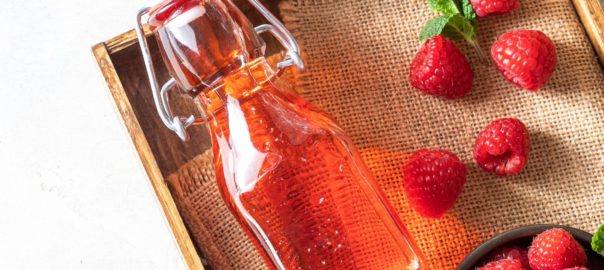
Raspberries are coming in to season.  Their fragrant luscious aroma greets me every time I walk into the produce section of my local grocery store.  And their plump juicy red fruit temps me.  I love raspberries and truly miss the raspberry bed I had in Connecticut.  It was stocked with four different varieties each bearing at a different time pretty much ensuring a summer full of fresh flavorful berries.

Sadly the drought here in Texas has done a number to my fruit bushes.  The trees seem to be holding their own but the elderberries, raspberries, blackberries, blueberries and goji berries are all shriveled and I'm not sure they're going to make it.

Raspberries are such a wonderful fruit because not only are they tasty, they're so versatile.  They go great in fruit salads, eaten fresh, baked into scones or crumbles, on top of oatmeal, in a smoothie, the list goes on.  Plus a little as one half a cup provides 4 g. of fiber, over 25% of your daily value for vitamin C and just over 20% of your daily value for manganese. One of my favorite, extravagant ways to use raspberries is to make a raspberry vinegar.  This way I can enjoy that fragrant summer flavor all year long.

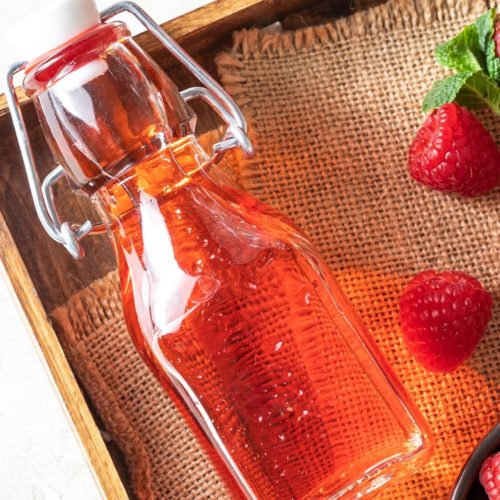
This is my favorite recipe using raspberries from Fancy Pantry which is one of my best-loved preserving cookbooks.

Raspberry Vinegar

By Fancy Pantry cookbook

Ingredients
  

  • 8 C. raspberries, cleaned, rinsed and drained
  • 3 C. white wine vinegar

Instructions
 

  • The recipe calls for the raspberries to be used in two portions.  You can freeze 4 C. for later.
  • Crush 4 C. raspberries and place them in a sterilized, heatproof 2 quart jar
  • Add vinegar and and cover the jar
  • Set the jar in a deep saucepan and fill with water to come halfway up the jar
  • Set over medium heat and bring the water to a boil
  • Reduce the heat and keep the water simmering for 20 minutes
  • Remove the jar and set aside, uncovered to cool the contents
  • When cool, add a lid to the jar and set it aside
  • Shake the jar every day for 2 weeks
  • Strain the jar to remove old raspberries, it is okay to lightly press the berries to extract all the juice
  • Crush 4 C. raspberries and pour infused vinegar over them
  • Repeat the scalding as done above
  • Let the vinegar rest for two weeks, shaking every day
  • Strain the vinegar discarding the fruit, it is okay to lightly press the berries to extract all the juice
  • Line a funnel with an unbleached coffee filter and place in a sterilized bottle
  • Filter the vinegar into the bottle
  • Cap or cork the bottle and store in a cool dark pantry

Notes

The vinegar may develop sediment as it stands, this is okay but the vinegar can be re-filtered if you wish

black bean

Black Bean Casserole

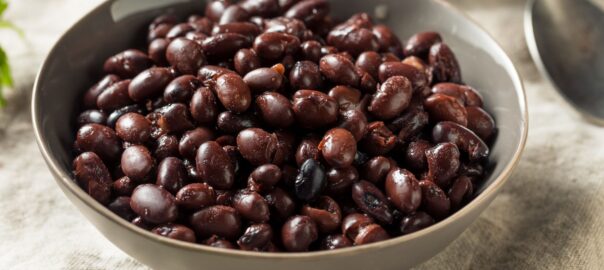
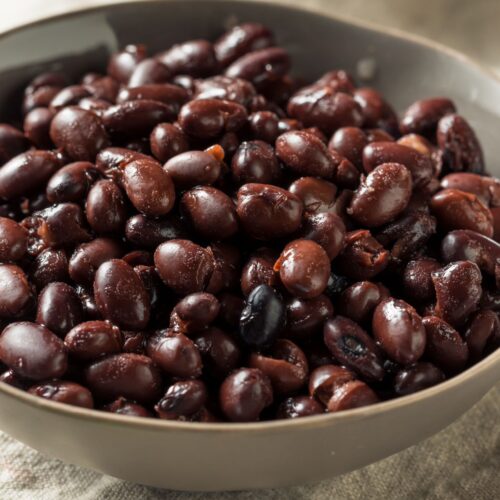
I previously posted a Meatless Monday menu of black bean casserole, roasted asparagus, spring onions, cauliflower, and cauliflower greens. It was a delicious dinner. I received a request for the recipe and decided to post it over here on the blog.

Benefits of Black Beans

I love oven roasting veggies; it's such a simple way to prepare them and makes fabulous leftovers. Black beans are a great flexitarian choice; they're tasty, easy to prepare, and go well with many different types of dishes.

Adding beans to your diet, if you don't already eat them, is such a healthy thing to do because not only are you getting protein, but you're also getting lots of fiber. One cup of black beans provides 15 grams of fiber and 15 grams of protein. A pretty good deal in my book. Even better, you're also getting many B vitamins, primarily thiamin and folate, plus iron, copper, magnesium, phosphorus, potassium, and manganese.

Recipe Adjustments and Preferences

This black bean casserole is one of my favorites because, with the addition of the corn tortillas, it makes a complete protein. The original recipe I developed calls for a generous sprinkling of shredded cheese on top; however, due to my new dietary restrictions, I am avoiding cheese. I've discovered that rice cheeses and other "fake" cheeses are unpleasant for my palate, both in taste and texture, so I've been feeding what I bought to the dogs (who are thrilled) and just leave out the cheese altogether. But if you're a cheese fan and can eat it, use about 3/4 cup.

Ingredient Choices

Being where we are in the growing season at the moment, with tomatoes so very expensive (and my garden burned to a crisp due to drought), I've turned to my favorite Pomi Chopped Tomatoes, which come in a box rather than a can, so there is no BPA. When tomatoes are in season and not hideously expensive, I definitely prefer them and use about four in this recipe.

black bean

Black Bean Casserole Recipe

Ingredients
  

  • 2 tablespoons olive oil
  • 1 large red onion, chopped small
  • 2 cloves garlic, minced (more if you like lots of garlic)
  • 2 ribs celery, chopped small
  • 1/2 of a 26 oz box of chopped tomatoes
  • 2 cups cooked black beans
  • 1 teaspoon cumin
  • 6 medium-sized corn tortillas, cut or ripped in half
  • 2 tablespoons minced cilantro
  • 1 tablespoon lime juice
  • 2 spring onions, chopped
  • Sea salt and pepper to taste
  • Hot sauce (optional)

Instructions
 

  • Preheat oven to 350°F.
  • Lightly grease a medium round pie dish.
  • In a pan, heat olive oil and sauté onion until wilted.
  • Add celery and garlic and sauté until celery is wilted.
  • Add black beans, tomatoes, and cumin, and cook until heated through.
  • Remove from heat and add salt and pepper to taste.
  • In the pie pan, layer 4 corn tortilla halves with 1/3 black bean mixture (the top layer is where the cheese goes if you're using it).
  • Repeat layers, ending with the bean mixture.
  • Cover and bake for 30 minutes.
  • Remove from oven, and sprinkle with spring onions, cilantro, and lime juice.

Like this recipe? Join our exclusive private membership for access to a growing collection of delicious and nourishing recipes for members only!

Dive into our collection of programs, eBooks, and live monthly classes designed to support your holistic health journey and nourish your body.

Unlock a world of inspiration and healthful living by becoming a member today!

Pondering Plastic

Yesterday was another Holistic Mom’s Network twitter party.  The topic of conversation was plastic and it’s insidious presence in our homes.  It may seem innocuous but really there’s more than meets the eye.  All week long as I was waiting for the twitter party I looked around my home at all of the different ways we use plastic.  I was stunned to realize that there was far more than I thought.

plastic bags | photo: Trosmisiek

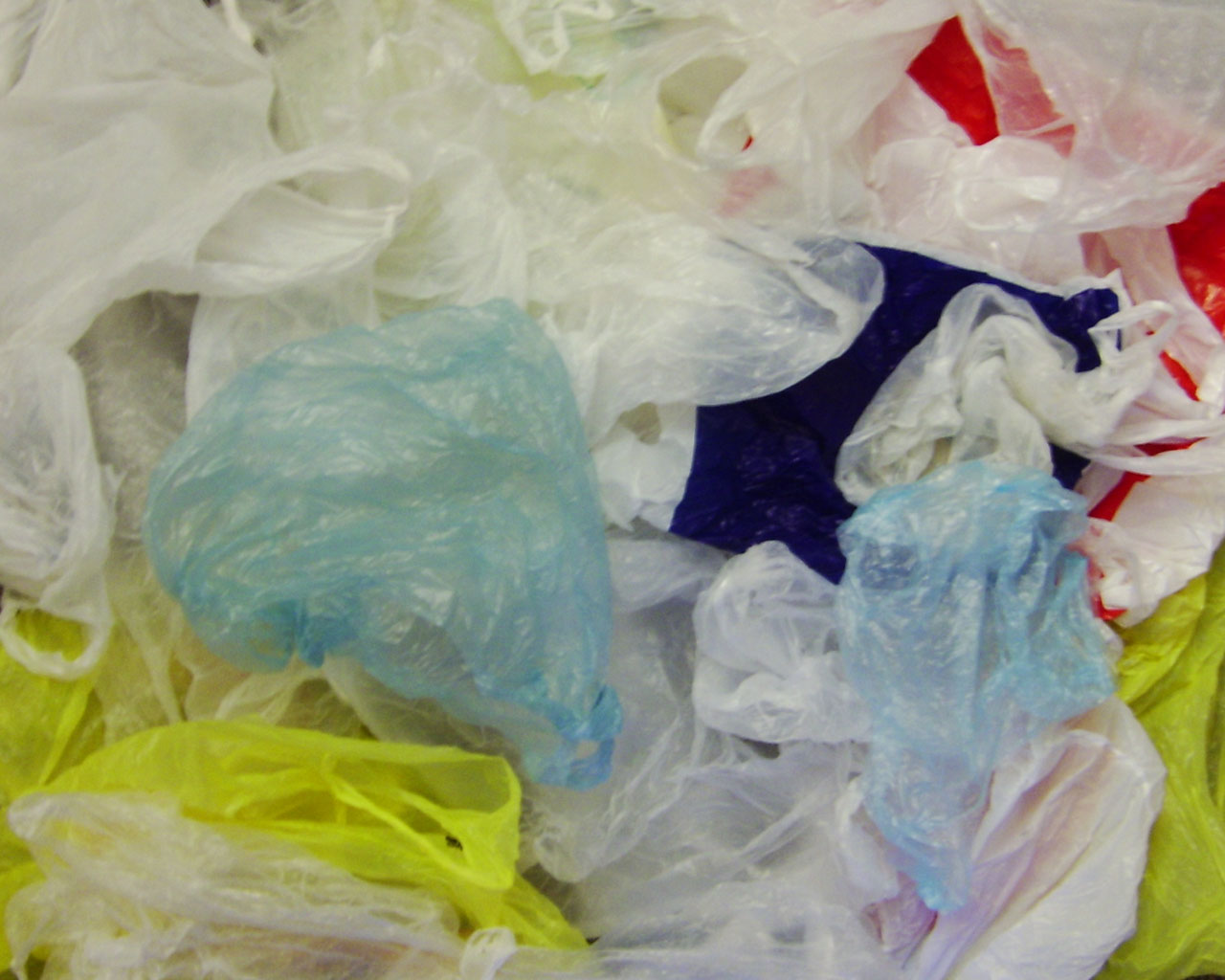
Many people have given up the paper or plastic question at the grocery store and bring re-usable grocery bags.  One of my challenges these days is to not use the thin plastic bags that the grocery store gives out in the produce section. I think the time has come to make some produce sacks, the challenge is that it’s not nice and see-through for the clerk.  I don’t use many of them, trying to take produce by itself whenever possible; however for some things like beans, mushrooms, etc it’s not really feasible.  So I’m planning on working on that to reduce my plastic usage.  As we discussed last week when talking about paper….it’s one step at a time.

The expert in charge of the twitter party was Beth Terry who blogs over at My Plastic Free Life and goes by the twitter handle @PlasticfreeBeth.  Her website is full of amazing information, links and resources on the steps to a plastic free life page including this great video on making produce bags from old t-shirts.  In addition to Beth’s wonderful website there is also a lot of useful information to be found at Earth 911.

BPA laden receipts | 

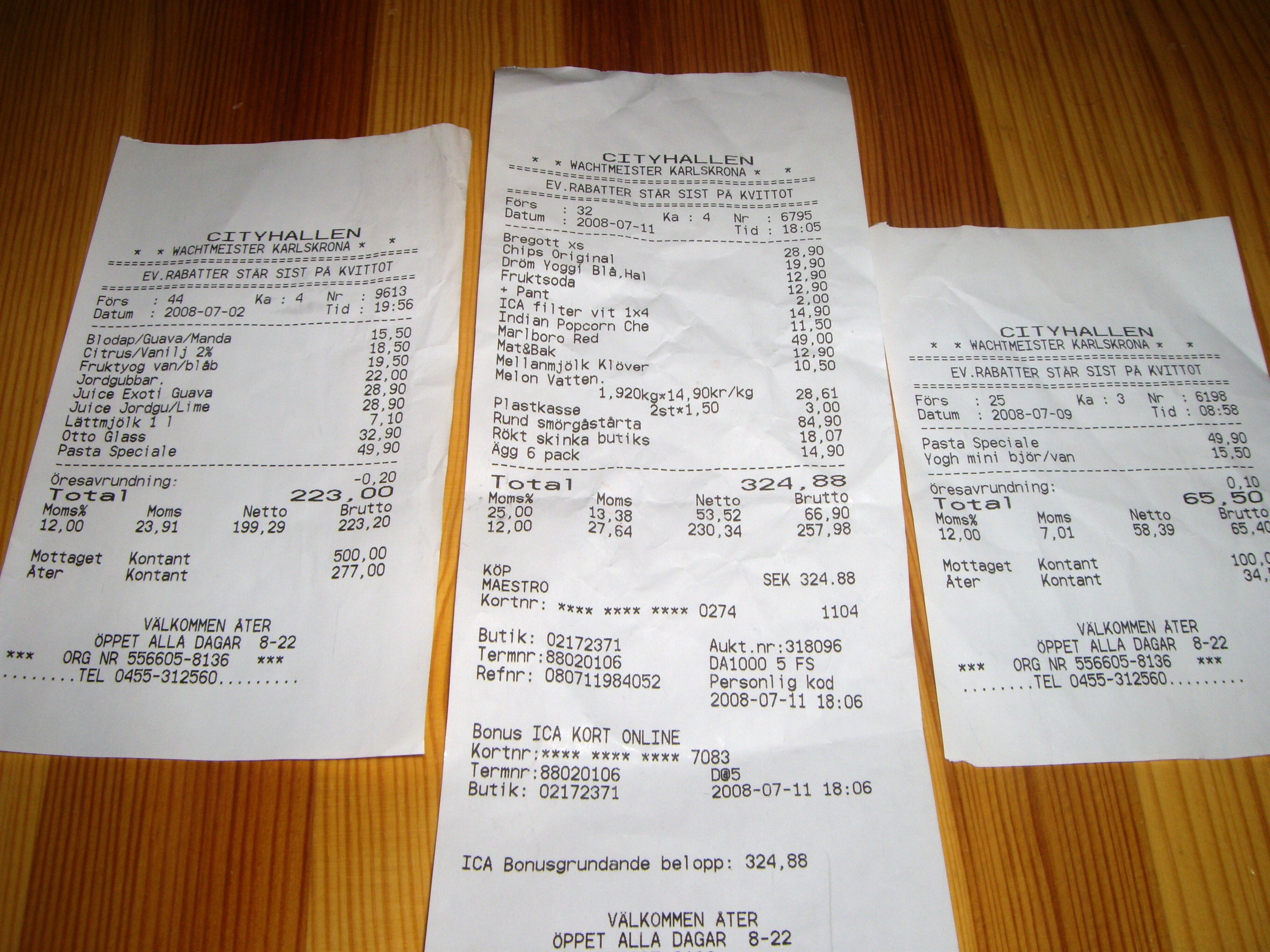
The startling thing for many is learning just how pervasive plastics are in our lives.  Many of us focus on BPA because that’s what’s in the news.  There’s even a study currently underway to examine the blood of cashiers to see how high their BPA levels are because they handle receipts all day long.  Those receipts are coated with a powdery form of BPA that transfers easily (something to think about next time you eat a snack after purchasing it and handling that receipt).  As Beth points out, it’s important to remember that BPA-free does not mean it’s totally safe.

I also learned that chewing gum is made with polyvinyl acetate.  Seriously?  Apparently the only brand of gum currently available that is all chicle is my favorite Glee gum.  But I confess to sometimes having other gums as well.  Not anymore.  I discussed this one with my husband last night and we will no longer be buying other gum.  Turns out this will also reduce our plastic packaging because Glee only packages in cardboard.

Even more disturbing was what I learned about bio-plastic.  This is being touted as the best replacement because it is supposed to break down.  However it turns out that many bio-plastics are made with GMO corn.  Since I try to avoid GMO foods it bothers me that this product is still finding it’s way into the environment.  According to one thread in the party last night some bio-degradable plastics have a mystery ingredient that helps them to break down faster.  Researching it on the internet I come up with the information that that chemical is “proprietary” and so does not need to be shared with the general public.  Other information states that it may “leave some toxic residue but the environmental impact is lessened.”  This is not something that I want in my environment at all.

glass straws | photo: Wizdomseeker

Just as with last week, the subject of straws came up again.  Of course you can get glass straws from Glassstraws.com or you can purchase stainless steel straws.  What I thought was really cool was discovering this link to a tutorial on making your own DIY travel cup.  I can see that I’m going to make re-evaluating my travel container choices my second priority after those fabric produce bags.  And don’t forget to carry your own travel beverage with you.  If you travel through airports it can go empty through security and then be refilled on the other side.

PlasticfreeBeth set forth a Plastic Challenge.  I’m not quite ready to do that yet although I will be paying more attention to the plastic usage around our house. After last night, and after watching the trailer for the documentary movie Bag It this morning, I’m certainly more educated and more committed to making changes.

It’s 9:00 a.m. and already I’ve handled the following plastic:

light switches

household plastic objects | photo: cjp24

toothbrush
toothpaste container
dental floss container
shampoo bottle
razor
deodorant container
mascara container
lipstick container
eye liner container
cell phone / case
supplements/vitamins containers
computer
pen

and probably a few other things that didn’t creep into my awareness.  Whew, that’s a lot of petroleum product!  Definitely need to look around and see how I can reduce my usage.

Do you have any great non-plastic tips?  I’d love to hear them.

The Journey Continues

I am still on my dietary journey, each day learning to make these changes.  Yesterday I had a moment where I really missed cheese.  I just wanted to make myself a big chef-style salad.  In the past it would have been no meat and perhaps two kinds of cheese.  Now it’s meat, no cheese.  And knowing that I couldn’t have the cheese made me want it more.

After the first two weeks of my dietary changes I am now adding in more vegetables and fruits.  The testing that I did broke my food sensitivities into 3 categories, high sensitivity, moderate sensitivity and low sensitivity.  For the first two weeks I ate nothing on the list, even the low sensitivity list.  It got really boring.

I have a confession to make.  I don’t like cooking for myself.  I much prefer to cook for others.  I like eating with others and I certain love when people cook for me.  But if I have to cook specifically for me…not so much.  And because of my dietary changes I was doing a lot of that.  And it got boring.  For anyone who knows me, that’s a surprising statement.  I LOVE food, I like thinking about it, talking about it, researching it, helping others with their food.  I love food.  But because of the restrictions I am on it I started to become less enthusiastic about my food.  I figured out a few dishes that were dietarily compliant, figured out how to add back in the meat slowly (still working on that) and tended to live on the same 8-10 recipes.

Now that I’m able to add other foods back in I am all of a sudden much happier.  In part I am now able to eat an expanded list of foods which is always a good thing.  Plus many of the foods on the low sensitivity list that have been added back in are grillable veggies. In the summer that is one of my all-time favorite ways.  (If it was winter I would be making vats of soup!)  I like to make up several large salads, grill a huge batch of veggies and then make composed plates by adding in a protein.

I am learning so much from this experience.  Part of it is a deeper respect for some of the dietary changes I sometimes ask folks to go through as we work together on their journey toward health.  I have had my own journey and have certainly done many of the things that I ask clients to do (such as a candida cleanse) but this time around the process seems much more mindful.  As I journal my food choices and how my body is responding to the reintroduction of meat I am much more aware of how I feel and why I am making some of these choices.  In many ways to a much greater extent that ever before.  I am also learning to understand some of the complexities that can lead to boredom with food.   I am grateful for this deeper understanding of myself but also because I believe it helps me to better help others.

And the journey continues…

Eco Friendly Living

Yesterday I attended the Holistic Moms Network twitter party.  It was great fun; I learned a lot about a wide variety of eco-friendly ideas and shared in some great conversations.
tree | photo: dieraecherin

The topic of the party was people talking about different ways to cut down on how much paper we use.  According to PeopleTowels, “Each person in the US uses about 335kg of paper each year–that’s 7 times the world average, even twice the average for industrial countries.”  That’s a lot of trees!  And don’t those trees look better as trees rather than a methane-producing, decomposing mass in the landfill?

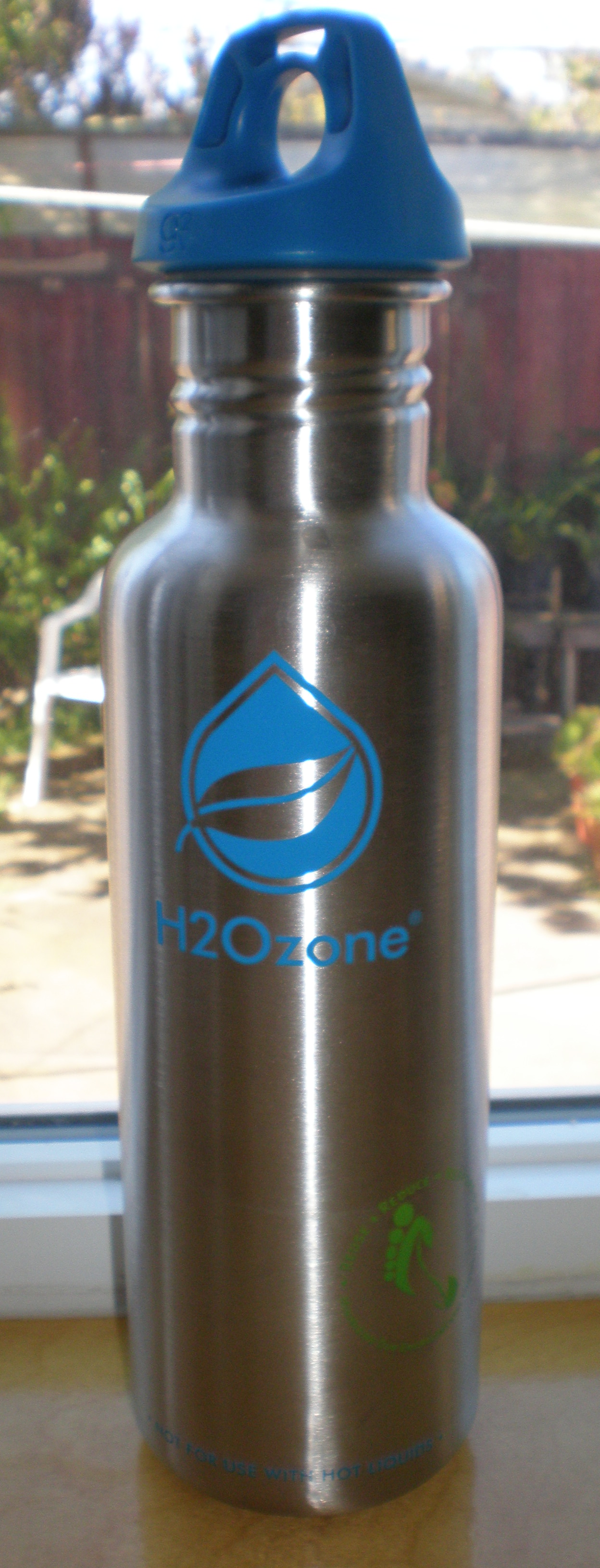
This discussion got me thinking about the holistic lifestyle many of us are trying to lead.  We bring our own drink containers (stainless steel, BPA free plastic, or glass) instead of taking styrofoam or paper cups from vendors.  We bring shopping bags to the grocery store instead of using paper or plastic.  Many of us are looking for ways to reduce our environmental impact.
Canteen | photo:  Broken Sphere

I confess that I am a work-in-progress in this area.  I think my success rate with the grocery bag issue is about 80%.  I even now bring shopping bags into other stores, not just the grocery store.  The challenge is getting them back into the car if I’ve been using a lot of them.  We do have a water bottle and BPA free hot cup for each member of the household and they do get used frequently.  We’ve shifted to dishtowels instead of paper towels.   All of the eco-friendly ideas that many people are starting to adopt.  But there’s always more that can be done.

I felt energized by the discussions going on and came across a number of new-to-me products and companies that I wanted to share.  These are products which will help me continue to reduce my environmental impact; something I consider to be an important part of the balance to a holistic life.

PeopleTowel

PeopleTowels – This company sells reusable small towels that are a great size to take with you on the road, to the office, when you travel.  I confess the nerd side of my nature fell in love when I discovered that they had a special towel for Towel Day.*  One of the great things about their towels is that although they have lots of really cute ideas and great towels they also have an option where you can design your own.  So if you want to create a theme set of towels, put pictures on a towel, put one of your kids art projects on it, you can.  And these towels will last for years.  I’ve already ordered a set of five plus a Towel Day towel and can’t wait for them to arrive.

Another topic that came up was the idea of straws.  To be honest we don’t use a lot of straws in our house but when we do they are always plastic.  Until now.  It turns out that you can get either glass straws or stainless steel ones.  The glass straws are available from a company called Strawsome.  They have all different sizes, bubble tea, regular, smoothie, plus colors, plus you can get them personalized.  Another option for reusable straws that I like a lot is these stainless steel straws.  This is something that I could easily carry in my bag to use when I am out.  One challenge that I see is what do you do with a used straw if you use it at a restaurant.  But I like the concept a lot and love the thought of not wasting plastic.

As part of the eating out section of the conversation I was re-introduced to the concept of bringing your own takeout container to restaurants.  There are two reasons I like this idea and why I plan to start implementing it.  One is that most restaurants use styrofoam and I have a strong aversion to it.  It hangs around in the landfill forever and if you put hot food into it you are then absorbing some of the plastics that are released due to the heat of the food.  Bringing your own takeout containers is such an eco-friendly idea.  You can reduce waste, still have your takeout (I often wind up with lunch for the next day as most restaurant portions are far too large for one person), and have containers that you feel good about using.  I’ve decided to go through my BPA free containers and see which ones are going to be designated for takeout.  And I’m going to work on the habit of bringing them with me.

Another part of the conversation was about using cloth napkins which in turn opened up a discussion about cloth sandwich bags.  We do use cloth napkins in our house.  Not 100% of the time, when I have a party I confess I buy paper because I just don’t have that many cloth napkins.  But on a daily basis it’s cloth and we have a good size, mis-matched collection.  When talking about the idea of reusable sandwich bags I came across only one resource for food-safe plastic fabric.  If you decide to make your own reusable sandwich bags please do not use PUL or oilcloth, neither of those is acceptable for food contact.  This discussion lead me to realize that I think I want to set aside some time to make a few reusable sandwich bags and while I’m at it whip up one or two sets of napkins that actually all match.

I encourage my health clients that we are working one step at a time.  It’s important to remember this when you are moving toward a more eco-friendly life as well.  If you try to change everything at once it’s too much.  You are trying to remember and be consistent about too many things.  You are not learning and setting those new habits.  When I first started with shopping bags my success rate was about 10%.  I wouldn’t remember to bring them in to the store or I wouldn’t have enough reusable bags.  While I still forget from time to time to get them back into the car I do use them the vast majority of the time.  I’ve also gotten very good about telling cashiers that I do not need a bag if I am only purchasing a few products and can easily carry them when I’ve forgotten my bags.  That was my first big eco-friendly step.  Little by little I added others.  You can do the same.  Pick one thing that is important to you.  Practice and develop that habit.  When you are comfortable that you are utilizing it the majority of the time, move on to another one.  Slow and steady is the way to make effective, long-lasting, positive change.

What do you do in your home to be more mindful of the environment?  I’d love to hear ideas and resources.  Leave a comment below and share your thoughts.

*Towel Day is May 25th.  It is celebrated by fans of The Hitchhiker’s Guide to the Galaxy written by Douglas Adams.  Rule #1 is “Don’t forget to bring your towel.”