All posts by Mira


About Mira

Mira Dessy is The Ingredient Guru. A holistic nutrition professional, author, and a popular public speaker, she knows that it's not just what you eat, but what's in what you eat. She is the author of The Pantry Principle: how to read the label and understand what’s really in their food. Dessy is a Board Certified Holistic Health Practitioner whose mission is to educate and empower consumers. She curates the Lean Clean Green Subscription box, the premier, organic, earth-friendly, healthy, sustainable subscription box which can be found online at https://theingredientguru.memberbox.com

I Love Latkes!

Hanukkah and pancakes!

It's that time of year again.  Hanukkah!  The festival of lights.  Part of the holiday celebration calls for eating foods fried in oil to celebrate the miracle of the oil the burned for eight days.  Latkes, or potato pancakes, are a favorite.  Everyone loves them and everyone has their own recipe.

I only make them once a year (although they're great anytime).  Mostly because we don't tend to eat a lot of fried foods in our house.  Every year my husband asks me not to make latkes because they're so greasy.  And every year, as we're eating them, he says, "I'm so glad you made latkes, they taste so good!"  

A special treat

Latkes taste amazing.  I actually think they taste better because we only get them once a year.  If we ate them all the time it wouldn't be that special.  Or that healthy.  They're a treat and we enjoy them fully.  And at the end of the day, that's a part of what really matters when it comes to our food.  Yes, we want to make healthy choices, yes we need to get rid of the chemicals and additives in our food, but yes, we also need to celebrate with special foods.  And in my book latkes falls into that category.

Cooking with friends

This year I got together with a bunch of friends and we made latkes together.  Four different kinds!  That kitchen smelled a-m-a-z-i-n-g when we were done --  potatoes,  potatoes with carrots,  potatoes with zucchini, and sweet potatoes.  I have learned from past experience that you can't mix regular potatoes with sweet potatoes because they cook at different rates.  It's also important to note that when you add things into the potatoes it changes the cooking time and sometimes requires you to turn down the heat a bit so you don't burn the latkes.

You can make latkes however you like. I've seen recipes that call for green apple to be shredded into the mix, I've heard of adding jalapenos, using herbs, making them with other root vegetables, it's all a matter of personal preference.  

In our family we tend to be traditionalists and prefer the plain potato latkes served with organic sour cream and unsweetened apple sauce.  Here's my favorite latke recipe.  And may there always be light in your home and your life.

Mira's Favorite Latkes

Ingredients
  

  • 3 pounds of russet potatoes, scrubbed, peeled and shredded
  • 1 large vidalia onion peeled and shredded
  • 1 large egg
  • 1/4 C. gluten free flour
  • sea salt to taste
  • avocado oil (enough for frying)

Instructions
 

  • Mix ingredients together
  • Heat oil in a pan
  • Drop mixture by very large tablespoons into pan
  • After 2-3 minutes flip to other side and cook another 2 minutes
  • Remove from pan and drain on paper towels

Notes

Although I use olive oil for most cooking, I don't like the olive oil flavor on my latkes. I use avocado oil instead because it has a wonderful buttery flavor.


Home Health Hacks

We are surrounded by ads for all kinds of medications to treat a wide variety of health issues. But what did people do before they had access to all of these pharmaceuticals? They used what they had on hand – herbs, food, pressure points, etc.

Many of these home remedies became consigned to the category of “old-timey” knowledge in our rush to embrace chemical solutions. But for some people the side effects of pharmaceuticals are not easy to tolerate.  Now we’re beginning to realize that many of these remedies have value and indeed can still be used effectively today.

While not all of the solutions listed below are guaranteed to be one hundred percent effective one hundred percent of the time, they are solutions which could be a reasonable first step before reaching for the pharmaceuticals.  My favorite home health hack isn’t on this list so I’ll share it here. For really bad headaches firmly massage the big toe. Sometimes it helps to reduce the pain and if I catch it soon enough can actually stop the headache in it’s tracks.

Here’s an infographic with a number of home health hacks for you. If you have one that you like that’s not on the infographic please share it in the comments below.

Health Hacks
Source: CheapNurseDegrees.com

Should You Use A Microwave Oven

This post started off innocently enough as a post in response to a question about if and how I use my microwave oven *.  The post was responsible for a lively response from a number of people but brought up more questions.

I’ll start by sharing an article by my friend Jodi Friedlander, NC, Microwave Ovens: What Do We Really Know? has shed light on the fact that perhaps microwave ovens aren’t quite as dangerous as previously believed.  In the past I was rather dismissive of their use, however, a microwave oven may not be as bad as I initially thought.  I still firmly believe they’re still not great for cooking and I think I’d prefer to mostly cook, and reheat, our food using more conventional methods.

How I use a microwave ovenmicrowave
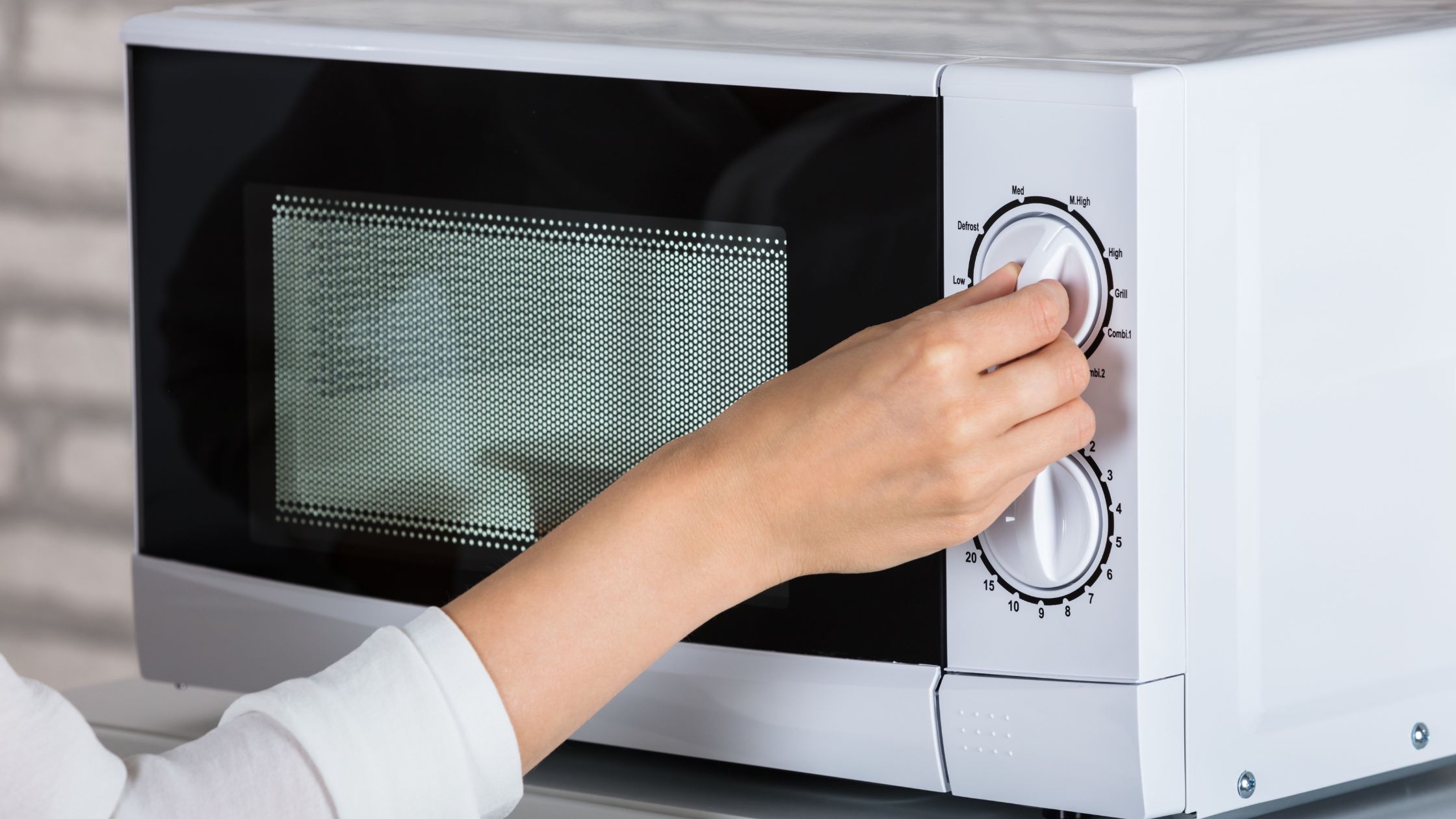
I know some people don’t even have one in their homes.  I think if we didn’t have one we would be okay.  However, since we do have it here are some of the ways I use it:

  1. Microwaving sponges to kill bacteria – two minutes every morning
  2. Proofing space for rising baked goods – it’s a perfect draft-free space
  3. As a draft-free space for making sprouts
  4. It’s a great warming oven for waffles and pancakes – I put a cooling rack in there and then pile the waffles and pancakes on the rack.  The proofing box space keeps everything warm and moist, the rack keeps the ones on the bottom from getting soggy
  5. To heat my buckwheat-filled neck wrap – great for a sore back, sore neck, or to warm your feet in bed on a cold night
Honesty compels me to admit I rewarm my tea in it (frequently) and my husband loves it for reheating leftovers. But we don’t cook in it and if it weren’t built in I might consider doing without it.

Questions about using a microwave oven

Answering questions from The Ingredient Guru Community, a couple of important comments came up:

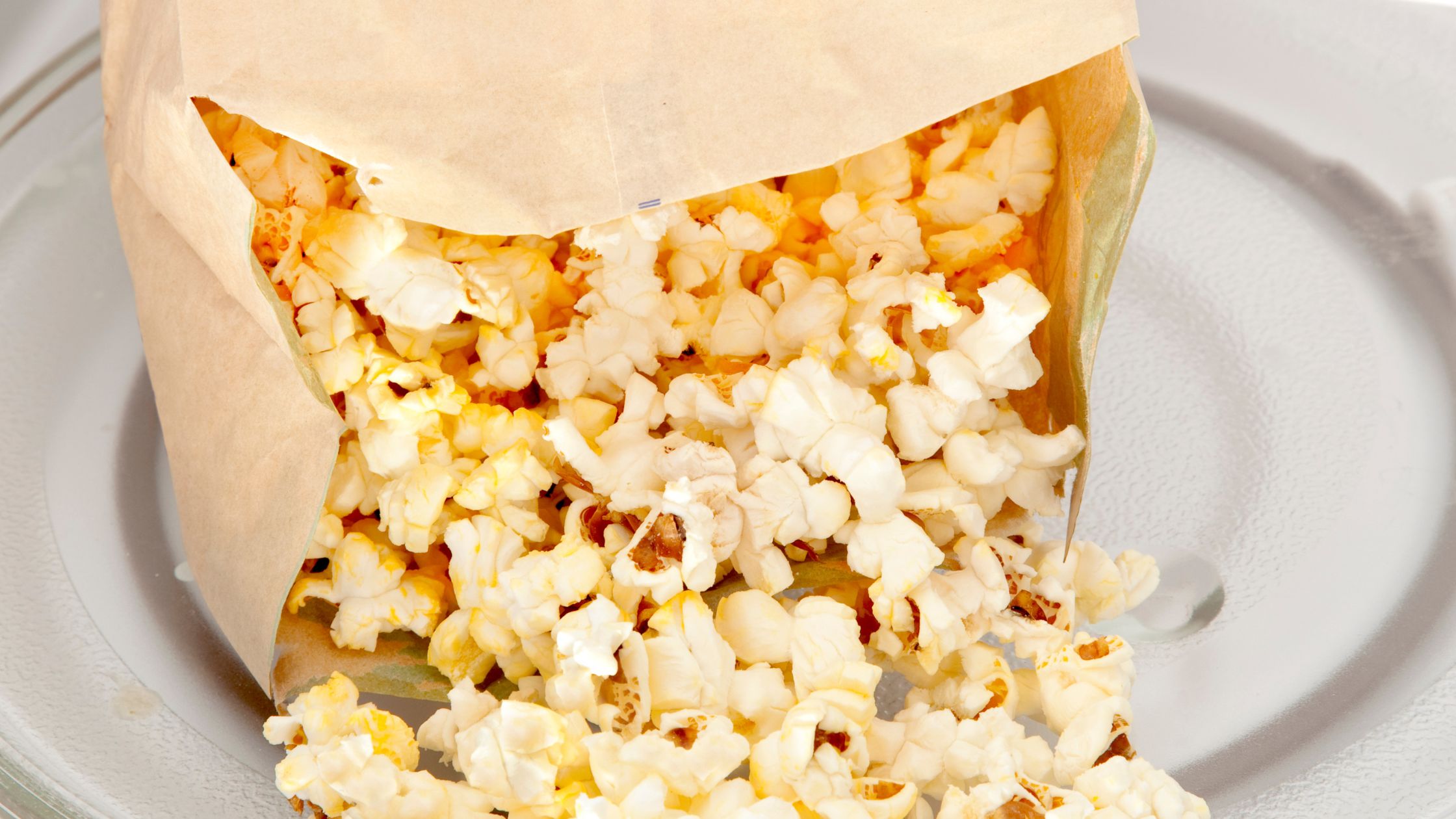
What about microwave popcorn?microwave popcorn

I’m sorry but this is a bad bad bad bad bad idea.  And did I mention that it’s bad?  Why you ask?  Perfluorooctanoic acid (PFOA) is a known cancer-causing Teflon agent.
 
Admittedly all of the studies have only been done in rats. It’s generally true that if it causes cancer in rats it is highly likely to cause cancer in humans, but that’s another subject and I won’t go there right now.  That bag lining is the same material that is in Teflon pans. I tell people to throw out all of their Teflon cookware and invest in non-Teflon.  I rarely tell people to throw things out, but this is one area where I feel it is never too soon to abandon the stuff.  
 
The problem with PFOAs is that when you open that hot steamy bag of popcorn you are exposing yourself far more than when you cook on a Teflon pan, through the steam and through what has leached into the popcorn itself.
 
According to one scientist, “It is estimated that microwave popcorn may account for more than 20% of the average PFOA levels measured in American residents.”
 
Not only that, there’s the “butter” (in quotes because it isn’t) which is linked to lung disease in factory workers exposed to the vapors.  This is from the Diacetyl which is so toxic that “Significant new information regarding the health effects of diacetyl and food flavorings containing diacetyl (FFCD) affects the information that must be conveyed to employers and employees under the Occupational Safety and Health Administration’s (OSHA) Hazard Communication standard.”
 
Bottom line:  shift to hot air or stove-top popped popcorn and don’t eat the microwave stuff.
 

Cooking in a microwave oven
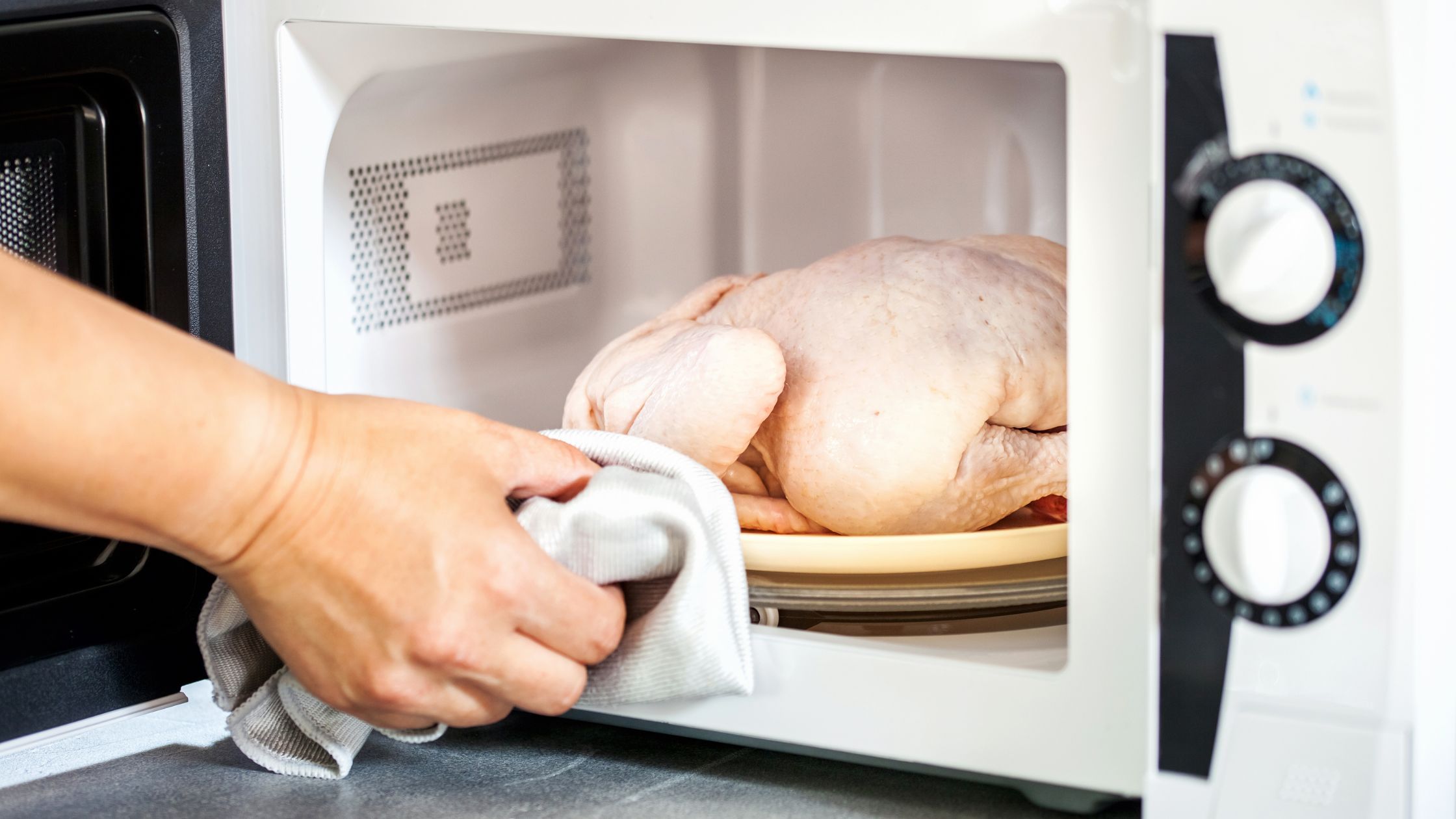
Microwave ovens work differently than other cooking methods and there are some health risks that go along with it.  
 
A study published in the American Journal of Epidemiology showed that cooking meat in a microwave oven does not kill bacteria (in this case salmonella).  The study concluded, “Compared with conventional methods of reheating, microwave ovens had no protective effect in preventing illness. To prevent outbreaks such as this one, care must be taken to assure that food is both properly cooked and handled and properly reheated.” 
 
Another study, from CEBAS-CSIC in Spain, comparing various cooking methods and their effect on the nutrient status of food showed that steaming is the best way to cook vegetables. The worst is to microwave them; more nutrients are lost during the microwave cooking process.
 
Cooking in a microwave oven has also been shown to convert B12 to the inactive form thereby depleting its bioavailability by denaturing up to 40% of it in the food.  We all need B12, if you’re a vegetarian or a vegan this is even more critical.
 
To be fair all methods of cooking will reduce nutrient status somewhat, that is part of the process from heat.  And if you are steaming especially vegetables, it can be a good idea to drink the nutrient-rich broth that remains behind.  But overall microwave ‘cooking’ is, in my book, not a good idea.

In conclusion

So the end result?  I certainly have no complaint with people wanting to reheat their food or beverages in a microwave oven.  I do, however, think it’s not a good idea to cook in it.  And I think if you are re-heating something, you are best served to remove it from any plastic or coated surface, put in it ceramic, and use the oven to avoid any potential fumes or chemical leaching.
 
Let me know your thoughts, how you use your microwave oven, and/or if you are considering changing what you do based on the information you find here.
 
 
*  A small nerd-humor note.  I find myself consciously referring to microwave ovens as microwave ovens rather than as ‘a microwave’, ‘the microwave’, etc.  The reason?  My husband delights in telling me that “Microwaves are itty bitty little particles that you cannot see.”
 

[expand title=”Sources”] 

Sharma, Manan et al. “Effective Household Disinfection Methods Of Kitchen Sponges”. Food Control, vol 20, no. 3, 2009, pp. 310-313. Elsevier BV, doi:10.1016/j.foodcont.2008.05.020.

“Dietary Exposure To Perfluorooctanoic Acid (PFOA) And Perfluorooctane Sulfonic Acid (PFOS): A Review Of Recent Literature”. 2022, p. ., https://www.tandfonline.com/doi/abs/10.1080/15569543.2017.1346685.

“Dietary Habits Related To Food Packaging And Population Exposure To Pfass | Environmental Health Perspectives | Vol. 127, No. 10”. 2022, p. .,https://ehp.niehs.nih.gov/doi/full/10.1289/EHP4092.

“Popcorn Lung – Proquest”. Proquest.Com, 2022, https://www.proquest.com/openview/273563539a6e7e57374db21d4490d7b9/1?pq-origsite=gscholar&cbl=1096447.

Gessner, Bradford D., and Michael Beller. “Protective Effect Of Conventional Cooking Versus Use Of Microwave Ovens In An Outbreak Of Salmonellosis”. American Journal Of Epidemiology, vol 139, no. 9, 1994, pp. 903-909. Oxford University Press (OUP),doi:10.1093/oxfordjournals.aje.a117096.

[/expand]

Is Gluten The Problem?


More and more people appear to be sensitive to gluten. While gluten sensitivity is different than celiac disease, it is still problematic and can cause immense digestive distress, bloating, unexplained rashes, migraines,  fatigue/fogginess, unexplained weight loss (or gain), joint pain…and more.  Believe it or not, eating gluten can trigger more than 300 different symptoms for those who are sensitive.

I have been fortunate enough to hear Dr. Tom O’Brien speak three times.  Believe me when I tell you that he is passionate about gluten.  He has made it part of his personal mission to move the question ‘is gluten causing my health problems’ into the light and into conversations between patients and healthcare professionals.

Now he’s stepping it up and presenting a free seminar from November 11-17.  Each day there will be 3-4 seminars available on-demand for 24 hours.

According to information on his website :

The Gluten Summit will:

– Bring the latest research to the public eye with interpretation from Dr. O’Bryan;

– Call more attention to gluten-related disorders;

– Potentially improve diagnosis and treatment in practice;

– Teach better practices for safely eating outside of the home;

– Encourage more clinicians, practitioners and patients to ask, “Could it be gluten?”

The lineup of speakers is absolutely amazing.  It’s hard to believe that all of these speakers are available for free simply by signing up for this event

Prof. Michael Marsh

Dr. Loren Cordain

Dr. Alessio Fasano

Dr. Umberto Volta

Dr. Aristo Vojdani

J.J. Virgin

Dr. Mark Hyman

Jeffery Smith

Dr. Deanna Minich

Dr. Yehuda Shoenfeld

Dr. David Perlmutter

Dr. Daniel Amen

Suzy Cohen

Dr. Mark Houston

Dr. Rodney Ford

Andrew Keech

Erica Kasuli

Cynthia Kupper

Dr. Liz Lipski

Dr. William Davis

Melinda Dennis

Dave Asprey

Nora Gedgaudas

Dr. Peter Osborne

Jaqui Karr

Sayer Ji

Tom Malterre

Dr. Marios Hadjivassiliou

Dr. Natasha Campbell-McBride

As more and more people struggle with issues related to gluten sensitivity it’s important to learn what you need to know and can do to better support your health.  Chances are this issue affects you or someone you know.

Full disclosure – I believe in what Dr. O’Brien is presenting so much, and I’m a huge fan of so many of these speakers (and have heard a number of them speak before — they’re good!)  that I’ve signed up to be an affiliate and am sharing this information.  I’m hoping to reach as many of you as possible so that you don’t miss out on the opportunity to hear what these folks have to say.  You can sign up for free here.

5 For Fitness On Twitter

Living a healthy and fulfilling life is a major goal for most of us. This is why many people continue to seek advice and suggestions about health and fitness from specialists.  Someone who can support your health goals by providing simple and applicable tips. With the advent of the internet, there are now large numbers of health and fitness experts available at the push of a button.  Twitter is just one place where you can find the latest updates on health and fitness methods to improve your health and help you get into good physical shape.

Five fabulous twitter accounts to follow for up to date health and fitness tips:

1.@CrossFit – this tops the list of top-class Twitter accounts to follow for updates on health and fitness tips. The administrator of this account provides continuous updates on healthy living tips that are well laid out to ensure that you do not miss a single point. It is widely believed that @CrossFit is one of those Twitter accounts that updates their feed every half an hour providing regular inspiration and information.

2. @BornFitness – new on the twitter scene, this feed is emerging as a reliable source of health and fitness tips. The coverage on this feed goes further by giving suggestions on some important weight loss programs without the use of diet pills. These natural ways of improving your health makes this Twitter account one of the reliable health and fitness accounts you can get on this social media platform.

3. @TakeaChallenge – the tips are of more practical procedures are aimed at ensuring that you maintain or improve on your health status by participating in exercises that are important to ensuring that you live a healthy life.

4. @greatist – another Twitter account with tips that are aimed at improving on your health and body appearance. The suggestions on this account are very professional and straightforward to ensure that you are not lost or confused while focusing on your body health.

5. @actionhapiness – one of the most popular feeds, this account not only gives updates on health and fitness tips but also has suggestions on how to improve on your life by living happily. The main aim of this feed is to support you in creating your happy life.

It is important to note that these twitter accounts provide health and fitness tips that are aimed at ensuring that you live a healthy life that is not only enjoyable but also free from illness. Filled with  practical tips geared toward encouraging an exercise, fitness, health, and wellness routine which should help those looking to make  changes in their life and their physique. With the ideas and suggestions found on these accounts, there is regular encouragement to lead a healthy and fulfilling life as you embark on putting the ideas shared in these feeds into practice.

This article was provided by Carl Shaw of Followersboosts.com.

photo: http://flickr.com/photo/28618109@N05/5611575061

Halloween

Halloween Treats – An Alternative Viewpoint

In just a few days it will be Halloween.  It’s a fun holiday, I admit.  After all who doesn’t like playing dress up and running around collecting treats.  When the kids were little it was a month-long anticipation-fest.  Deciding what to be, making costumes, participating in the neighborhood Boo Bag festivities, choosing which treats we would give out and then ::drumroll please:: the big night.

How many kids?

For whatever reason over the last couple decades we wound up living in areas where our house was part of the local Halloween central.  I’m talking, literally, hundreds of kids.  In a wide variety of diverse settings:

  • A small, rural town in Vermont where the houses on Main Street were hard hit by the hordes that came from all over town, and I mean the entire town
  • A high density Texas suburb where kids pretty much stuck to their own neighborhood but there sure were a lot of them — when your houses are on 7,00-10,000 square foot lots with 2-3 kids in most of the houses, well, you get the picture
  • A small rural Connecticut town where our street was THE place to be.  Van-loads of children from our town as well as van-loads of children from surrounding towns all descending on our doors — some of the kids employed a technique called ‘double masking’ where they wore one mask on the way down the street and the other mask on the way back, hitting all the houses both ways to try and get EVEN MORE candy

But it’s always fun to see all of the kids and their costumes and their excitement.  I love this time of year and have so much fun with it. However as the years went on and I learned more about what’s really in our food I became less and less enthusiastic about what is, after all, the main purpose of Halloween for many kids.  The sugar fest.  I began to look for alternatives that did not add carcinogenic chemicals to their little bodies, no artificial colors, flavors, or other additives which, after all, are not real food.

Alternative treats

Over the years I spent a fair amount of money on organic, natural treats but the year we hit over 300 kids I stopped.  It just got to be more than our budget would allow.  So I started handing out treats of a different kind.  And the funny thing is… the kids loved them.  I had thought that they might prefer their candies and sweets.  But really they got so much of that at other houses. Plus due to the sheer volume of trick-or-treaters, everyone was braced for the onslaught and the neighbors mostly purchased small candies.  There’s also only so many different kinds of snack-size or fun-size treats available, so the contents of the bag looked very similar from house-to-house. At our house, rather than getting the same thing that they got everywhere else, we were giving them something fun and new.

What sorts of things did we give out?  It’s amazing what you can find:

  • glow in the dark bracelets
  • glow in the dark rubber duckies (these were very popular surprisingly)
  • Halloween themed hacky sacks
  • fake creepy things – bugs, spiders, bats, and snakes
  • Halloween frisbees

There’s also a number of strategies for swapping out the candy once the kids have collected it. Here’s a great list from the Holistic Mom’s Halloween Roundup.

The real food philosophy

Alternative treats and swapping out can be a great way to be able to participate in the holiday without compromising the health of the kids.

I love the dress-up part, and admiring all the costumes that come to my door.  With the bigger kids I always ask them to do a trick to “earn” their treat.  I’ve had kids tell me jokes, do hand-stands, make silly faces, it’s hilarious.  One time I asked a young man, “What do you say?” He looked at me rather puzzled and softly said, “Please?”  To which I laughinly replied, “What about Trick-or-Treat, smelly my feet?”  He laughed and I gave him a double helping.

I love the excitement and the fun of being outdoors at night.  It’s a special time of year. But when it comes to the sugar overload and the negative ingredients I’m no longer a fan. I want to to be as true to my real food philosophies as I can.

In the meantime, if you have any alterntive suggestions or know of a place selling great Halloween swag, let me know, there’s still time to swap out the sweets or to plan for the year ahead.

road snacks

Eating On The Road

I'm off unexpectedly off on another trip.  Thanks to my friend Trudy Scott I found out about Author101 in Las Vegas and was able to work it into my schedule.  I'm so excited to be going to this conference and thrilled to be learning more of what I need to know as an author to help get the word out about my book and it's important message.

One of the not so fun parts of traveling is trying to figure out what to eat when you're on the road.  As someone who eats gluten free and is very mindful of additives and GMO it's not always easy to find good food on the road.  Especially in an airport.  There are small changes happening though.  There appear to be more salad bars, some with organic greens, there are options for fresh fruit, and I was pleasantly surprised to find a veggie juice bar in Philadelphia on my last trip.

I was walking toward my gate in Philly.  Next to the Dunkin Donuts and across from the Philly Cheesteak count I saw a display of veggies and a juicer!  I was amazed and delighted.  I stopped and spoke with the woman behind the counter, telling her how excited I was to see a veggie juice bar (instead of the all-fruit-added-sugar smoothies that seem to be everywhere).  She smiled and told me I was the third person that morning to tell her that.  I ordered a carrot, cucumber, celery, greens and lemon juice.  She asked me if I wanted a little ginger (I hadn't seen the ginger), I said yes and off she went to juice it all up.  While some of those veggies would have been best quality if they were organic (to avoid pesticide load), it's important to remember that we don't want to get over-stressed about things like that.  Just the ability to have fresh juiced vegetables in an airport is a big deal as far as I'm concern.  It's a great start and one which will hopefully catch on and keep growing.  I happily paid for my juice and went to my gate to wait for my flight.

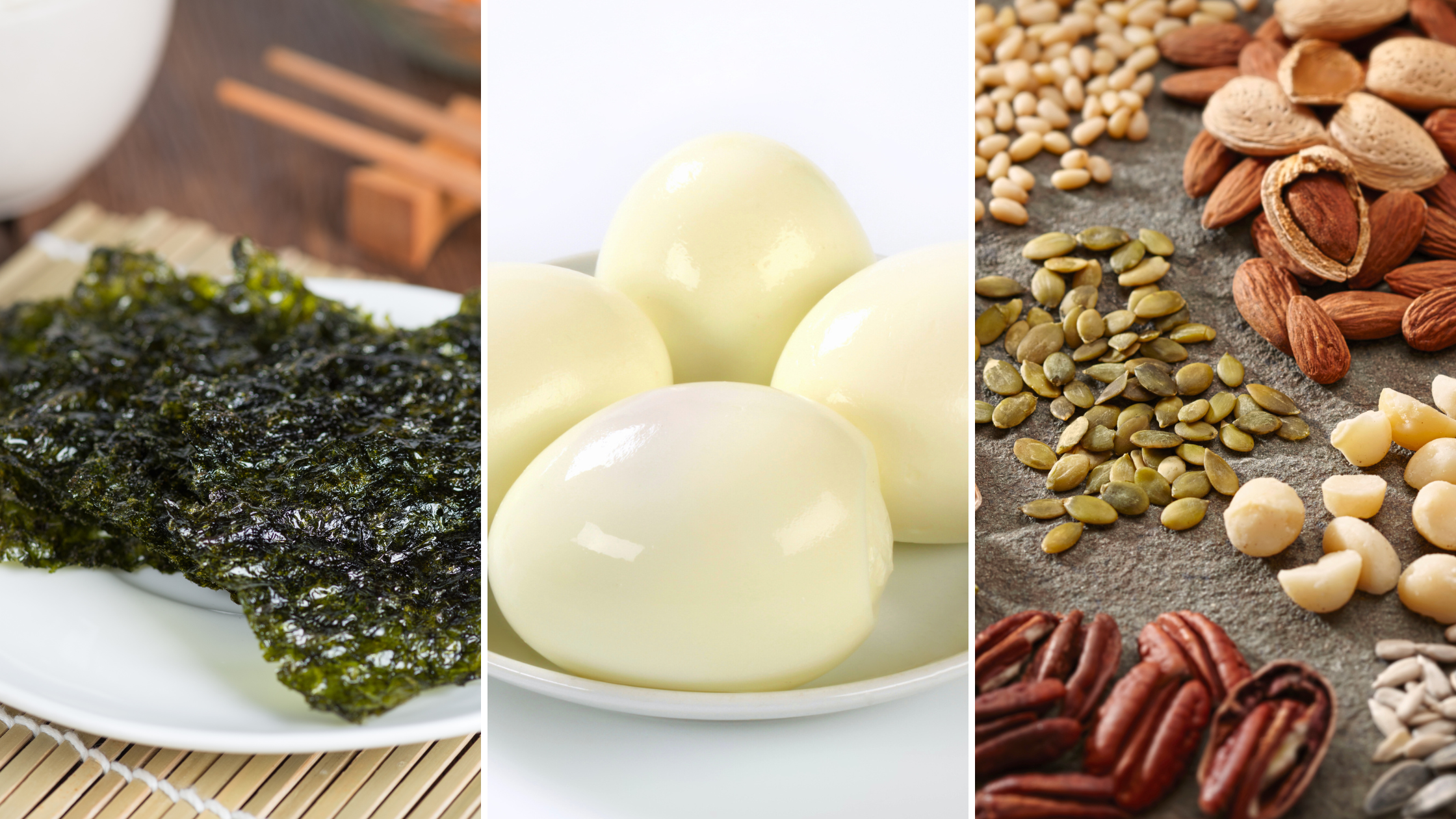
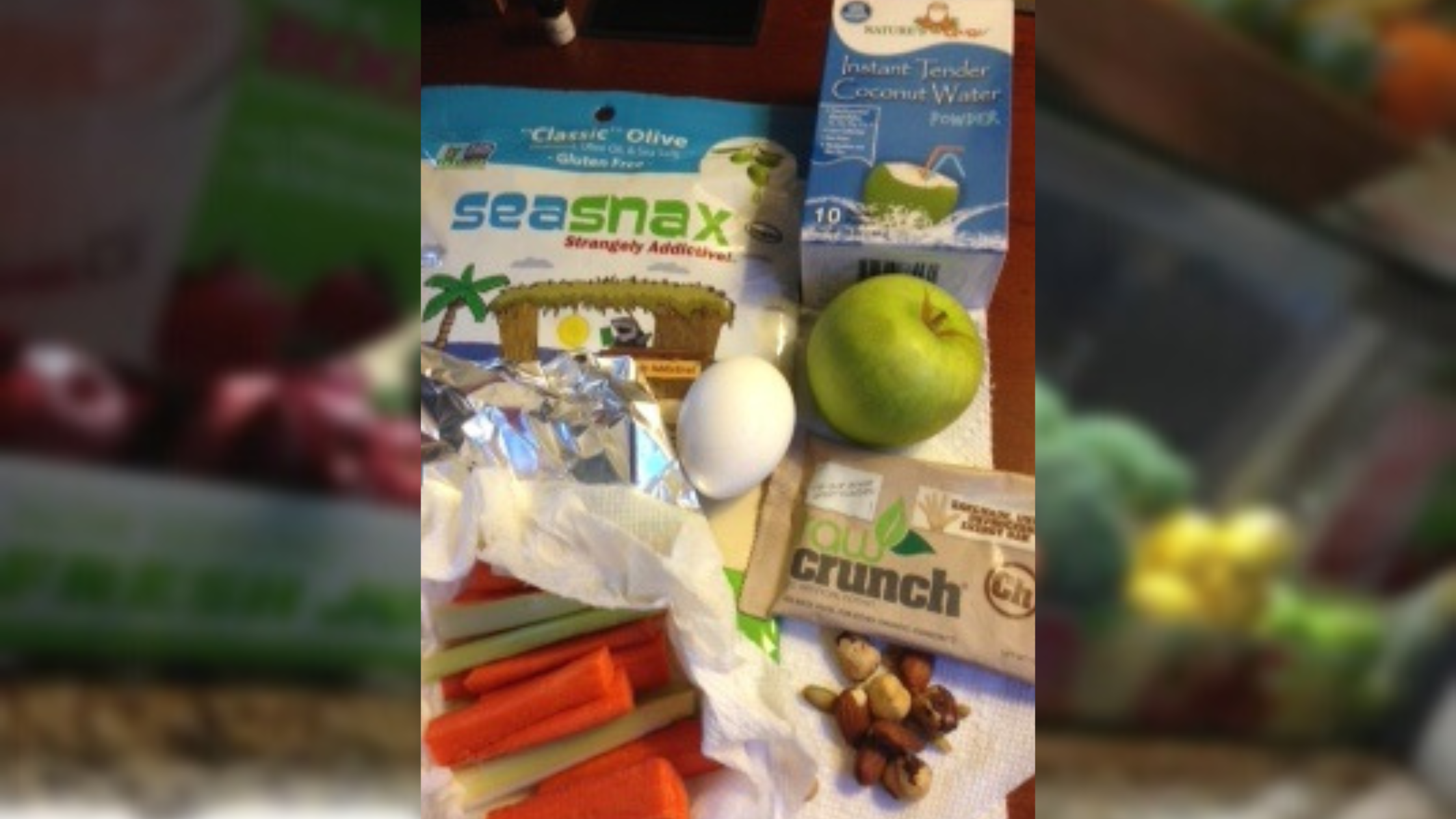
So here I am one week later, back at gate 16 heading out, this time to Las Vegas.  When I travel I look at my trip and decide how much food I'm bringing with me.  Because I'm loaded down with conference supplies this time there's not much room for while-I'm-in-town-food, but there's definitely always room for on-the-road food.  Here's what I'm taking with me this time:road snacks

Seaweed snacks are great.  I find them mildly addictive, salty, great flavor, and just a little crackle.  When I was in here last week several people saw me eating this "green stuff" and wondered what it was.  I was engaged in reading my book when first one person and then a few more asked me what I was eating.  I told them and offered them a taste.  Two people actually tried it and decided that they liked it!  That was kind of fun.

A hard boiled egg.  A great source of protein easy to eat and in it's own protective container.

Mixed nuts and seeds that I've roasted in coconut oil and seasoned with Kelly's.  This is an amazing seasoning which is made from organic garlic, hawaiian sea salt, and organic nettles.  It's mouthwateringly delicious and I use it on my snack mixes but also on salads, greens, roast meats, baked potatoes and more.

Carrot and celery sticks.  Wrapped in a damp paper towel (to prevent them from drying out) this is a great crunchy food for on the road and helps me get at least a little more veggie into my day.

A Raw Crunch Bar.  These are my new favorite snack bar.  Made from raw ingredients they've got some sweetness to them but are not overwhelmingly, cloyingly sweet like many protein bars.  They're still a treat food as far as I'm concerned but I wouldn't go so far as to put them in the candy-bar-masquerading-as-protein category.

Coconut water powder.  I know, it's kind of funny.  Coconut water, just add water.  I haven't tried this yet but plan to once I'm on the plane.  I find travel to be very dehydrating.  But you can't bring liquids on the plane with you.  And aside from plain water or tea they don't sell any liquids that I want.  I'm not a gatorade fan and certainly not interested in all the juices, power drinks and more.  So I'm going to give this a try and see if they electrolyte balance helps and how it tastes.

If you plan ahead it's possible, and less expensive, to eat healthy when you're on the go.  I'd love to hear your travel food tips, please share them below.

Shellac: A Horrifying Additive Probably In Your Halloween Candy

With Halloween just around the corner, there will be a huge assortment of candy going into goody bags and candy dishes all over the country.

Candy corn, malted milk balls, milk duds, jelly beans, chocolate covered nuts and fruits, and more are all part of the holiday festivities.  

In addition to the potential for artificial colors and chemical additives, these treats also come with a little something extra.  A “natural” ingredient that falls into the GRAS (General Recognized As Safe) category — Shellac.

In the interest of helping you to understand what’s really in your food, I wanted to explain exactly what shellac is and where it comes from.

Most of us tend the think of shellac as something found in furniture polish.  It can also be found in personal care products such as hairspray or shampoo, in cosmetics like mascara, or even in perfumes.  Shellac also has the potential to be used in dentures.

It also appears in the above-mentioned foods as well as some others.  Sometimes hidden on the label (because food manufacturers would prefer that you not know what’s in your food)  it may be referred to as “confectioner’s glaze,” “confectioner’s resin,” “candy glaze,” or even simply “natural glaze.”

So what is shellac?  It’s essentially the insect version of castoreum*.  Harvested from trees where the female lac bug lays down cocoon-like secretions, it is scraped off the trees (often along with bark and insect parts) and heated until it liquifies.  

It’s strained and then allowed to cool in thin sheets.  This is then reconstituted with denatured alcohol when manufacturers are ready to use it to give foods that shiny coating. Because these secretions, or resin, are not harvested until after the female has died (according to web research) The Vegetarian Society has determined that it is a vegetarian product.  Vegans, on the other hand, do not consider it to be an acceptable food-product because it is produced by an insect.

Other food-grade uses for shellac include the coating found on some pharmaceuticals and supplements.  A coating of shellac can be used to create the enteric coating on pills.  Another use includes adding the shine back to apples in order to replace the natural wax coating lost when the fruit is cleaned before shipping.

Although research reveals that some people may suffer from allergic dermatitis from contact with shellac, there appear to be no other highly significant health issues, but rather a strong, “ick” factor.  There is a vegetable alternative to shellac.  It is called zein and is a corn-based protein.  It is important to note that in order for this to be an acceptable solution it would need to be from organic corn as most corn is highly contaminated with GMOs.  Zein can be hard to identify on the label as it is also frequently referred to as “confectioner’s glaze.”

If eating shellac (and potential bug parts) is a concern for you I suggest you contact the manufacturer of any product with confectioner’s glaze, confectioner’s resin, candy glaze, or natural glaze on the label to identify its origin.

*I refer to this item as “beaver butt.”  It’s the anal gland secretion of beavers, used to flavor foods with vanilla, raspberry or strawberry flavoring.  However, on the label, it always appears under the term “natural flavor.”

Kitchen Tips

I recently discovered a new kitchen tip.  I’m geekily excited about this new tip.  Let me explain.

I live in Texas.  It’s insanely hot here for many months of the year.  After moving here I began to understand the concept of a “summer kitchen.”  An outdoor space where you can cook and not worry about heating up your house.  At our house that’s the barbeque grill, but I do a lot of cooking inside anyway.  So I’m always looking for ways to maximize the use of my oven.  If I’m going to roast a chicken there are other things going into that oven so I can squeeze as much in there taking advantage of the heat as possible, without having to turn on the oven any more than is truly necessary.

My newest kitchen trick?  I just discovered that you can cook eggs in your oven.  Well…yes, we all know that we can cook eggs in the oven.  But it turns out you can hard cook (can’t say boil if you’re not boiling, now can you?) eggs in the oven.  325 degrees for 30 minutes.  They come out great.  And the best part?  They peel like a charm.  For me the peeling is often a problem as I get my eggs from a friend who raises pastured eggs.  Often I get them within a day or two of laying.  And in my experience, the fresher the egg the harder it is to peel.  But it turns out when they are baked they peel perfectly.  Every. Single. Time.  I love it!

Then I started thinking about other kitchen tips and tricks and decided to share a few of my favorites here with you.

2. Baking Rice – this is a great way to make rice without having to watch the pot or be as concerned about sticking. When I make rice in the oven I have never had it stick.  1 cup of brown rice + 1 3/4 cups of boiling water or broth + a pat of butter + a pinch of salt.  When the water comes to a boil, add the other ingredients, cover, and slide into the oven to bake for 25 minutes.  Perfect every time.

3. Cutting Round Vegetables – cut a small slice off the “bottom” and you’ll have a flat surface to help keep the vegetable from rolling.  Sounds silly but it took me a long time to figure this one out.  I used to cut everything in half and then cut from there.  You get a nicer presentation and more even pieces if you cut off a small slice.

4. Ice coffee or tea – when making coffee or tea take your leftovers and freeze them in ice cube trays.  Then when you need to cool down your drink (a necessity in the summertime if you live in Texas — or any place hot) you can cool it down without diluting it.  Delicious!

4.a. This goes for wine as well.  You can freeze that last little bit to use for sauces.  [Unless you’re making vinegar, then it goes
into the vinegar pot.

5.  Back to eggs – crack eggs on the counter, not the edge of your bowl.  You’ll be less likely to get shell fragments in your dish if you do that.

6. Stacked Baking – when you need more room in your oven consider putting one baking sheet on the shelf. Then put a raised cookie cooling rack sideways across the baking sheet.  You have just created another space for another baking sheet.  I use this all the time, especially during the holidays when trying to get as much as possible into the oven.

7. Order of operations – this is so important it probably should have gone first.  Write things down.  If you’re cooking multiple things in your oven write down how long everything takes to cook, what temperature, and then figure out when things need to go in and out of the oven.  When you’re cooking for a big family dinner, for a party, or doing a once-a-month cooking spree this is very helpful to maximize your oven time.

8. Crockpots outside – in the summer you can plug your crockpot in on a screened in porch.  This way it doesn’t heat up the house but sits there cooking away until dinner time.  I do recommend that it’s in a screened space though to prevent any unwanted visitors from checking out your delicious crock.

9. Saving Jars – I save jars all the time.  They’re great for storing spices which I buy in bulk, fabulous for filling with last little bits of leftovers (rather than in plastic), and in a pinch make a great lidded containers for protein shakes.  But I don’t like all of the labels on them and peeling them is messy, messy, messy.  Until I discovered this trick.  After you’ve emptied the container rinse it (but don’t run it through the dishwasher yet).  Fill it with boiling hot water and let it sit for about 2 minutes.  For the majority of the jars I’ve ever dealt with this loosens the glue and the label peels right off.  There is a bit of glue left on the jar but this washes off pretty easily.  Then run the jar through the dishwasher and voila! Another great storage container.

10. Lemon Dust – I love to use lemon flavoring in a lot of things, for baked goods, for sauces, to sprinkle over roast chicken.  I make my own very easily.  When juicing a lemon (which I do almost every day – it’s an alkalizing addition to water) first peel the lemon.  Then cut it in half, squeeze half into your glass and save the other half for the next time.  Take the peels and lay them out on a plate allowing them to air dry.  When they are dry I collect them in a jar.  When the jar is full I run them through my food processor turning them into dust.  A pinch at a time, it’s a delicious addition.

If you have a favorite tip or trick, I’d love to know about it.  Please share in the comment section below.

photo: cyclonebill

Fabulous Real Food Breakfast Ideas

Breakfast, the best way to start your day

For many people breakfast is an afterthought. A cup of coffee and a bagel on the way out the door. Or possibly nothing at all. But it seems that conventional wisdom about breakfast being the most important meal of the day may be true.

Studies show that eating breakfast, and what you eat, impacts your blood sugar. It also tends to have an effect on food choices throughout the rest of your day. Skipping breakfast is not a good idea.  After all, when we examine the word, it means breaking the fast.  For most of us, it has been at least 10 hours if not more since we last ate.  Choosing a bowl of sugar-bomb cereal in milk, or a carbohydrate rich muffin or bagel can have a negative effect on your blood sugar; possibly leading to candy cravings later in the day. You deserve to feel well and you start by supporting your body with a real food breakfast.

What not to eat for breakfast

The cereal aisle at the grocery store is huge and cereal manufacturers would like you to believe their overprocessed, often high sugar, offerings are a healthy choice. Nothing could be further from the truth. While the milk you eat the cereal with may provide a small amount of protein, it's certainly not enough to get your metabolism going. What you are getting is an over-processed, sugary product.  While cereal is debatably better than not eating I’m here to tell you that it is not better by much.  Your body will still feel the effects metabolically and it will not be supportive of your blood sugar.

Grab-and-go fast food options are another no-no. I have never been a fan of that idea because the food is fatty, over-processed, chemically-laden and very few of these places offer a truly healthy start to your day.

Breakfast bars are another common, highly processed, item put forth as a potentially good idea. Unfortunately, these tend to be candy bars in disguise. So while the front-of-package labeling may try to convince you that this is the perfect portable option, when you read the label you'll see that they are often high in sugar and don't have very much protein.

Good rules to follow

Starting your day the right way is easy. Here are the quick tips you need to know:

  1. First and foremost it is important to start your day with breakfast.  Don’t skip.
  2. Eat protein, your body needs to refuel after the “fast” of sleeping.
  3. Get fiber, supportive to your digestive system it also helps sustain you as your blood sugar balances out with this first meal of the day.
  4. Limit sugar. Too much sugar (think cereals, syrups, muffins, etc) will cause a spike in insulin and then your body begins the blood sugar roller-coaster.
  5. Avoid simple carbohydrates (pancakes, toast, boxed cereal) your body will digest them too quickly and they are not supportive of blood sugar stability.

Break away from the box

Because of the excellent marketing job by cereal manufacturers, we often think of breakfast as coming in a box. Or there's an association with certain foods for breakfast like bagels, pancakes, or waffles. But you don’t have to have what is considered “breakfast” food for breakfast if you don’t want to. 

It's interesting how many people are fans of breakfast for dinner. But what about having dinner for breakfast instead? Of course, if that's something you're not ready for yet, below are some easy to make, tasty, and nutritious breakfast recipes to start your day.

  • A Mediterranean style breakfast would include olives and avocados which provide healthy fat, fresh fruit, hard-boiled eggs for protein, cucumber, and tomato salad with olive oil and fresh herbs. While this meal would typically come with bread or pita and either butter or labneh (a thickened yogurt cheese), you can simply skip that or serve the cheese by itself. 
  • Sauteed greens, like kale, collards, or cabbage, with mushrooms, red onion and pine nuts sauteed in coconut oil is a fabulous veggie-rich start to the day. Add protein, either lentils, a chicken breast, or a couple of eggs, and a tablespoon of sauerkraut for a delicious start to the day. 
  • Many people who don't like to eat breakfast find that smoothies can be a good way to start their day. Either by having a smoothie bowl 0r one of these superfood smoothies.
  • If you're looking for a really easy way to start your day there's always this crockpot breakfast casserole. Let your crockpot do all the work while you're sleeping. You wake up to a healthy breakfast. 
  • If you still really want to have pancakes for breakfast you can bump them up a notch with the tasty recipe below

Banana-Nut Paleo Pancakes

A delicious, protein rich pancake. Great for breakfast or as a snack
Course Breakfast
Cuisine Paleo
Servings 4 people

Ingredients
  

  • 2 bananas
  • 2 TBSP (heaping) almond butter
  • 4 large eggs
  • 1 Tbsp butter, divided

Instructions
 

  • Blend all ingredients together in a blender
  • Heat pan and grease with a little butter
  • Cook pancakes by pouring batter into pan in 1⁄4 cup amounts
  • When pancake starts to bubble flip and cook the other side
  • Serve with mashed fruit
Keyword breakfast, paleo, protein

Start with a real food breakfast, it's one of your first steps towards a healthy life

[expand title="Sources"] 

Bauer, LB, et al. A pilot study examining the effects of consuming a high-protein vs normal-protein breakfast on free-living glycemic control in overweight/obese 'breakfast skipping' adolescents. Int J Obes (Lond). 2015 Sep;39(9):1421-4.

Kobayashi, F, et al. Effect of breakfast skipping on diurnal variation of energy metabolism and blood glucose. Obes Res Clin Pract. 2014 May-Jun;8(3):e201-98.

[/expand]