All posts by Mira


About Mira

Mira Dessy is The Ingredient Guru. A holistic nutrition professional, author, and a popular public speaker, she knows that it's not just what you eat, but what's in what you eat. She is the author of The Pantry Principle: how to read the label and understand what’s really in their food. Dessy is a Board Certified Holistic Health Practitioner whose mission is to educate and empower consumers. She curates the Lean Clean Green Subscription box, the premier, organic, earth-friendly, healthy, sustainable subscription box which can be found online at https://theingredientguru.memberbox.com

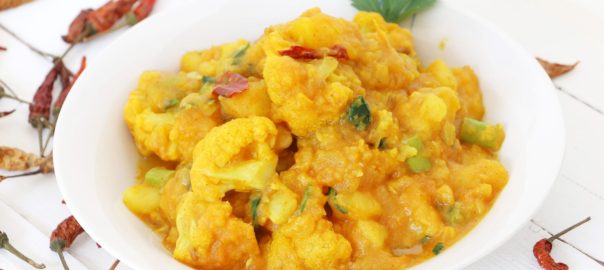
Curried Cauliflower

Health Benefits of Cauliflower


A delicious cruciferous vegetable, cauliflower is high in vitamin C, vitamin K, folate, and pantothenic acid. High in fiber, some studies indicate that it's a good choice for cardiovascular health due to its ability to bind bile acids and help regulate cholesterol levels. In addition to cardiovascular support, cauliflower is also good for the detoxification, digestive, immune, and inflammatory systems in the body. 

In my part of the world, cauliflower is in season.  I'm very fortunate to live in an area where we have an extended growing season.  While I miss certain crops that need cold weather to grow well (like rhubarb) I love the veggies that come out of my garden.


Eat it All!


Cauliflower is a fabulous white vegetable. Sometimes it comes in an orange-y yellow color or even purple. Those have a few more antioxidants, but they're all still cauliflower and absolutely delicious steamed, baked, roasted, or even be eaten raw.

The tastiness doesn't stop with the florets.  Easy and versatile to prepare in a number of different ways, one of the things that always seems to surprise people is that you can use the cauliflower green leafy bits too.  They make a great vegetable to go along with your cooked cauliflower.

In the summer I often roast the greens right along with the florets.  Drizzled with fruity olive oil, some sea salt, and fresh ground pepper they are truly fabulous. A friend of mine recently told me that he used the greens in place of kale to make cauliflower greens chips and they were delicious.  

Now that we're heading into colder weather I'm not eating raw or steamed vegetables as much, preferring different cooking methods.  At this time of year with cauliflower, I often like to curry it.  The flavors of curry go well with the cauliflower and greens.  Over a bed of rice with some protein on the side it's a very satisfying dinner.

Curried Cauliflower

A delicious, warming way to serve this versatile vegetable

Ingredients
  

  • 1 generous pinch mustard seed
  • 2 Tbsp olive oil cold pressed, extra virgin, organic preferred
  • 1 onion, minced
  • 1 clove garlic, minced
  • 1 head cauliflower, cut into florets
  • 1 cauliflower greens, cut into bite-sized pieces
  • 1 tsp curry powder
  • 1/4 cup water
  • salt to taste
  • 1/4 cup cilantro, chopped fine

Instructions
 

  • Heat olive oil in the pan
  • Add mustard seeds and cook until they just start to pop
  • Turn heat to medium
  • Add onions and saute until starting to soften
  • Add garlic and saute one minute more
  • Add curry powder and stir well
  • Add cauliflower, greens, and water
  • Reduce heat to low, cover and cook 8-10 minutes until cauliflower is tender
  • Season with salt and cilantro

Holiday Roundup

The holidays are rapidly approaching.  I often get questions about what would be a good eco-friendly/healthy gift to give.  Because I seem to be suggesting the same ideas to a lot of people I thought it would make sense to share my top ten list.  In no particular order they are:

  1.  Stainless Steel Drink Staws – These are on my wish list and I think they make a great gift for anyone.  Environmentally friendly and strong enough for travel it’s a great way to take your straw with you.
  2. Mesh Reusable Produce Bags – I have these and think they are fabulous.  Very eco-friendly, easy to use, I often get positive comments from cashiers and other shoppers.
  3. Nourishing Traditions – I own a thumb-marked, dog-eared copy of this book.  For those who are getting started with whole food nutrition this is a great beginning.  For those who have started and want to learn more it’s a wonderful resource.  Definitely one of my top book recommendations.
  4. Blendtec 40-609-BHMV 2-Quart Blender Jar – I think the Blendtec products are good ones.  For those of you who are getting into green smoothies this is a must have in order to make them.
  5.  Green Smoothies Diet – and if you’re going to start making Green Smoothies you need the book that got it all started by Robyn Openshaw.
  6. CuisinartSmart Stick Hand Blender – I have this and it is one of my all-time favorite appliances.  Quite frankly I’m not sure what I would do without it, I seem to use it almost every day.
  7. Artisan Bread in Five Minutes a Day – Store bought bread often has all sorts of chemical ingredients in it, dough conditioners, preservatives and the like.  For those who want to skip those unhealthy ingredients and learn to make bread at home this is a great place to start.
  8. 7-Quart Oval Slow Cooker, White – I love my slow cooker and use it frequently.  I’ve even use it overnight to make breakfast.
  9. Not Your Mother’s Slow Cooker Cookbook – if you’re going to give a slow cooker you probably want to throw in a cookbook to go with it.  This is one of my favorite slow-cooker cookbooks I use it quite often.

  10. To-Go Ware Reusable Bamboo Utensil Set – and for all those eaters out there…your very own, eco-friendly tableware.  I carry a set with me all the time in my purse and it has often come in handy.  Inexpensive and good to have, consider this as a stocking stuffer.
    food reconditioning

    Reconditioned Food

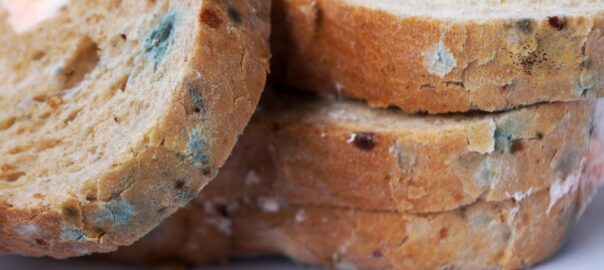
    Under the what's-in-your-food catgory...an article caught my attention at the beginning of the week about reconditioned food.  

    I'll be totally honest with you and share that this idea never ever crossed my mind.  I assumed that if food was in any way spoiled it needed to be discarded.  

    This article, however, made it abundantly clear that this is not the case.  The fact that the company in question only received a "sharp censure" from the FDA is truly wrong.

    In Home Ec (as we used to call it) I remember being taught in the sixth grade that soft foods with any hint of mold, discoloration, or odor should be immediately destroyed as bacteria travelled quickly through them, whereas in hard foods they are more localized.  I don't know about you but in my book applesauce is a soft food.

    FDA Guidelines vs. Common Sense

    The FDA has a manual that talks about food reconditioning.  But just because you can doesn't mean you should.  With the increasing rates of food recalls due to bacterial infections, poor sanitary conditions and massive outbreaks of illness why is our government willing to allow corporations to knowingly serve bad food for profit?  Silly question...we all know the answer is money.

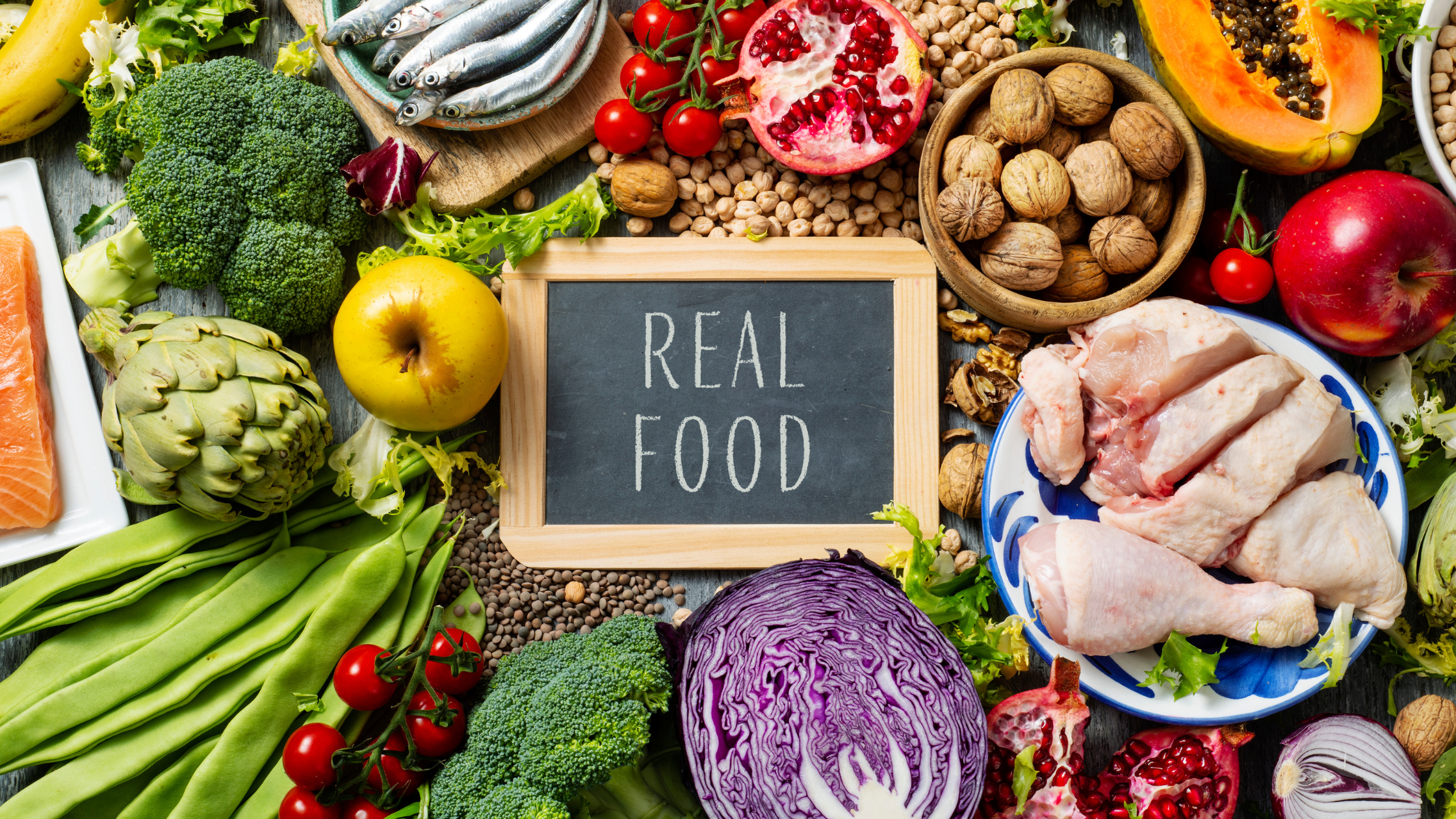
    Eat Real Foodreal food

    As a consumer the answer boils down to what is one of my top catch phrases...eat real food.  Do I buy some packaged foods, yes I do.  But I try to buy as little as possible, purchasing most of our groceries as whole food and then making the items myself.   We have already severely reduced our canned goods (most of what we have on hand is in our emergency preparedness closet), and are weaning ourselves off of most snack foods.  This last is not so popular with our teens but we certainly don't have nearly as much as we used to.  I also get more and more products from local sources that I trust.

    Taking Action

    The more I learn, the more I am motivated to make things myself.  For example learning that "an average of 225 insect fragments or 4.5 rodent hairs per 8 ounces of macaroni or noodle products." is okay is motivating me to get out the pasta maker again.  I still, and always will, throw out whatever is contaminated in my house.  When we have had a moth infestation everything they got into was destroyed. That's why my dry goods are stored in glass or plastic, to keep them out.  Hard food products can be washed, and cleaned so although I don't like it I understand how it can be allowed in a case like the one in Illinois.  But it's motivated me to double check the pantry seals on things.

    The FDA has set up a Reportable Food Registry which is a first step.  But I believe they need to know that this practice is unacceptable.  What are your thoughts on the matter?

    Do You Know What’s In Your Food?

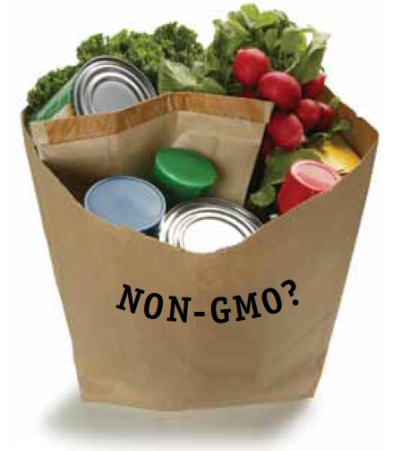
    image from: gmo-journal.com

    I’ve been writing more about Genetically Modified (GM – also referred to as GMO or GE) foods lately.  Part of it is because the problem seems to be getting worse.  I am concerned that there is still no labeling required in this country.  According to this article from the San Francisco Chronicle 93 percent of Americans polled want their food labeled.  They want the right to know.  But it’s still not happening.  Why?  Because it’s bad for business.

    I’m reminded of the fight over Recombinant Bovine Growth Hormone (rBGH) when the dairy industry fought like mad to stop farmers from labeling their milk as free of this harmful additive hormone which is not healthy for cows or humans.  The farmers prevailed in that they were allowed to label their products as being rBGH-free but were forced to put a statement on their product that there was no difference between dairy from cows treated with or without rBGH.  Science has since proved them wrong and we now know that rBGH increases Insulin Growth Factor 1 (IGF-1), decreases nutrition in the milk, increases mastitis in the cows (requiring antibiotics which we ingest because they don’t stop milking the cows while they are giving them antibiotics), and decreased fertility in cows.  That’s obviously a problem for the cows, if they can’t be bred, or “freshened” in dairy parlance, they can’t be milked and therefore are no longer useful.  If  rBGH causes infertility in cows (apparently studies have showed a reduction of as much as 40%), what does it do to the people who drink the milk?

    We are the only industrialized nation, to my knowledge, that still allows this harmful chemical in our food.  Europe, Canada, Australia, and Japan, among others, have all banned it’s use.  Purchasing dairy products labeled rBGH-free or organic is the only way to avoid this chemical.

    But with GM foods it’s a completely different thing.  Yes, purchasing organic is one way to avoid it, but no GM foods are labeled, not everything is available organic, and it’s not financially feasible to purchase everything organic (at least not in our house).  You would be amazed at how far GM products have crept into our food supply.  We deserve the right to know what is in our food.  I believe that corporate interests and profits should not supersede the right to choose clean food.

    I also wonder what it says when the employees of the company that makes most of the GM foods, Monsanto, won’t eat it, demanding GM free foods in their cafeteria?  If they won’t eat it why should you?

    California is, potentially, about to become the first state to require mandatory GM labeling.  With 80 percent of those polled in California supporting this initiative I am hopeful that they will win.  Striking a blow against these modified foods and their manufacturers.  I’m also hopeful that this will be the first of a steamroller effect across the country.

    To stay informed about this issue you can follow along on the blog as well as at Organic Consumers.

    Pizza As A Vegetable

    My mind is reeling.  Last week Congress declared pizza a vegetable, again.  Having just returned home from the Wise Traditions conference of the Weston A. Price Foundation (WAPF), where the focus was on whole, nourishing, traditional foods, to a this kind of absurdity is mind boggling.

    I should not be surprised, this has been policy up until now but I confess I’m appalled to think that anyone in our government is stupid enough to believe that the tomato paste on a slice of pizza in any way counts as a serving of vegetables.  It’s barely got any nutrition at all and comes wrapped in highly processed, chemically conditioned dough, covered with cheese that is no doubt loaded with rBST and antibiotics and possibly some preservative-laden pepperoni.  As the video above states, we, and our children, are having their taste buds conditioned to prefer unhealthy foods.

    While this is nothing new, it is certainly getting a lot of press.  I hope it’s also getting a lot of attention from a lot of parents.  This is not what you want to feed your kids to have them grow up strong and healthy.  I encourage everyone who cares about these issues to get involved:

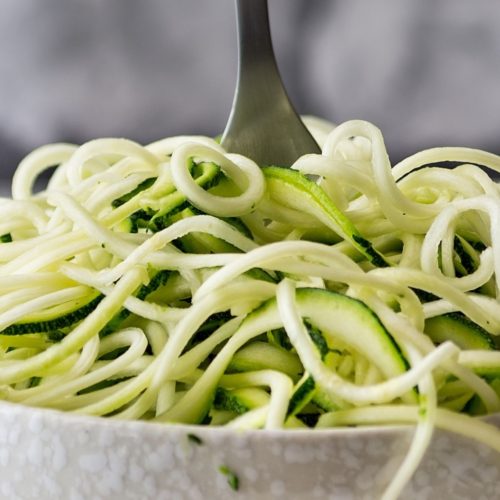
    Zoodles And Sausage

    It's zucchini season, that means LOTS of zucchini and a distinct need for more recipes. And while zucchini bread is really delicious, there's only so much of that that you can eat in one season.

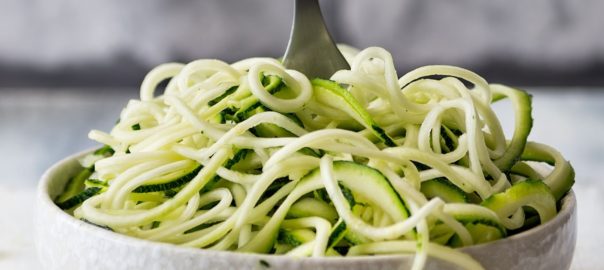
    Below is a dinner that I made recently using zucchini noodles or zoodles. One of the great things about this dish, aside from using up more zucchini, is that it's quick, easy, and very tasty. It's an assembly-style dish. You cook each of the layers individually and when you get to the last layer dinner is done.  Most of the time is spent in prep-work, the actual cooking doesn't take too long.  I do keep the dish in the oven in between layers (set to 250 degrees) to make sure everything stays warm.


    Making Zoodles


    These days with so many people eating gluten-free that means no pasta. The challenge is that there are so many delicious recipes out there that use noodles as a base.  My favorite solution is to make zoodles. You can even use the oversize-on-their-way-to-baseball-bat sized zucchini.  Of course, you can use the smaller, more tender ones too, really, in this case, any zucchini will do.

    Previously the best way to make zoodles was to use a vegetable peeler, carefully peeling each side. This meant you had a leftover core with lots of seeds in it.  Sure you could cut up the core and throw it into your recipes, but somehow it always seemed to get just a little gloopy. Nowadays some genius has invented a zoodler that does it for you. Not only can you make noodles from zucchini, using this amazing device you can "zoodle" a whole bunch of different vegetables like carrots, beets, and more.  It's a fabulous way to add more veggies to your diet.  

    So grab your zoodler and let's get going...

    Zoodles And Sausage

    Ingredients
      

    • 1 package pre-cooked, chicken cilantro sausage
    • 1-2 zucchini, turned into zoodles
    • 3 tablespoons olive oil
    • 1 large sweet onion, diced
    • 2 cloves garlic, minced
    • 1 large tomato, diced
    • 1 green pepper, diced
    • 1 tablespoon tomato paste
    • 1/2 cup minced cilantro
    • sea salt and pepper to taste

    Instructions
     

    • Add 2 tablespoons olive oil to the skillet
    • Add 1/2 of the diced onion and the garlic
    • When the onion starts to soften turn down the heat slightly and add the zucchini
    • Toss and cook the zucchini for approximately 5 minutes until it is coated in oil and warmed through
    • Place zucchini and onions into a serving dish
    • Add 1 tablespoon olive oil to the skillet
    • Add the rest of the onion
    • When onion starts to soften add bell pepper, tomato, and tomato paste
    • Saute until bell pepper starts to soften
    • Add salt and pepper to taste
    • Spoon mixture over zucchini noodles
    • Place sausage in the skillet and heat until browned on the outside
    • Remove sausage from skillet and slice into bite sized pieces
    • Sprinkle sausage pieces on top of dish
    • Garnish with cilantro
    Notes

    If necessary you can make this dish ahead.  Simply reheat in a 300 F degree oven for about 20 minutes until all of the ingredients are warmed through

    Weston A. Price Foundation

    I’m so excited. In a frenzy of last-minute packing and organizing, I’m off to the Weston A. Price Foundation Conference.  I’ve been a member for several years but this is the first time I’ve been able to go to one of their conferences.  Looking forward to learning an enormous amount of information from people whose work I have been following for some time.

    Leaving the family behind I’m off to immerse myself in the world of traditional foods, fermentation, and holistic health.  I can’t wait to come back and start sharing all the wonderful information I’ve learned.

    Colorfree

    When I work with people I sometimes recommend they take certain supplements.  If they have a vitamin or mineral deficiency, shown through testing, or if they have digestive issues, there are supplements that can help with that.  When I suggest supplements I almost always suggest professional grade because they are a more pure product and do not have all of the chemicals and most of the fillers that come in over-the-counter supplements.  This is especially important for those who need to follow a nutritional plan that requires them to avoid dairy, wheat, gluten, soy, or corn.

    Recently one of my clients asked why all of the supplements I suggest have no colors.  She pointed out that it is easier for her to know which is which when they are colored.

    While the colors may make identification easier it actually makes the supplements less healthy for you.  There are a number of studies that show a negative effect from artificial colors on children with ADHD, autism, and other neurobiological illnesses.  According to the Center for Science in the Public Interest (CSPI) there is also evidence showing that many people have food sensitivities to artificial color and that these artificial colors are carcinogenic in animal studies.

    When I advise people to take artificial colors out of their diet the object is to remove all artificial colors.  This includes those substances that are not food but which are ingested in some way such as toothpaste, mouthwash, and, yes, even supplements.

    The supplements can be identified by the label, and it’s a healthier choice.  I say choose the healthier option.

    Gluten Free Lemon Muffins

    I needed to make something to bring to an event that I was attending recently. Knowing that the hostess was sensitive to gluten and dairy I wanted to make sure that I made something that fit her nutritional plan.

    Casting around for ideas I spied a pile of fresh Meyer lemons that I had recently been gifted with in the fruit bowl.  These are my absolute favorite lemons. Immensely fragrant they add fabulous lemon-y flavor. I have a small tree that is now making 6-8 lemons a year.  I am eagerly awaiting the day that I get bags full of lemons like my friends.  Fortunately, those same friends are very generous and share.

    I had thought about making a lemon quick bread but decided to make muffins instead. The best thing about muffins is that they are so easy to throw together. In just a few minutes you can have all of the ingredients mixed together and into the pan.  Because muffins are so small they bake rather quickly. 

    I love lemon-flavored baked goods. Quick breads, scones, muffins, they are all so tasty when they have the added brightness of lemon added to them.  I'm not sure why lemon baked goods don't often make an appearance, more people seem to go for chocolate, or other flavors.  Sometimes sticking with a simple flavor is the best, imho.

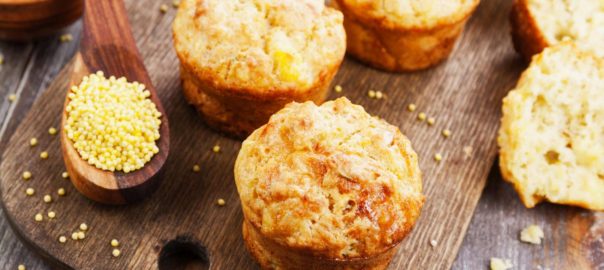
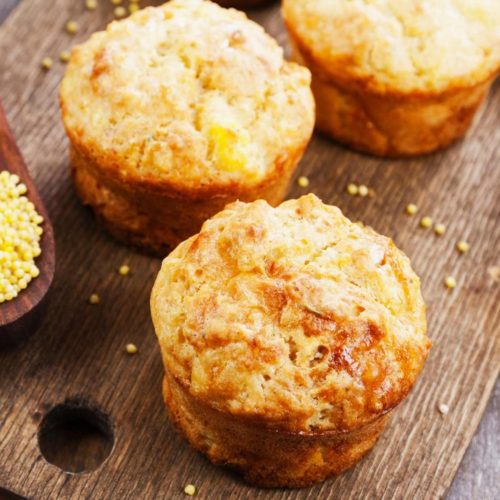
    I wanted my muffins to have a little crunch to them so I decided to add some millet which would give a slight pop.  I've used millet before in other baked goods and like the crunch and texture it adds.  

    I often play with a recipe multiple times before it's ready for prime time, but this one seemed to come together really well so I'm sharing it as is.  I made it in mini-muffin tins and got three dozen.  They were well received at the event, all of them were eaten and I went home with crumbs.  This is definitely a recipe that's a keeper.  Something not-too-sweet but definitely tasty, perfect with a cup of tea to brighten up a cold, grey, winter morning.

    Lemon Millet Muffins

    Ingredients
      

    • 1/2 cup coconut oil
    • 1 cup sucanat
    • 1/2 cup evaporated cane juice crystals
    • 1 lemon
    • 2 eggs
    • 1/2 cup almond milk, approximately
    • 1 cup gluten free flour mix (I used a combination of oat, rice, buckwheat, tapioca)
    • 1/4 cup fresh ground flax seeds
    • 1/4 cup (heaping) millet seeds
    • 1 teaspoon baking soda
    • 1/2 teaspoon sea salt

    Instructions
     

    • Preheat oven to 350 F
    • Grease three mini-muffin pans (or one regular muffin pan)
    • Zest the lemon
    • Juice the lemon and put juice into a measuring cup
    • Add almond milk until there is 2/3 cup liquid
    • Beat together coconut oil and sugars until fully combined
    • Add eggs, one at a time until well mixed
    • Add lemon zest, baking soda, and the salt
    • Alternate adding flour and curdled milk, making sure they are well mixed
    • Spoon by tablespoonfuls into muffin cups
    • Bake 15 minutes
    • Let cool 2 minutes in the pan
    • Finish cooling on a wire rack

    Pressure Cooker Curried Rice and Beans

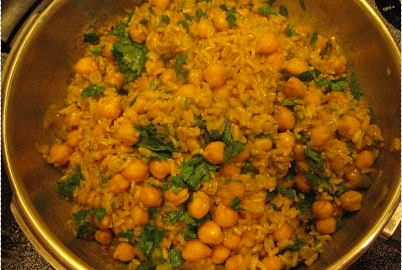
    Pressure Cooker Curried Chickpeas And Rice

    Afraid of the pressure cooker

    I have a confession to make.  I’ve always been a little afraid of pressure cookers.  When I was growing up my mother didn’t use one.  By the time I was exposed to them as a young adult, the concept seemed a little scary.

    When I talked to my mother about it she told me that her mother had used a pressure cooker when she was growing up.  So I asked my mother why she never used one.  She replied by sharing a story about my Nana, my father’s mother, involving a pressure cooker.  

    Apparently, in the middle of cooking dinner with the pressure cooker, something went horribly wrong. There was some kind of an explosion and the lid blew off.  There was so much force involved that the lid embedded itself in the ceiling of Nana’s kitchen.  

    One can only imagine the horror and disbelief … and what the kitchen must have looked like.  Mom wasn’t exactly sure how Nana managed to get the lid out of the ceiling.  That was the end of pressure cooking as far as Nana was concerned. Needless to say that episode was enough to convince my mother that she did not want to use a pressure cooker.  Ever.

    Learning to use a pressure cooker

     Not having grown up around one neither did I.  Until now. Fast forward many years….my friend Emily at The Kindred Kitchen invited me over for dinner.  She made an amazing dinner in her pressure cooker.  She was so confident, so calm, and it was all so delicious!  I was hooked and wound up buying one of my own.

    I’ve been experimenting with it and have discovered that I absolutely love it; it is rapidly becoming one of my favorite kitchen appliances.  Meats and vegetables are delicious, colorful, flavorful, and oh so tender.  The real prize-winning use, however, is for rice and beans, of all different flavor profiles.  It is so quick, so easy, and it comes out just right.  I absolutely love my pressure cooker and owe Emily a debt of gratitude for helping me to change my mind.  This recipe for curried chickpeas and rice is based on one that she shared with me.

    Pressure Cooker Curried Rice and Beans
    Print
    Ingredients
    1. 1 cup chickpeas, picked over and rinsed
    2. 1 cup brown rice
    3. 1 medium onion, diced
    4. 2 cloves garlic, minced
    5. 2 tablespoons curry powder
    6. 2 cups vegetable broth
    7. sea salt and fresh ground pepper to taste
    8. 1/2 cup chopped cilantro

    Instructions
    1. In the morning set the chickpeas to soak in a pot of hot water
    In the evening assemble your meal
    1. Drain and rinse the chickpeas
    2. Heat the olive oil in the pressure cooker
    3. Saute the onions and garlic for a few minutes until soft
    4. Add the curry powder and stir for a moment
    5. Add the rice and stir until the rice is coated
    6. Add the broth, chickpeas, salt and pepper
    7. Lock the lid in place and bring to high pressure
    8. Reduce the heat but still maintain high pressure
    9. Cook for 9 minutes and remove from heat
    10. Let pressure drop naturally for another 5 minutes
    11. Quick release and then remove the lid
    12. Stir in the chopped cilantro and serve
    The Ingredient Guru, Mira Dessy https://theingredientguru.com/

    New and improved pressure cooking

    Fast forward again. After I became comfortable with using a pressure cooker a lovely new device came on the market.  The Instant Pot! I love my instant pot and it’s pressure cooking capabilities. This dish works just as well in the instant pot and only needs a few modifications.

    Instant Pot Curried Chickpeas and Rice
    Print
    Ingredients
    1. 1 cup chickpeas, picked over and rinsed
    2. 3 cups of water
    3. 1 cup brown rice
    4. 1 medium onion, diced
    5. 2 cloves garlic, minced
    6. 2 tablespoons curry powder
    7. 2 cups vegetable broth
    8. sea salt and fresh ground pepper to taste
    9. 1/2 cup chopped cilantro
    Instructions
    1. Add chickpeas and 3 cups of water to IP
    2. Cook for 2 minutes
    3. Natural release for 10 minutes, then quick release
    4. Rinse well and set aside
    5. Heat the olive oil in the IP
    6. Saute the onions and garlic for a few minutes until soft
    7. Add the curry powder and stir for a moment
    8. Add the rice and stir until the rice is coated
    9. Add the broth, chickpeas, salt and pepper
    10. Lock the lid in place and bring to high pressure for 25 minutes
    11. Natural release for 15 minutes, then quick release
    12. Stir in the chopped cilantro and serve
    The Ingredient Guru, Mira Dessy https://theingredientguru.com/

    If you enjoyed this article, please join my community to receive more information and special offers with my free newsletter, Food News You Can Use  (I do the research so you don’t have to). This concise, informative newsletter gives you updates you need to know about the ingredients for living a healthy life.