All posts by Mira


About Mira

Mira Dessy is The Ingredient Guru. A holistic nutrition professional, author, and a popular public speaker, she knows that it's not just what you eat, but what's in what you eat. She is the author of The Pantry Principle: how to read the label and understand what’s really in their food. Dessy is a Board Certified Holistic Health Practitioner whose mission is to educate and empower consumers. She curates the Lean Clean Green Subscription box, the premier, organic, earth-friendly, healthy, sustainable subscription box which can be found online at https://theingredientguru.memberbox.com

Twitter Party #holisticmoms

It was a busy night last night.  Trudy Scott, Certified Nutritionist, author of The Antianxiety Food Solution, and the founder of everywomanovr29.com was the expert online answering questions about food and mood.  The twitter party was sponsored by the Holistic Moms Network.

The chat started with a discussion of whether or not folks noticed if there were certain foods that made them anxious or affected their mood.  Answers were fairly consistent across the board with responses including sugar, caffeine, gluten, McDonalds, and processed food.  Sugar was by far the biggest offender with many participants discussing how difficult it can be to break the sugar habit.  Trudy pointed out that not only does sugar destabilize our blood sugar levels, it also depletes us of vital nutrients such as zinc and magnesium and also also shared, High Candida (yeast) in the body will make you crave sugar…For Candida, best to go on anti-candida diet, and add B1, B2, Biotin, yeast free vitamins to diet. Getting off that sugar roller-coaster is very important for good mood and health.

The close second in the food/mood correlation seemed to be gluten and/or grains.  A number of people mentioned that when they went gluten-free they felt so much better.  There was some discussion of why gluten is becoming such a prevalent food sensitivity these days.  Part of the answer is that we eat far too much of it, it’s not sprouted, and the products that are made from it are of poor quality nutritionally.  Another part of the answer may be that modern wheat has been bred to be higher in gluten (since this is what makes baked good so soft and fluffy) and so our tolerance is lower.

This thread was quickly followed by a query about what to eat to balance your brain chemistry.  Trudy’s response? eat real food, no sugar & indiv amino acids.  From there the talk turned to discussion about zinc which is important for nerve function, cell metabolism, neurotransmitter production, blood sugar stability and so much more.  Turns out it also helps to reduce anxiety.  Zinc can be found in beef (grass fed is best), calf liver, venison, spinach, shitake mushrooms, and pumpkin seeds.  It’s very important for pregnant women and children to get enough zinc with the addendum that zinc is a trace mineral and we do not need massive doses of it.

From there the talk shifted into the following topics:

  • chocolate – dark chocolate is good for you in moderation – and yes, if you crave chocolate there is a chance you may be low in magnesium (find magnesium in pumpkin seeds, spinach, black beans, and sesame seeds)
  • healthy fats – choose coconut oil, ghee, avocados, flax seed oil, and olive oil.  Avoid canola – it’s almost always GMO 
  • sweeteners – choose lower process sweeteners such as sucanat, evaporated cane juice crystals, honey, molasses, maple syrup and avoid agave nectar which is high in fructose (this puts a burden on your liver to process it and also raises triglycerides and can contribute to diabetes and heart disease)
  • sea vegetables – dulse seemed to be a clear favorite, with one person even adding it to mac and cheese (I’m going to try this tip because I love dulse), nori and kelp sprinkles were also mentioned. Adding sea vegetables to your diet is a good choice, they are a great source of iodine, iron, and can be cholesterol-reducing.
  • sleep/dreaming – turns out that B6 is important for dreaming and seratonin production.  Trudy shared that it’s important to take it with B complex as B vitamins work best together. 
  • Tea – lots of people on the list love tea, chamomile, linden, roiboos, all good calming drinks to help you destress.
Trudy shared some other awesome tidbits about food and mood.  If you are interested in learning more you can purchase her book online.  Want to work with her?  Trudy has some great programs and even offers a free 15 minute consultation.  Want to find other holistic families for support, information and friendship?  Consider joining the Holistic Moms Network.

disclosure: cmp.ly/4

Ulcerative Colitis On The Rise

My brain is reeling.  The following headline made me shudder. “The Ulcerative Colitis Drug Market Will Increase from $1.7 Billion in 2010 to $3 Billion in 2020 as New Agents Will Offer Additional Lines of Therapy for Moderate to Severe Disease.”  This is only the latest of an increasing number of articles that have come through on my news feed recently.

Sidestepping slightly I will share that I have a personal, vested interest in articles like this.  You see I was diagnosed with UC almost seven years ago.  This was after over 12 years of misdiagnosis with IBS.  Before I learned what was wrong with my digestive system I struggled with some of the less pleasant aspects of UC.  And frequently wondered what was wrong.  Fortunately for me I found answers, especially answers that worked for me, for my bio-individual body.  I also discovered that I’m one of the lucky ones.  I have a mild case.  Mild enough that aside from an occasional flare-up I am able to control my UC through diet.  I have friends who have had to undergo surgery to have large sections of their colon removed.

Because I don’t take medication on a daily basis it’s easy to get cocky sometimes when things are going well.  And the holidays are especially tough with all of the temptations that surround you.  But when I stray from my nutritional plan and routine I know it; my body makes it very clear that I’ve not been paying attention.  Stress is also a huge trigger and I work hard at living a more mindful life, focusing on what’s important to me and how I handle stress.  I like to think that over time I’ve gotten better at it but it is an ongoing process.

So why does that headline above bother me so much (and why am I sharing all of this personal information)?  It bothers me because if you read the article that accompanies it you’ll see that it almost crows about the growth in the market and the need for pharmaceuticals.  Don’t get me wrong I am certainly not advocating that someone who needs pharmaceutical intervention for the UC shouldn’t take it, quite the opposite.  However, phrases such as “promising novel agents” and ” sales of maintenance therapies in 2010 accounted for nearly three-quarters of major-market ulcerative colitis sales” and “will contribute to an increase in sales of maintenance therapies as well as an increase in sales of acute therapies” all point toward a burgeoning market that is being driven toward medication with no effort to look at the underlying causes.  More than a billion dollars in growth over ten years is a powerful market force.

I’m frustrated because in my own journey toward health, and that of clients that I work with, our concerns and questions are often disregarded; we are simply advised to take medication.  My first GI doctor was skeptical when I told him I wanted to change my diet.  But he didn’t stop me and I was able to avoid the need for daily meds.  While I’m certainly not cured, I’m definitely better.  And many people I know with UC lead much more manageable lives (some with and some without medication) by paying attention to their diet and whatever their personal triggers may be (stress being one of the biggest).

If we are experiencing huge growth in the market for this type of a disorder isn’t it worthwhile to look into the root cause?  Sadly I believe the answer is no because then the pharmaceutical industry wouldn’t be able to sell anything, or as much of anything as they are obviously planning on doing now.  Again, I want to make it perfectly clear that I would never, under any circumstances, tell someone to stop taking their medication.  I do, however, question why our current system does not seek answers by looking at the whole picture.  Why the system simply accepts that this, sometimes debilitating, condition is growing by such large numbers.  Shouldn’t we be helping people learn how to better meet the needs of their body rather than throwing medication at the “high unmet need?”  Shouldn’t we be figuring out why so very many people are starting to come down with this disease?

Saving Calories

The New Year has come and gone.  The festivities are over, the days are getting longer and we’re one week into what for many people is the annual self torture of resolutions.  As I’ve mentioned before I really don’t like the word resolution.  It seems hard and finite and often is a rather amorphous concept.  “I resolve to lose 10 pounds”  “I resolve to go to the gym more often”  and other statements.  There’s no strategy of how it’s going to happen, no defined timeline and if you don’t succeed you feel like you’ve failed.

It may seems like splitting hairs but I prefer the term goal.  The goal outlines what you hope to achieve.  And if you don’t quite get there that doesn’t mean you have to give up in dejected defeat.

Because so many people struggle with their weight at this time of year that tends to be one of the more common health goals I hear.  I’d like to start by sharing that weight loss is more than just eating less.  It’s about changing habits, moving more, changing mindsets and, yes, eating less.  But there are ingrained habit that need to change.

Spend some time focusing on mindful eating (chew, be grateful for your food, enjoy your food, take time with your meal, and chew [yes I repeated that one, it’s important and many of use don’t chew enough]).   Mindful eating helps us to better digest our food in so many ways from making sure that we are breaking down the food, getting adequate salivary enzymes, and also having our body in a calm focused place to be able to digest.  Liz Lipski, the Digestive Wellness guru, tells us that we often fuel our bodies the way we fuel our cars….stop, gas, go.  She’s right.  The next time you sit down to a meal stop a moment and recognize how you are eating.  Most of you will discover that you are rushing through your meal and if you take a few extra moments you will feel better and calmer.

Move more.  If you have a car and it just sits in the driveway and never goes anywhere when you eventually need it the tires are cracked and dry, the engine fluids are gummy and don’t lubricate well and the car may not function the way it is supposed to.  That car is a metaphor for our bodies.  Use them and they stay active and functioning.  This is nothing you don’t already know but sometimes we just need a reminder.  Park a little further away at the grocery store.  Take the stairs instead of the elevator.  Sign up for a physical movement class or find a free one on DVD or the internet.  You’ll feel better and your body will be burning calories which can help with weight management.

vegetable broth | photo: Takeaway

I also like give you a few ways to make small measurable food changes that can add up, helping you to shed pounds:

  1. Consider changing your plate size.  We often cue in to the size of the plate to help us determine how much food to put on it.  If you use a smaller plate you often take less food but find yourself just as satisfied.  
  2. Consider changing your plate altogether.  Slimware is a company that sells some really attractive plates that have designs on them that are portion controlled.  This visual cue can help you learn how to choose portion sizes over serving sizes.
  3. Choose salsa instead of queso.  That cheesy dip or melted cheese topping adds up to a lot of calories and a lot of fat.  Substituting salsa for some, or all, of the cheese not only saves calories it adds delicious flavor.  A baked potato with black beans and salsa is one of my favorites and really needs no cheese or sour cream.
  4. Looking for something crunchy?  Forego the corn chips and snack mix.  Try air popped popcorn instead.  With a tiny bit of melted butter or coconut oil, a hint of salt and some spices you’ve got a great crunchy snack that doesn’t have nearly the same caloric count.  Be sure to choose organic popcorn to avoid any potential GM contamination.
  5. Add a cup of soup to your dinnertime routine.  A delicious strong stock with veggies and herbs or even a tomato based veggie soup is a great way to get your digestion going but also to help fill your tummy.   Barbara Rolls, a Ph.D. at Penn State shares that  “Eating a 100-calorie bowl of broth-based soup…at the start of a meal takes the edge off your hunger. Even with the extra course … you are likely to eat fewer total calories during the meal.”
  6. Remember the Three Polite Bite Rule.  If you are going to have dessert have just three polite bites.  You’ll get enough to satisfy that sweet tooth without overdoing the sugar intake.
Step-by-step small meaningful changes can add up to a healthier you.
Interested in making more changes?  Anyone who leaves a comment and their email address on the blog will receive a free copy of my “Eating Out – Eating Healthy” ebook.

Disclaimer: cmp.ly/5

Trans-fat in fast food

Are Trans Fats Shrinking Your Brain?

I hear about this scenario a lot. Not just from families, from anyone who has a hectic, modern, over-scheduled life.  You’re out and about, after a soccer game, running errands, running late after a meeting, and you suddenly realize that you’re hungry. So you decide to stop for a quick bite to eat.  More often than not it’s probably fast food.  While we all know fast food isn’t really good for you, we sometimes for get how often we’re choosing to eat it. Or we think, “Well, I’m in a hurry so it’s okay this one time.”  Truthfully the fast food run is more frequent than most people realize. Especially if they’re not taking the time to journal what and when they eat.  

Trans-fats and brain health

Aside from the poor quality meat, high levels of fat and sodium, and high-calorie intake, it looks like there’s even more reason to avoid that drive-through window. A recent study run by Dr. Gene L. Bowman, an assistant professor of neurology at the Layton Aging and Alzheimer’s Disease Center at the Oregon Health & Science University, found that people with high levels of trans-fats in their blood had lower cognitive performance scores as well as lower brain volume.  While the study was admittedly small and homogenous (100, elderly Caucasians living in Oregon), Dr. Bowman notes that the results of the testing were so clear that this particular pattern should not be ignored.  Testing looked at nutrient levels in the body, cognitive function and included MRI studies.  What does this mean?  In plain English, there was a positive correlation between higher levels of trans-fats and lower brain function and smaller brain size.  That’s a scary thought.

Although trans fats have been removed from the Generally Recognized As Safe (GRAS) list they have not been banned for use in food products. Although at this point just about everyone knows that trans-fats are bad for our heart you’d think that would be enough to convince people to avoid them.  Sadly, that is not the case as evidenced by how many products still contain trans fats.  And with this new research it now it looks like trans fats are also bad for your brain.  This provides even more reason to avoid them.  

Avoiding trans fats 

It’s difficult to identify trans fats in fast food, and truthfully most people don’t take the time to look it up on those posted-near-the-bathroom menu charts.  The easiest suggestion is to assume that if it comes from a fast food restaurant and it’s fried there is a high probability that it contains trans fats. It is important to note that although many fast food restaurants are proudly touting no trans-fats in their food.  

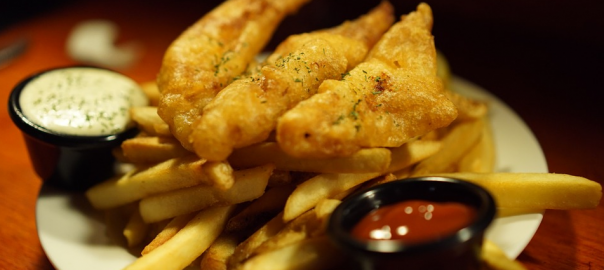
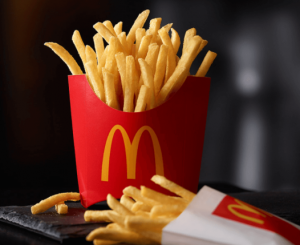
french friesFor example, a large french fries from McDonald’s is technically one serving (so is a small french fries by the way).  That large fries contains 510 calories and 24 grams of fat. That’s 37% of the daily value of fat calories for someone who eats a 2,000 calorie a day diet.

According to the McDonald’s website, 220 of those calories are from fat, 3.5 grams are saturated fats, and there are 0 grams of trans fat.

This is a lie. We know this because of the ingredients list:

Potatoes, Vegetable Oil (Canola Oil, Corn Oil, Soybean Oil, Hydrogenated Soybean Oil, Natural Beef Flavor [Wheat and Milk Derivatives]*), Dextrose, Sodium Acid Pyrophosphate (Maintain Color), Salt. *Natural beef flavor contains hydrolyzed wheat and hydrolyzed milk as starting ingredients.

That hydrogenated oil is a trans fat. So how is McDonald’s allowed to claim 0 trans fats in this single serving of large french fries? This is due to a Federal ruling that allows them to claim no trans fats if there is less than .05 per serving. But remember the changing serving size.  A small is one, a medium is one, and a large is one.  That seems like pretty bad math to me. Because it’s considered one serving they can say 0 grams of trans fats, but it all adds up pretty quickly.

Trans fats at the grocery store 

Fast food is not, alas, the only place that one finds trans-fats.  There are plenty of items on the grocery store shelf that contains them as well.  Look for the words hydrogenated, partially-hydrogenated, olestra, and mono- and di-glycerides. These indicate the presence of trans fats in that food item.  These trans fats are created; they are not from natural sources. There is a small amount of trans fats naturally occurring in beef, lamb, and dairy. But in the case of hydrogenated ingredients, it comes from forcing hydrogen into liquid fats to make them solid at room temperature.
 
So why are trans fats bad for you? For one they raise the level of LDL or “bad” cholesterol in your system.    Unfortunately, they also lower the level of HDL or “good” cholesterol.  Not a good combination.  And as we’ve learned above, avoiding them is important not only for your heart but for your brain as well.
 

Avoiding fast food snacking

So what should you do when you are out and about and need a snack?  There are several options available: 
  1. Have a protein bar available – I almost always have a healthy protein bar in my glove box or purse for an emergency snack.  Look for bars that don’t have a high sugar content and provide balanced proteins and fat.
  2. Stop at a grocery store and buy an apple and some raw nuts.  It’s a delicious and healthy snack.  Often it costs far less than that drive-through meal.  The trick is not to get side-tracked in the grocery store and start to shop for other things.  Treat it like a fast food run, you can always do your grocery shopping later.  
  3. Plan ahead.  If you know you are going to be out and about you can plan ahead and bring food with you.  Using a handy snack container, such as a Laptop Lunchbox, you can pack a healthy snack and skip the trans-fats.
 

Joy Bauer’s Food Cures


Joy Bauer’s Food Cures has been revised and updated; I was fortunate enough to have a copy recently come across my desk.

As those of you reading my blog know, I am a huge proponent of food and it’s ability to help support a healthy body.  We are what we eat; eating whole food and practicing wholesome nutrition goes a long way toward supporting our bodies and in dealing with health issues.

Broken down into several easy to understand categories this book covers the basics of understanding nutrition as well as how to, as Joy puts it, “think like a nutritionist.”  She offers information about how to lose weight and support healthy skin and hair.

Speaking of hair, did you know the average person loses about 100 hairs each day?  It turns out that since hair is made from protein if we don’t get enough we can actually cause the rate of new hair growth to slow down.  In the book Joy points out that hair is a good way to determine overall health and highlights which vitamins (and which foods contain those vitamins) are supportive for healthy hair and nails (which are made from the same hardened keratin protein as hair).  Offering more in-depth health and nutrition support, the book also delves into conditions such as cardiovascular disease, diabetes, migraines, IBS and more.

The book is easy-to-read and laid out with step-by-step encouragement and support to help the reader reach their goals for health.  The book is also sprinkled with lots of call-out boxes which cover the highlights and answer questions that the reader may have.  She includes stories and examples throughout the book which is helpful.  In addition to providing the necessary information to help the reader better understand the basics of their condition and how to best support their body each chapter has a 4-Step Program which reminds the reader of the basics, provides a grocery list, offers some additional suggestions, and then also offers meal plans with some delicious looking recipes.  Her Citrus Smooth-See recipe on page 272 is delicious as is the Vegetable Oatmeal Bisque on page 322.  And the Parmesan Couscous and Ratatouille with Olives, Tomatoes and Fresh Basil on pages 383 (listed below) is a new family favorite.

Joy Bauer’s Food Cures provides what you need to know about healthy eating and whole food nutrition.  It also gives you information to help you understand how to make those healthy changes.

Parmesan Couscous and Ratatouille With Olives, Tomatoes, and Fresh Basil
Makes 3 servings (1 1/2 cups ratatouille and 1 1/2 cups coucous per serving

Ratatouille

1/2 pound kale, stems trimmed, thinly sliced
Kosher salt
1 tablespoon olive oil
1 large yellow squash, cut into small cubes (about 2 cups)
2 medium tomatoes, diced
1/4 cups kalamata or nicoise olives (7 or 8) pitted and chopped
Pinch of ground red papper
1/4 cup whole basil leaves torn

Couscous

1 cup whole wheat couscous
1 cup sugar snap peas, chopped
1 1/4 cups low sodium chicken or vegetable broth, heated
1/2 cup grated Parmesan cheese
Kosher salt
Ground black pepper

To make the ratatouille:
Heat a deep saute pan over high heat
Add the kale, a sprinkle of salt, and 3/4 cup water
Cook, stirring occasionally for 13-15 minutes or until softened
If the kale becomes too dry add more water
Stir in the oil, squash, tomatoes, olives, and red pepper
Cook for 5-6 minutes or until the squash is tender and the tomatoes lose their shape
Remove from the heat and stir in the basil
Set aside

To make the couscous:
In a medium bowl, mix the couscous and sugar snap peas
Pour the hot broth on top, stir at once and cover with aluminum foil
Allow the couscous to rest for 5-6 minutes or until all the water is absorbed and the couscous is soft and fluffy
Fold the cheese into the couscous and season with salt and black pepper

To serve:
Spoon the couscous onto a plate or bowl and serve the ratatouille on top

To learn more about Joy and the concept of food cures visit her website.

Disclosure: cmp.ly/1cmp.ly/5

The Giving Season

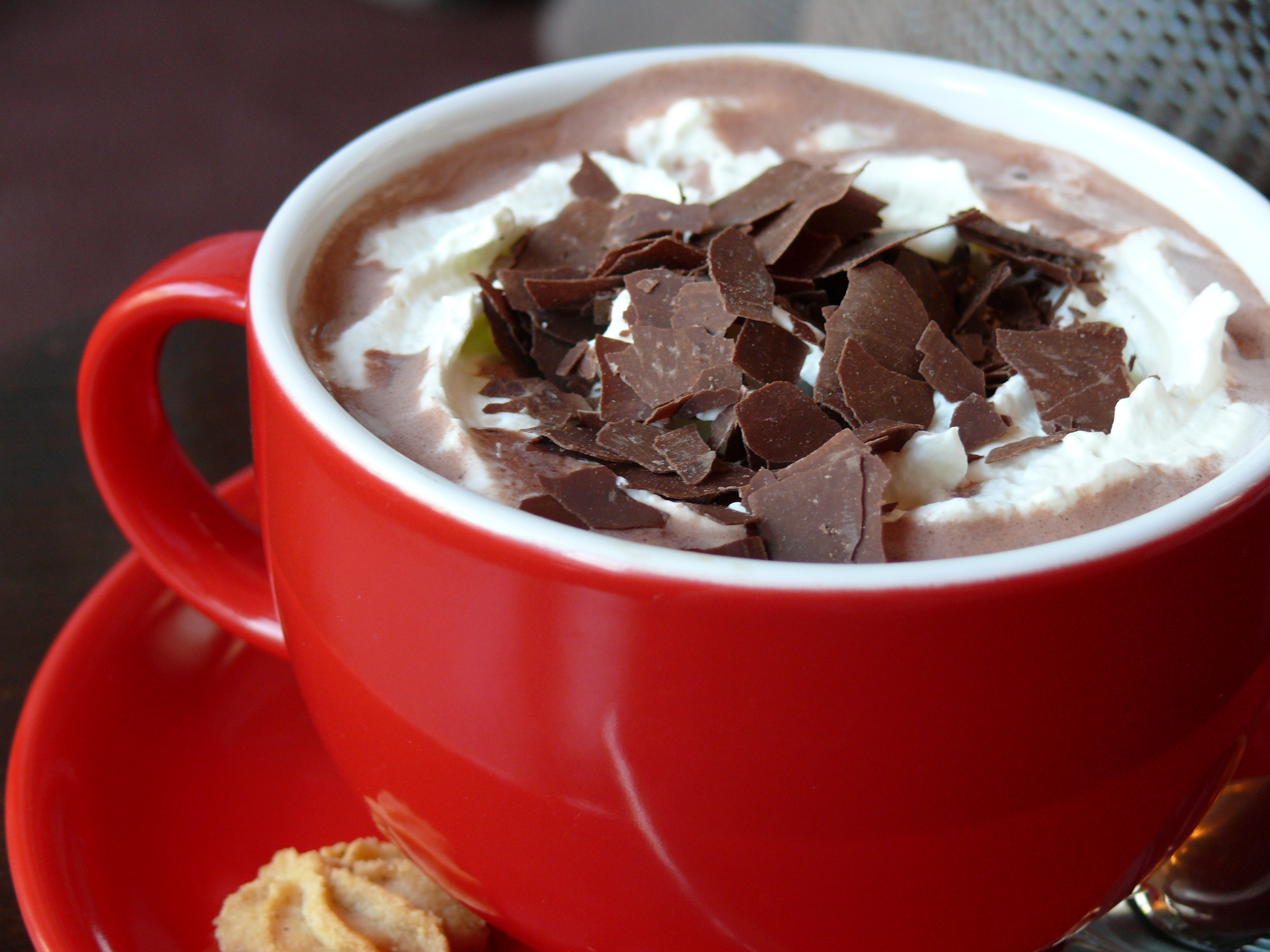
hot chocolate | photo: Itizdacuriz

Every year around the holiday season I always find that I need a few small gifts.  Not willing to brave the shopping frenzy at this time of year I turn to the idea of making gifts at home.  I find many people truly enjoy receiving these more personal gifts.

Confession time.  I’m a fairly decent knitter but rather slow at it so whipping out a bunch of hand knitted gifts just isn’t going to happen.  (I’m still working on a gift for someone that was supposed to be last year’s present.)  I have visions of all of the fabulous crafty gifts that abound on the internet that look so easy.  Following directions closely my version comes out “nice” but certainly not as full of wow factor as the originals; so that’s not gonna happen either.

But…food…I love food.  And I love giving food.  And most people I know like getting food.  That makes it a perfect gift in my book.  The best part is that you still have time to put it all together, wrap it up in a pretty ribbon and gift it to that someone special without braving the crowds. the carols, and the olfactory assault that is commercialized holiday shopping.

  1. Chocolate Granola – This recipe is from my friend Christine and is always a huge hit.  Made in the crockpot it’s super easy; set it to cook all day (stirring when you remember) while you are doing other things.
  2. Crockpot Snack Mix – There are four recipes on this post Tropical, Tex-Mex, Asian, and Curried; they’re all delicious.  Another fabulous use for your crockpot.
  3. Crockpot Nuts – Okay, by now you’ve figured out that I love my crockpot.  These snack nuts are so tasty that I always have to make extras because they’re just that good.
  4. Vanilla Sugar – This is a fabulous gift to give, especially to someone who is a baker.  One vanilla bean pod split and shoved, seeds and all, into a wide mouth pint jar full of evaporated cane juice crystals.  Tie a pretty ribbon on it and you’re good to go.  It does need to sit for 2-3 weeks to allow the aroma to infuse so stick a note on it if necessary.
  5. Hot Cocoa Mix – This is based on a recipe from a major food manufacturer.  I’ve changed it by substituting better ingredient options and removing the requirement for name brand products. 
  • 1/4 Cup plus 2 Tablespoons Dutch process cocoa powder
  • 1/3 Cup evaporated cane juice crystals (optional – made into vanilla sugar. yum)
  • 1 1/2 Cups organic milk powder 
  • 1/2 Cup chopped good quality chocolate (I prefer Belgian chocolate)
  • Layer ingredients in order given into a wide mouth pint jar, close and decorate with ribbon
  • Instructions for preparation:  Gently heat 4 cups of organic milk to just below boiling, add contents of the jar, whisking well until fully combined.  note:  if not using vanilla sugar include instructions to use 1/2 teaspoon of vanilla.  
  • Garnish with organic whipped cream and shaved chocolate.  Makes 4 servings  
Whatever your holiday of choice, I hope it’s a happy and healthy one.

Heading Home For The Holidays

over the river and through the wood | photo: ladyheart

The winter holidays are fast approaching.  For many people this includes travel plans to spend the time with friends or family.  If you’re going to be on the road, either by plane, train, or automobile plan ahead for snacks and beverages.

Of course on an airplane you can’t bring beverages with you.  You can, however, bring an empty, eco-friendly water bottle and refill once you get past security.  Once you are on the plane consider getting juice mixed with seltzer rather than soda or straight juice.  Soda, of course, is not a healthy option while juice alone provides a lot of sugar; diluting it reduces the sugars while still helping you to stay hydrated.

If you’re traveling by another method be sure to bring healthy beverage choices with you, such as lots of water.  This can not only help you avoid dehydration, but can also save you money as on-the-road purchases are often much more expensive.

Protein is important to help stabilize blood sugar.  Consider bringing snacks with you to avoid the munchies and the temptation to purchase non-nutritious, fatty, sugary road food choices.  Options might include:

  • my favorite trail mix (raw and unsalted):  3 parts nuts, 2 parts seeds, 1 part unsulfured dry fruit
  • a salad with some healthy protein: chicken, turkey, beef, or ham, or eggs
  • a wrap with some healthy protein: chicken, turkey, beef, or ham, or eggs
  • cheese and whole grain crackers with delicious olives, pickles  and other finger foods
  • those little pouches of tuna (w/o liquid), add your own whole grain crackers
  • preservative free turkey jerky
  • healthy protein bars

Planning ahead for your travel needs can help you avoid the pitfalls of on-the-road non-nutritious food choices.  You’ll arrive with stable blood sugar and well-hydrated, a great start to a happy, healthy holiday.

Online Store For Grains&more

I haven’t been writing much in the last couple of days because I’ve been busy playing with this lovely new graphic.

Some time back one of my friends, Darbi, started asking “What would Mira eat?”  She took it one step further and started sharing that question with other friends.  It became a fun joke with my friends.

But it also highlighted for me one of the challenges of being a Nutrition Educator.  Going out to eat with other people.  The situations sometimes go something like this:

  1. They wait until I order because they want to see what I’m going to eat and then they order the same thing whether they want it or not.
  2. They order something telling me to avert my eyes because I’m “not going to like it.”
  3. They order something they don’t really want (different from what I order) because they’re afraid I will disapprove.
  4. If I want a cookie they are shocked [don’t be, I’m human and yes, I do, occasionally, eat cookies.]
I tell people all the time.  I’m am NOT the food police.  Your food choices are your business and it would be rude, inconsiderate even, for me to comment on your choices unless you asked me to do so.  And truthfully I have more important things to do than to micro-examine what other people have on their place (such as enjoying the company I’m with).  If you want me to tell you I will but otherwise, what you eat is up to you.  I saw the WWME comment as a gentle way for friends to remind themselves to eat well without my having to be the food police.
So back to Darbi and the gang…another friend of mine, the talented and amazing Dawn, came up with this really cute design.  I love it.  I thought it was so much fun that I decided to throw it on a t-shirt.  Well, one thing led to another and I wound up putting it on a whole bunch of stuff.
If you like it too, and if you can see your way clear to wearing it, please visit my new store at http://www.printfection.com/grainsmore and buy something.  I do make money when you do this, one dollar from each product.  And each dollar helps me out.  So in advance, thank you to those of you who choose to help support me in writing this blog.
hygiene hypothesis

The Hygiene Hypothesis

In the United States there seems to be an increasing number of people affected by asthma and allergies.  These conditions are especially prevalent among children.

One reason put forward is that Americans have become more focused on cleanliness, to the point where we have created problems.

Overuse of antibiotic soaps and cleansers has reduced our exposure to pathogens, or germs, in our environment.  Because our bodies have been designed to fight these germs, to develop a healthy immune system, when we severely reduce our environmental exposures it is theorized that our bodies over-react.  They become sensitive to increasingly more substances, most of them environmental or food exposures.  

As odd as it may sound, the research supports this.  Studies show that children who grow up in rural areas, especially non-Westernized countries, with more exposure to a wider range of microbes, have a vastly reduced rate of allergies.

Western Lifestyle, Diet Tied to  Allergies and Intestinal Disease

Of increasing interest to me is the concept that this hyper-clean state that we've created has affected our intestinal health which in turn leads to more problems.  Gary Huffnagle, co-author of The Probiotics Revolution has gone a step further with the hygiene hypothesis and developed a concept that he calls the microflora hypothesis.  He posits that our Western lifestyle and diet have altered our microflora, our ecosystem, and opened us up to more allergies and, by extension, more digestive disorders.  By not gaining exposure to a wider range of microbes we are unable to build an ecosystem that is fully supportive of our overall health.

Part of the reason that this is so fascinating to me is that in working with clients I am also seeing more and more digestive health issues. And I believe the numbers are rising.  More leaky gut, more IBS, IBD, more dysbiosis.  Dr. Liz Lipski, the author of Digestive Wellness, shows, in her work, that the immune system is very strongly tied to digestive function.
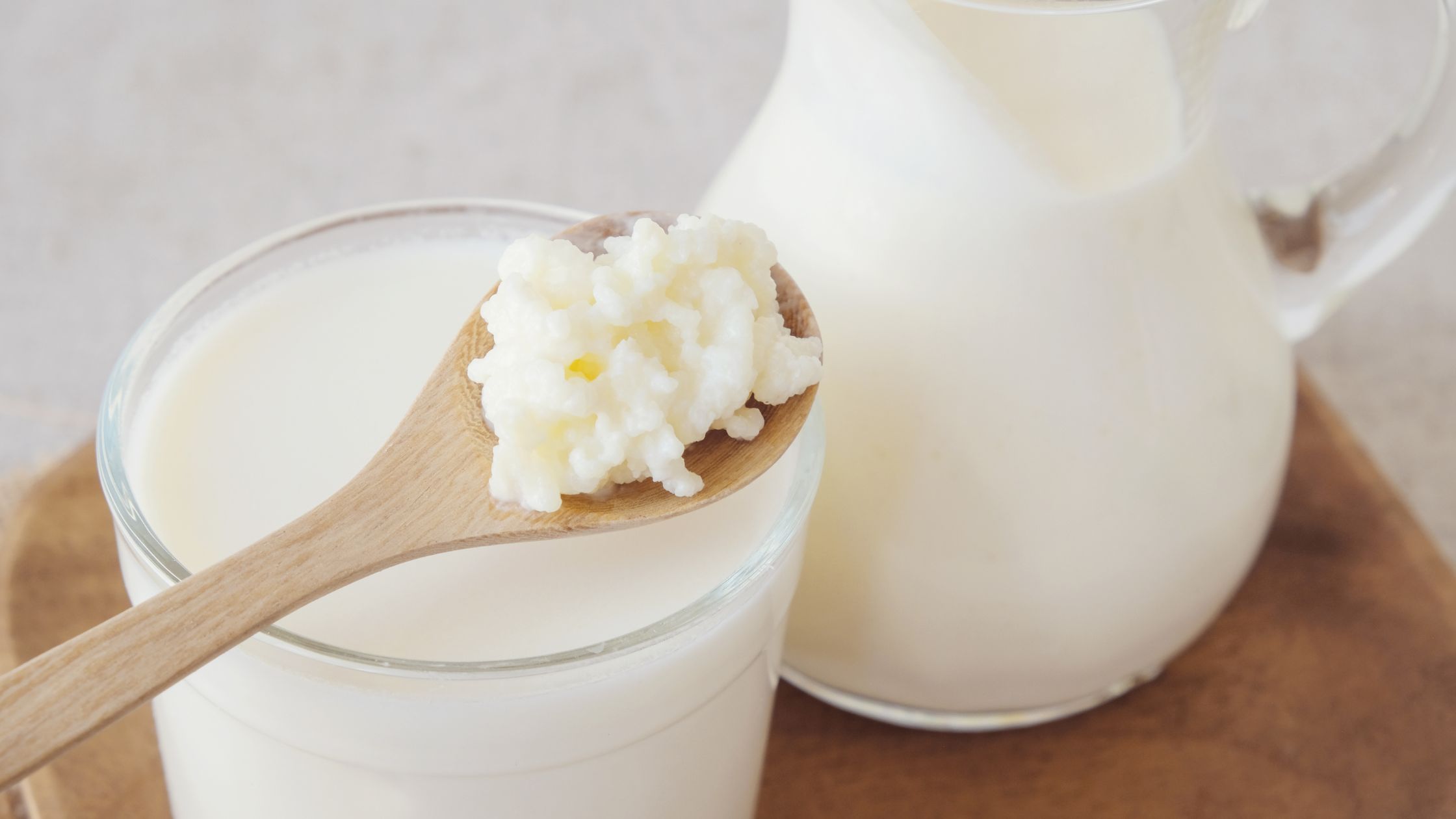

Foods to support your gut

In order to support our health, we need to stop killing off our symbiotic partners, those bacteria that inhabit our gut, through the overuse of antibiotics and antibacterial products.  We also need to feed and support these probiotic colonies.  What do they eat? Prebiotics.  Their food comes from insoluble fibers found in our food.  Berries, onions, legumes, oatmeal, and other whole grains support not only the probiotic bacteria but also help maintain good bowel health.  

We also need to re-inoculate our systems with a steady supply of healthy bacterial colonies. Those are found in fermented foods such as kefir, kombucha, and kimchi.  You do not need to eat an overwhelming amount of these on a regular basis, but they should be a regular part of your diet.

Research does not, as yet, appear to show how much we can reverse the effect on our immune systems, but we certainly can keep it from continuing to decline.  Dr. Natasha Campbell McBride, speaking at a Wise Traditions Conference in Dallas, stated, "We are a shell, a habitat for our eco-system."  We need to support our ecosystem.  We can also protect future generations by focusing on and acknowledging that the ecosystem needs to be fully supported in order to function properly.

[expand title="Sources"] 

Liu, Andrew H. "Revisiting The Hygiene Hypothesis For Allergy And Asthma". Journal Of Allergy And Clinical Immunology, vol 136, no. 4, 2015, pp. 860-865. Elsevier BV, doi:10.1016/j.jaci.2015.08.012. Accessed 

[/expand]


Interested in knowing what your gut microbiome looks like? Schedule a consult with Mira to learn more.