Category Archives: health


Reinventing Comfort

When I was a little girl my mother used to make something called rice cereal.  My brother and I loved it.  Leftover white rice in a bowl of hot milk with a huge dollop of butter and a spoonful of sugar on top.  It brings back memories of the small kitchen we had when we were young.  Sitting at the table with my brother, legs swinging, enjoying this dish which we viewed as a treat.

When my children were growing up I would make the same dish for them.  And they loved it just as much.  Even now my 16 year old will assemble a bowl if we have the ingredients at hand (which we often do).  It was a great way to use up extra rice — filling, tasty, and warming to the tummy.  I even served it on occasion to overnight guests.   One such guest, a dear friend from my high-school days, exclaimed about this wonderful breakfast, wanting to know where the recipe came from.  My answer?  My mom.  And probably from her mom.  I think it was simply a frugal way to use leftovers.  But it sure was, and still is, tasty.

Sometimes you have a day where you want comfort food.  This morning was one of those days.  As I was assembling, and then happily eating, my bowl of comfort I realized that I have changed the recipe.  Modified it to be more in line with my healthier eating habits.  But it was still just as comforting, warming and satisfying as it ever was.  Reflecting on this I realized that the concept of comfort food is a state of mind.  Yes it’s a comfort to the tummy and makes us feel good; but part of what makes us feel good is the memories associated with that food.  Changing the food doesn’t change the comfort level as long as the basic concepts are the same.

So I’m making an offer, what are your comfort foods?  What do you eat when you feel the need for that emotional lift?  Share the recipe and the concept below.  If you’d like (and please ask below) I’m happy to make suggestions to help boost the nutrition or health factor while still helping you get that bowl or plate of comfort you are after.  Eating well to be well doesn’t mean we can’t still have comfort.

Hot Cups

photo by alvimann

I gave a lecture today.  It was entitled “The Poison Pantry.”  The location where the lecture was held offers a beverage service of coffee and water.  Having been there before I knew that they also use polystyrene cups.  Most people refer to them as styrofoam however according to Dow Chemical, the trademark owner of Styrofoam, they do not make cups, plates, take-out containers or any other food product from styrofoam.  However you refer to them, as styrofoam or polystyrene, I do not like these cups.

To the best of my knowledge polystyrene does not break down in the landfill.  It is recyclable but I am not aware of recycle efforts specifically directed toward them, most people I know just throw them in the trash.  However there are other factors to take into account when choosing beverage cups.

One study, published in March 2009, found that there was migration “above the EPA recommended level.” (Khaksar and Ghazi-Khansari, 2009).  The study found that higher levels of fats and/or heat caused more migration, or breakdown, of the polystyrene which was then consumed along with the beverage.

Another study from Purdue University found that styrene was “hepatoxic and pneumotoxic in mice, in addition to causing lung tumors.”  (Harvilchuck and Carlson, 2009)  Although the study states that human studies are inconclusive I accept that since most rodent studies are a good indicator of human health conditions, using styrene containers is not a good idea.

But I digress…I had a lecture and I needed cups.  I went to the store to get some and discovered, to my utter surprise, that there weren’t any.  Thinking that this was a fluke I went to another store.  Same thing, no non-styrene hot cups.  At the third store I asked for help and the clerk was just as surprised as I was to find that they didn’t have any either.  Now I could have brought regular mugs from home with me however it didn’t seem very professional, I didn’t want to take the risk of breaking them during transport, and if folks wanted to take their beverage with them after the lecture I couldn’t very well let them do so if it was my mug.  So I went to Starbucks and asked if I could buy a sleeve of cups.  Bless them, they said yes.  I told them what happened and promised them free publicity; telling them I would share the story with my lecture attendees.

I have cups left over for future lectures but I can see that unless I want to give Starbucks endless free publicity while paying for their cups I need to find another source.  Thinking about this issue also made me realize that the clamshells that most restaurants use for take-home are styrene.  I think I’m going to get into the habit of either bringing my own container or at least bringing some foil to line the container with to limit exposure.

winter sunshine, vitamin D

Winter And Vitamin D

Recently I have been getting a number of emails with questions about vitamin D;  I’m sure it’s generated by all of the press about the changing recommended levels, levels of exposure and how important it is for our health.

Where to get Vitamin D

Vitamin D, known as the “sunshine vitamin” is a fat-soluble vitamin produced in the skin by exposure to ultraviolet (UV) type B rays.  For food sources we can look to fatty fish and eggs as a good source of vitamin D. It is often added to milk.  
 
I have a personal theory that part of the reason behind the epidemic of vitamin D deficiency is that our parents were forced to take cod liver oil by their parents.  They hated it so much they decided not to give it to their kids.  The science of the times did not recognize how important cod liver oil was and it was considered “old-fashioned.”  As a result of this, I, and many others of my generation, grew up not taking it.  So we didn’t give it to our kids.  While I’m not sure how much scientific veracity there is to that theory it certainly seems to fit the current situation.  Decreased cod liver oil consumption combined with reduced sunshine/increased sunscreen and suddenly many people, including pregnant women and their infants, are deficient.
 

The importance of Vitamin D

Why all of the scientific attention to vitamin D lately?  It turns out that it’s very important for our health and there are significant consequences to being deficient.  Not only does vitamin D help support our bone structure, it’s vital to immune system health, increasing activity of our natural killer cells and macrophages.  Many studies now show that it may help protect against cancer, cardiovascular disease and there are even suggestions that vitamin D deficiency may be a contributing factor to increased influenza rates during the winter months.

How much should I take?

One question I recently received about vitamin D was concerned with how much to take:
 
I was taking 400 IU but a while back started reading about re-examined attitudes toward D and upped it to 2,000 IU.  Then I thought that might be too much so I am currently taking 1,000 IU.  Your thoughts?”
 
Here’s a little information to help you understand vitamin D better.  
 
I believe, and the studies support, that we do not get enough and that the levels set by the government are too low.  If you wear sunscreen you need to be aware that SPF8 and over will effectively block UV-B; this means your body cannot synthesize D from sunlight.
 
If you do not get enough outdoor exposure, are over 60 years of age (our ability to synthesize D decreases as we age), and/or live in northern latitudes you are probably not getting enough vitamin D.  Someone who lives in New England or further north generally does not get sufficient vitamin D during the winter months and can become deficient.  Especially if they did not have sufficient stores to begin with.
 
How to find out if you need more?  You need to get a blood test.  It is important to get the 1,25 OH-dihydroxy,  not the 25(OH) vitamin D to find out what your levels are.   Taking between 2,000-5,000 IU per day is not unreasonable, especially in the winter.  
 
Osteomalacia (vitamin D deficiency) is often treated with 5,000-50,000 IU for three to six months.  Once a good level is reached doctors usually drop people to 1,500-2,000 per day.  Most doctors aim for at least 30-40 ng/dL (nanograms per deciliter) although many Functional Medicine practitioners prefer a level of 50-80 ng/dL.  It is important to note that too much vitamin D can be just as bad for you as too little, which is why it is important to get tested and know what your levels are.

How to get vitamin D

When you take vitamin D is it best to take it as vitamin D3 (cholecalciferol) combined with K2 which is the most effective form.  D2 (ergocalciferol) is not as effective.  
 
I personally prefer to take a sublingual D3/K2 liquid formulation to make sure that I am getting the best possible absorption. A combined liquid formulation also ensures that I am getting a synergistic balance of the proper amounts of D3 to K2.

The very best way to get your vitamin D?  Get sunshine.  Whenever possible get 15-20 minutes per day before you put on your sunscreen.  

More Information

Here are a few other resources which provide good information about vitamin D:
 
 
foods to lower blood pressure

Foods To Lower Blood Pressure

Hypertension is a growing concern in this country. Especially when coupled with the unfortunate reality of restaurants that over-salt their food. But our over exposure to salt is not only from eating at restaurants, even at home, we are consuming far more than we need. Many people tend to over-salt their food, probably due to the influence of high salt when eating out. You can then become addicted to that level of salt flavor and it can take some time and effort to readjust your palate.

Causes of high blood pressure

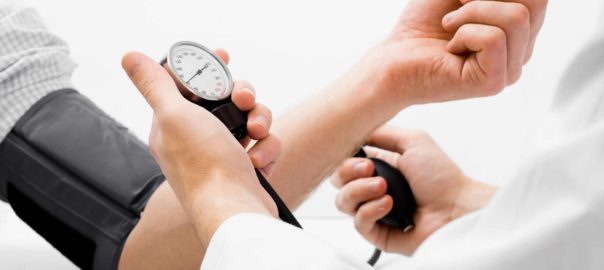
Blood pressure is measured in milimeters of mercury (mm HG). A moderate adult blood pressure is usually considered to be 120/80. The upper number is called the systolic pressure and indicates the force of your heart beat on the walls of your arteries. The lower number is called the diastolic and this number shows the force of your heart between beats.

Factors that can cause that number to go up may include a diet high in fat, sugar and sodium. A high stress lifestyle can also contribute to high blood pressure. It is very important to note that if you have blood pressure problems you need to let both your doctor and any nutrition professional you are working with know if you are making any changes to try to address blood pressure issues. Herbal remedies, lifestyle changes, and medication implemented together may cause a significant drop in blood pressure. Hypotension, blood pressure that is too low, can be just as bad for you as hypertension.

Fake Salt
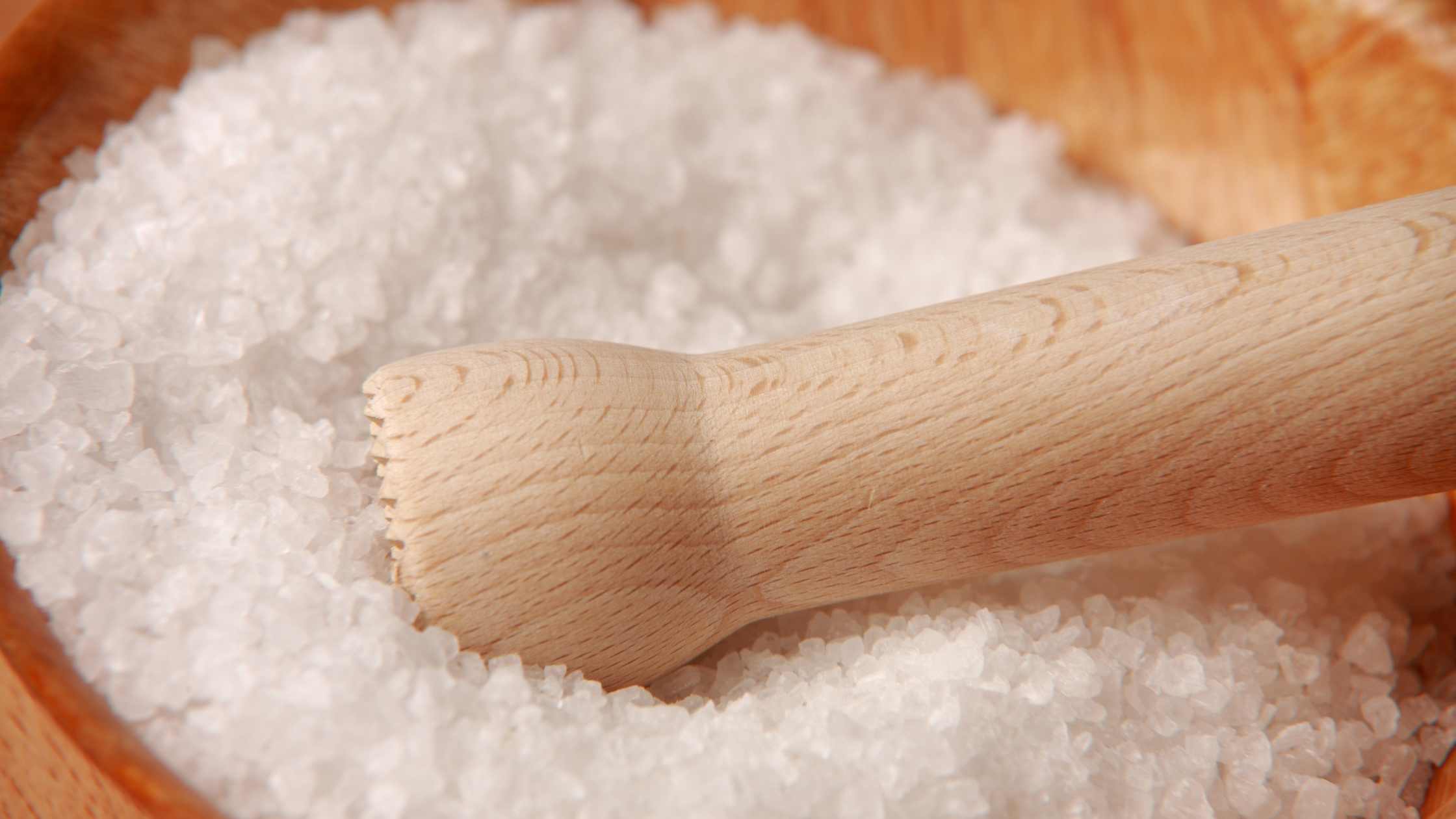
If you have high blood pressure you may be advised to go on a low sodium diet. For many people that means switching to "fake" salt which is usually made from potassium chloride. Because it's not sodium it's deemed to be better for you by some medical practitioners. 

If you need to avoid excess sodium, I think it's better to also avoid the potassium chlorides and look for other taste alternatives.  Adding herbal blends like no salt-seasoning mix is a great way to add flavor without the salt. Or you can use lemon juice on things like black beans or sweet potatoes where you might normally use salt.  The added tangy flavor really adds a boost without the need for salt.

The difference between salts

Table salt

This is typically a highly processed form of salt. It is often stripped of minerals, has chemicals added to prevent clumping, and then a low bioavailable form of  iodine is added. 

Sea salt

I confess I prefer to use sea salt. It has no additives and all the minerals are still in there.  Sea salt does tend to have less iodine than table salt and iodine is important for our health so you’ll want to make sure you’re checking your levels and consuming iodine as needed. Adding sea vegetables to your diet is one way to help you get enough iodine. There are a wide variety of sea salts depending on where they’re harvested from.

Kosher salt

is a coarse salt named for the process by which it is created.  To my knowledge, there are no additives, and it is not stripped of minerals. But the larger crystals limit some of the uses for it depending on the flavor profile of the dish you are making.

Foods that support lowering blood pressure
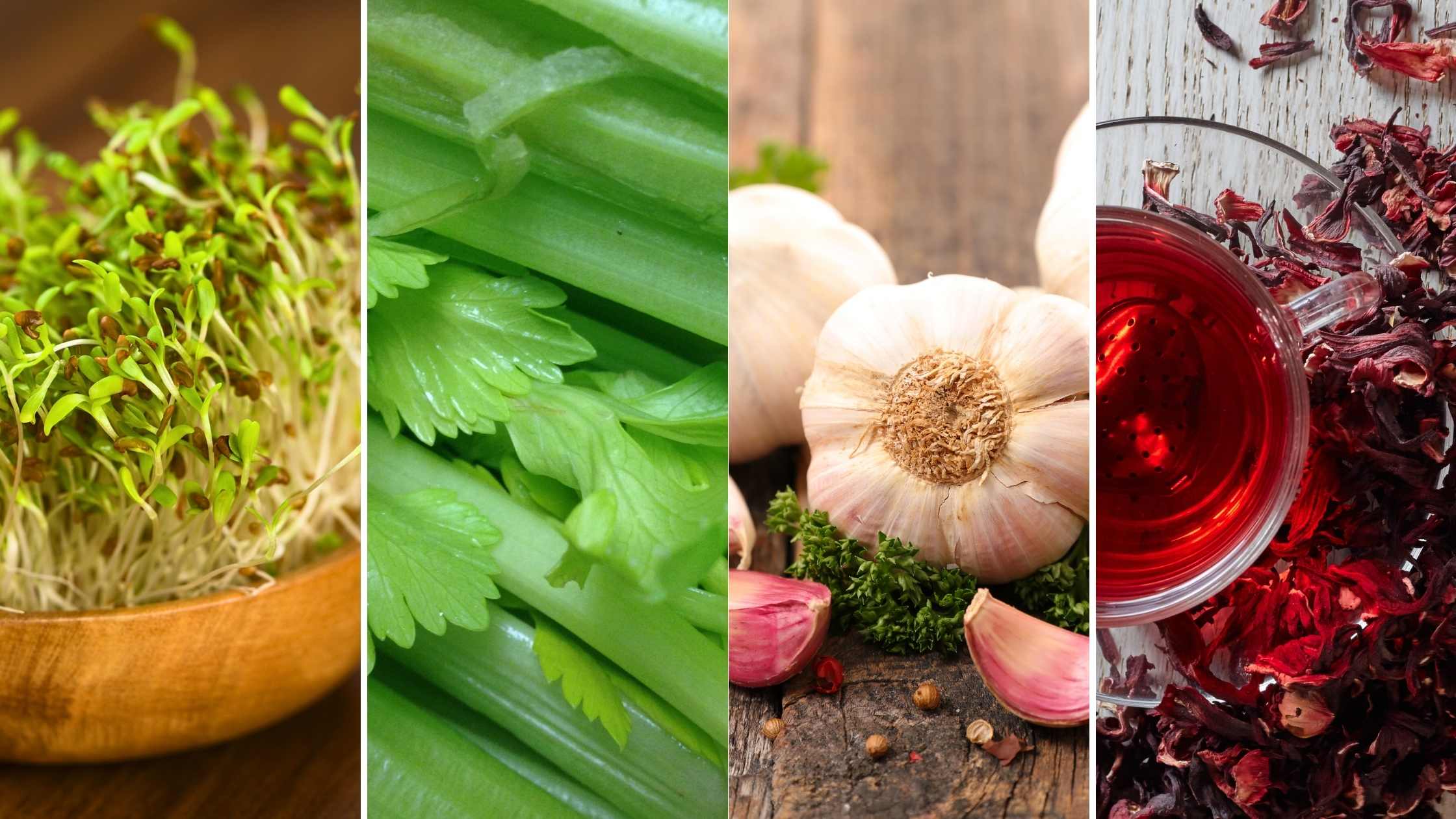
Alfalfa is an herb with a reputation for lowering blood pressure.  Other herbs believed to be beneficial for lower blood pressure include parsley, ginger root, nettle, and sage. Often taken as an infusion or a tea, these should be avoided if you are on any sort of blood thinners.

Celery is an easily available food that has been recognized in Chinese medicine as being effective for lowering blood pressure.  Studies done in Western medicine appear to confirm this benefit.  Containing both potassium and sodium, celery is not only a vasorelaxant it is also a diuretic helping to relieve the body of excess fluid.

Garlic is also known to be very beneficial for reducing not only blood pressure but also cholesterol.  Fresh garlic is better as the beneficial allicin is fully available when chopped or minced.  Letting the garlic sit for 5-10 minutes after cutting allows the allicin to fully develop.  Cook garlic lightly for 10-15 minutes (in other words closer to the end of the cooking time) to get full benefit.

Hibiscus tea is known to be very effective for lower blood pressure.  The dried flowers can be purchased either through health food stores or even some larger chain grocery stores.  A double-blind study published in 2009 in the Journal of Human Hypertension concluded that non-medicated hypertensive diabetic patients had a positive outcome from drinking two cups of infused tea every day for one month.  The report further stated, "This study supports the results of similar studies in which antihypertensive effects have been shown for [Hibiscus sabdariffa]."

Nitric Oxidenitric oxide
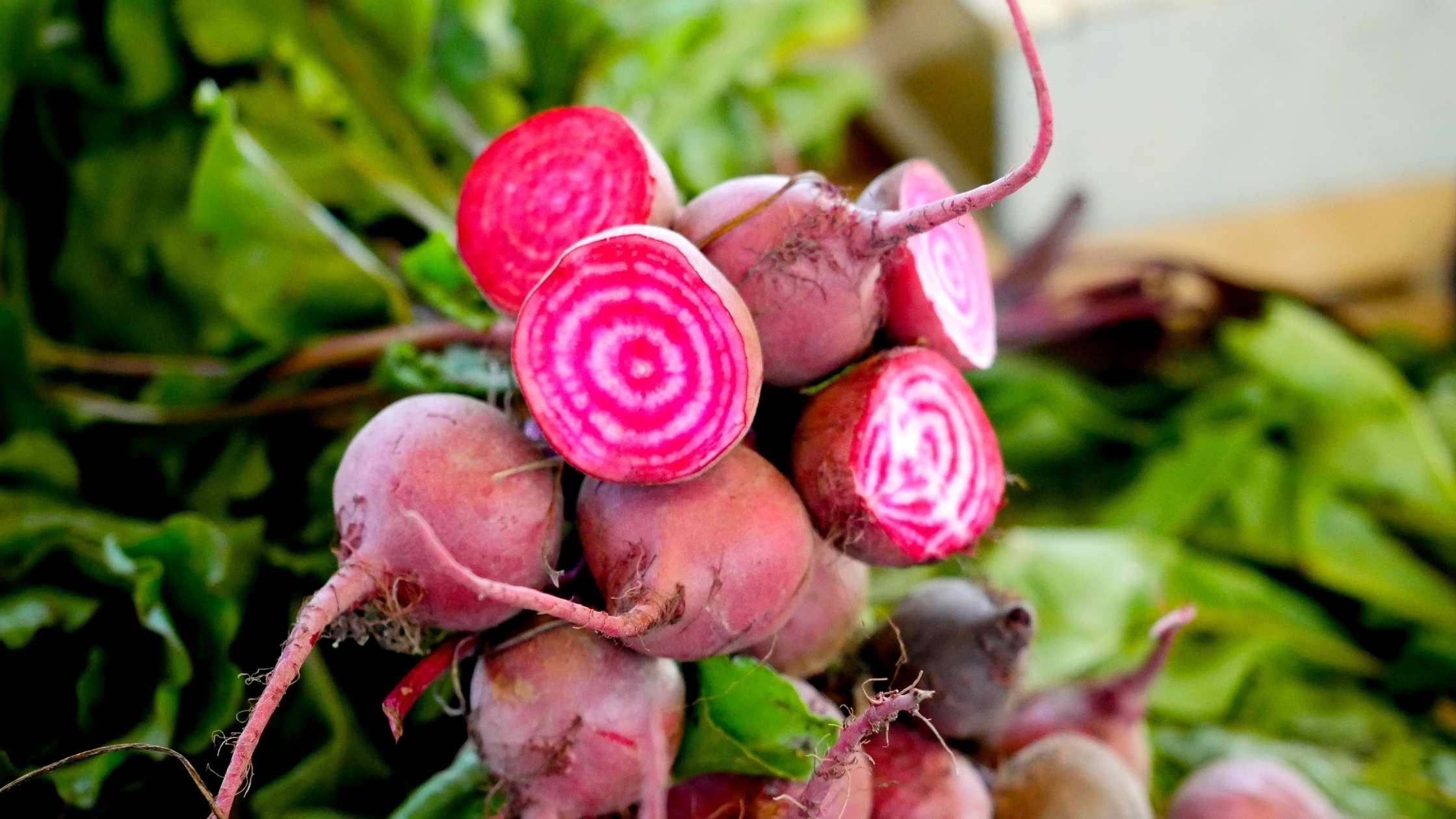
Nitric oxide is a supplement that can be supportive for lowering blood pressure.  This is because it helps your blood vessels to dilate, which can help regulate blood flow, inflammation, and also blood pressure. There are several studies using inorganic nitrate and beet juice supplementation, that found nitric oxide can support a reduction in blood pressure levels. Studies with beet root and beet juice have shown such promise that they have been considered as complementary treatment for hypertension. Beets are rich in dietary nitrates. By consuming beets or beet juice, your body has the components to convert it to nitric oxide and keep your blood vessels more open.

Another way to increase nitric oxide is through meditation. One study found that “meditation groups showed a significant higher level of serum nitrate & nitrite concentration…” Several different types of meditation have been observed to help reduce blood pressure levels.  These can include zen-meditation, trans-meditation, and breathing awareness meditation.

In conclusion

  • The average person should get from 1,500 to 2,300 mg of salt per day.  
  • 1 teaspoon of salt has about 2,000 mg 
  • Restaurant foods tend to be heavily salted, if you eat out a lot this may overbalance your palate to a high sodium preference
  • It is possible to restructure your palate and learn to use less salt
  • Changing your diet, adding nitric oxide, and including meditation may all be helpful strategies to lower blood pressure

With hypertension becoming a growing challenge, making changes can be an important strategy for controlling blood pressure levels and reducing the risk of cardiovascular disease.

Whole Foods Versus Whole Medicines

The less we spend on food, the more we spend on health care.”  ~ Michael Pollan 

I think this recent quote is true.  The more we spend on “convenience” the more we buy over-processed, non-nutritious foods.  This leads to a nutritional deficit that in turn can lead to illness.  This then leads us to take medicines to “correct” whatever is wrong with us and unfortunately no attention whatsoever is paid to managing what fuels our bodies.

Don’t get me wrong.  I am not suggesting that medicine is bad or unnecessary.  On the contrary, I can recall being very grateful for the sophistication of our current state of medical care and what pharmaceuticals can do to help.  My foot surgery in 2003 is a prime example.  However, I do believe that in many instances we have gone too far in trying to fix everything with a pill and not looking at the food (i.e., fuel) that we put into our bodies.  Chemicals are not enough to run the complex organism that is our body.


The more our food is broken down for us, in other words processed, the easier our bodies can work through that food.  In the process of breaking down foods many nutrients are stripped.  They are then replaced with chemicals that promote shelf stability for longer life in the grocery store, colorants to make them look more attractive, flavorings to fool our palates into thinking we’re getting something good, and emulsifiers to help it all stick together.  All of these non-nutritive additives do nothing for our state of health.  In fact, the faster our body can  work through that highly processed donut, candy, cereal, canned pasta, etc, the less it needs to work.  And the more empty calories we wind up consuming.  If we can’t use them all our body saves them.  Where does it save extra calories?  As fat.  Adipose tissue.  Frequently in the belly area, but all over our bodies if it needs to.


I believe that it is important to look at what we are eating and how we can increase the nutrient density.  The more whole foods you eat, high fiber, no chemicals, low processed, the harder your body has to work to retrieve those energy units we call calories.  Yes, overeating even healthy foods can lead to weight gain, but I challenge anyone to eat the same number of apples it takes to make one glass of apple juice and claim that they still have room for more.


While eating a whole food, low process diet may not be the answer to all of your medical problems it will certainly give your body the best possible support it needs to be as healthy as it can be.  Staying well hydrated, exercising, getting enough sleep.  Those help too.  But one of the most important foundations is good nutrition.  Eat well to be well.


photo courtesy of pleasant family shopping | Wikimedia Commons

Shopping Guides

I just came across this detergent shopping guide from Organic Consumers and it’s so important that I knew I had to pass it along.  It has a list of all of the soaps/detergents that use 1,4 dioxane, a known carcinogen that can cause a host of health problems.

This seemed like a good opportunity to pass along a couple of other good resources that are available online.

The Environmental Working Group Shopper’s Guide to Pesticides

The Environmental Working Group Safety Guide to Children’s Personal Care Products

The Environmental Working Group Shopper’s Guide to Safer Sunscreen

The Food and Water Watch rBGH-free Dairy Guide (search by state)

The Non-GMO Shopping Guide

Colors And Fats

Jen wrote in with a comment and a couple of questions:

A friend shared a recipe with me for rainbow pancakes. It was pretty horrifying with tons of artificial colors. I am disappointed how my son’s class is drawn to the colors when choosing food at the class parties.”

I agree, rainbow pancakes would be horrifying (as are rainbow sprinkles, cookies, anything made with artificial colors). We are biologically drawn to eat a colorful range of foods. Unfortunately manufacturers have figured this out and turned it to their advantage. It’s not a bad thing to want colorful fruits and veg, what’s bad is when that instinct is transformed by modern “science” to include processed foods.

Back in 2007 the BBC published a news article highlighting findings from the University of Southampton, a leading research–led university in Southampton, England, that shows a link between artificial colorants, temper tantrums, allergic reaction, and poor concentration in children. This study supports the findings of Dr. Ben Feingold, a prominent pediatrician and allergist who was Chief of Allergy at the Kaiser Permanente Medical Center in San Francisco. In 1968 Dr. Feingold published a paper “Recognition of Food Additives as a Cause of Symptoms of Allergy.” Throughout his career he would continue to publish articles and work in clinical practice encouraging families to remove additives from their diet. The Feingold Association was founded in 1976 and continues to support a diet that eliminates artificial ingredients, flavorings, colorants, and preservatives. Dr. Feingold claimed that 30-50% of his hyperactive patients showed an improvement in behaviors after colorants were removed from their diet.

It is possible to make food colorings from readily available plant sources such as beets for a red tint, spinach for a green tint, carrots for orange, or saffron for yellow, however homemade colors tend to be rather muted. If a purchased product is considered more desirable there are several sources of plant based food dyes such as Seelect, an organic tea company located on the web at http://www.seelecttea.com, Nature’s Flavors, which offers organic food coloring, many of which are kosher, vegan and gluten-free, located at http://www.naturesflavors.com, or India Tree, which sells natural food coloring, natural color sugar and other products through commercial outlets.

“I also have two food questions. I’ve been hearing buzz words like “good fat” and “bad fat”. I actually heard people in the store talking about it while looking at the information on the back of a food package, which I was very pleased to observe but didn’t have the courage to ask what’s the difference?

Good fats are fats that your body knows how to use and can efficiently work with. Bad fats are fats that are difficult for your body to process and clog your system. Good fats include things like olive oil, grapeseed oil, and coconut oil. Bad fats are things like margarine, crisco, hydrogenated and trans-fats.

“I think the answer might also relate to another question I have. What is better for you, olive oil or smart balance buttery spread. Olive oil has 14 grams of fat per TBS and the butter spread has only 5 grams per TBS. I would think that the olive oil is better for you since it’s the least processed but, I just can’t get that “5” out of my head. It’s less than half of the fat from the olive oil. I’m thinking this is an example of good fat vs. bad fat but which is better? Does it change your choice if your trying to stay on a low fat diet?

Olive oil is much better for you. Although it has more fat it is a good fat. Not only that you have to look at fat in context. A fair percentage of our brain is made of fat cells. Fatty acids (from good fats) help make DHA (docosahexanoic acid) which allows the brain to grow and create the cells you need to think. Also the myelin sheathing that surrounds our nervous system is made of fat, helping to keep them healthy so they can transmit nerve impulses.

We need fat to be healthy, without it our bodies cannot absorb and process fat soluble vitamins (A, K, E). Eating good fats also helps to promote saiety or fullness; too little fat and we can get dry scaly skin, dry hair, bruise more easily, take longer to heal wounds, and be less cold tolerant.

If you’re interested there is a very good book called “Eat Fat to Lose Fat” by Sally Fallon and Mary Enig. It’s a pretty straightforward book and easy to understand.

Thanks for the questions!
Be well.

Fairground Food

Walking around the fairgrounds at the Houston Livestock Show and Rodeo all my senses are assaulted; the flashing lights, the booming pounding music, the loud chatter of the crowds, and the smells of fairground food. Fried food, smoked food, barbeque, spun sugar, all swell around me creating an almost hypnotic state.

 
As I look around at the food choices on offer I am amazed at what I see. Batter-dipped cheeseburgers, fried with a generous topping of powdered sugar. Blooming onions, chicken-fried bacon (you know you’re in the South when you find chicken-fried anything), 2-lb jumbo smoked turkey legs, cheesecake dipped in chocolate. There was even one stand that was offering gator and pork-a-bob (not sure what that is but not sure I want to know either). The beverage choices were similarly calorie-laden, gallons of sweet tea, frozen drinks, and colas, not to mention all of the alcoholic options available.
 
It was a day of fun, enjoyment and enthusiasm at the Rodeo. Unfortunately it was readily apparent that for large numbers of people at the rodeo a steady diet of saturated fats, over-sugared, over-salted food is the norm. I think of fairground food as something that, while never the best choice, would be a occasional treat (and I did enjoy that cheesecake although I only ate half of it as the serving was overly generous and extremely rich). It is sad to realize that for many people, although they don’t eat fairground food on a regular basis, this style of eating is their daily habit. Rich, fatty, salty, sugary foods that have dulled their palate. That appeal to the childlike habit of comfort foods. As a culture I believe we have come to a point where many of us have lost our taste for whole foods. For healthy, fresh foods that contain the nourishment our body demands.
 
I’m certainly not trying to be a killjoy and demand that no one ever enjoy these fairground treats. We live in the real world and an occasional indulgence is certainly not unreasonable. What is difficult is when we allow these occasional treats and this unhealthy eating habit to become the norm.
 
Start now; make it a point to eat whole foods, low processed, fresh and in season. Eat more fruits and vegetables in a rainbow of colors. Reduce the palate-numbing, non-nutritive indulgences to an occasional treat. It’s time to educate yourself and your children about healthy choices, everyone will be better off for it. Remember, eat well to be well.
 
Chicken-fried bacon photo courtesy of Cara Fealy Choate | Wikimedia Commons

Servings Vs. Portions

I don’t normally cross-post my columns here but have recently written two columns that I feel are very important for folks to understand when it comes to their health and controlling what’s on their plate.

The first deals with serving sizes and the second addresses portion control. Most of us don’t stop to think that the two are not equal but they aren’t. In brief, serving sizes are the information on the side of the package (set by the USDA) that says how much of something we should eat; portions are what we actually serve ourselves (and usually it’s more than we should).
To learn more read the articles and, as always, if you have any questions please feel free to leave comments or send an email.
Be well.

What About The DASH Diet

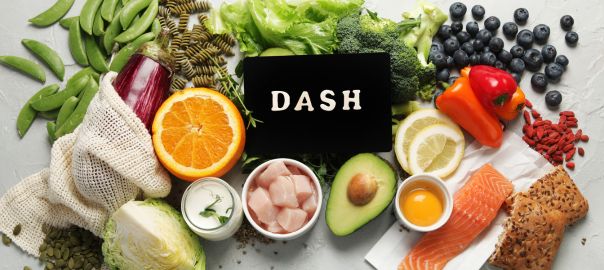
A recent question came in from Eden asking what I thought about the DASH diet. DASH stands for Dietary Approaches to Stop Hypertension. Here is my reply: I think the concept of the diet is certainly a good one; low sodium (most of us eat too much already) and lots of lean protein, fresh veggies, fruit, and whole grains. This is the basis of a good dietary approach for all of us. However, I do not believe that DASH goes far enough.

Concerns About Low Fat and Healthy Fats

One issue I have with the DASH diet is its focus on low fat. While reducing fat intake can be important for many people, the emphasis should be on the types of fats we consume. I do not consider margarine or other fake fats to be healthy choices. Instead, using healthy fats, as I wrote about [here], in moderation is a much better option than relying on trans fats.

The Importance of Fiber for Blood Pressure

Another concern is that the diet does not specifically address how increased fiber content can help lower both blood pressure and cholesterol. A study published in the Journal of the American College of Nutrition showed that "bean consumers had lower systolic blood pressure in comparison to non-consumers." Incorporating beans and other high-fiber foods is essential for everyone and can be particularly beneficial for reducing blood pressure.

Holistic Considerations: Stress and Relaxation

The DASH diet does promote exercise but falls short in addressing stress management and other holistic concerns. Teaching people how to breathe or engage in active relaxation techniques has been proven to lower blood pressure. Practices like meditation, Qi Gong, Yoga, and other mindful exercises also offer techniques that help reduce blood pressure. Lastly, the DASH diet does not mention or strongly promote foods that are specifically helpful for lowering blood pressure, such as garlic, onions, hibiscus, and foods rich in magnesium and potassium. Nor does it caution against foods that can raise blood pressure, which I wrote about [here]. Overall, I think the DASH diet is a good starting point for lowering blood pressure, but there are additional changes and considerations that can further enhance its effectiveness.