All posts by Mira


About Mira

Mira Dessy is The Ingredient Guru. A holistic nutrition professional, author, and a popular public speaker, she knows that it's not just what you eat, but what's in what you eat. She is the author of The Pantry Principle: how to read the label and understand what’s really in their food. Dessy is a Board Certified Holistic Health Practitioner whose mission is to educate and empower consumers. She curates the Lean Clean Green Subscription box, the premier, organic, earth-friendly, healthy, sustainable subscription box which can be found online at https://theingredientguru.memberbox.com

Reinventing Comfort

When I was a little girl my mother used to make something called rice cereal.  My brother and I loved it.  Leftover white rice in a bowl of hot milk with a huge dollop of butter and a spoonful of sugar on top.  It brings back memories of the small kitchen we had when we were young.  Sitting at the table with my brother, legs swinging, enjoying this dish which we viewed as a treat.

When my children were growing up I would make the same dish for them.  And they loved it just as much.  Even now my 16 year old will assemble a bowl if we have the ingredients at hand (which we often do).  It was a great way to use up extra rice — filling, tasty, and warming to the tummy.  I even served it on occasion to overnight guests.   One such guest, a dear friend from my high-school days, exclaimed about this wonderful breakfast, wanting to know where the recipe came from.  My answer?  My mom.  And probably from her mom.  I think it was simply a frugal way to use leftovers.  But it sure was, and still is, tasty.

Sometimes you have a day where you want comfort food.  This morning was one of those days.  As I was assembling, and then happily eating, my bowl of comfort I realized that I have changed the recipe.  Modified it to be more in line with my healthier eating habits.  But it was still just as comforting, warming and satisfying as it ever was.  Reflecting on this I realized that the concept of comfort food is a state of mind.  Yes it’s a comfort to the tummy and makes us feel good; but part of what makes us feel good is the memories associated with that food.  Changing the food doesn’t change the comfort level as long as the basic concepts are the same.

So I’m making an offer, what are your comfort foods?  What do you eat when you feel the need for that emotional lift?  Share the recipe and the concept below.  If you’d like (and please ask below) I’m happy to make suggestions to help boost the nutrition or health factor while still helping you get that bowl or plate of comfort you are after.  Eating well to be well doesn’t mean we can’t still have comfort.

Reinventing Comfort

When I was a little girl my mother used to make something called rice cereal.  My brother and I loved it.  Leftover white rice in a bowl of hot milk with a huge dollop of butter and a spoonful of sugar on top.  When I had children I would make the same dish for them.  It was a great way to use up extra rice — filling, tasty, and warming to the tummy.  I would even serve it to guests sometimes.   One time a friend exclaimed about this wonderful dish, wanting to know where the recipe came from.  My answer?  My mom.  And probably from her mom.  I think it was simply a frugal way to use leftovers.  But it sure was tasty.

Sometimes you have a day where you want comfort food.  This morning was one of those days.  As I was assembling, and then happily eating, my bowl of comfort I realized that I have changed the recipe.  Modified it to be more in line with my healthier eating habits.  But it was still just as comforting, warming and satisfying as it ever was.  Reflecting on this I realized that the concept of comfort food is a state of mind.  Yes it’s a comfort to the tummy and makes us feel good; but part of what makes us feel good is the memories associated with that food.  Changing the food doesn’t change the comfort level as long as the basic concepts are the same.

So I’m making an offer, what are your comfort foods?  What do you eat when you feel the need for that emotional lift?  Share the recipe and the concept below.  If you’d like (and please ask below) I’m happy to make suggestions to help boost the nutrition or health factor while still helping you get that bowl or plate of comfort you are after.  Eating well to be well doesn’t mean we can’t still have comfort.

Hot Cups

photo by alvimann

I gave a lecture today.  It was entitled “The Poison Pantry.”  The location where the lecture was held offers a beverage service of coffee and water.  Having been there before I knew that they also use polystyrene cups.  Most people refer to them as styrofoam however according to Dow Chemical, the trademark owner of Styrofoam, they do not make cups, plates, take-out containers or any other food product from styrofoam.  However you refer to them, as styrofoam or polystyrene, I do not like these cups.

To the best of my knowledge polystyrene does not break down in the landfill.  It is recyclable but I am not aware of recycle efforts specifically directed toward them, most people I know just throw them in the trash.  However there are other factors to take into account when choosing beverage cups.

One study, published in March 2009, found that there was migration “above the EPA recommended level.” (Khaksar and Ghazi-Khansari, 2009).  The study found that higher levels of fats and/or heat caused more migration, or breakdown, of the polystyrene which was then consumed along with the beverage.

Another study from Purdue University found that styrene was “hepatoxic and pneumotoxic in mice, in addition to causing lung tumors.”  (Harvilchuck and Carlson, 2009)  Although the study states that human studies are inconclusive I accept that since most rodent studies are a good indicator of human health conditions, using styrene containers is not a good idea.

But I digress…I had a lecture and I needed cups.  I went to the store to get some and discovered, to my utter surprise, that there weren’t any.  Thinking that this was a fluke I went to another store.  Same thing, no non-styrene hot cups.  At the third store I asked for help and the clerk was just as surprised as I was to find that they didn’t have any either.  Now I could have brought regular mugs from home with me however it didn’t seem very professional, I didn’t want to take the risk of breaking them during transport, and if folks wanted to take their beverage with them after the lecture I couldn’t very well let them do so if it was my mug.  So I went to Starbucks and asked if I could buy a sleeve of cups.  Bless them, they said yes.  I told them what happened and promised them free publicity; telling them I would share the story with my lecture attendees.

I have cups left over for future lectures but I can see that unless I want to give Starbucks endless free publicity while paying for their cups I need to find another source.  Thinking about this issue also made me realize that the clamshells that most restaurants use for take-home are styrene.  I think I’m going to get into the habit of either bringing my own container or at least bringing some foil to line the container with to limit exposure.

Should You Use A Microwave Oven?

This post started off innocently enough as a post in response to a question about if and how I use my microwave oven*.  The post was responsible for a lively response from a number of people but brought up more questions.

I'll start by sharing an article by my friend Jodi Friedlander, NC, Microwave Ovens: What Do We Really Know? has shed light on the fact that perhaps microwave ovens aren't quite as dangerous as previously believed.  In the past I was rather dismissive of their use, however, a microwave oven may not be as bad as I initially thought.  I still firmly believe they're still not great for cooking and I think I'd prefer to mostly cook, and reheat, our food using more conventional methods.

How I use a microwave ovenmicrowave
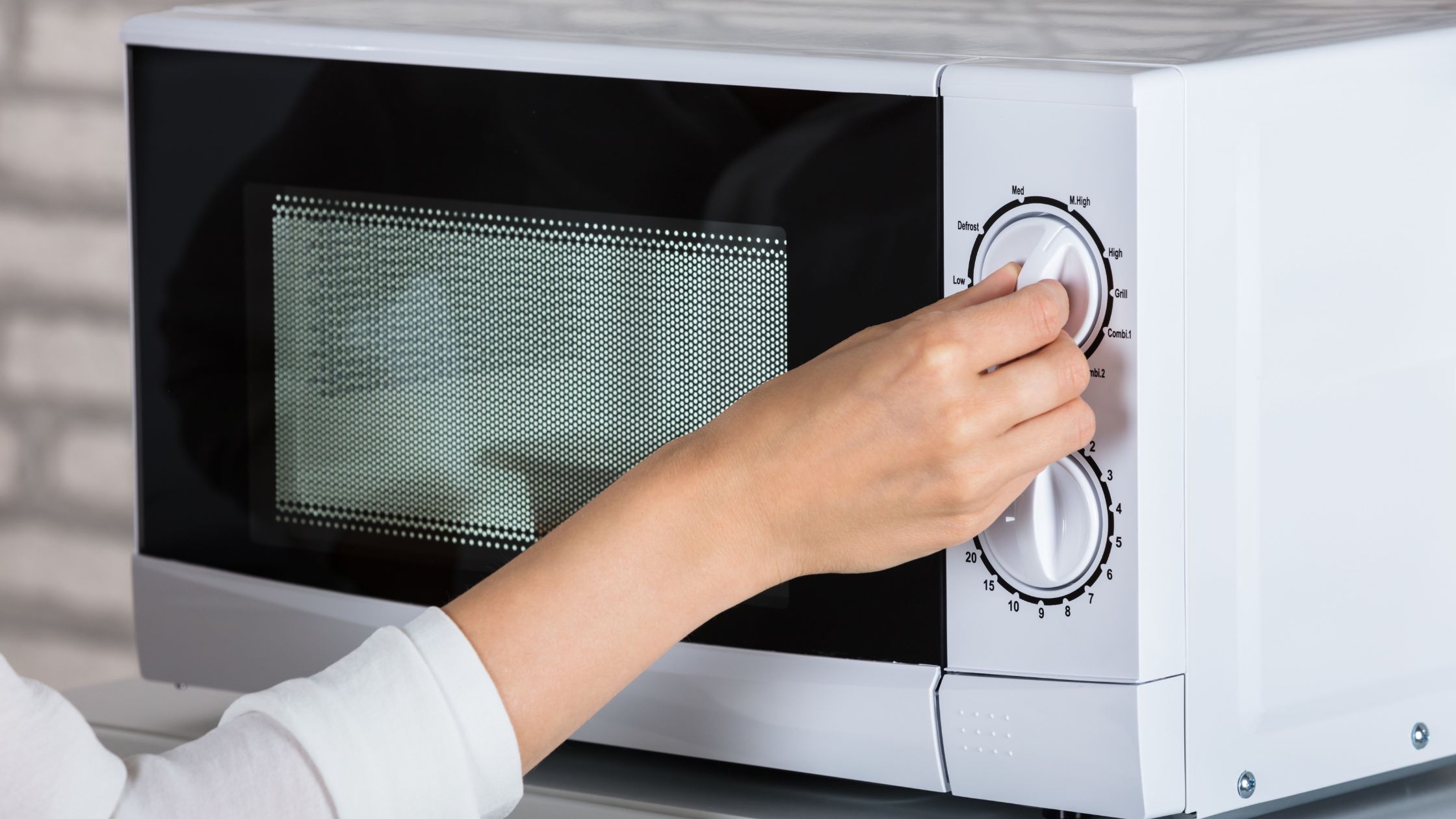
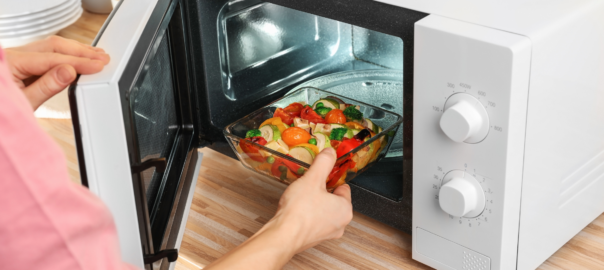
I know some people don't even have one in their homes.  I think if we didn't have one we would be okay.  However, since we do have it here are some of the ways I use it:

  1. Microwaving sponges to kill bacteria - two minutes every morning
  2. Proofing space for rising baked goods - it's a perfect draft-free space
  3. As a draft-free space for making sprouts
  4. It's a great warming oven for waffles and pancakes - I put a cooling rack in there and then pile the waffles and pancakes on the rack.  The proofing box space keeps everything warm and moist, the rack keeps the ones on the bottom from getting soggy
  5. To heat my buckwheat-filled neck wrap - great for a sore back, sore neck, or to warm your feet in bed on a cold night
Honesty compels me to admit I rewarm my tea in it (frequently) and my husband loves it for reheating leftovers. But we don't cook in it and if it weren't built in I might consider doing without it.

Questions about using a microwave oven

Answering questions from The Ingredient Guru Community, a couple of important comments came up:

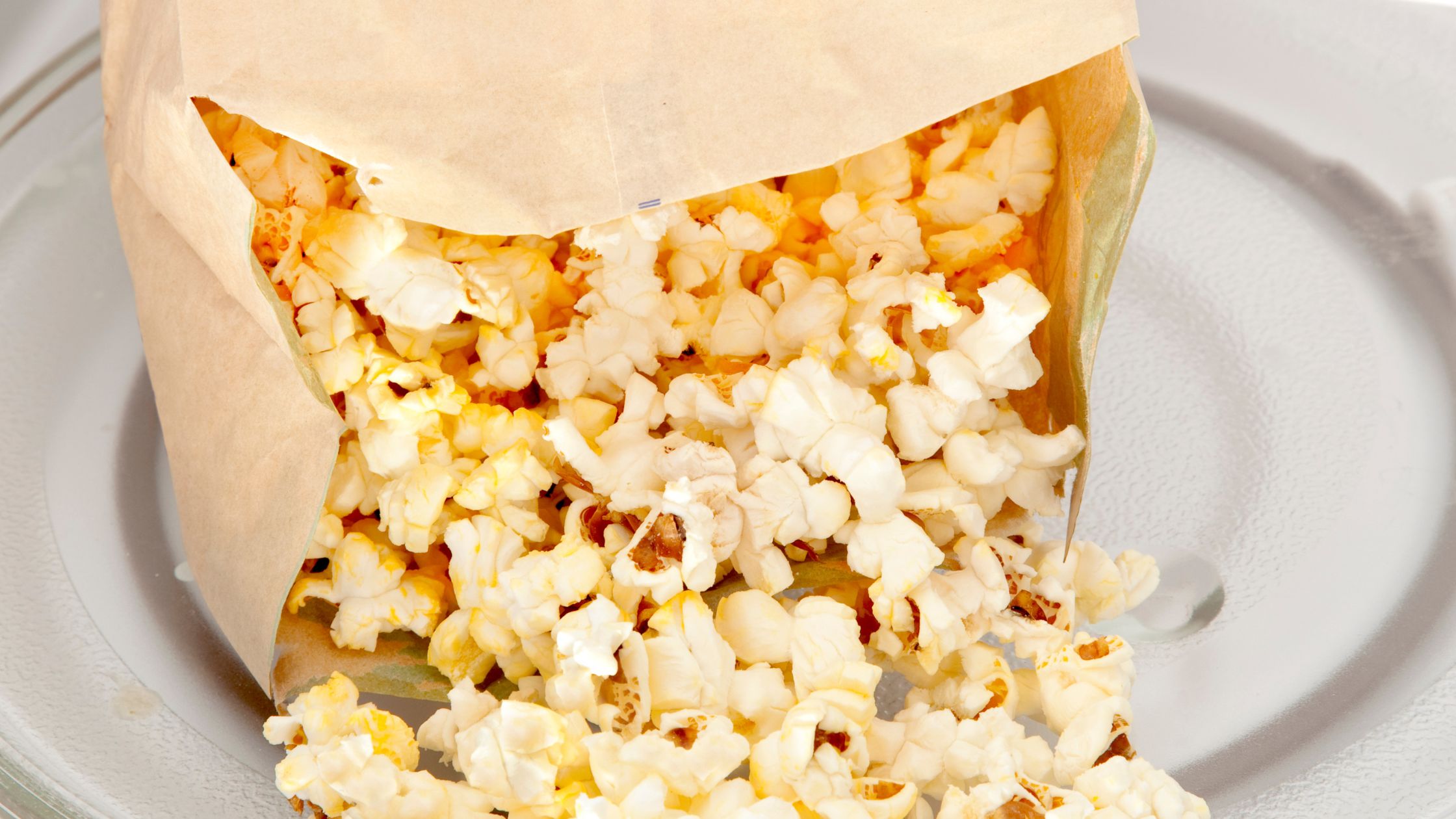
What about microwave popcorn?microwave popcorn

I'm sorry but this is a bad bad bad bad bad idea.  And did I mention that it's bad?  Why you ask?  Perfluorooctanoic acid (PFOA) is a known cancer-causing Teflon agent.
 
Admittedly all of the studies have only been done in rats. It's generally true that if it causes cancer in rats it is highly likely to cause cancer in humans, but that's another subject and I won't go there right now.  That bag lining is the same material that is in Teflon pans. I tell people to throw out all of their Teflon cookware and invest in non-Teflon.  I rarely tell people to throw things out, but this is one area where I feel it is never too soon to abandon the stuff.  
 
The problem with PFOAs is that when you open that hot steamy bag of popcorn you are exposing yourself far more than when you cook on a Teflon pan, through the steam and through what has leached into the popcorn itself.
 
According to one scientist, "It is estimated that microwave popcorn may account for more than 20% of the average PFOA levels measured in American residents."
 
Not only that, there's the "butter" (in quotes because it isn't) which is linked to lung disease in factory workers exposed to the vapors.  This is from the Diacetyl which is so toxic that "Significant new information regarding the health effects of diacetyl and food flavorings containing diacetyl (FFCD) affects the information that must be conveyed to employers and employees under the Occupational Safety and Health Administration’s (OSHA) Hazard Communication standard."
 
Bottom line:  shift to hot air or stove-top popped popcorn and don't eat the microwave stuff.
 

Cooking in a microwave oven
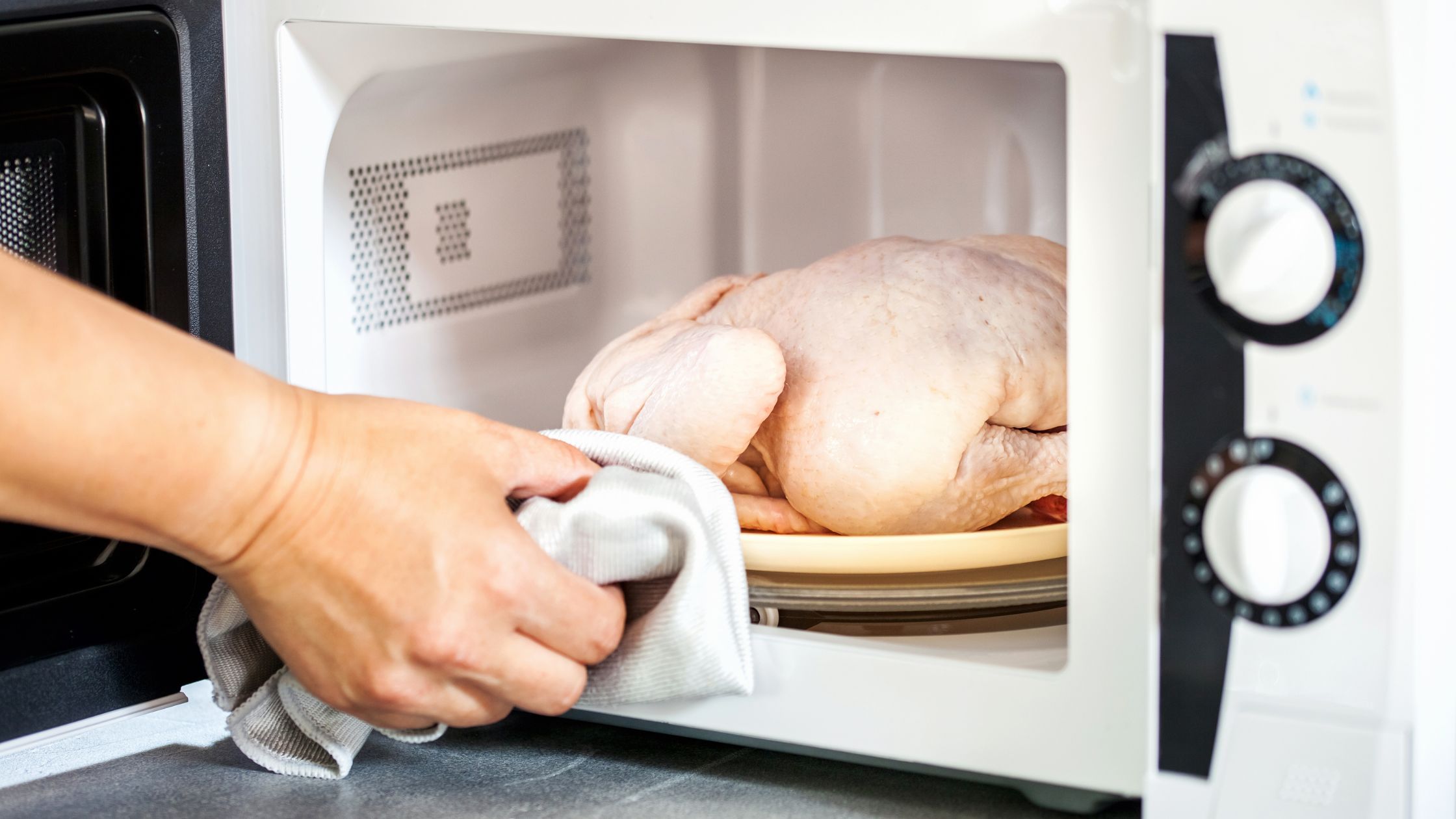
Microwave ovens work differently than other cooking methods and there are some health risks that go along with it.  
 
A study published in the American Journal of Epidemiology showed that cooking meat in a microwave oven does not kill bacteria (in this case salmonella).  The study concluded, "Compared with conventional methods of reheating, microwave ovens had no protective effect in preventing illness. To prevent outbreaks such as this one, care must be taken to assure that food is both properly cooked and handled and properly reheated.
 
Another study, from CEBAS-CSIC in Spain, comparing various cooking methods and their effect on the nutrient status of food showed that steaming is the best way to cook vegetables. The worst is to microwave them; more nutrients are lost during the microwave cooking process.
 
Cooking in a microwave oven has also been shown to convert B12 to the inactive form thereby depleting its bioavailability by denaturing up to 40% of it in the food.  We all need B12, if you're a vegetarian or a vegan this is even more critical.
 
To be fair all methods of cooking will reduce nutrient status somewhat, that is part of the process from heat.  And if you are steaming especially vegetables, it can be a good idea to drink the nutrient-rich broth that remains behind.  But overall microwave 'cooking' is, in my book, not a good idea.

In conclusion

So the end result?  I certainly have no complaint with people wanting to reheat their food or beverages in a microwave oven.  I do, however, think it's not a good idea to cook in it.  And I think if you are re-heating something, you are best served to remove it from any plastic or coated surface, put in it ceramic, and use the oven to avoid any potential fumes or chemical leaching.
 
Let me know your thoughts, how you use your microwave oven, and/or if you are considering changing what you do based on the information you find here.
 
 
*  A small nerd-humor note.  I find myself consciously referring to microwave ovens as microwave ovens rather than as 'a microwave', 'the microwave', etc.  The reason?  My husband delights in telling me that "Microwaves are itty bitty little particles that you cannot see."
 

[expand title="Sources"] 

Sharma, Manan et al. "Effective Household Disinfection Methods Of Kitchen Sponges". Food Control, vol 20, no. 3, 2009, pp. 310-313. Elsevier BV, doi:10.1016/j.foodcont.2008.05.020.

"Dietary Exposure To Perfluorooctanoic Acid (PFOA) And Perfluorooctane Sulfonic Acid (PFOS): A Review Of Recent Literature". 2022, p. ., https://www.tandfonline.com/doi/abs/10.1080/15569543.2017.1346685.

"Dietary Habits Related To Food Packaging And Population Exposure To Pfass | Environmental Health Perspectives | Vol. 127, No. 10". 2022, p. .,https://ehp.niehs.nih.gov/doi/full/10.1289/EHP4092.

"Popcorn Lung - Proquest". Proquest.Com, 2022, https://www.proquest.com/openview/273563539a6e7e57374db21d4490d7b9/1?pq-origsite=gscholar&cbl=1096447.

Gessner, Bradford D., and Michael Beller. "Protective Effect Of Conventional Cooking Versus Use Of Microwave Ovens In An Outbreak Of Salmonellosis". American Journal Of Epidemiology, vol 139, no. 9, 1994, pp. 903-909. Oxford University Press (OUP),doi:10.1093/oxfordjournals.aje.a117096.

[/expand]

Food And Money

The USDA is predicting an increase in all foods for 2011; depending on the item it is expected to range from 2% for things like sugars and cereals to as high as 5.5% for dairy products.  If you are interested you can see the chart here.  Part of the increase is due to the higher costs for corn and soybeans.  Remember, it’s a cycle, what we eat needs to eat.  I actually anticipate that the costs for meat will be much higher than currently predicted due to more people deciding to purchase meat and dairy that is organic to avoid the GMO contamination of corn and soy.  These are two of the most heavily GMO crops but our government doesn’t identify that so the only way to avoid it is to purchase organic.

There are a number of ways that you can save money on your food bill in the upcoming year:

Plant a vegetable garden.  Using your space for edible gardening can be attractive and save you food dollar costs.  During both World Wars Victory Gardens were planted in every yard and public park all across the United States.  It’s a concept that I think many people are rediscovering.

 Even if you buy a tomato plant at the garden center and plant it in a pot you will still get far more produce than if you purchase your tomatoes at the grocery store.  And believe me, they’ll taste better.  We’ve just re-arranged our side yard and brought in a load of organic dirt, working on creating a better vegetable garden.  We’ve also put in herbs and a few fruits in the yard.  

Here are a couple of books that I think are great for backyard vegetable gardening

Mel Bartholomew is the authority on getting the most out of the smallest space. If you have any gardening space available, even just one square foot, you’d be amazed at what you can grow.


Rosalind Creasy shows you how to incorporate beauty and function in your garden by making your landscape edible.


If you live in an apartment or don’t have access to a plot of ground you can consider container gardening.  Even one  reasonable size container can grow a lot of tomatoes and basil or peas and mint or…read the book.


And there seems to be an increase in folks growing food on rooftops and terraces.


If you shop at warehouse stores frequently the prices are good but the quantities are huge.  Don’t buy more than you need, after all 50 pounds of potatoes is a lot, especially in a family like ours with just three people in the house.  Just because the price per pound is low, if you wind up throwing out rotten potatoes (or anything else) you’ve just lost money.  If you really want the item consider saving money by asking family, friends and/or neighbors if they want to share these items with you.  This way you’ll both save money and there will be less waste.

And speaking of waste…


According to Jonathan Bloom, author of American Wasteland, Americans, on average, throw away half of their food.  Half!  That’s a mind-boggling concept.  Knowing, really knowing exactly what is in your pantry is a great start, learning how to be mindful of it is the next step.  Jonathan has a lot of great information on his blog to help you avoid food waste.  Don’t want to read the book (although I highly recommend it)?  There’s an app for that — yup, a company called UniByte has created an app to help you better manage your food purchases so you will waste less.


If you do wind up with food waste, and some of it is inevitable such as potato peelings, egg shells, coffee grounds, and the like, consider composting.  This is also environmentally friendly in that the food scraps become usable dirt instead of going to the landfill where they cannot be used to grow more food.  

A little off the beaten path but for those who have access, inclination, and a sharp eye there is always the idea of foraging.  According to my friend Merriweather it is important to remember a couple of key points:

1.  Know what you are foraging.  Many edibles have an inedible counterpart that looks almost the same.  He points out that these inedibles wind up in either the “kill your kid dead” or “keep you on the toilet sick” category so it’s important to be very sure of your identifications.

2.  Forage responsibly using appropriate tools to cut and dig rather than ripping and shredding.  This allows the plants to continue to grow and is the best way to forage.

3.  Make sure you have permission. Here in Texas, and probably elsewhere, plant rustling is against the law.  Getting a huge fine for public trespassing or theft is not going to help your grocery bill any.

While Merriweather sadly does not yet have a published book there are some great foraging books out there:


And last, but certainly not least, another way to save money at the grocery store is to learn to make your own.  One of my favorites is making my own granola which definitely saves money over the store-bought versions.  You can make your own pudding, soups, muffins, snacks, spice mixes, beverages, pickles, jams and much much more.  Currently I am fermenting kimchi on my kitchen counter, starting another batch of kefir and have just finished making another batch of bean sprouts.  These require very little hands on time and save quite a few dollars while providing healthful foods for my family.  Making your own has a number of benefits:

1.  It will save you money
2.  You will avoid extra packaging and commercial waste
3.  You will avoid additives, preservatives and chemicals (which you don’t need in your diet anyway)
4.  Often when you make your own you make smaller batches so you are less likely to waste it

So here’s to a new year, a new grocery budget, and new possibilities for your health.
what's in season: june

Superfoods Trending Down

According to a recent news article, superfoods are trending down.  Not all superfoods, just the ones that have been the media darlings, acai, goji berries and the like.  I actually like this trend because as I wrote previously (back in 2008 I might add) we don’t need to import superfoods. Bringing them to your table from other countries that adds to the environmental impact of sourcing them. We would do better to utilize those that are readily available.  It’s more sustainable, eco-friendly, and also easier on your wallet.

What are superfoods

While there isn’t a true definition for a superfood, it’s generally accepted that they are foods with high levels of vitamins, minerals, and/or antioxidants. Eating them is supposed to be beneficial due to their increased nutrient values. To take advantage of their health benefits, choose local, or domestic, options.

Domestic superfoods

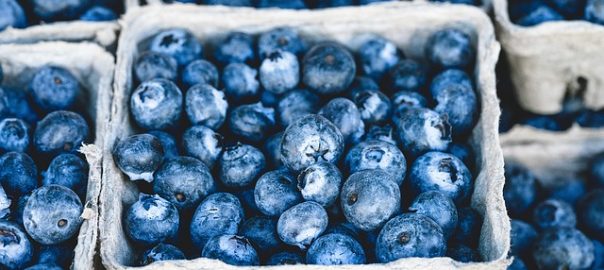
Berries– with lots of fiber and antioxidants they’re great and easy to add to the diet in cereal, yogurt, salads, plain, anytime.
 
Eggs – high in protein (1 egg provides 6 g) with lutein and zeaxanthin (good for your eyes) eggs are nourishing, versatile and satisfying.
 
Nuts – raw and unsalted are the best. Soaked nuts are optimal for good nutrition. Providing monosaturated fats they are a great heart-healthy choice.  Add them to foods such as cereals or baked good or take some along for healthy nutrition boosting snack.
 
Broccoli – yes, it is a super food.  With an amazing nutritional punch, it provides not only fiber and a wide range of vitamins, but it also has sulforaphane which is a potent cancer-fighting detoxifier.
 
Beans – with a hefty dose of fiber and iron beans are an all-around good for you food.  Soups, stews, and dips are a great way to add them to your meals.
 
Beta-carotenes – okay so this isn’t a food but rather a group of foods.  Found in orange foods (think sweet potatoes, winter squashes, carrots, etc) and dark leafy greens (the chlorophyll hides the color) like kale, spinach, collards, and more betacarotene is a powerful antioxidant that supports immune system health, reproductive health, and it’s very good for your eyes.
 
So while imported superfoods may be trending down I’m rooting for an overall upward trend in the concept of nourishing foods.
 

Gluten Free Cookie Fun

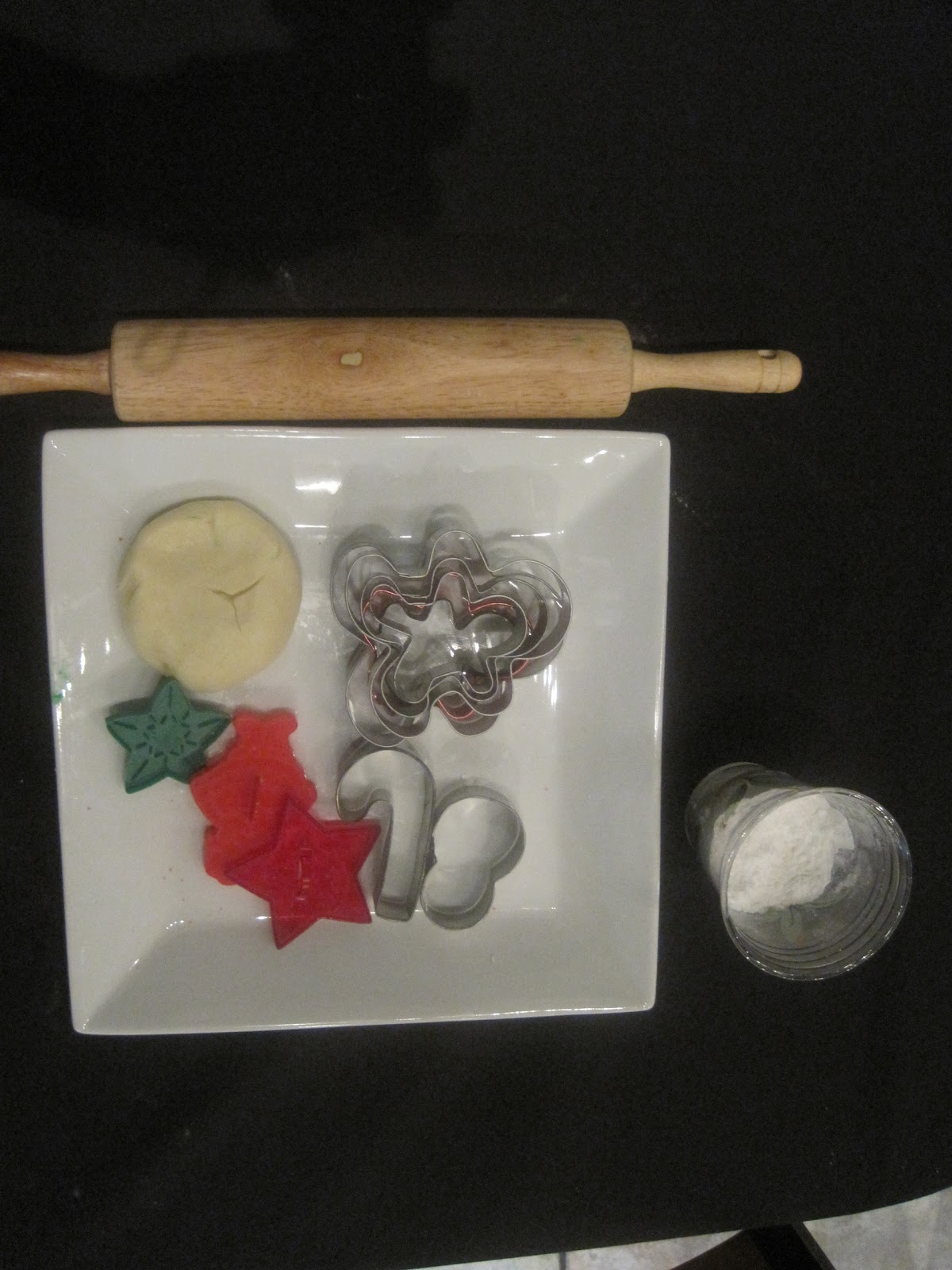
Walking into The G’s Healthy Gourmet with a couple of borrowed kids I am greeted by the sounds of Christmas carols playing over the speakers and the sight of children rolling dough and sprinkling flour.  Tiffany, the Pastry Chef, and her husband, Nick, the Executive Chef at The G’s, greet us at the door.   We settle at a table while Tiffany brings us our supplies…rolling pins, a block of cookie dough, a bowl of her own specialty gluten-free flour, cookie cutters, milk (because what goes better with cookies than milk?) and a plate of cookies to munch on while we are working.

Rolling out the slightly cold dough and pressing the cutters into it is a lot of fun for the kids.  It’s hard to get the cold dough started, the adults help get things going.  Some of the children seem to really like the idea of flouring the table, the rolling pin, the dough, the floor; Tiffany assures the adult guests that they have someone coming in to clean up after the event is over.  Rolling, cutting, reshaping and re-rolling the dough, the kids are having a lot of fun.  Excitedly chattering away about the choices of cookie cutters they are using the children quickly fill up their baking trays.  After getting each child to initial their parchment paper lined tray Tiffany and Eric, her assistant, take the cookies back into the kitchen and slide them into the oven.


Ten long agonizing minutes.  Waiting and waiting for those cookies to come out of the oven.  Playing with flour.  Making shapes out of left over dough.  Is it ten minutes yet?  Are the cookies ready yet?

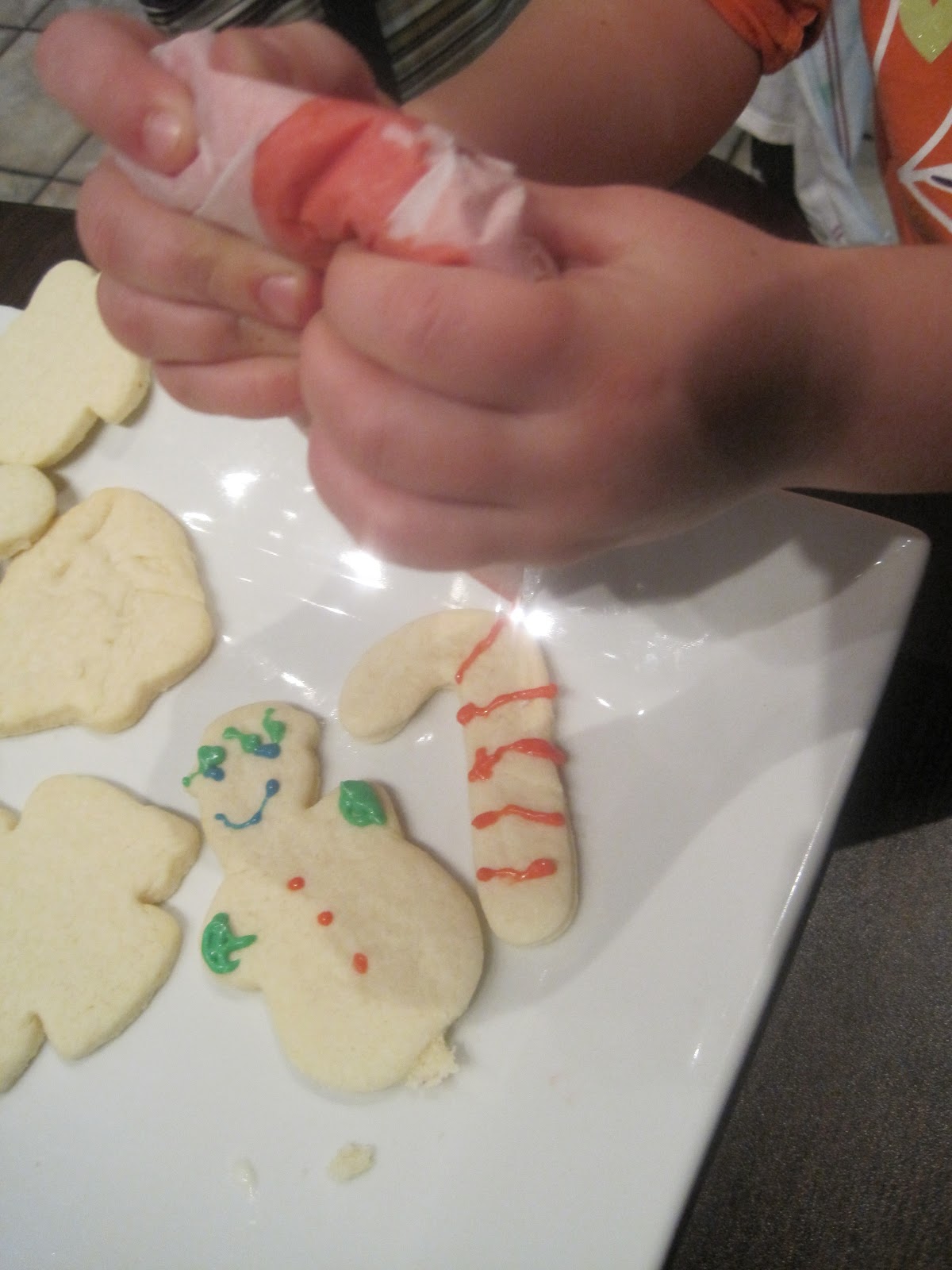
Then the wait is over and the warm cookies arrive.  A pretty pile of holiday shapes all waiting for their final transformation.  With them come bowls of fluffy frosting (a serious temptation for little fingers), parchment paper frosting-filled bags and the excitement of creating a masterpiece.

It was clearly obvious that everyone, kids, parents, the folks at The G’s, had a good time.  Each child went home with their cookies carefully placed into a stack of take-out boxes, proudly carrying the haul of their handmade creations.  What a  sweet way to start the holiday season.

What’s In Your Water?

Water | Abhijit Tembhekar | Wikimedia Commons

Everyone seems to be drinking more water these days, that’s a good thing.  Unfortunately though many kids are drinking flavored water drinks that are presented as healthy.  You know the ones I’m talking about.  They come with names like Vitamin Water and Fruit2O.  Let’s not even start with the whole sports drink issue.

I was horrified when the pediatrician told my daughter that she needed to add more water to her diet, suggesting that she start drinking Propel.  My daughter was thrilled and turned to me with a gleeful look on her face that faded when she saw my expression.

I am continually amazed at how manipulated we are by manufacturers.  There is no other way to say this other than to just say it.  Water is water period end of story.  Why are they trying to fancy it up with all sorts of chemical additives for color and flavor, and why are they adding preservatives.  Preservatives?  What’s in water than needs preserving?

Are many of us dehydrated?  I believe the answer is yes.  Do we need 8 glasses of water per day?  That depends on what your bio-individual needs are.  If you live in a climate that causes you to lose a lot of moisture or you exercise a lot or you don’t eat high moisture foods and take in other liquids it all adds up.  However I also believe that by the time we feel thirsty we are generally more dehydrated than we realize.

Dehydration is known to cause headaches, can lead to worsening asthma, hypertension and other health issues.  Proper hydration is also key to helping the body eliminate toxins.  That is why it’s important to make sure that we are getting enough fluids to stay well hydrated.  Breathing, digesting, sweating, and excreting all cause us to lose fluids.

If what we need is to stay well hydrated what we do not need is all of the extra chemicals that come with most packaged water drinks.  Not only that if you look at the label you will see that they are misleading you by claiming to only have a certain number of calories.  What you need to remember is to look at the label and see how many calories are in a serving and how many servings are in a bottle.  One bottle of VitaminWater has 50 calories and 13g of sugar per serving.  The label purports to contain 2.5 servings per bottle.  Most people I know drink the whole bottle; that means 125 calories and over 32g of sugar per bottle.  And those are empty calories.  Providing no nutritional value and not filling you up at all.

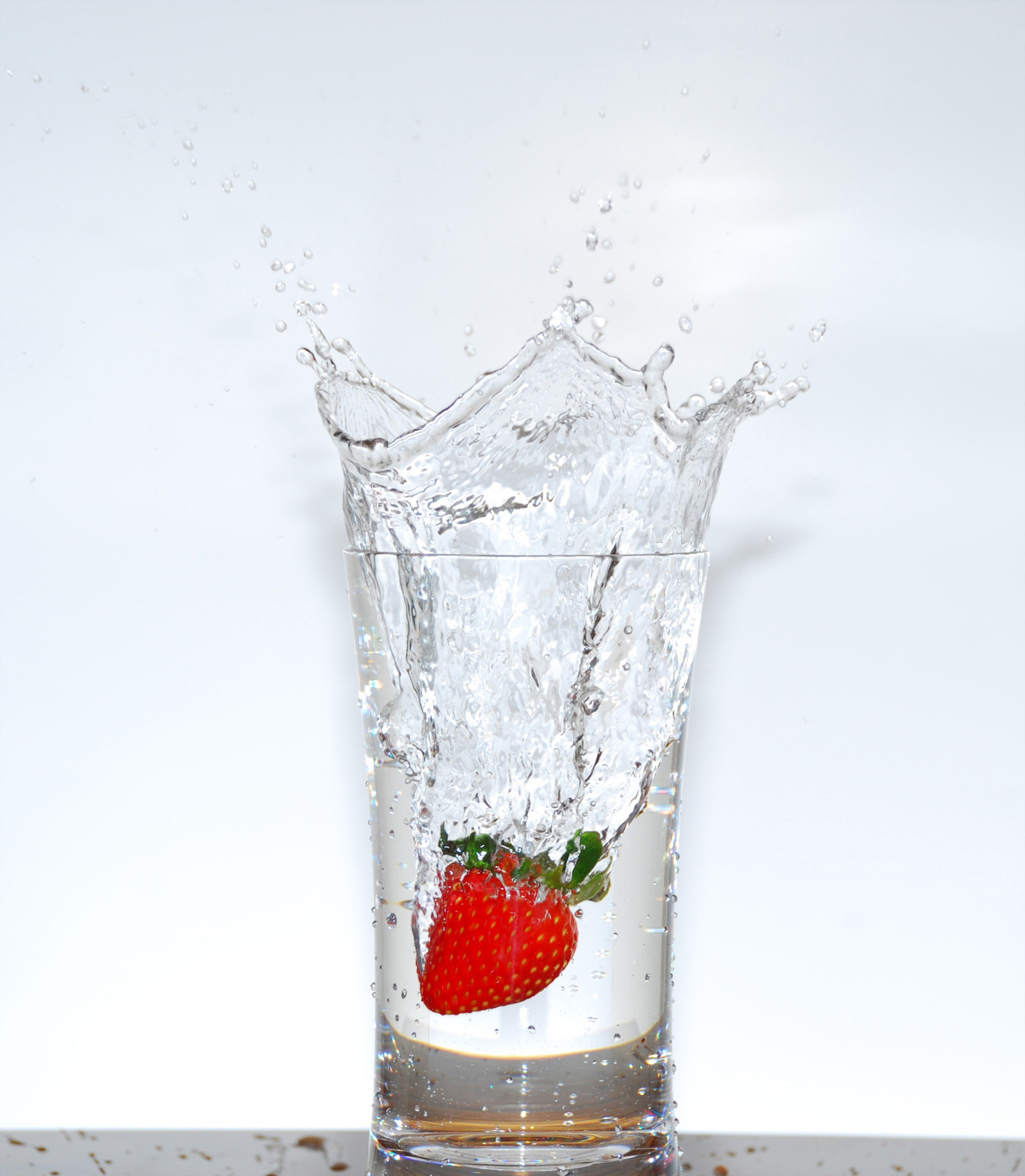
Let me give you a hint, there are no calories in water.  If you are looking for a little flavor in your water consider adding a slice of fresh fruit, a squeeze of citrus, a slice of cucumber, or a sprig of mint.  These all add a lot of flavor without adding sugar, calories, “natural flavors”, or other chemicals.  Just drink water.  It’s what your body needs.

Recipe Calendar

I’m excited beyond words.  


That image to the left?  It’s a recipe calendar…my recipe calendar.  Put together with the favorite, most loved recipe posts of this past year.


This is the first time I have ever set them down in glossy-print-and-photo; I’m so happy to see and hold this calendar, for me it represents another professional step forward.  


One of the neat things about it is the CD style case which presents each month upright in the holder.  On the back of each month is a recipe.  When the year is over the cards are sized to fit in a regular 4″ x 6″ recipe card box making them easy to keep and use year after year.


If you’re looking for a great gift or stocking stuffer (for yourself or for someone else) I’d be more than thrilled if you would choose to give one of these.  Ordering is as simple as clicking on the button in the left sidebar.


Wishing you and yours a happy healthy holiday season.  Thanks for all of your support and encouragement over the last 12 months, it’s been great and I look forward to the next twelve.  

winter sunshine, vitamin D

Winter And Vitamin D

Recently I have been getting a number of emails with questions about vitamin D;  I’m sure it’s generated by all of the press about the changing recommended levels, levels of exposure and how important it is for our health.

Where to get Vitamin D

Vitamin D, known as the “sunshine vitamin” is a fat-soluble vitamin produced in the skin by exposure to ultraviolet (UV) type B rays.  For food sources we can look to fatty fish and eggs as a good source of vitamin D. It is often added to milk.  
 
I have a personal theory that part of the reason behind the epidemic of vitamin D deficiency is that our parents were forced to take cod liver oil by their parents.  They hated it so much they decided not to give it to their kids.  The science of the times did not recognize how important cod liver oil was and it was considered “old-fashioned.”  As a result of this, I, and many others of my generation, grew up not taking it.  So we didn’t give it to our kids.  While I’m not sure how much scientific veracity there is to that theory it certainly seems to fit the current situation.  Decreased cod liver oil consumption combined with reduced sunshine/increased sunscreen and suddenly many people, including pregnant women and their infants, are deficient.
 

The importance of Vitamin D

Why all of the scientific attention to vitamin D lately?  It turns out that it’s very important for our health and there are significant consequences to being deficient.  Not only does vitamin D help support our bone structure, it’s vital to immune system health, increasing activity of our natural killer cells and macrophages.  Many studies now show that it may help protect against cancer, cardiovascular disease and there are even suggestions that vitamin D deficiency may be a contributing factor to increased influenza rates during the winter months.

How much should I take?

One question I recently received about vitamin D was concerned with how much to take:
 
I was taking 400 IU but a while back started reading about re-examined attitudes toward D and upped it to 2,000 IU.  Then I thought that might be too much so I am currently taking 1,000 IU.  Your thoughts?”
 
Here’s a little information to help you understand vitamin D better.  
 
I believe, and the studies support, that we do not get enough and that the levels set by the government are too low.  If you wear sunscreen you need to be aware that SPF8 and over will effectively block UV-B; this means your body cannot synthesize D from sunlight.
 
If you do not get enough outdoor exposure, are over 60 years of age (our ability to synthesize D decreases as we age), and/or live in northern latitudes you are probably not getting enough vitamin D.  Someone who lives in New England or further north generally does not get sufficient vitamin D during the winter months and can become deficient.  Especially if they did not have sufficient stores to begin with.
 
How to find out if you need more?  You need to get a blood test.  It is important to get the 1,25 OH-dihydroxy,  not the 25(OH) vitamin D to find out what your levels are.   Taking between 2,000-5,000 IU per day is not unreasonable, especially in the winter.  
 
Osteomalacia (vitamin D deficiency) is often treated with 5,000-50,000 IU for three to six months.  Once a good level is reached doctors usually drop people to 1,500-2,000 per day.  Most doctors aim for at least 30-40 ng/dL (nanograms per deciliter) although many Functional Medicine practitioners prefer a level of 50-80 ng/dL.  It is important to note that too much vitamin D can be just as bad for you as too little, which is why it is important to get tested and know what your levels are.

How to get vitamin D

When you take vitamin D is it best to take it as vitamin D3 (cholecalciferol) combined with K2 which is the most effective form.  D2 (ergocalciferol) is not as effective.  
 
I personally prefer to take a sublingual D3/K2 liquid formulation to make sure that I am getting the best possible absorption. A combined liquid formulation also ensures that I am getting a synergistic balance of the proper amounts of D3 to K2.

The very best way to get your vitamin D?  Get sunshine.  Whenever possible get 15-20 minutes per day before you put on your sunscreen.  

More Information

Here are a few other resources which provide good information about vitamin D: