All posts by Mira


About Mira

Mira Dessy is The Ingredient Guru. A holistic nutrition professional, author, and a popular public speaker, she knows that it's not just what you eat, but what's in what you eat. She is the author of The Pantry Principle: how to read the label and understand what’s really in their food. Dessy is a Board Certified Holistic Health Practitioner whose mission is to educate and empower consumers. She curates the Lean Clean Green Subscription box, the premier, organic, earth-friendly, healthy, sustainable subscription box which can be found online at https://theingredientguru.memberbox.com

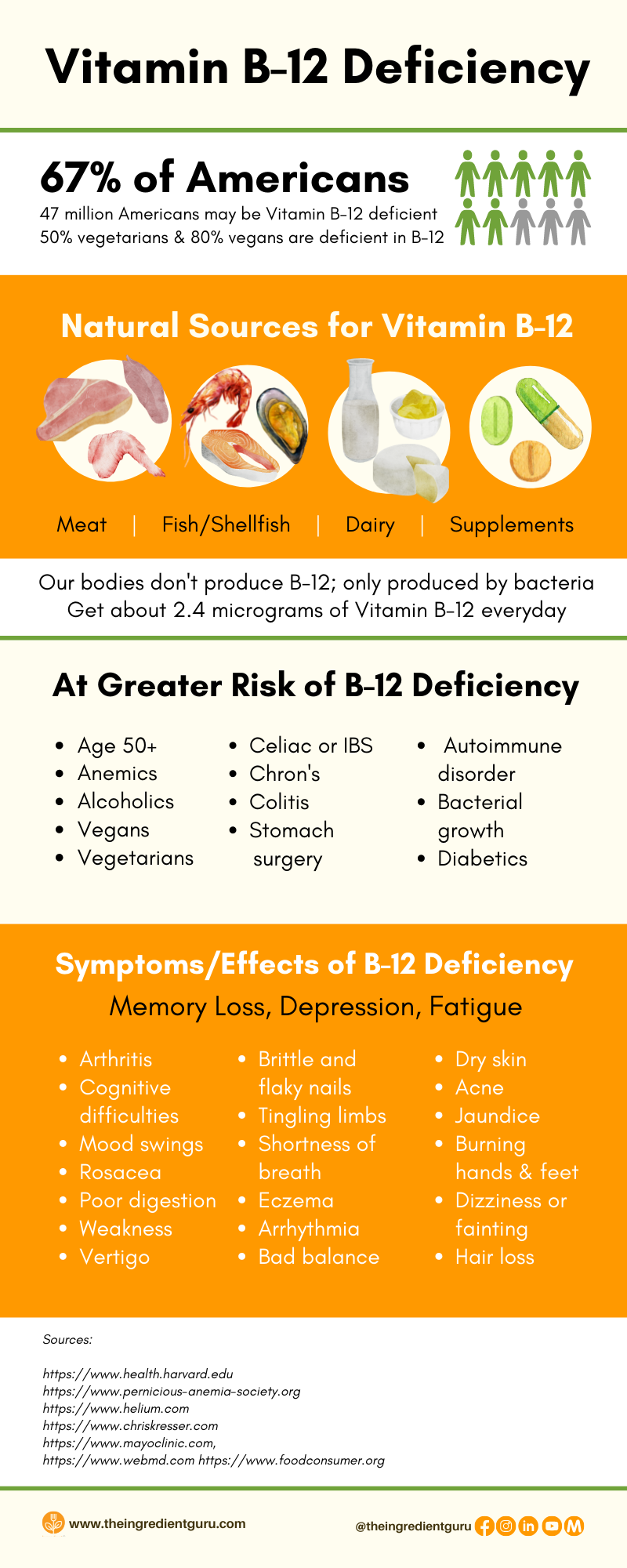
What’s Vitamin B12 For?

Recently at a pharmacy I saw a sign "Do you have low energy? Trouble with weight loss? Foggy thinking? Anemia? Get your B12 shots here!"

Many people may be deficient in B12; as a water soluble vitamin we tend to go through it pretty quickly.  As we age we tend to lose our ability to process B12 optimally which may lead to deficiency.  And deficiency is often found in those who are smokers, pregnant, or breast feeding.  Then there are those who have a variety of disorders such as crohn's, celiac disease, SIBO (small intestinal bacterial overgrowth), or pernicious anemia.  In some cases it can take five or more years before you see signs of deficiency.

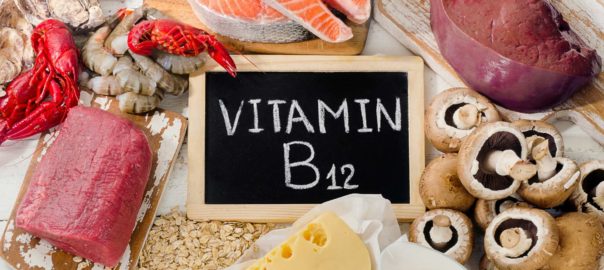
The largest population with a tendency toward low B12 is vegetarians and vegans.  This is due to the fact that animal foods such as sardines, salmon, tuna, cod, lamb, scallops, shrimp, and beef provide the highest levels of B12.  It is possible to get it from other food sources, however those are the best ones.

B12 is vital for optimal many body functions.  The body uses it to convert carbohydrates into glucose which our body uses for fuel.  If we don't have enough, or if we aren't converting properly this can cause fatigue.  It also supports a healthy nervous system, helping us to balance stress and contributes to a balanced circulatory system, supporting good cholesterol levels and blood pressure.  B12 is also vital for healthy hair, skin, and nails.

But is taking shots the right things to do?  There are some claims that the shot can be taken as often as twice a week.  However there can be side effects up to and including diarrhea, stomach upset, headache, joint pain, or even flushing, rashes, or hives.

Before simply taking a B12 injection it would be prudent to obtain a comprehensive micronutrient panel to determine if you are actually low.  If you are deficient in B12 consider modifying your diet to include more B12 rich foods, supplement orally, and also evaluate if you need appropriate digestive support to ensure you are absorbing what you are putting into your body.

What’s In A Biscuit

Screenshot 2014-09-27 10.24.44

For some reason I’ve been seeing a number of recipes lately that seem to include the use of a can of biscuits.  Maybe it’s because Fall is here and so there are more stews and “comfort” foods being made to accompany the change in seasons.

Truthfully I used to use these a lot myself. Especially when my children were younger. It was an easy to way to get a quick batch of biscuits into the oven to have with dinner. They also made great donuts when coated with cinnamon sugar and fried. Or rolled out they made a quick and seemingly tasty crust or wrap for something.  They even made great snacks when cut into bite size pieces, rolled in melted butter, and sprinkled with parmesan.

Now I shudder to think about eating that and I’m horrified at the thought of all of those chemicals that I fed my children.  For those who can and do eat gluten, if you’re still eating this type of whack-and-bake product it’s truly not a good choice.

Let’s start with the Nutrition Facts:

This label demonstrates one of my biggest issues with how the label works.Screenshot 2014-09-27 10.31.23It doesn’t tell the truth.  Right there on the label we see “Trans Fat 0g.”  That leads us to believe that there are no trans fats.  And since we’ve all pretty much learned that trans fats are bad for you we think we’re doing a good thing by avoiding them.  But are we really?

Not here.

Because when we skip down to the Ingredients List we find the following:

Enriched Flour Bleached (wheat flour, niacin, ferrous sulfate, thiamin mononitrate, riboflavin, folic acid), Water, Soybean and Palm Oil, Baking Powder (sodium acid pyrophosphate, baking soda), Dextrose. Contains 2% or less of: Hydrogenated Palm Oil, Partially Hydrogenated Soybean Oil, Sugar, Salt, Vital Wheat Gluten, Mono and Diglycerides, Xanthan Gum, Propylene Glycol Alginate, Yellow 5, TBHQ and Citric Acid (preservatives), Butter, Red 40, Color Added, Natural and Artificial Flavor.

Near the bottom we see Hydrogenated Palm Oil and Partially Hydrogenated Soybean Oil.  ANYTHING that is hydrogenated or partially hydrogenated IS a trans fat.  So how do manufacturers get away with this?  Isn’t that lying?  Not according to the standards used for nutrition fact reporting which allow them to say there are no trans fats if there is less than 0.5g per serving.

What is a serving?  It’s what the label says it is.  A portion is what you serve yourself.  Regardless of how many biscuits you eat, even if you just eat one you are still getting trans fats.  Guaranteed.  Because it’s in the ingredients.

And that doesn’t even begin to address all of the other nutritionally damaging ingredients found in this product.

Enriched flour is nutritionally deficient.  Notice all of the ingredients after “wheat flour” in the parenthesis?  Those are mostly B vitamins with some iron that are put back into the flour by Federal mandate.  But the flour is still missing all of the other ingredients which are stripped out in processing.  And then it’s bleached.  Enriched anything is not a healthy choice.

The dextrose is probably from corn and mostly likely genetically modified corn at that.  The soybeans are probably also genetically modified.  GMO foods are simply not a good choice for health.  The citric acid is possibly also sourced from corn and therefore likely to be GMO as well.

Artificial colors, yellow 5 and red 40.  While it may not look like a colored item this canned biscuit product does have artificial colors.  TBHQ, Propylene gycol alginate, artificial flavor, there’s a huge array of chemicals in this product and it’s not something that anyone should be consuming.

Sadly we often think that convenience foods are, well, convenient.  We don’t realize that in order for them to be shelf-stable and ready to go it means lots of chemicals and not a lot of nutrition.

For those who can eat gluten and who want biscuits to go with their meal it’s still possible to have them.  And although it takes a little more work, it’s truly not that much effort and the results are far better (and much better for you) than a chemical concoction from a can.

Soaked Flour Biscuits

1 cup whole wheat flour
1 cup oat flour
1 cup organic whole milk
1 tablespoon raw unfiltered vinegar

Mix vinegar and milk together and let sit 5 minutes until milk curdles slightly
Add to wheat and oat mixture, combining thoroughly
Let sit 8 hours to soak

1/2 teaspoon baking powder
3/4 teaspoon sea salt
1 teaspoon baking soda
1/4 cup organic, unsalted butter, cut into slices

Preheat oven to 450 F
Sprinkle baking powder, salt, and baking soda over the flour mixture
Add butter and gently work butter into mixture to fully incorporate
Don’t over-mix the dough or your biscuits will be tough

Roll dough out on a lightly floured board to about 1″ thickness
Cut biscuits out with a glass that has been dipped in flour (so it doesn’t stick)
Place on baking tray
Bake 8-10 minutes until golden brown


Recovering From Knee Surgery

I had knee surgery six weeks ago.  Totally unexpected but necessary.  It turns out I had a torn ACL and needed a new one.  Under the best of circumstances surgery is never fun.  My situation is made a little more challenging due to my diagnosis of Ulcerative Colitis; anytime you have general anesthetic or antibiotics it can affect your system.  This time, however, I was more prepared; I have a daily nutrition plan and know more about supporting the body.

While I’m still in the recovery phase and definitely in the “danger zone” where I’m impatient to do more but realize I need to allow my body to heal fully and well at it’s own pace, I’m doing very well.  My surgeon, his PA, and my pain and torture physical therapy team are all very happy with my progress.

It goes without saying that in order for the body to heal it helps to start with a good nutritional basis.  If you live on fast food and sugars your body doesn’t have  what it needs to heal efficiently.  While I’m certainly not perfect I do work hard at making sure I have a well balanced, clean, whole food diet and good supplementation.  However I believe one of the keys to my success was/is enzyme therapy.  It is giving my body the materials it needs to rebuild and heal quickly.

The company that makes these enzyme supplements is called Transformation Enzymes.  I’m a huge fan, not just now because of my surgery.  Actually if anything I’m an even bigger fan now.  Transformation Enzymes is a great company with a very clean product that they put through clinical trials before they release it.  Long time readers will know that I am passionate about knowing what’s really in your food and avoiding the chemical contamination; their label says “absolutely no fillers,” it doesn’t get any better than that.

Below is the protocol that I followed.  It’s important to note that I was already taking the digestive enzyme and the probiotic before this happened.  I take these on a daily basis to support my health.  I also added in extra nourishing broth, 2 cups per day.

Digest – 1 with each meal – to ensure that you are getting enough nutrition from your food for healing

although if you are someone who needs to eat more gluten free then you would use CarboG instead

Probiotic 42.5 –  1 per day at bedtime – to ensure maximum digestive capacity

Protease IFC – 2 capsules 3 times per day – to calm the inflammation

RepairZyme – 1 capsule 3 times per day to provide nutritional support for healing

In addition to these supplements I took a few more:

Methylsufonylmethane – a sulfur compound that is very important for join health and also is supportive for bones, hair, skin, and for overall energy.  It’s found naturally in a lot of foods, the highest being in raw milk.  For those who don’t want to drink raw milk, dark leafy greens are a good way to get it.  For high needs, such as post surgery, supplementation is probably the best way to get it.

Arnica – this comes from a plant and is highly supportive for bruising, aching, and inflammation.  It comes in both a cream and a homeopathic pill.  I used both as needed.

Hypericum – I struggled with a lot of nerve pain down the front of my shin immediately after surgery.  Hypericum also comes from a plant, is available in a homeopathic pill, and is supportive for nerve pain.

I’m grateful to my medical team for the excellent work they did.  I’m also grateful to all my friends, family, and colleagues who offered support, visits, meals, and good wishes.  As I said at the top I truly believe that part of my healing process is due to having a good nutritional plan already underway.  Don’t wait until you need surgery or medical information to change your eating habits.  Small changes now will add up to a large, positive effect down the road.  It’s like I always say, “Eat well to be well.”

Healing Your Gut Naturally

6 Tips To Support Your Gut Naturally

Your gut doesn’t lie. It gives you that “gut reaction” when something isn’t quite right; it growls when you’re hungry, and a stomach upset is sometimes the first symptom of something amiss in your body. Indeed, your gut may be the most forthcoming part of your body, unable to mask the symptoms when something is wrong – and that’s a good thing.

Gut or digestive issues can be temporary (you went overboard on Mexican food last night), but for many people, they’re chronic, disruptive, and painful. And if you and your doctor have already ruled out other potential conditions that may be causing the problem, you’re probably wondering why the bloating, constipation, flatulence, and other irritating issues won’t let up. Collectively, this set of symptoms is usually diagnosed as IBS, or irritable bowel syndrome, and about 60 million Americans suffer from it.

Why Your Gut Needs Love

When we talk about your “gut,” we’re referring to your entire digestive tract. Along the path, through the stomach and small and large intestines, anything you ingest can either nourish or degrade the digestive organs. Your gut must assimilate nutrients, prevent toxins from permeating cells and move everything along in a timely fashion.

So if you think of the gut as being the “custodian” of an organism – sweeping out the debris to make sure things don’t rot, fester or cause disease – you can see why the rest of your body will suffer if your gut can’t do that quickly and efficiently.

Many experts in the medical community believe that true health starts in the gut. Digestive issues can affect the body as a whole, contributing to everything from allergies and acne to IBS, liver disease and even cancer. Your gut also shields your immune system, so when it’s compromised, you’re more vulnerable to becoming sick.

Dietary imbalances (too much sugar, processed foods, overeating), medication use, mineral deficiencies and even stress can also change the balance of bacteria in your digestive tract, leaving you susceptible to a host of different health conditions.

How to Support Your Gut
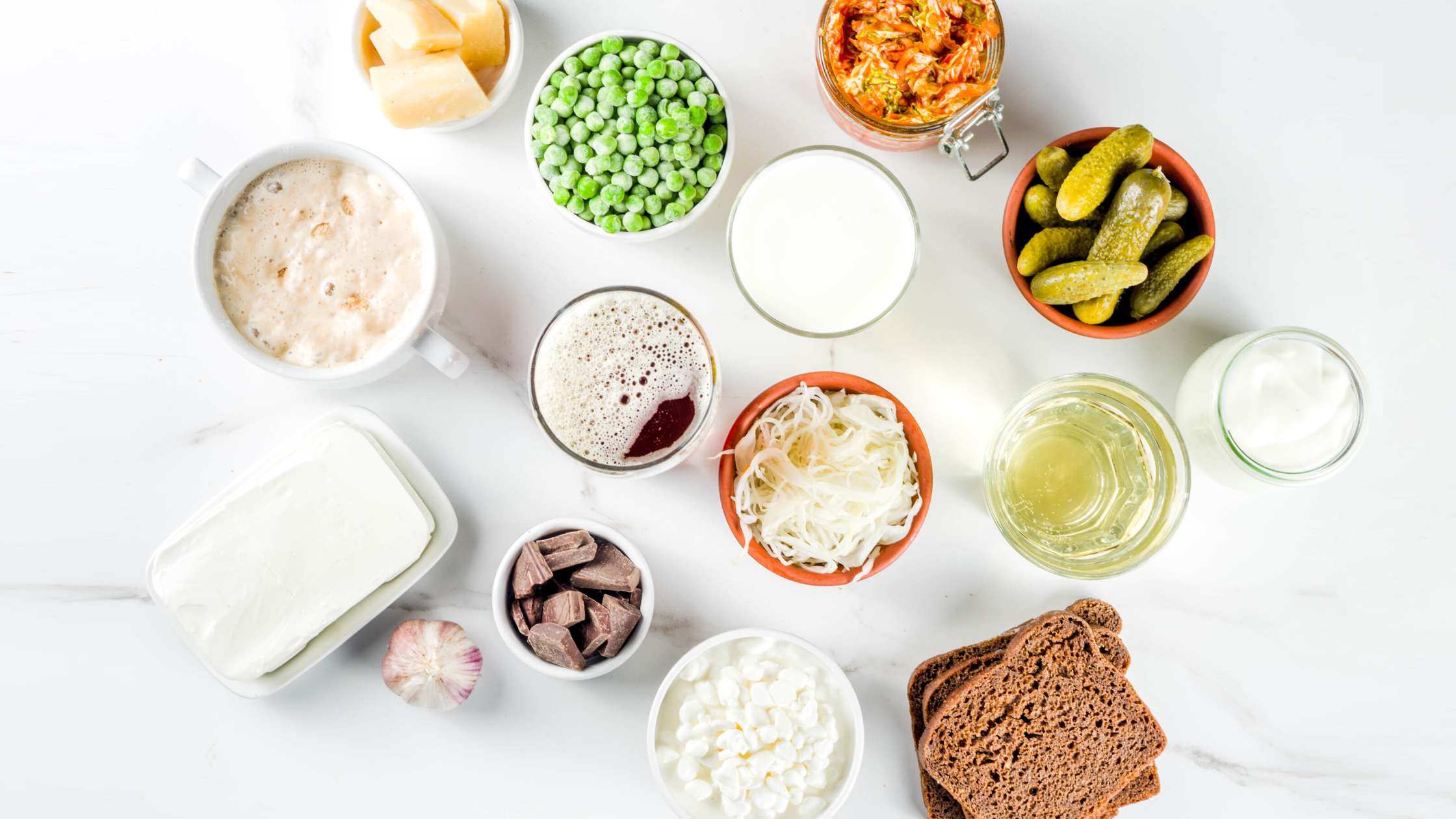
So how do you keep your gut healthy and efficient? It starts with some basic dietary changes. Additionally, a few high-quality supplements can complement this process:

1. Give GMOs the Heave-Ho.

You know that GMOs (genetically modified organisms) are a no-no, but what you may not have heard is that they have the ability to wreak havoc on your gut. Up to two-thirds of the processed foods on grocery shelves in the United States have genetically modified ingredients. And the GMO Project Organization [or is it Non-GMO Project] estimates that might be as high as 80 percent. There is evidence that exposure to GMOs can increase risk for gluten intolerance (which can manifest as various gut-disturbing symptoms). Opt for whole and organic products and you’ll avoid GMO exposure.

2. Pass on Dairy.

If you’re one of those people who make a beeline for the cheese plate, it will be no surprise that dairy can be addictive. Caseomorphins – a cousin of morphine or heroin – are protein fragments that come from the digestion of the milk protein, casein. In addition to making you want more, casein can be highly disruptive to your body. It raises cortisol and contributes to leaky gut syndrome – a condition that includes vague symptoms like bloating, cramps, gas, and food sensitivities.

3. Probiotics, Please.

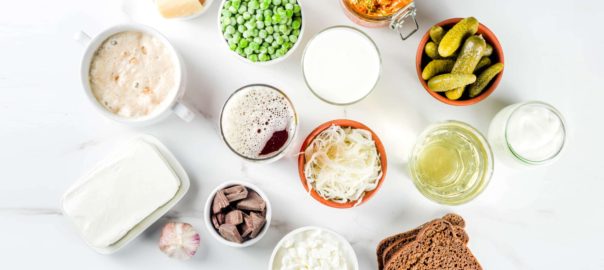
While antibiotics are designed to kill off harmful bacteria, probiotics do just the opposite – they keep your insides flourishing with a healthy colony of good germs. Since stress, diet and some medications can upset this balance, it’s important to refuel with probiotic-rich foods like sauerkraut, miso, pickles, tempeh and kombucha (avoid those sparkling probiotic drinks unless they’re naturally low in sugar). You can also take probiotic supplements, which help chronic digestive issues and conditions like IBS.

4. Water, Water, Everywhere.

If you think of your entire digestive tract as like one big Slip ‘N Slide, you can see why lack of water is a problem. Water is the life-giving force that makes up about 60 percent of our bodies. It moves things along in your gut and helps sweep away toxins through your urine and feces. Need I say more? Drink up.

5. Get Tested for Food Allergies.

Food allergies can lead to inflammation in all areas of the body, but especially in your gut. You can try the elimination method with certain foods to see if your digestive issues clear up, but it may also be worth getting an allergy panel test done by your doctor. Knowing you’re allergic to casein, for example, could offer invaluable insight about how to change your diet for the better.

6. Fill Up With Fiber.

Fiber isn’t just the magic solution for constipation. It helps to remove toxins, it keeps things moving and it protects your digestive tract from inflammation, injury and disease. An added bonus of fiber? It can curb your appetite by keeping you full.


If you’re thinking, “I’ve done all of these things, and my gut is still giving me grief,” you’re not alone. In that case, it may be helpful to try a detox or supplement program specifically aimed at cleansing your digestive organs. I offer two kits, My Gut Needs Love or My Gut Needs Advanced Love, that are designed to calm inflammation, remove toxins and give your gut the TLC it needs to become shiny and clean again.

While gut problems are indeed common, don’t just assume you have IBS if you’ve had long-lasting symptoms like cramping, pain or diarrhea. Sometimes digestive disturbances can indicate gallbladder, liver or kidney problems. If dietary changes or cleansing doesn’t alleviate your symptoms, it’s best to see your doctor to determine if there might be an underlying issue.

Sara Gottfried, M.D. teaches women how to balance their hormones naturally so they can rock their mission. She is a Harvard-educated physician, speaker and New York Times bestselling author of The Hormone Cure (Simon & Schuster, 2013). She is board-certified in Obstetrics and Gynecology, and is regularly featured in magazines such as Cosmopolitan, Glamour, Redbook, O Magazine, and Yoga Journal, and TV including The Ricki Lake Show and 20/20. Known for effortlessly blending the seriousness of women’s health with playfulness and humor, Dr. Sara’s mission is to help women lose weight, feel great and vital from their cells to their soul.

She is co-hosting a free live video event on September 3, 7 Power Habits to Double Your Detox and Weight Loss

Obesity Starts In The Past

This Rewind The Future public service ad from Children’s Healthcare of Atlanta shows the consequences of a lifetime of unhealthy choices and it’s impact on obesity. Rewinding from a 32 year old man having a heart attack back through moments in his life that collectively brought him to that point.

The ad is a, hopefully, sobering look at how your food DOES matter.  We’re often taught “a calorie is a calorie, just eat less and exercise more.”  To that I would like to point out the vast difference between 100 calories of broccoli and 100 calories of french fries.  Our bodies are amazing but they still need the correct fuel to run properly.  Borrowing a metaphor from Liz Lipski, “We fuel our bodies the way we fuel our cars.  Stop.  Gas.  Go.”  I’d like to point out that at least we give our cars the fuel they need.  If you put water in your gas tank your car isn’t going to make it very far.  Unfortunately that’s what we wind up doing with our bodies; sugar is not a healthy fuel choice, excessive and overwhelming amounts of unhealthy fats, chemicals, sodium, all add up to have a negative impact on health.  I frequently say, and I strongly believe, you need to eat well to be well.

I do like this ad and I hope it shocks people and then gets them to make a change.  I’d also like to point out the following:

1. It is never too late to make a change.  Every thing that you do for health is one thing more than you were doing the day before.  And it all adds up.  Rather than giving up in defeat (“oh I’m already fat/sick/diabetic/ill”)  resolve to love your body and your life by committing to make a change.

2. Food producers are large part of the problem, they create foods which are high fat, high sugar, highly addictive and then spend tens of millions of dollars marketing them.  And we are surrounded by it every day in almost every setting.  It’s extremely challenging to make changes when you are immersed in an environment that’s calculated to encourage you to eat poorly.

3.  Part of #2 above but so important that I’m going to give it it’s own number is the fact that manufacturers overload our food and deliberately seek out that perfect balance to make us desire them.  And then claim that it is not in any way their fault.  It’s us, we should have better control.  While I’m not saying that we do not have individual responsibility I feel strongly that they need to acknowledge their role in what’s happening.  Shoving excess sugar, fat, and chemicals into our food because they know it makes it seem to taste better is upsetting.  Refusing to accept that this is a part of the issue is just plain wrong.

4. Family habits are…well…a habit. Set healthy ones for your family.  It’s not easy but it’s worth it to make that focus on healthy eating, exercise, and wellness.

5. The biggest challenge, in my opinion, is that it takes so very long for these health issues to show up, in some cases decades.  That makes it difficult to stay focused sometimes.  We don’t see the effects immediately after eating a particular food.  It’s after years of eating that way that our body finally begins to show the results.

One eye-opening movie that looks at some of this is Fed Up.  A documentary to examines sugar in our food supply.  Below is a trailer from the movie followed by a video of a 10 day no sugar challenge.


Sugar For Pregnancy

We consume far too much sugar in this country. Manufacturers shove enormous amounts of it into a wide variety of foods making the amount that the average American eats shockingly high. According to information found at the Department of Health and Human Services, 200 years ago Americans ate an average of 2 pounds of sugar per year. Now, thanks to modern food production methods, combined with cheap and easy access to sugar, the average American eats 3 pounds per week! That’s the equivalent of about 6 cups of sugar or approximately 1,500 calories worth (it varies depending on the type of sugar). The American Heart Association recommends no more than 6 teaspoons of added sugar per day for women (9 teaspoons for men).  Six teaspoons times seven days brings the total suggested consumption to 42 teaspoons or less than 1 cup of added sugar per week, an enormous difference.

The effects of excess sugar consumption are well known, weight gain, diabetes, cavities, gum disease, suppression of the immune system and a number of other issues. Obviously it makes sense to try to avoid excess sugars as much as possible.

One area where it especially makes sense to reduce sugars is for those who are pregnant. Excess sugar consumption by the expectant mother not only affects her health, but also that of her unborn child. Unfortunately this does not stop manufacturers from using excessive amounts of sugar in products aimed specifically at pregnant women.

I was shopping with a friend at a maternity store last week. As we waited at the checkout I noticed a few “impulse buy” products near the registers. Being the Food Ingredient Guru that I am I could not resist the impulse to pick them up, flip them over, and #ReadTheLabel. Here are the results of two of the items I saw:

IMG_4847
IMG_4848
Marketed specifically as candies for pregnant woman, this has 12 grams of sugar per 3 pieces.  And the ingredients are not a healthy choice:  dried cane syrup, corn syrup, citric acid, natural flavors, and natural colors.  Breaking this down we have two kinds of sugar, one of which, the corn syrup, is most likely to be genetically modified.  We also have citric acid which is often made from corn and therefore probably genetically modified.  Natural flavor is often code for monosodium glutamate.  I’m not sure in this instance as they talk about essential oils, but it’s an ingredient that I feel would be best avoided.

The other product was a pregnancy “boost” bar with 8 grams of protein.  It’s important to remember that many protein bars are just glorified, grown-up candy bars.  They’re often not a healthy choice due to the high levels of sugar.  This bar is no exception.

IMG_4846
IMG_4845

I find this one especially frustrating because the packaging specifically calls out health claims such as “bone health for mom and baby”, “supports baby’s healthy brain function”, and :enhanced immune function”.  However 13 grams of sugar per bar are not going to be supportive for the immune system.

The ingredients in this product are as follows:

Brown rice syrup, oats, milk chocolate (sugar, cocoa butter, milk, chocolate liquor, dextrose, soy lecithin, vanilla), soy crisp (soy protein, tapioca starch, salt), toffee (evaporated cane juice, butter [cream, salt], crisp rice [rice flour, sugar, malt extract, salt]), brown rice crisp (brown rice flour, rice flour, distilled monoglycerides), soy nuts (soybeans, sugar, natural flavors, sunflower oil, salt), soynuts, almonds, vegetable glycerin, cocoa butter, cocoa powder, pear juice concentrate, non-fat dry milk, natural flavor.

Fortified with: calcium carbonate, magnesium citrate, cholecalciferol (vit D3), potassium iodine (iodine), choline bitartrate, ascorbic acid (vit C), zinc oxide.

The company does claim to use non-gmo soy however

  • The dextrose is from corn and probably genetically modified.
  • Sugar appears five times on the label.
  • The listed dairy products are not organic and therefore are likely to have added hormones, antibiotics, and potential pesticide residue and/or genetically modified on the feed given to the cows.
  •  The soy crisp, rice crisp, and brown rice crisp are all exploded grains and as simple carbohydrates are quickly broken down impacting the blood sugar.
  • Malt extract and natural flavor are potential sources of MSG.

All of these combine to make this an unhealthy option.  Consider instead having a real food snack such as an apple (if you’re looking for something sweet), or a clean source of protein such as a handful of raw nuts or an organic whole milk yogurt with some fresh berries.

Remember that whatever the claim on the front of the package it’s always important to Read The Label.

Farmer’s Market Finds

I love farmer’s markets.  It’s always wonderful to go and see all of the different vendors offering their products.  To chat with them and learn more about what they do and their vision of real food/real products that they create to share with those who appreciate it.

This past weekend I went to a local farmer’s market with a couple of friends.  It was held at a local brewery and had an eclectic gathering of vendors.  I wanted to share a few that I had the opportunity to visit with.

Bison

Patrick from Katera Exotics shared about their pasture raised Texas bison.  He says they “love them, raise them well, and then we eat them.”  They have two locations, one near San Antonio and one in Katy.  I purchased a sirloin and made it for dinner that night.  It was absolutely delicious!  Raised without hormones or antibiotics on grassland, this is sirloin the way it’s mean to be.

There was a salsa vendor, Shane and Nina of the Salinas Salsa Co.  I confess that I only tried their mild salsa.  It was fabulous but way too hot for this Yankee girl.  I muscled down the rest of the sample because it was so delicious and Shane told me that they are working on a “really mild” version for folks like me that have trouble with the Texas heat.
salsa3

My Texas friends, however, informed me that the mild was, indeed, mild. Whoo boy!


jason2An unexpected and delightful stop was my chat with Jason of Leadbelly Elevator.  He’s a perfumer, essential oil product maker, and permaculturist.  We had a fabulous conversation about growing real food, chemical free products, and his commitment to making great products that smell good and are good for you.

Next up was the amazing variety of Texas Hill Country Olive Oils.  I know, hard to believe, but there are parts of Texas that are the right appellation to grow amazing olive oils.  Demetria was happy to sample out her products.  She also had some balsamic vinegars that won rave reviews from my friends.

demetria2
Last, but certainly not least, was the barbecue sauce from The Sauce Factory and my visit with Darrel and Gerald.

bbq2
At first I wasn’t going to buy any but I tried their sugar free (sweetened with stevia) bbq sauce. It was great so I bought a bottle. Then I was tempted by their mustard bbq sauce, tried it and was hooked. So I bought two bottles. I refrained from trying their other varieties for fear that I might come home with five bottles of sauce, but this stuff is good.

Afterwards my foodie friends and I ran down the street to the raw dairy where I bought some butter and got to say hello to these adorable calves and goats.

raw milk

raw milk 2

raw milk 3

 
Farmer’s markets are a great way to connect with the people that make your food. They’re also a wonderful way to get real food. Support your health and your local farmers, you’ll be glad you did.

Your Food – Fortified With Fish

IMG_3950

As the Food Ingredient Guru I advocate reading the food label.  It’s your best line of defense against all of the chemical cr@p that manufacturers insist in stuffing into your food.  If you or someone in your family has a food allergy it becomes imperative that you read the label because you need to pay attention to those ingredients that may cause a serious or life threatening reaction.

In my case it’s fish and seafood.  For me it’s not just a food intolerance (sometimes called a food sensitivity).  It’s an actual full-blown food allergy.  I have an epi-pen.  And as much as I advocate and believe in the power of fish oil for health, I can’t take it myself.

While fish itself is generally easy to avoid sometimes it gets added to food under the guise of the health benefits of omega-3 fatty acids.  Now we’ve all heard that omega-3s are good for us (they are) and that we don’t get enough of them (most of us don’t).  Manufacturers want to capitalize on this and they add omega-3s to the food, fortifying it*, and displaying this information in big bold letters on the front of the package.  But that’s not the whole story.

There are three different kinds of omega-3 fatty acids.  ALA (alpha-linolenic acid), EPA (eicosapentaenoic acid), and DHA (docosahexaenoic acid).  ALA comes from plant sources, such as flax, olive oil, walnuts, and soy.  EPA and DHA come from fish, with the best sources being cold water fatty fish like sardines and salmon.

Omega-3 fortified products can include milk, yogurt, eggs, juices, bread products, baby food, peanut butter, protein bars, protein shakes, and more.  While ALA, or vegetable-sourced omega 3s, are cheaper, that doesn’t always mean that that’s what the manufacturers are using in their food.

Recently I was doing in a client’s pantry and came across this jar of peanut butter.  Looking at the label we can see that the omega-3 was is from fish (because is says DHA and EPA on the front).  In the ingredient panel (sorry for the fuzzy photo) it lists anchovy and sardine oils as well as tilapia gelatin.  I’m not sure why the tilapia gelatin is there except for some sort of binder, but as a source of omega-3 it’s not a great one.  For someone with a food allergy the difference between vegetarian and animal sources of omega-3 could potentially be huge.

It is also important to note that farm raised fish, such as tilapia, have been shown to be higher in omega-6 fatty acids.  We already get too many of these in our modern diet and they’re known to be more detrimental to cholesterol, LDL, HDL and triglyceride levels.  This is because farm raised fish are eating corn and soy (both probably genetically modified by the way) instead of beneficial algae.  When fish eat algae they can convert it into the omega-3 fatty acids we need.  When they eat corn and soy they can’t and so wind up with the higher omega-6 levels.

IMG_3949

Another issue to be aware of is that when we add omega-3s to our food by fortifying it, studies appear to show that the fortified versions don’t have the same beneficial effect as the original, whole food source.  Additionally, the amount of omega-3s in fortified foods may not reach the levels needed to truly have a beneficial effect on your health.  Once again, manufacturers are capitalizing on buzz words and media focus to add something to their food products in an attempt to convince you to buy.  Unfortunately it may not provide the health benefits that you think it will.

The solution?  Stay informed, read the label, and eat real food.

*Quick reminder:  Fortified foods are those that have an added substance that was never in there to begin with (like omega 3s in peanut butter).  Enriched foods are those that have ingredients removed during processing added back (usually chemically synthesized versions).

Making Vanilla

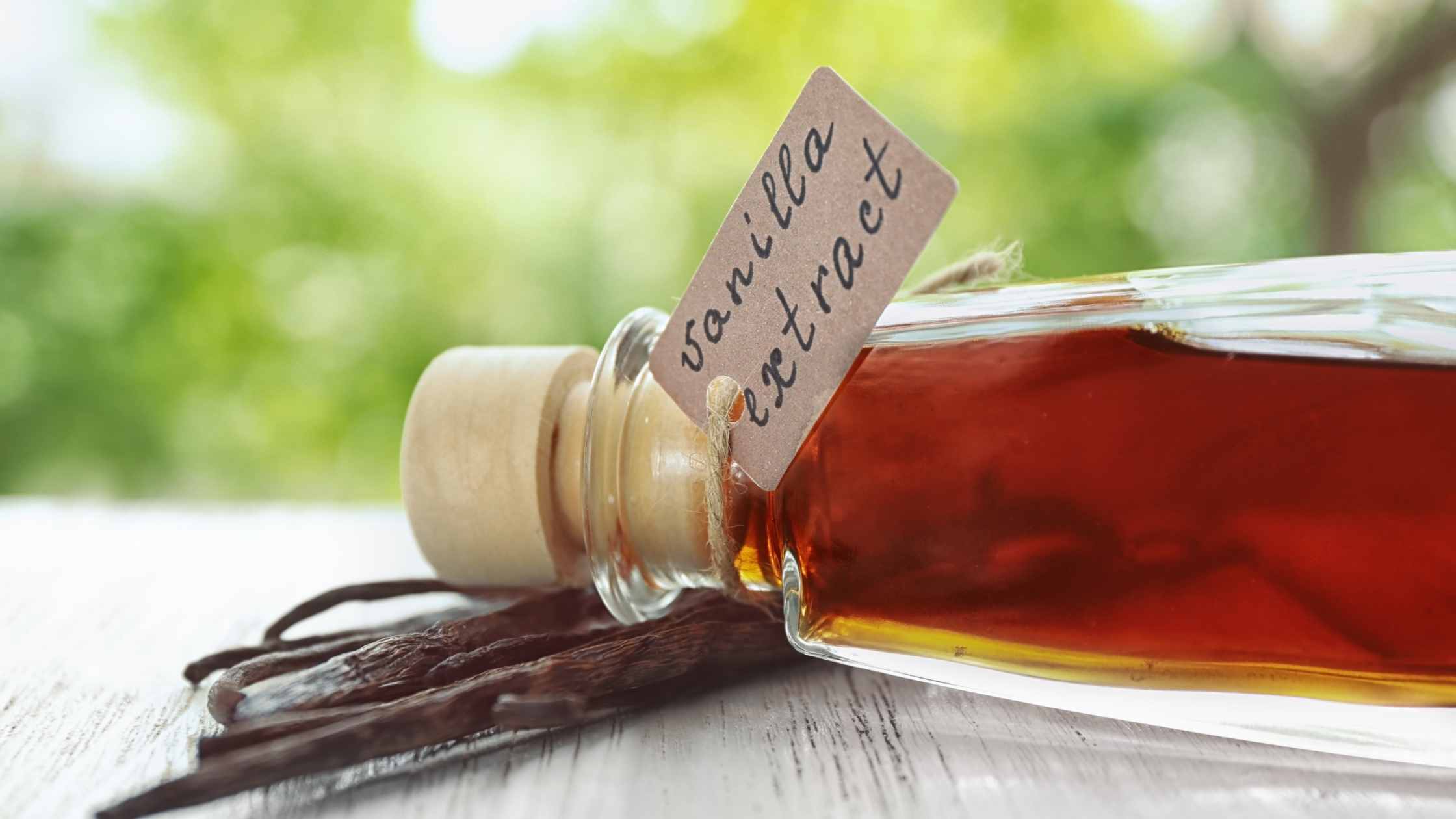
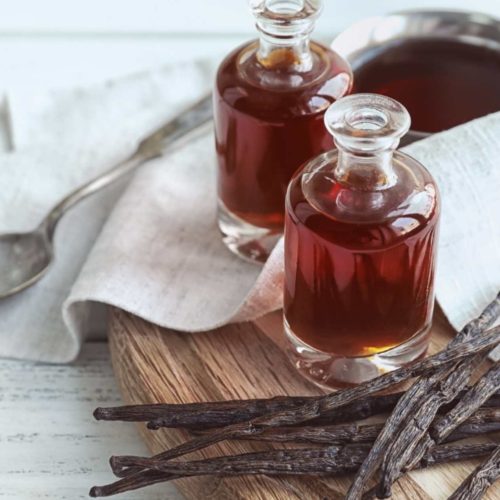
Used in a lot in baking, vanilla adds a subtle undertone to a number of dishes, especially sweet things. It's wonderful to help to intensify the flavors. The beans for real vanilla extract are harvested from orchid flowers. There are a number of different places where they can be grown, many people consider those from Madagascar to be the best.  

Pure vanilla is very expensive. And given current weather-related difficulties, the costs are going up. For a 4 ounce bottle, I've seen it priced anywhere between $4-$9. That's quite a bit when you consider that there are only two ingredients in that bottle, alcohol and vanilla beans.

Vanilla Extract vs. Artificial Vanilla

For extract (not pure), sometimes labeled "Natural Vanilla Extract" you may find yourself  looking at more than two ingredients:

  • Sugar.  I'm not sure why this would be added since vanilla extract by itself is not expected to be sweet, it's used to flavor things to help bring out the sweetness.  If the sugar source is not identified as cane sugar it is possibly beet sugar which has the potential to be from genetically modified (GM) sources.
  • I've also seen labels that contain corn syrup.  This is, again, a sweetener, however, since it's from corn it is most likely to be GM and therefore not something you want to purchase.
  • Potassium sorbate can be added as a preservative.  This is probably done when the alcohol content is low since alcohol by itself would be a preservative.  For some people, this preservative can cause rashes, itching of the mouth or eyes, congestion, or digestive disturbance.
  • Caramel color is another additive.  True vanilla does turn brown but perhaps the manufacturers want a consistent-looking product and therefore they use caramel coloring. Unfortunately, recent studies have shown this additive to be carcinogenic and therefore something you want to avoid.

Artificial vanilla sometimes referred to as vanillin, has no extract from vanilla beans at all. Instead, it is chemically synthesized. One common substance used is lignin, a waste product from papermaking, which is treated to release vanilla flavor overtones.  Vanillin can also be synthesized from the oils from cloves.  The most common source is guaiacol, an oily yellow petrochemical-like substance made by distilling wood tar (wood tar is also referred to as creosote).  In some people, vanillin can bring on migraine headaches or cause other allergic reactions.

Gluten-Free Vanilla Extract

For those who need to eat gluten-free, many dessert recipes call for gluten-free vanilla extract.  The interesting thing is that most pure vanilla uses distilled alcohol as the base.  The distillation process creates a gluten-free product as the gluten proteins cannot carry over through vaporization, cooling, and re-liquifying that happens. However, if you want to be absolutely sure there is no gluten in the bottle you'll need to choose a distillation base that is not grain-based.

Having said all that, it's easy, and not that expensive, to make your own pure vanilla extract.

Musings on Making Pure Extract

  • Supposedly it does best if you make it in an amber-colored bottle.  I didn't have one the size I wanted so I just used a recycled glass bottle.  But I have a dark, fermentation cupboard so I figure it's good in there.
  • The bean does not at all smell like vanilla when you cut it open and scrape out the stuff.  I'm not sure what it smells like but, to my untrained nose, certainly not vanilla.
  • The longer the extract sat the more it smelt like vanilla.
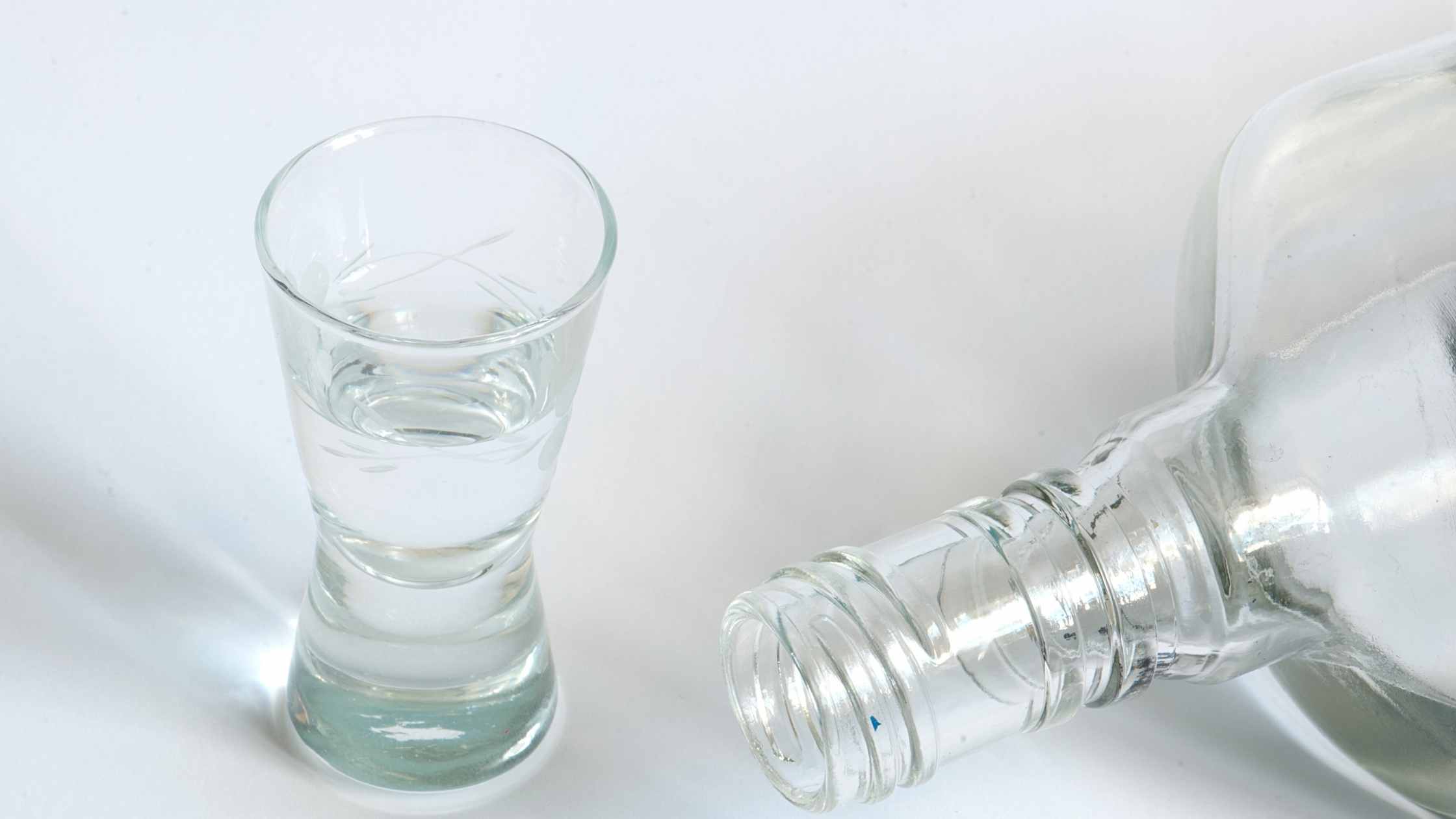
  • Things to watch out for with the alcohol you are using.  Vodka is sometimes made from wheat so if you have gluten sensitivity issues you need to use gluten-free vodka which is made from grapes (seek out organic in order to avoid pesticide residue from the grapes), potatoes or corn (potentially GM so look for organic if it's sourced from either of those).  Bourbon is made from corn and therefore potentially GM, you'll need to look for organic bourbon (not easy to find I've been told).  Rum is made from sugar cane and should be fine.  Brandy is made from fruit pressings, grapes, apples, or pears usually.  Since apples and pears are high on the dirty dozen list look for organic to avoid pesticide residue.
  • As you use your vanilla extract you can continue to top off the jar and let it sit awhile to infuse.


How to Make It

Vanilla Extract

Ingredients
  

  • 3-4 vanilla beans
  • 1 cup of alcohol (I chose Vodka)

Instructions
 

  • Slice open the beans and scrape out the stuff in the middle. Scrape this stuff into your jar/bottle of alcohol.
  • Cut the beans into pieces and add them to the jar with the scrapings.
    Cap the jar tightly.
    This is the part that requires patience. Wait.
  • In two weeks shake the jar.  Wait some more. Repeat.
    It takes approximately four months for your extract to be ready (some people say six is better)


Wait, There's More

It turns out that there's a little secret to vanilla beans.  Once you've used them to make extract you can get just a little more flavor out of them.

After you've finished making your vanilla you can make vanilla powder.  To do this simply take the beans out of the extract and dehydrate them.  Using either a dehydrator or an oven set to 150°F dry them until they are crisp and snap when you bend them.  How long this take will depend on how thick the bean is and, if you're using a dehydrator, the temperature of your dehydrator.

Once the beans are completely dry cut them into 1" pieces and grind them in a spice grinder.  I use a coffee grinder that is clearly marked "Not For Coffee." Otherwise certain other people in the house are known to just grab a grinder and add beans.  This is not pleasant because once a grinder has processed coffee beans it's difficult to get rid of the coffee flavor.

Culinary surveys show that vanilla powder, from vanilla beans, is very potent and far more flavorful.  When using the powder instead of the extract you only need 1/2 teaspoon for every teaspoon required in the recipe.

Another option is to dry the beans thoroughly, not dehydrated, and put them into a quart jar filled with sugar to make vanilla sugar.  Because the beans have already been used to make the extract and you're not adding the inner scrapings this can take a while, possibly up to a month for the beans to infuse the sugar.  This can be a wonderful topping for special desserts or for those who add a smidge of sugar to a cup of tea.


How To Make Kombucha And Water Kefir At Home

Fermented foods have become extremely popular for good reason. They're good for your gut and a very healthy way to add probiotics to your system. The wonderful thing about fermented foods is you can make many at home. Some I make at home while others I buy. The challenge is finding the time to make everything while still finding time for family, work, and real life. 

One of my favorite foods to make however is kombucha. This is in part because the price for kombucha has risen to an incredible $4.19 at my local grocery store.  That seems rather steep for a 16-ounce bottle of fermented tea.  Especially when you consider that all you need to make your own is a one-gallon glass jar, a SCOBY, 1 cup of starter kombucha, 8 tea bags, 1 cup of sugar, and filtered water.  All of that will make a gallon of kombucha.  That's eight pints which is more than $32.00 at grocery store prices. The at home price (not including the cost of the jar) is less than $1.00. It's definitely worth it to make your own.

The picture above is called a SCOBY. That's an acronym for Symbiotic Culture of Bacteria and Yeast.  It is the "mother" that consumes all the sugar while fermenting the tea all the while adding beneficial colonies to it. To get started, you will need to have a SCOBY.  Amazingly enough each time you brew a batch it makes a new "baby."  Eventually you have so many that you wind up giving them away.  It's a great way to make friends and share the healthy benefits of this wonderful drink. 

Secondary fermentation

After my initial batch of kombucha is done brewing, I do a secondary brew by adding fruit, sealing the jar, and letting it sit at room temperature for 24 hours. This extracts the sugars (and flavor) from the fruit and makes a fizzy drink at the same time. The longest I've ever let it sit is 36 hours because it generates so much fizz, I'm afraid to let it go longer, I don't want to shatter the jar. One of these days I'll get around to buying a fermentation lock and then I won't have to worry about exploding jars.

After it's done, I decant the flavored kombucha into recycled kombucha bottles. This time I used strawberries, blueberries, and blackberries.  The blackberries, unlike most fruits, were still firm, pretty tangy, and delicious, rather than bland, sour, and soggy. If you mash them first, you get a better flavor in the kombucha, but I wanted to try eating the fruit afterwards to see what it was like. Not every fruit will produce a tasty drink but try those fruits you enjoy to see how you like each one. Some fruits will be edible after the fermentation process while others will have given up all their flavor to the drink.

A testimonial

The best thing about kombucha is how healthy it is for you. I recently had a friend visiting who has been having a lot of gut issues. We talked about fermented foods. I happened to need to brew a new batch of kombucha, so I showed her the process. She got to eat some fermented foods while she was at my house. I sent her home with a baby SCOBY, and she's been adding fermented foods to her diet. She says that her stomach has not bothered her once since she started adding fermented foods. Yay for live food!! If you'd like to know more about kombucha, including specific brewing instructions and recipes using kombucha be sure to get your copy of my ebook.

Water Kefir

Another highly beneficial fermented beverage is water kefir.  Like kombucha, it’s a great source of probiotics and can be great for your digestion.  Studies also show that probiotics can help when you are depressed or anxious.  So, it makes sense to support good probiotic status in your gut.  And just like kombucha you can make this delicious drink easily at home. Check out additional health benefits of water kefir!

Health benefits of kefir:

  • Due to the beneficial bacteria, kefir is helpful for the immune system and supports a good bacterial balance in the gut
  • Water kefir is high in antioxidant activity which can protect against cell damage caused by free radicals
  • May be helpful for those with diabetes mellitus to control glucose and lipid levels
  • High in probiotics, kefir may be a beneficial beverage for supporting mental wellbeing
  • L. kefiri (one of the active beneficial bacteria in kefir) is antimicrobial and has good probiotic benefits, inhibiting pathogens
  • Appears to be anti-carcinogenic and may have therapeutic benefit for both healthy and ill adults
  • Those who are lactose intolerant or allergic to dairy can drink and enjoy this probiotic drink which is comparable to milk kefir without the adverse effects of a dairy allergy or intolerance.

How to make water kefir

I have to say water kefir is my favorite when it comes to home-made because it’s so quick and simple.

  1. Dissolve 1/3 cup sugar with filtered warm water in a clean one-quart glass jar. I like to use turbinado or rapadura sugars because they are not stripped of all their nutrients.
  2. Add water kefir grains (about 1 to 2 tablespoons).
  3. Cover jar with a plastic lid, fermentation cap, or clean dish towel.
  4. Place jar out of direct sunlight.
  5. Let sit for 24 to 30 hours or to your taste. (If you aren’t sure how it should taste, try some from someone else’s batch)
  6. Strain the water kefir grains from liquid.
  7. Do a secondary fermentation by adding something to provide some flavor – I like ginger so I add 5-10 slices of freshly peeled ginger. Another option is a few mint leaves. Cap and let sit on the counter for 24 hours.
  8. Strain out flavorings, transfer the liquid to another one-quart glass jar and save in the fridge to start drinking
  9. Start the process all over with your strained grains.


A few more notes:


  • Don’t worry about the sugar as it’s mostly used up during the fermentation process
  • Your kefir grains will actually start to grow so you can share them with friends – getting grains from a friend is a good way to get started
  • The grains sort of look like very baby cauliflower florets and should be kept cool when not being used

For those of you who would like to try making kombucha or water kefir at home Kombucha Kampis a great resource.  You can get kombucha mother cultures, grains for both milk or dairy kefir plus an assortment of equipment that makes your beverage making better.  

[expand title="Sources"] 

  • Alsayadi, M., Al jawfi, Y., Belarbi, M., and Sabri, F. (Jun/Jul 2013) Antioxidant potency of water kefir. Journal of Microbiology, biotechnology and Food Sciences. Vol. 2, Iss 6.
  • Cai, Y., Sounderrajan, A., and Serventi, L. (May 27, 2020). Water kefir: a review of its microbiological profile, antioxidant potential and sensory quality. ACTA Scientific Nutritional Health, Vol 4, Issue 6 June.
  • Moretti, A., Moure, M., Quinoy, F., Esposito, F., Simonelli, N. Medrano, M., and Leon-Pelaez, A. Water kefir, a fermented beverage containing probiotic microorganisms: from ancient and artisanal manufacture to industrialized and regulated commercialization. Future Foods, Vol 5.
  • Pendon, M., Bengoa, A., Iraporda, C., Medrano, M., Garrote, G, and Abraham, A. (25 Nov 2021). Water kefir: factors affecting gran. Growth and health-promoting properties of the fermented beverage.  Journal of Applied Microbiology. 

[/expand]


Trudy Scott, CN, Food Mood Expert and the author of The Antianxiety Food Solution contributed to this article. Trudy educates women about the amazing healing powers of food and nutrients and helps them find natural solutions for anxiety and other mood problems. Her goal for all her clients (and all women): “You can be your healthiest, look your best and feel on-top-of-the-world emotionally!"