All posts by Mira


About Mira

Mira Dessy is The Ingredient Guru. A holistic nutrition professional, author, and a popular public speaker, she knows that it's not just what you eat, but what's in what you eat. She is the author of The Pantry Principle: how to read the label and understand what’s really in their food. Dessy is a Board Certified Holistic Health Practitioner whose mission is to educate and empower consumers. She curates the Lean Clean Green Subscription box, the premier, organic, earth-friendly, healthy, sustainable subscription box which can be found online at https://theingredientguru.memberbox.com

Word Of The Year: Focus

New day, new year, new word.  Each year I pick a word of the year.  One word that I use to help me pay attention to my goals and to give me a touchpoint to refer to throughout the year.  It sounds simple but it's harder than you think to pick just one word.  To think about the overall goals for the year ahead, to find something meaningful that resonates within me as my inspiration.

This year I've chosen the word focus.  Last year's word was balance  and I certainly put a lot of thought and effort into staying mindful with that word.  I feel like I did better with the whole work-life-spirit-me-others balancing act (although there is always room for improvement).  But being in balance and being focused are two very different things.

When I chose the word focus I had not really thought about all of the different meanings.  I was concentrating on the verb, to become more focused.  I meant it to be more attentive to things and to narrow down on what's important.  To try to winnow through some of the distractions and what I call "The Octopus."  You're probably familiar with it.  The Octopus is where you feel like you have everything under control, then you get distracted by other things but you fold them in to what you're doing.  Then you start spinning another plate or two and the next thing you know you're overwhelmed, trying to figure out how to corral everything back under control.

But it's a noun as well, bringing something into focus and I like that idea as I begin on the path that is this delicious new  adventure of a new year.  And it turns out I also like another definition as well.  To become a central point. I see that as being your resource, your go to person for reliable information about ingredients, food, nutrition, and health.  That loops back to the first time I did the word of the year challenge and chose the word inspire (you can read about that word here).

If you'd like to pick a word of the year consider writing it down.  You can even go online to OneWord365.com and find others who are using the same word as you are.  Whatever your goals are for this new year I wish you many good things along the journey.

focus

[foh-kuh s]  
noun, plural focuses, foci
 
1.  a central point, as of attraction, attention, or activity:  The need to prevent a nuclear war became the focus of all diplomatic efforts.
 
2.  Physics. a point at which rays of light, heat, or other radiation meetafter being refracted or reflected.
 

3.  Optics.

  1. the focal point of a lens, on which rays converge or from which they deviate.
  2. the focal length of a lens; the distance from a focal point to acorresponding principal plane.
  3. the clear and sharply defined condition of an image.
  4. the position of a viewed object or the adjustment of an opticaldevice necessary to produce a clear image:
    in focus; out of focus.
4. Geometry. (of a conic section) a point having the property that the distances from any point on a curve to it and to a fixed line have  constant ratio for all points on the curve.
 
5. Geology. the point of origin of an earthquake.
 
6. Pathology. the primary center from which a disease develops or in which it localizes.
verb (used with object), focused, focusing or (especially British)focussed, focussing.
 
7. to bring to a focus or into focus; cause to converge on a perceived point:  to focus the lens of a camera.
 
8. to concentrate: to focus one's thoughts; to focus troop deployment in the east.
 
verb (used without object), focused, focusing or (especiallyBritish) focussed, focussing.
 
9. to be or become focused:  My eyes have trouble focusing on distant objects.
 
10.  to direct one's attention or efforts:  Students must focus in class.


Kim Kardashian Baby Weight Loss Plan

Kim Kardashian recently had her second child. A new child is such a treasure and I’m sincerely happy for her; I wish her and her family all the best.

I was dismayed however to read, just a short while after all of the announcements about the baby, headlines about her plans to lose ’60 pounds of baby weight fast’. I do not know what diet and exercise plan Kim Kardashian plans to use, nor do I know if she plans to breastfeed. She’s just the latest celebrity example of the race for post-natal thinness that seems to be populating the social media waves. I’m saddened by the thought that simply because a celebrity or media personality posts something like this it will leave other women feeling that perhaps they should be that thin that quickly or that they are somehow less than because they don’t.  That’s simply not true.  While I certainly understand the desire to want to be back at your pre-pregnancy weight I believe that rapid post-natal weight loss is not a good idea. It’s more important to take care of yourself and be kind to yourself in the midst of all the changes that are happening.

Kim Kardashian is by no means the only one to want to rapidly lose weight after having a baby. There are a growing number of social media posts practically glorifying women who have rapidly lost weight after having a baby. Unfortunately this is not a healthy idea for mom or baby.

One big reason against rapid weight loss is that we tend to store toxins in fat. Then when we lose weight rapidly we experience a toxin dump. In fact one study found that weight loss increased the level of toxins in the blood with some of the toxins then being reabsorbed into the remaining fat cells. Weight loss can be, in effect, a form of detoxing. (Truthfully our body is always detoxing, it’s continually working to clear toxins and keep metabolic processes running to the best of it’s ability.) But rapid weight-loss can accelerate some of the symptoms of detoxing. Dumping toxins through rapid weight loss can cause cardiac stress, gout-type symptoms, gall bladder flare-ups, and lightheadedness.  It also doesn’t help you form healthy eating habits for maintaining the weight loss. This can be one reason why many people lose weight quickly and then gain it back sometimes with a few pounds extra.

Breastfeeding

Breastfeeding is very important and provides a perfect balance of nutrition. Sometimes there are issues with nursing either because the mother cannot produce enough milk, baby has issues that make it challenging, or there may be some other reason why it is physically not possible. If there is a problem with breastfeeding it’s best to refer to a lactation consultant or connect with your local La Leche League.

For those who are breast feeding it’s important to note that breastmilk is between 3-5% fat. This means that “detoxing” via weight loss may cause the breastmilk to have significantly higher levels of toxins. That, in turn, gets passed on through the milk to the baby.  Rather than focusing on weight-loss, look at ways to nourish yourself, and baby, through eating well.

The following foods and beverages are very supportive post-partum and during breastfeeding:

  • Nourishing broth
  • Cod liver oil to provide vitamin D and essential omega 3 fatty acids
  • Red raspberry leaf to help with postpartum recovery
  • Nettles also help with postpartum recovery
  • Coconut oil is a healthy medium chain triglyceride
  • Leafy greens – kale, spinach, swiss chard, dandelion,
  • Fresh fruit and vegetables
  • Fermented foods – lacto-fermented kraut or other vegetables, kombucha, kefir
  • Eggs
  • Protein
  • Porridge – made from soaked oats, buckwheat, brown rice, or quinoa
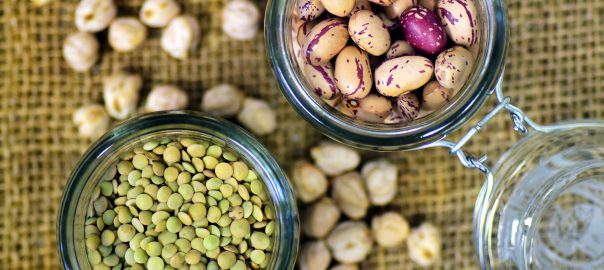
  • Legumes, lentils, chickpeas, black beans, pinto beans
  • Nuts and seeds
  • Sea vegetables – dulse, wakame, nori, hijiki, kombu

Avoid the following foods which are anti-lactogenic and can impair breastfeeding:

  • high consumption of the following herbs: basil, parsley, sage, rosemary, thyme, and any mints
  • Soft drinks and carbonated beverages
  • Caffeine – coffee, black tea, green tea, hot cocoa, chocolate

Food Intolerance Issues

Colic can be an issue with some newborns. It is possible that the mother’s diet can impact the digestive status of the baby when breastfeeding. Therefore it would be best for mother to avoid: spicy food, onions, garlic, legumes/beans, broccoli, cauliflower, cabbage, and Brussels sprouts.

There may also be a food intolerance issue, wheat and dairy and two of the biggest offenders in this category. Mother can try eliminating the seven most common allergenic foods from her diet to see if this makes a difference: wheat/gluten, corn, soy, eggs, dairy, seafood, and nuts.

Self Care

Taking care of ourselves is important all the time but these few self-care tips are especially important after giving birth:

  • Stay hydrated – breastfeeding takes a lot of hydration.  Even if you’re not breastfeeding you still need to make sure that you are getting enough fluids to keep your system working properly
  • Skin brushing – this helps to keep your lymph system flowing properly.  Bonus, it’s also really good for your skin
  • Get sleep – the temptation after having a baby is to “get things done” while the baby is napping.  After decades of raising kids I’m here to tell you there’s always stuff that needs to be done.  One of the biggest single self-care things you can do for yourself is to rest when you can
  • Set aside some me time – when we have a baby we tend to forget how to take care of ourselves because we are so wrapped up in taking care of that precious little person.  But we still have wants and needs that have to be taken care of.  As my friend Dr. Vicki Bradley (of the Self-Care Reminder Project) says, when we take care of ourselves we are better able to care for others

Take the time to love yourself and your body. Remember, it took nine months of work to produce that little bundle. On average it takes three months to a year to get back to where you were before you had the baby. To try to erase all of the physical symptoms and expressions of that in just a few days or weeks is not the best, healthiest option. And some of them (like stretchmarks) don’t ever really go away.  And check out a great photo series called A Beautiful Body which highlights the beauty of a mother’s body.

Who Put Beer In My Ice Cream?

Ben & Jerry's New Flavor for Climate Advocacy

Who Put Beer In My Ice Cream?

Ben & Jerry's is concerned about climate change. So they've created a new flavor in partnership with New Belgium Brewing. Ice cream and beer. They're both called Salted Caramel Brown-ie (Brownie) Ale. Profits from the sales of these products will go to Protect Our Winters, a climate advocacy group in support of winter sports.

While I certainly support the idea of supporting efforts to educate people about climate change and to create positive ways to reverse it I'm not sure what beer and ice cream have to do with it. Just being honest on that point right up front.

Because these are products with a social message I imagine they'll sell pretty well. Truthfully it sounds like an interesting flavor and Ben & Jerry's is known for good ice cream. I don't drink beer so I can't speak about the ale. Ben & Jerry's has a great mission statement that supports GMO labeling, they do not use rBGH in their dairy products, and they are proponents of Fair Trade ingredients. New Belgium Brewing also believes in non-GMO sourcing for their products. All good things.

The Ingredients

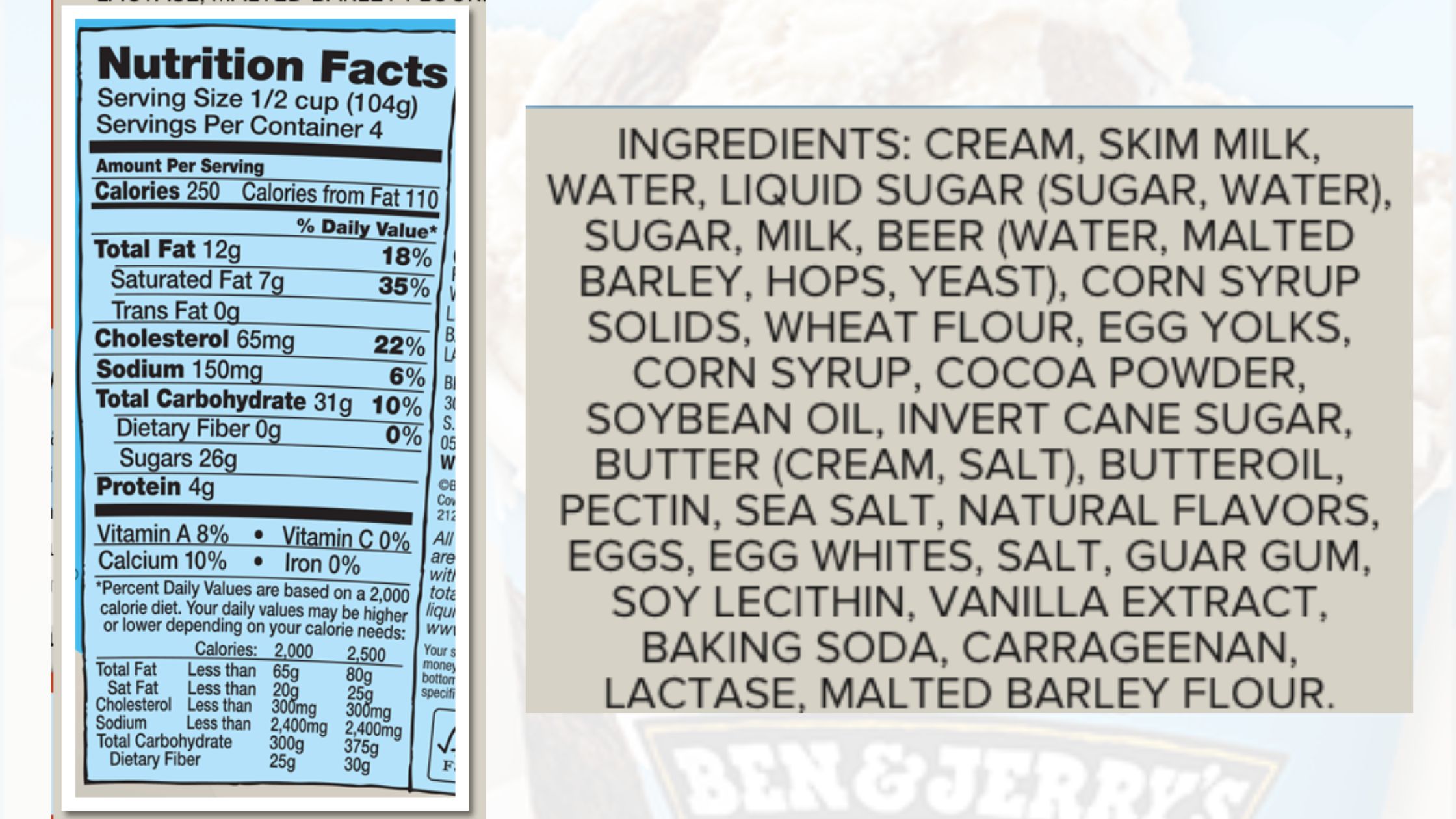
So what's the one major thing that will keep me from eating this ice cream? * Carrageenan. This red seaweed has been linked with gastrointestinal inflammation, colon cancer, and it is very damaging to those with gastrointestinal disorders.

There is also a study, partially funded by the American Diabetes Association, looking at the relationship between consuming carrageenan and its impact on diabetes. Because carrageenan appears in so many products (primarily dairy, alternative dairy, and frozen confections) the amount of exposure can be significant.

Eating organic foods is no escape as carrageenan is approved for use in those foods as well. Which serves as an important reminder that just because something is organic doesn't mean it's good for you.

Many people who have bloating and digestive issues often find their symptoms significantly diminished or removed when they stop eating this ingredient. While low level inflammation and gastrointestinal distress are not always significant enough to be noticed (as opposed to conditions such as ulcerative colitis, irritable bowel syndrome, or Crohn's), when removing this ingredient from their diet for a period of time many people notice a difference. The science behind the negative impact of carrageenan is increasing.

The Cornucopia Institute has petitioned the FDA to remove carrageenan from the approved list (and is seeking input from consumers who have noticed changes to their health after eliminating carrageenan from their diet). The response of the FDA's Select Committee On GRAS Substances (SCOGS) from February of 2015 concludes, "uncertainties exist requiring that additional studies should be conducted."

There's also the matter of the "natural flavors." We don't really know what they are and there are a lot of things that can fall under that "natural" label that are less than desirable.

Surprisingly there is lactase in the ice cream. Not a negative, just interesting. This is the digestive enzyme that specifically helps to break down milk sugar. I haven't bought ice cream in a while so I haven't been looking at the label. This is something that could be a good idea to help digest the dairy products.

However please note that for those who are lactose intolerant this enzyme addition is not sufficient for them to be able to consume the ice cream without also taking some additional enzyme support. It will be fascinating to start reading ice cream labels and seeing if other manufacturers are following suit.

Conclusion

It's important to remember that no matter how good the social mission, no matter how well sourced some of the ingredients are, if there's something in a food that you can't eat, you simply shouldn't eat it. Remember to always read the label and eat well to be well.

*We're leaving out the fact that this does contain gluten (beer/malted barley, wheat flour, and malted barley flour)

Repealing Country-of-origin Labeling Isn’t Cool

The House just voted to repeal Country-of-Origin labeling (COOL) for beef, chicken, and pork.  The reason that this happened makes sense but the fact that it happened at all makes no sense.  But first, a little background.

COOL was first signed into law in 2002 as part of the Farm Security and Rural Investment Act as a voluntary labeling process.  Initially it was intended for the label on fresh beef, pork, and lamb products.  In 2003 it became mandatory to label COOL.  By 2008 the program was expanded and the current labeling requirement covers beef, veal, lamb, chicken, fish, shellfish, pork, goat, macadamia nuts, pecans, ginseng, peanuts, and perishable agricultural commodities.   For the purposes of this post I’m focusing on meat.

The intent of COOL was to clearly identify the chain of supply for fresh food.  If an item was destined for a processing plant where it would be significantly changed for example, turning fresh beef into a shepherd’s pie, that process would remove the need for COOL.  The FDA’s definition of processed is so broad that many foods were able to avoid using the label.

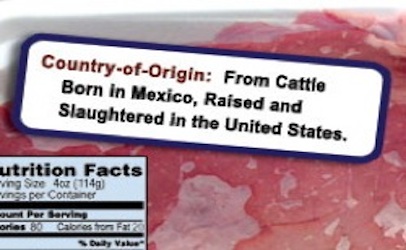
What does the label look like?  It’s confusing.  There’s no clear standards for a COO label.  It can be any size, font, color, location on the package.  There are standards about what it has to say but even there it can get a little confusing.  The Agricultural Marketing Service (AMS) which is part of the United States Department of Agriculture (USDA) does publish a list of the standard terms acceptable for labeling which covers country names and their abbreviations as well as labeling options covering the chain of supply from birth to either slaughter or slaughter and import.  Prior to May 2013 even that was less than clear due to commingling.  This was the practice of allowing a single label for meat that has more than one country of origin as long as it was processed in the same slaughterhouse all on the same day.  Commingling is no longer allowed which should make for clearer labeling of where animals were born, raised, and slaughtered.

In theory the ability to know where your meat is coming from, where it was raised, is a good one.  In practice COOL does not work as advertised.  I believe part of this is due to the lack of consistency with labeling, a lack of clear understanding for the consumer, and too many loopholes.  I also believe that people really are paying more attention to where their food comes from, how it’s raised, and where it is processed.  They want to know but are confused about the label due to inconsistent and unclear implementation.

The supply chain can sometimes become very convoluted.  As the Horsemeat Gate Scandal in the early part of 2013 highlighted, our food can travel a great distance before it lands on our dinner plate.  This unfortunate incident where horesemeat was fraudulently sold as beef only revealed the scale of travel for processing not for birth and rearing.  Obviously because it was processed it also would have been able to sidestep a COOL process had one been in place.

Horsemeat Gate also revealed a significant breakdown in the traceability of where our meat comes from.  The EU is currently investigating possible solutions to prevent this from happening again.  Something along the lines of COOL comes to mind, but only if it’s properly implemented.  It’s important to note that this was by no means a stand-alone incident, it was simply the biggest, most reported on episode.  There have also been incidents in China such as a 2013 investigation into the use of rat, mink, and fox meat being adulterated and sold as mutton.  And it doesn’t seem to get better.  Just last year there was a recall in China of donkey meat contaminated with fox.  These incidents, by the way, give serious pause to the thought of eating any meat from China.  And yet the USDA has approved the import of American raised chickens to China for processing and then re-imported for sale. Currently the transportation costs for poultry are too expensive and it does not appear that any American producers are doing this.  Unfortunately, if they do, it may be hard to know because the chicken would come back in a processed form that would thereby allow it to avoid COOL.

So why is COOL on the chopping block?  In a single word, politics.  Canada and Mexico filed a complaint with the World Trade Organization (WTO) claiming that COOL was discriminatory.  It is interesting to note that China is listed as one of the third parties in the complaint.  Canada contends that meatpackers offer lower prices for their products.  Not because they are lesser quality, but because the meat packers don’t want to track and label the meat.  Canadian producers claim this has cost them nearly US$1 billion.  Unfortunately the WTO agreed with the plaintiffs.  This is the second time they’ve done so, the first time the US reworked COOL but apparently this was not perceived as being enough.  Now Canada and Mexico are threatening import taxes on certain products from the United States unless COOL is repealed.  Due to fears about trade the House has voted to dismantle COOL altogether.  The next step is to go before the Senate.

This is a huge mistake.  While the process of modification on any legislation is certainly challenging, the fact remains that this program was never thoroughly laid out or utilized to begin with.  Given the increasing issues with food contamination, adulteration, mis-labeling, and because of sourcing concerns it makes sense to keep COOL and more clearly identify the supply chain for our food.  Consumers want to know, and have the right to know, where their food comes from.


The Truth About Olive Oil

Olive oil has been studied for many decades, and we have come to understand its many health benefits. Let’s check out a few of these benefits.

Benefits

Anti-inflammatory Properties – Olive oil contains phenolic compounds which help your body fight inflammation. Virgin olive oil has been credited with being one of the healthy attributes of the Mediterranean diet because of these anti-inflammatory components. Chronic inflammation is thought to be a leading driver of many diseases.

Cardiovascular Health – The above-mentioned inflammation can affect your heart health. Extra-virgin olive oil has many benefits for your heart. It can lower your blood pressure, protect “bad” LDL cholesterol particles from oxidation, and can improve the function of your blood vessels. 

Stroke Prevention – There have been many large studies that have shown that people who regularly consume olive oil have a lower risk of stroke. 

Type 2 Diabetes – In both observational and clinical trials, it has been suggested that olive oil, combined with the Mediterranean Diet, can reduce the risk of type 2 diabetes.

Cancer – In recent research, olive oil has been shown that it may be helpful in preventing certain cancers such as breast and digestive tract cancers. 

Rheumatoid Arthritis – Olive oil has been shown to reduce joint pain and swelling caused by this type of arthritis. 

Gut microbiota have been shown to be positively impacted by the antioxidant activity which in turn helps in the prevention of the above conditions through the consumption of olive oil. 

With all these awesome health benefits you can see why there is such a large market for olive oil! Unfortunately, there are challenges with the quality and quantity of available olive oil.

Olive Oil Issues

A class-action suit was previously filed regarding the purity of olive oil; you can read about it here.  I wrote briefly about this issue in my book The Pantry Principle.

It turns out that worldwide more olive oil is sold than is grown (we'll get back to that in just a moment). How does this happen you ask? Sadly, it's because producers or bottlers dilute or adulterate the olive oil with other oils. That's food fraud.

In the name of science, there was a study done by the University of California, Davis investigating how many brands failed to pass mass spectrometry tests for being pure olive oil.  There were quite a number of popular brands whose products failed the test.  These included: Filippo Berio, Bertolli, Colavita, and Pompein among others. While the testing only looked at oils sold in California, it is reasonable to assume that national and international brands were equally affected.  

Another issue that can come up with regard to olive oil is that many of those marked extra-virgin (which means the very first pressing) may not be. Selling an oil as higher quality, or possibly even selling organic, when it's not is also a form of food fraud.

Making Un-Olive Olive Oil

Unfortunately, there's no other explanation for this type of deception than cost.  Olive oil is expensive.  Diluting it with cheap, highly refined oils generates more profit.  Similarly, the use of poor-quality olives (either over-ripe or damaged in some way) and mislabeling it as a higher quality is also simply for profit. There would be no other reason to lie on the label.

This highlights the fact that when it comes to olive oil it's very important to know your source.  While the label appears to be your only indicator, as we see here, it can be misleading or completely wrong.  It will be interesting to see how this situation plays out in the courts.

Know Your Fats

Although you need to investigate which olive oils you are using, there are other fats that are also a healthy choice.  Here are the ones that I recommend:

  • Olive oil – Kirkland brand organic, extra virgin, cold-pressed  – they were one of only 5 determined to be pure by the UC, Davis study. There are other specialty olive oils that I like as a treat, but for everyday use, this is the one I use.

  • Coconut oil – Nutiva brand organic cold-pressed – I am a big fan of Nutiva organic. It's important to know that while coconut oil is a saturated fat it is a healthy saturated fat.  As a saturated fat, it will be solid in cold temperatures and liquid in warm ones.  This is normal and perfectly fine.  There is no need to throw it out because “it melted.”

  • Ghee – While you can buy it, I usually make my own. If you're going to do this, you'll need to buy butter that is either organic or from free-range cows. It's important to make sure that the milk is from cows not treated with artificial hormones, antibiotics, fed pesticides or GMOs, and grass-fed is best.

  • Tallow, suet, and lard – Contrary to popular belief, these animal fats are healthy options and can be a good choice for the diet. Sourcing is very important. You'll want to make sure the animals are raised without hormones, antibiotics, or genetically modified, pesticide-laden feed.

I recently interviewed Tony Kasandrinos who is founder and CEO of Kasandrinos. They produce an incredible olive oil from Greece. What makes it so special? Tony shared the family’s dedication to quality and organic sustainable practices which produces a better-quality olive oil.

Their olive oil has a high polyphenol content which is what gives olive oil its marvelous health benefits. He also shared how most olive oils on your supermarket shelves are 2 to 3 years old.

What can degrade an olive oil beside time?  Light and air. Tony shared that if you are purchasing olive oil from a supermarket make sure it is in a tinted glass bottle and grab from the back of the shelf as those bottles will have been exposed to less light.

[expand title="Sources"] 

Nocella, C.; Cammisotto, V.; Fianchini, L.; D'Amico, A.; Novo, M.; Castellani, V.; Stefanini, L.; Violi, F.; and Carnevale, R. Endocrine, Metabolic & Immune Disorders-Drug Targets (Formerly Current Drug Targets - Immune, Endocrine & Metabolic Disorders), Volume 18, Number 1, 2018, pp. 4-13(10). Bentham Science Publishers. Retrieved from https://doi.org/10.2174/1871530317666171114121533.

Martínez-González MA, Dominguez LJ, Delgado-Rodríguez M. Olive oil consumption and risk of CHD and/or stroke: a meta-analysis of case-control, cohort and intervention studies. Br J Nutr. 2014 Jul 28;112(2):248-59. doi: 10.1017/S0007114514000713. Epub 2014 Apr 28. PMID: 24775425. Retrieved from https://pubmed.ncbi.nlm.nih.gov/24775425/

Buckland, G., & Gonzalez, C. (2015). The role of olive oil in disease prevention: A focus on the recent epidemiological evidence from cohort studies and dietary intervention trials. British Journal of Nutrition, 113(S2), S94-S101. doi:10.1017/S0007114514003936. Retrived from https://www.cambridge.org/core/journals/british-journal-of-nutrition/article/role-of-olive-oil-in-disease-prevention-a-focus-on-the-recent-epidemiological-evidence-from-cohort-studies-and-dietary-intervention-trials/067113B01A4A7254066C542D640BC1AE

Gavahain, M., Khaneghah, A., Lorenzo, J., Munekata, P., Garcia-Mantran, I., Collado, M., Melendez-Martinez, Al, and Barba, F., Health benefits of olive oil and its components: impact on gut microbiota antioxidant activities, and prevention of noncommunicable diseases. Trends in Food Science & Technology. Vol. 88, June 2019, Pages 220-227. Retrieved from https://www.sciencedirect.com/science/article/abs/pii/S0924224419300779

[/expand]

Hormel And Applegate Farms: If You Can’t Beat ’em, Buy ’em

Screenshot 2015-02-25 20.51.54

Screenshot 2015-02-25 20.53.17Screenshot 2015-02-25 21.16.22


Recent news from Reuters reveals that Applegate Farms LLC is in talks with Hormel Foods Corp in a deal that would allow Hormel to purchase Applegate. While this joins the fray of firms in the meat industry looking to merge or acquire one another, this particular deal stands out for a couple of different reasons.

As a producer of organic meats, hot dogs, bacon, and deli products Applegate holds a position that stands apart from Hormel’s “natural” brand. As discussed here before, the term natural is very lose and although it does have some standards when it comes to meat (as opposed to other products such as cereals, juices, etc) it really doesn’t mean much and is often used by companies to nutri-wash their products while charging higher prices. Overall market share in conventional foods is falling as more and more people pay attention to what’s really in their food. When they make that shift their purchasing habit change which means less profit for conventional and “natural” product lines.

Applegate is not a small company. Based in New Jersey they are estimated to be worth as much as $1 billion. As a privately held corporation there is no way to know exactly what their value position is but needless to say they are a profitable company that fills a market need.

As an independent producer they have more control over their line, what they do, how they source, what they provide to their consumers. If this deal goes through they will be a wholly owned subsidiary of Hormel which is a major food producer who is not believed to be as concerned with food sourcing and, for lack of a better word, quality (meaning organic). The web of who owns your food is large and quite confusing. If you want to know the big brands behind organic check out this graphic of organic foods acquisitions and alliances by the Cornucopia Institute (click on the graphic to enlarge it for clarity).

This deal represents a disturbing trend. It’s one thing for small organic, cleanly sourced food processors to get bought out by competitors. Lately, however, it seems that even large and profitable firms are succumbing to the lure of corporate America. The purchase of Annie’s Homegrown Inc. by General Mills  raised a lot of fuss and fury by consumers. For a little while. That seems to have died down at the moment, and that’s probably what Hormel is banking on. Weather the storm, allow people to vent, and then they’ll forget. Because the brand packaging won’t change. And people may not continue to read the label or to stay on top of what changes are being made to their food. Often it’s easier to just shop on auto-pilot.

While many of these deals previously happened behind the scenes, they’re certainly gaining more attention at the moment. In part due to the size of the companies involved and the amounts of money on the table. Remember food producers are in business to make money, to earn a profit. Unfortunately for the majority of food items available that means sourcing artificial ingredients, chemically created “foods” and unhealthy additives. If it’s cheaper it’s better seems to be a driving reason to use these ingredients. And if your product doesn’t hold up to what consumers want, the answer, apparently, is to buy out those who do.

Food Storage Tips

There’s nothing worse than having to throw out food because it’s gone fuzzy or mushy. It’s even worse when it’s something that you purchased organic because that means you paid an even higher price for it.  With proper food storage habits you can make sure that your food lasts as long as possible.

It’s easy to wind up with an abundance of fresh produce for a number of reasons:

  • it was on sale
  • you’ve just visited the farmer’s market and it looked inviting
  • you have a CSA share and have limited control over how many tomatoes they give you (when tomatoes are in season of course)
  • you have a home garden and discovered the awesome power of a single zucchini seed.  

Whatever the reason for having a bountiful supply of fresh food (or even dairy, eggs, and foods of that nature which can also spoil), it’s important to know how long it can be stored for.  It’s also a great idea to understand proper food storage.   After all, knowing which things go in the refrigerator, what has to be wrapped, and the best way to wrap it, can be the difference between eating what you paid for or creating expensive compost.

Buying organic

As you go through this infographic below keep in mind that there are a significant number of items which need to be purchased organically.

  • The Dirty Dozen:those 12 fruits and vegetables which need to be purchased organically in order to avoid pesticide residues) – This list changes annually, be sure to revisit it every year  
  • Dairy products: All dairy should be organic in order to avoid the artificial hormones (rBGH), antibiotics, and pesticide and GMO-laden feed that is part of conventional dairy  
  • Eggs:  Whenever possible eggs should be sourced from someone who has free range or pastured hens, in order to produce the healthiest egg.  Farmer’s markets can be a great source for this, or ask around.  Many more people are beginning to raise chickens at home for the eggs.  When it’s prime season, at one egg per chicken per day, they may have extras to sell

Storage

One final note, I really don’t like to wrap food in plastic.  Plastics, containers and wraps, are comprised of chemical compounds that are hormone disrupting.  For more information about why plastic, and especially BPA, are harmful for you watch my interview with Lara Adler.  For storage if you must wrap use plastic, place wax paper over the food first and then wrap over that.  If at all possible try using glass or steel containers. 


Source: Fix.com

beans-TIG

Groceries – What Can I Get For A Dollar

As more and more people learn to chose whole foods, real food, to feed their family the market share for processed foods is dropping.  Groceries are a necessary part of living, we all need to eat. But there are no guarantees about how well we eat. Given that their mission is not to sell food but to make a profit, many food manufacturers are looking to reverse the decline in profits.  Their primary tactic is to go after lower socio-economic consumers.  Unfortunately these are the ones who have the tightest budgets for food and who may not stop to consider nutritional value per dollar spent.

The cost of groceries

To tempt consumers to by their highly processed foods producers use the following tactics:

  • available at lower cost grocery stores
  • available at discount stores (such as The Dollar Store)
  • offer multiple purchase coupons
  • offer smaller packages at what appears to be a low price
  • offer single serving size options
  • create discount menu pricing (at fast food locations)

Unfortunately those options not only offer incentive to purchase junky foods, they are also more expensive when you price out the actual cost per weight or volume.  Sadly it’s a recipe for a health disaster.  

Yes, that burger may only be a dollar, same with those fries.  But it’s nutritionally deficient food which is high in calories, fats, and chemicals.  It may fill you up but it won’t nourish you. That cereal package may seem like a deal but there’s no real nutrition in the package and it often comes with a lot of sugar. Your belly may be full but your body is depleted.

Eating healthy for less

It is possible to eat healthy for less, it simply means making different choices.  A recent trip to the grocery store* highlighted a few foods which are healthy and available for $1 or less per serving.

appleApples: Nature’s perfect 100 calorie snack pack, the average apple contains about 100 calories. They are a good source of fiber, including pectin (a type of fiber that may be good for reducing cholesterol). Apples also provide vitamin C and healthy phytonutrients which can help moderate blood sugar. At $1.15 per pound with three medium apples in a pound it comes to just under three apples for a dollar.  This was the price for organic apples which represent the best choice as there are no pesticides on them.  Obviously conventional apples are less expensive but come with a chemical coating.
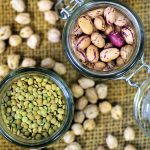
beans-TIGBeans: Lentils, chickpeas, black beans, are all good nutritional choices for fiber, folate, iron, and protein. Their high levels of fiber make them an excellent choice for helping to reduce cholesterol and manage blood sugar. $0.79 per pound for lentils means 12 servings per pound, all for less than a buck.
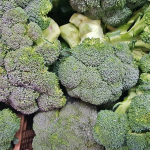
broccoliBroccoli: Contains calcium, vitamin A, vitamin C, potassium, folate and fiber. Low in calories it’s delicious raw, steamed, or stir-fried. One bunch will set you back $0.99 for around three 1⁄2 C. servings.

Collard Greens: This dark, leafy green and others such as kale, spinach, or mustard greens are loaded with vitamin C, carotenoids, and calcium.  This week at my grocery store organic collards were $0.99 per bunch with one bunch providing 2-3 servings cooked. It’s delicious when cooked with onions and fresh herbs.

eggs-TIGEggs: A great source of protein, lutein, and zeaxanthin (good for eye health) as well as selenium, B2, B5 and B12 eggs are a nutrition powerhouse. They are versatile, easy to prepare and can be served for any meal. At $2.39 per dozen for large, cage free, grain fed eggs that’s 5 eggs, and five servings, for $1.00.
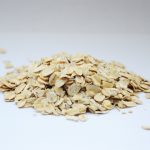
Oats (old fashioned rolled): high in fiber and a good source of manganese, selenium, vitamin B1, magnesium; a 1⁄2 C. serving even provides 6 g. of protein, they are also scientifically proven to reduce cholesterol (whole oats are best). $0.15 per ounce means that whole oats come out to 6 1⁄2 ounces for $1.00 or a little over 4 servings.  note: for those who need to eat gluten free the cost for oats would be different.

Sweet Potatoes: An excellent source of beta carotene, vitamin C and provide a sweet potato-TIGmoderate amount of fiber. A 5” long sweet potato weighs about 4.5 ounces, for $0.89 that’s a little more than one serving (3.5 ounces per serving) for less than a buck.


Admittedly it takes a little more effort to eat for less when you include time for shopping and cooking.  But if you’re willing to focus on health and spend the time, it is possible to get a lot of nutrition for just a dollar.


*These prices reflect a trip to my grocery store in my local area in Texas.   Prices may differ depending on location.

Coconut Milk — Not As Healthy As You’d Think

Big news!  Yesterday, Wednesday, February 4 2015, Starbucks announced that they would start offering coconut milk as a non-dairy option. It's scheduled to appear at a Starbucks near you beginning on February 17, 2105. Normally that would be a great option, especially for someone like me who is currently dealing with food sensitivities and needs to avoid dairy.  It's also potentially better than their current non-dairy option, soymilk, which is quite possibly genetically modified.

While I don't drink coffee I do like an occasional green tea latte.  However, on closer inspection it turns out this isn't going to be an option for me either.  The ingredients panel shows several items that I can't consume and a couple more that I choose not to.

Carrageenan

Let's start with carrageenan.  It's a red seaweed which has been shown to be problematic for those with digestive issues.   Not just those who have serious bowel health issues such as crohn's or ulcerative colitis, carrageenan can also affect those who struggle with bloating or gas issue.  Many of them find that they do much better when they avoid carrageenan.  For more information check out this report by the Cornucopia Institute.  In fact many people who struggle with carrageenan also have issues with excessive amounts of gums in food products.  This coconut milk also contains gellan gum, xanthan gum, and guar gum.

"Natural" Flavors

For ingredients I choose not to consume, and which I advocate others avoid as well, we see "natural" flavors [quotes are mine] which could mean anything and sometimes is a code for monosodium glutamate.  There's also corn dextrin which, because it doesn't specifically say organic, could be genetically modified.  While coconut milk itself isn't genetically modified, corn is one of the most highly GMO crops we have and conventional corn products should be avoided as much as possible.   The vitamin A palmitate is most likely a synthetic form of palmitic acid; it's used to fortify dairy products.

Guar Gum

There are coconut milks that do not contain these products however some of them contain a gum, usually guar gum, to help with thickening the coconut milk.  Be sure to read the label to avoid ingredients you don't want to eat.

----------

Update:  A reader wrote in and told me that Starbucks was aligned with Monsanto and supported opposition to GMO labeling.  Research shows that Starbucks is not directly affiliated with Monsanto other than that they both belong to the Grocery Manufacturers Association which is vigorously opposed to GMO labeling.   Starbucks claims to be an "affiliate" member and in a direct quote from Starbuck's website:

Starbucks is not a part of any lawsuit pertaining to GMO labeling nor have we provided funding for any campaign. And Starbucks is not aligned with Monsanto to stop food labeling or block Vermont State law.

The petition claiming that Starbucks is part of this litigation is completely false and we have asked the petitioners to correct their description of our position.

Starbucks has not taken a position on the issue of GMO labeling. As a company with stores and a product presence in every state, we prefer a national solution.


Glucerna – Is It A Healthy Choice?

Meal supplement beverages, such as glucerna, are frequently promoted by doctors for a variety of reasons.  In some cases it may be due to concerns about the amount of protein a patient needs, or if they are a “picky eater” and not getting enough nutrients.  An increasing number of these products are aimed at diabetics, purporting to help them control blood sugar levels.  Sadly these products come with a massive ingredient list and are not as healthy as the manufacturer would have you believe.

What’s in the can?

Glucerna - ingredient breakdown

I’ve chosen Glucerna because it’s one of the more popular products aimed at people with diabetes.  It claims to “Help Minimize Blood Sugar Spikes”, has 190 calories, and provides 10 grams of protein.  Just because something has a lot of protein does not mean that it’s helpful for managing blood sugar.  You need to read the label to see what’s really in that can.

INGREDIENTS:  Water, Corn Maltodextrin, Milk Protein Concentrate,       Fructose, Glycerol, Short-Chain Fructooligosaccharides, Cocoa Powder       (Processed with Alkali), Soy Protein Isolate, High Oleic Safflower Oil.            Less than 2% of the Following: Canola Oil, Soy Oil, Cellulose Gel, Potassium Citrate, Magnesium Phosphate, Salt, Choline Chloride,  Ascorbic Acid, Calcium Carbonate, Calcium Phosphate, Sodium Citrate,      Cellulose Gum, Potassium Phosphate, Natural & Artificial Flavor, Potassium Chloride, Monoglycerides, Soy Lecithin, Liquid Sucralose, Potassium Hydroxide, Magnesium Chloride, Carrageenan, Turmeric Concentrate, Acesulfame Potassium, Ferrous Sulfate, Zinc Sulfate, dl-Alpha-Tocopheryl Acetate, Niacinamide, Manganese Sulfate, Calcium Pantothenate, FD&C Red #3, Cupric Sulfate, Vitamin A Palmitate, Folic Acid, Thiamine Chloride Hydrochloride, Riboflavin, Chromium Chloride, Pyridoxine Hydrochloride, Biotin, Sodium Molybdate, Potassium Iodide, Sodium Selenate, Phylloquinone, Cyanocobalamin, and Vitamin D3.

That’s  quite a mouthful.  Literally.  So now let’s break down that long list  so you can really understand what you’re getting.

Glucerna ingredients

Sugars

This product delivers 6 grams of sugar per serving.  That’s a lot of  sugar in my book, especially for a beverage that’s supposed to balance blood sugar.   The very first thing that stands out for me on the ingredient list is that the first ingredient is water, meaning that most of this product is water.  

When we go through the list of ingredients we see that it has several different sources of sugar and sweeteners.  To have all of this in a product clearly aimed at people trying to better manage their blood sugar levels does not make sense.

  • Corn Maltodextrin: The corn is most likely genetically modified meaning that this has GMOs in it.  I do not advocate consuming GMOs and recommend avoiding them as much as possible.
  • Fructose: This is probably from either sugar cane, sugar beets or corn.  While I don’t know which one it is I will point out that the sugar beets and corn are most likely to be from GMO sources.  Excess consumption of fructose has also been shown to have a negative impact on the liver.  
  • Glycerol: This is a sugar alcohol which can be synthesized or made from either plant (soy, i.e., GMO soy) or animal (tallow) sources
  • Sucralose: An artificial sweetener which can cause a host of negative health issues including migraines, dizziness, digestive disturbances, and allergic type reactions.
  • Acesulfame Potassium: Another form of artificial sweetener.  Unfortunately studies appear to show that consuming a lot of artificial sweeteners may be linked to weight gain.

Other negative ingredients

  • Artificial flavor:  Made from “proprietary chemical formulations” the actual ingredients are not required to be listed on the label as long as they are considered GRAS.  However, many artificial flavor formulations have been shown to cause nausea, fatigue, dizziness, headaches, chest pain and more.
  • FD&C Red #3: Made from petrochemicals, this artificial dye can have a very negative impact on brain chemistry.  Studies have positively linked inattentive type behaviors, anxiety, and aggression with consumption of artificial food colors.
  • GMO ingredients:  In addition to the probable GMOs found in the sugars listed above, this product also has Soy Protein Isolate, Canola Oil, Soy Oil, and Soy Lecithin.  Soy and canola are two of the most highly genetically modified crops currently out there and should be avoided.
  • Milk Protein Concentrate: Sometimes listed as MPC, this highly processed ultra-filtered product is highly likely to come from cows that have been treated with artificial hormones and antibiotics.  These artificial hormones have been linked to overall immune system issues, metabolic syndrome, and even diabetes.  Overconsumption of antibiotics through animal products have been linked with antibiotic resistant diseases.
  • Carrageenan: is made from red seaweed and is often highly problematic for those who have digestive issues.

Many of the other additives are most probably synthesized versions of the vitamins that they represent, not the forms found in nature which are more readily absorbed by the system.

Overall this is not a product that I would suggest for anyone.  There are too many negative ingredients and I do not believe it’s a product that delivers any sort of health benefit.

Update  

When I posted this on my Facebook page it generated a number of comments asking what would be a good alternative.  If you’re looking for a protein drink there are powders that have a reasonable protein content, far less sugar, and few to no dubious ingredients.   I encourage you to read the label and understand what’s in the can before you make a choice.  The object is to choose one that has no negative ingredients.

An even better choice than a beverage would be the addition of real foods that are nutritionally dense and provide balanced protein without junky ingredients.  One of my favorites is soaked raw nuts or grass fed bison jerky.  My friend and colleague Trudy Scott is a huge fan of tinned sardines.  There are plenty of other options out there if you read the label.