All posts by Mira


About Mira

Mira Dessy is The Ingredient Guru. A holistic nutrition professional, author, and a popular public speaker, she knows that it's not just what you eat, but what's in what you eat. She is the author of The Pantry Principle: how to read the label and understand what’s really in their food. Dessy is a Board Certified Holistic Health Practitioner whose mission is to educate and empower consumers. She curates the Lean Clean Green Subscription box, the premier, organic, earth-friendly, healthy, sustainable subscription box which can be found online at https://theingredientguru.memberbox.com

The Thanksgiving Leftovers Plan

Thanksgiving is just around the corner.  That delicious feast where we cook all of our favorite foods and enjoy family and friends gathered around the table.  A bounteous array of turkey, potatoes, stuffing, vegetables, family favorite recipes, and an almost endless parade of desserts.  It is a holiday of plenty.

 Erma Bombeck once said, “Thanksgiving dinners take eighteen hours to prepare. They are consumed in twelve minutes. Half-times take twelve minutes. This is not a coincidence.” While I agree with the eighteen hours to prepare, hopefully, your meal lasts longer than twelve minutes. 

In our rush to get to the big feast we sometimes forget some of the other important stuff. I’ve put together some thoughts on things to remember for the holiday so we can all have a happy, healthy, safe, and delicious day surrounds by those we love and enjoying our favorite foods.

Food Safety

According to the CDC, approximately 1 in 6 Americans get sick each year from foodborne illness. That’s about 48 million people. As many as 128,000 of these people will wind up in the hospital. And raw foods of animal origin (such as poultry) are most likely to be contaminated. The holidays can present an enormous potential for foodborne illness. Combine a busy kitchen with a hectic schedule, a possible overload of guests, and high levels of cross preparation with raw meats and vegetables, and it all combines to make a perfect storm for food safety problems.

The CDC recommends the following rules regarding food safety:

  • Cook – make sure all foods, especially meats, are thoroughly cooked, a meat thermometer is especially helpful at this time of year
  • Separate – don’t cross-contaminate your cooking surfaces and be sure to clean all boards and utensils between foods
  • Chill – bacteria can grow on foods left out more than 4 hours so refrigeration is advised
  • Clean – thoroughly wash your veggies, your hands, your utensils, your prep surface, repeatedly
  • Report – if you or someone you know becomes sick and you suspect foodborne illness report it to your local health department

My suggestions  are:

  • Have multiple sponges, one for surfaces, one for pots, one for dishes
  • Microwave your sponges often, on high for 2 minutes, to kill bacteria
  • Have multiple towels for separate uses, hands, drying produce, drying counters, drying dishes

Feeding our fur-babies

While we’re enjoying the plenty that comes with this particular holiday, we need to be mindful of the fact that many of the foods that we eat for the holiday are not good choices for our dogs. Many people give their dogs “table treats” throughout the year.  On Thanksgiving, with so many people in the house, our furry friends may pull out all the stops when it comes to the piteous they-never-feed-me eyeball action.  Many of those around our table might be tempted to sneak them “just a little bit.”  The challenge is that all of these “just a little bit” pieces add up to quite a bit of food.  Add in the fact that many of these foods are, in fact, not safe for consumption by dogs and you wind up with very busy veterinary emergency centers.  No matter how much they try to convince us we need to remember that the following can be dangerous for dogs:

  • Turkey skin, gravy, drippings – loaded with fat and spices, it’s difficult for them to digest and could lead to pancreatitis
  • Turkey bones – these are very brittle and can splinter causing damage to the stomach and intestines
  • Bread, bread dough, stuffing, cookies, or other baked goods – dogs cannot digest these very easily and they can cause bloating or severe digestive distress
  • Onions, garlic, raisins, grapes, mushrooms, and nuts – these all contain different substances which can make your dog very ill
  • Chocolate – dogs cannot process the theobromine in chocolate. Consuming it can, depending on how much and how big your dog is, cause serious digestive upset and possible toxicity
  • Alcohol – especially beer, is very toxic for dogs

Leftovers

And after the big feast there will be leftovers.  Probably lots of leftovers.  Because let’s face it, isn’t that how most of us prepare for the big day?  We pretend we’re feeding an army (and maybe some of us are).  Partly because we enjoy the cornucopia of favorite foods. But also because after cooking for two days, it’s a great feeling to enjoy all these delicious treats again as leftovers. When we’re planning for leftovers, however, we need to have a plan.

Substitutions

In order to make sure you have the healthiest leftovers possible be sure to start with the healthiest ingredients:

  • This soup base is an excellent substitute for that chemical-laden standby cream of mushroom
  • If your family are biscuit fans do this instead of the whack-and-bake variety
  • Don’t buy the stuff in the can, it only takes a few minutes to make your own delicious cranberry sauce
  • If you eat gluten avoid the chlorine bleaching and bromates found in many commercial flours by choosing unbrominated and unbleached flours instead
  • Skip the crispy onions which come loaded with GMO ingredients and negative additives. Make delicious caramelized onions as a topping instead
  • Canned gravy usually has MSG, trans fats, sulfites, and caramel color, you can easily make your own 
  • Pie fillings often come loaded with GMO ingredients, MSG, plus artificial flavorings and preservatives, making your own is fairly easy. 

The plan

Most people plan their cooking day in great detail. What needs to go into the oven when, what gets cooked in which order, when family is arriving, and how to make the feast all appear on the table at the same time. While it’s great to pay all that attention to the meal, we also need to be mindful of how to plan for after the feast. These are my top tips for dealing with leftovers after the holidays:

  • Don’t throw out those bones, use them to make this delicious broth
  • And here’s a couple of recipes using it plus a wonderful one for my favorite meatball soup
  • Leftover wine can be frozen into ice cubes and used later. A standard ice cube tray is 1 ounce which is the equivalent of 2 tablespoons
  • Instead of storing each leftover item in its own container make them into Meal Jars using wide mouth pint jars for a quick and easy lunch or dinner 
  • Pie for breakfast – okay so it’s not nutritionally very sound, but when you’ve got a delicious gluten-free, lower sugar pie, there’s nothing wrong, in my humble opinion, with enjoying a slice of pie with breakfast
  • Here’s a blog post on one of my favorite leftover strategies, Sequential Eating
  • And another article Musings on Leftovers

However you celebrate, whatever is on your table, whoever your gather with, I wish you a holiday full of joy and gratitude, health, and happiness. 
When Probiotics Are Not A Good Choice

Health supplements are expected to reach a global market share of $278 billion by 2024. That’s a sizable market and it continues to grow. Probiotics are one of the fastest growing items in the category in the U.S. With so much focus on the microbiome and the as more information points to their effectiveness in minimizing digestive issues and promoting gut health, the demand for probiotics is all set to explode.

A recent report reveals that Canada could save up to $100 million CAN per year through probiotic use designed to minimize instances of upper respiratory infections. The supplement market in China, with probiotics at the top of the list, is also set for rapid expansion.

However, while probiotics are a great choice to combat many digestive issues, they are not always the best choice. That’s why it is important to know when to take probiotics and when to seek alternative treatments.

What Are Probiotics?

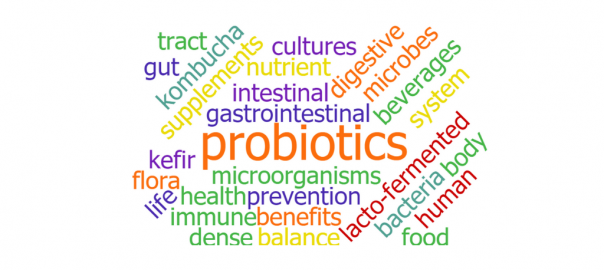
While bad bacteria can make you sick, good bacteria can help break down food and support your immune system. Probiotics are live bacteria and yeast that work in harmony with your biological systems. Many probiotics specifically help support good digestive health, combating issues like diarrhea, nausea, malabsorption, and dozens of other symptoms of a leaky gut. 

You can get probiotics through consuming probiotic-rich foods such as lacto-fermented vegetables and yogurt or through beverages like kombucha and kefir. Or you can get them through supplementation. However just because they can have some health benefits doesn’t always mean that they always have health benefits. There can be times when it’s best to not take probiotic-rich foods or supplementation and you should actually avoid them.

3 Reasons to Avoid Probiotics

Below is a quick list of those occasions when it might be better to seek alternative treatments for digestive issues. In each of these cases, use of or consumption of probiotics is contraindicated until the condition has been resolved.

1. SIBO

Small intestinal bacterial overgrowth (SIBO) refers to a condition where you already have too much bacteria in your small intestine. Adding more is not a healthy solution to anything, even when it is otherwise helpful bacteria. For those with SIBO getting a diagnosis can sometimes be difficult. But once you have a diagnosis there’s a specific dietary protocol and supplemental support required to support your system.

The symptoms of SIBO are quite diverse and can include

  • Constipation
  • Diarrhea
  • Abdominal bloating and pain
  • Joint pain
  • Fatigue
  • Headache
  • Nausea
  • Depression
  • and more

2. Candida Overgrowth

Candida is a type of yeast that can overrun your intestinal tract and cause a variety of symptoms. When your candida levels are under control, this yeast helps with digestion and nutrient absorption. When levels get too high, symptoms can range from simple things like a white coating on the tongue to more serious symptoms like:

  • Exhaustion
  • Brain fog
  • Joint pain
  • Chronic sinus and allergy problems
  • Gas and bloating
  • Weakened immune system
  • Frequent UTIs

This is just a small sample of the potential problems associated with an out-of-control candida overgrowth. While some low-level imbalances can be treated with over-the-counter medications (such as fluconazole for yeast infections), chronic overgrowth needs to be addressed through dietary changes, nutritional support, and possibly antifungal medications. The use of a self-scoring quiz can be helpful for diagnosis. Many people who switch to a candida protocol after scoring high on the test have good results ranging from clearer skin and better digestive function to clearing of infections and weight loss.

3. Probiotics Don’t Fix Everything

The effectiveness of probiotics depends entirely on the cause of your problem. If your gut flora is out of balance or you have too little bacteria to help with digestion, probiotics can be a great way to rebalance everything. If you have been on antibiotics, pairing those with probiotics might help prevent conditions like H. Pylori. Since H. Pylori can cause systemic and prolonged digestive upset, a bit of prevention is well worth the investment in probiotics. If you don’t suffer from any of these conditions or your digestive upset has nothing to do with your gut biome, probiotics won’t help.

While probiotics can be a great way to improve your digestive health, it is important to know when to take them. Unless directed by a doctor, you likely won’t want to take probiotics on a daily basis.

Added Probiotics

Unfortunately with all the news about the benefits of probiotics many food producers are starting to add them to a wide variety of items at the grocery store. Cereals, chocolate, cold brew coffee, salad dressings, and more are all being promoted as a healthy choice due. However, overconsumption of probiotics can lead to an imbalance of the gut and is not a healthy choice. 

If you suspect you have gut health issues it’s best to work with a health professional and be evaluated to see if you need to add or avoid probiotics in your diet.

Seasonal Superfood Recipes For Fall

Fall has arrived. And with the change in seasons comes a completely different way of eating. Instead of light and refreshing salads, it’s time for nourishing, warming, nutrient-dense foods. If you’re not familiar with the term, nutrient density is the concept of eating foods which provide a lot of nutrients for not a lot of calories. This is contrasted with energy dense foods which provide a lot of calories but not a lot of nutrition.  An apple, for example, is a more nutrient-dense food than fried apple fritters which are calorically (energy) dense.

Benefits of seasonal eating

When we change what we eat with the seasons there are many benefits for our health.  The health benefits come in part from the fact that seasonal foods are usually picked at their peak of ripeness. This is when their nutrient value is highest. It’s a distinct difference from when they are picked early, stored, and force-ripened. While it may be nice to have apples, strawberries, or lettuces year round, the truth is they each have a season.

Taste is another health benefit of seasonal eating. Being fully ripe when picked often means the produce will taste better. That’s because it’s fully ripe so the flavors have had a chance to really develop. Anyone who questions this should think about the difference between cardboard tasting winter tomatoes and a mouthwateringly delicious vine-ripened summer tomato.  There’s a huge difference, one that we shouldn’t ignore because the more flavorful tomato delivers more lycopene, vitamins C and K, biotin, molybdenum, and more.

Variety in the diet

Another important health benefit to seasonal eating is that it introduces more variety to your diet. When we eat the same foods all the time we can miss out on different nutrients from different foods. Micronutrient profiles are broad and varied among different foods, we can take advantage of that by eating with the season. For the Fall season, that means consuming a lot of foods that are rich in Vitamin A, a beta-carotene found in the red, orange and deep yellow foods of this season. Vitamin A is beneficial for eye health, hair, skin, nails, and can be supportive for respiratory health as well.

Just because a food is in season does not, unfortunately, mean that what you are buying at the grocery store is truly fresh. It is possible that foods traveling a far distance can be picked early and stored while they are shipped across the country or around the world.  In order to ensure that you are getting in-season foods, it’s best to shop locally from farmer’s markets and CSA’s or to look for locally grown signs at your grocery store.

Five Recipes

To help you add some of the delicious superfoods of Fall into your diet we’re sharing a few of our favorite recipes below:


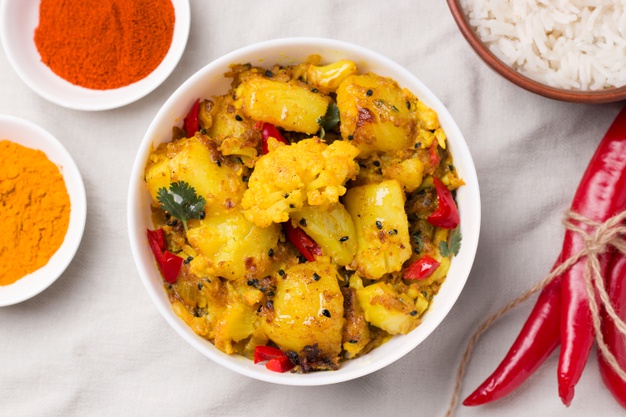
Cauliflower Curry

The mild taste and slightly rough texture of cauliflower make it perfect to add to many dishes at this time of year. Rich in vitamin C, K, pantothenate, and folic acid, cauliflower is also excellent for helping with cholesterol health. You can use it as a mash in addition to or instead of potatoes, make lots of types of rice with it, or even make cauliflower steaks.
This recipe is a testament to my friend Padma who taught me so much about Indian cooking.  Every time I wanted to learn how to make something she kindly and patiently invited me into her kitchen to guide me in learning to understand her cuisine.  This recipe is one that I came up with for a quick and tasty curry.  It's become a family favorite, I'm sure your family will love it too.

Ingredients
  

  • 2 C. red lentils, cleaned, washed, and cooked
  • 2 T. olive oil
  • ½ t. yellow mustard seeds
  • ½ t. cumin seeds
  • 1 large yellow onion, diced
  • 2 cloves garlic, minced
  • 1 t. ginger, grated
  • 1 T. curry powder
  • 1 t. ground turmeric
  • 2 C. tomato sauce
  • ½ cauliflower, cut into bite-sized pieces
  • 1 t. sea salt
  • 1 T. minced fresh cilantro

Instructions
 

  • The curry sauce is made while the lentils are cooking.  If the lentils finish before the sauce is ready, take them off the heat and set them aside until it is time to add them to the sauce.
  • In a large saucepan heat the oil
  • When the oil is hot add the mustard and cumin seeds, stirring constantly cook for 1 minute
  • Add onion and sauté until onion is golden and slightly wilted
  • Add garlic, ginger, curry powder and turmeric, cook 1 to 2 minutes
  • Add tomato sauce and cauliflower
  • Reduce heat to medium-low, cover and cook until cauliflower is al dente, approximately 7-9 minutes
  • Add cooked lentils, sea salt and cilantro, cook 2-3 more minutes


Spinach Leek Quiche

Mild yet flavorful, leeks are a wonderful addition to any fall or winter dish. A great source of sulfur compounds leeks are also high in vitamin K and manganese. This particular recipe is from my Aunt Haya and is definitely one of my favorite comfort foods for this time of year. This recipe makes a large quiche and is great as leftovers.

Ingredients
  

  • 4 slices gluten-free bread
  • 3 T olive oil
  • 1 pound spinach leaves
  • 2-3 leeks (depending on size), white parts only
  • 3 cloves garlic, minced
  • 5 eggs
  • 1 cup organic milk
  • 1 tsp dried basil
  • 1/2 tsp dried oregano
  • 1/4 tsp nutmeg, fresh ground
  • 1 T. dried parsley
  • salt and pepper to taste
  • 2 C organic grated cheese (any flavor will do but I particularly like swiss)
  • 1 C sliced mushrooms

Instructions
 

  • Preheat oven to 350F
  • Lightly grease springform pan (place base or foil under the pan to prevent liquid seeping out)
  • Pulse bread in food processor until it turns into crumbs
  • Line bottom of springform pan with breadcrumbs
  • Slice leeks in half and then cut into 1/2” thick semi-circles, wash thoroughly to remove dirt
  • Heat wok or large pan
  • Add 2 T olive oil
  • Add spinach and saute until it starts to wilt
  • Add leeks and salute, adding more olive oil if needed
  • Add minced garlic
  • When spinach and leeks are fully wilted remove from heat and pour into springform pan
  • In a separate bowl mix together milk, eggs, and herbs beating well
  • Pour egg mixture over the greens
  • Top with grated cheese
  • Top with mushrooms
  • Bake 1 hour or until set
  • Let cool 10 minutes before slicing

Pumpkin Date Cake

One of the easiest healthy food swaps you can do with your fall superfoods is to use pumpkin puree in baked goods. You can often use it in place of other moist ingredients like oil and eggs. When using pumpkin you are also adding fiber, vitamins A and C, plus potassium.

Ingredients
  

  • 1  cup almond flour
  • 1 cup coconut flour
  • 1 t. baking soda
  • 1 t. baking powder
  • 1/4 t. salt
  • 2 large eggs
  • Juice and zest of one orange
  • 1/2 C evaporated cane juice crystals
  • 1 cup pumpkin puree
  • 1 cup chopped dates
  • 1 1/2 t. vanilla extract

Instructions
 

  • Preheat oven to 350 degrees F. Grease a 10 x 12 baking pan.
  • Mix together flours, baking soda, baking powder, salt and whisk to combine.
  • In a separate mixing bowl beat the eggs; add the orange juice and zest, cane juice crystals, pumpkin puree, dates, and vanilla. Beat well. Add the dry ingredients into the wet, and beat for two minutes.
  • Bake 30-35 minutes, until golden brown and done in the center.
    Note: This cake freezes well, can also be used to make snack loaves or muffins

Quinoa Stuffed Baked Apples

The last substitution you can make for a healthier superfood-rich meal is to replace your rice with quinoa. Most types of rice, including white rice and brown rice, are okay in moderation, but they lack the nutrition you need for a well-balanced meal. Quinoa is considered a superfood, so it is the perfect alternative when you want to have a side dish. It’s also a great way to add a little extra protein, manganese, copper, phosphorus, and magnesium to desserts such as in this recipe.

Ingredients
  

  • 4 apples, washed, dried, and cored
  • Filling: 3/4 cup cooked quinoa, 3 T organic butter, 3 T evaporated cane juice crystals, 1 teaspoon cinnamon, 1/8 teaspoon nutmeg, 1/4 cup chopped almonds, 1/4 cup currants

Instructions
 

  • Use a square cake pan to hold the apples
  • Preheat the oven to 400 F
  • Mix all filling ingredients together until well combined
  • Stuff equally into apples
  • Bake for 18-20 minutes until apples are tender and filling bubbles slightly
  • Serve immediately
    optional: if desired drizzle with organic heavy cream


Sweet Potato Croquettes

Many people enjoy potatoes, especially in the fall when you want more savory dishes, but they tend to be high in carbs and fat, and not very nutritious. Instead of having traditional white potatoes in your dishes, try sweet potatoes. These are a superfood, so they are filled with nutrients, and are amazing to enjoy during the fall season. You can have stuffed sweet potatoes, mashed sweet potatoes, or even sweet potato soup.
This recipe owes it's start to a much-loved favorite from my husband's family.  Made for nearly every big family gathering everyone pitches in to roll the croquettes and then eagerly awaits the finished product.
Updated to use sweet potatoes and cinnamon, plus a few other healthy changes, these are a wonderful way to get beta-carotene as well as vitamin C and manganese.  The recipe makes a lot but this is because we tend to make them for large family gatherings.  You do not need to bake them all at once and can, if you like, freeze some to bake at a later time.  While they take a while to assemble they are certainly worth the effort.

Ingredients
  

  • For croquettes: 5 pounds of sweet potatoes, baked and peeled (be sure to not overbake so they are not mushy)1 stick organic butter2-3 eggs1 C organic milk¼ t. fresh ground nutmeg½ t. ground cinnamon
  • For coating: beaten egg, gluten-free breadcrumbs

Instructions
 

  • Puree baked potatoes while still hot
  • Add other ingredients and mix well
  • Roll into croquette shape (an oval tube approximately 1 ½ inches long)
  • Prepare a pie dish with beaten egg (beat eggs one or two at a time to ensure you don't make too many)
  • Prepare a separate pie dish with breadcrumbs
  • Dip croquettes into beaten egg
  • Dip egg-coated croquettes in bread crumbs
  • Place croquettes on an un-greased baking tray, cool 2-4 hours (we usually cool them overnight)
  • Bake at 350 F for 20 minutes or until golden in color

For more seasonal and superfood info check out these posts:

fruit smoothie

Four Delicious Superfood Smoothies For Fall

Superfood Smoothies

While smoothies are certainly more popular during the warmer months of the year, there’s nothing wrong with enjoying them during the Fall season. A superfood smoothie can be a great way to add a nutrient-dense bump to your diet. To increase your nutrition you can simply change the ingredients in your smoothies. This allows you to take advantage of the season by eating those superfoods that are available at this time of year.

Important notes for smoothie making

  • By using bone broth instead of plain ice cubes you’ll be adding a small amount of a wonderful nutrient dense liquid that adds to the health benefits of the smoothies.
  • For added protein in each of the smoothies listed below add 1-2 scoops of collagen powder.  This odorless, flavorless powder is also highly beneficial for gut health but won’t change the delicious flavor of the smoothie.
  • When using almond or coconut milk be sure to read the label and avoid carrageenan. This ingredient, made from a red seaweed, can be highly irritating to the gut.
  • Each recipe below makes 2 servings, if desired you can cut the recipe in half to make just a single serving.
  • If you want to make two servings and save one for later it’s recommended that you freeze the second serving in order to prevent the ingredients from oxidizing. When you are ready to drink it, thaw a little more than halfway (overnight in the fridge should work) and re-blend. The frozen one may have a thicker consistency when blended depending on how much you let it thaw.
Wonderful Walnut Smoothie
Print
Ingredients
  1. 2 cups almond or coconut milk
  2. 3/4 cup chopped walnuts
  3. 2 cups frozen organic wild blueberries
  4. 2 tbsp fresh-ground flax seeds
  5. 2 tbsp organic molasses
  6. 1-2 tsps cinnamon
  7. 4 bone broth cubes
The Ingredient Guru, Mira Dessy https://theingredientguru.com/
Cran-Orange Breakfast Boost
Print
Ingredients
  1. 6 oranges, washed, peeled and sectioned
  2. 2 cups frozen cranberries,
  3. 1 16-ounce bottle cranberry kombucha
  4. 1 ½ tsp vanilla extract
  5. 6 bone broth cubes
The Ingredient Guru, Mira Dessy https://theingredientguru.com/
Almost Pie Smoothie
Print
Ingredients
  1. 1/3 C gluten-free oats
  2. ½ C pumpkin puree
  3. 1 ½ C organic Greek yogurt
  4. 2 medium organic Fuji apples (about 2 cups)
  5. 1 banana, frozen and broken into pieces
  6. 1 C almond or coconut milk
  7. ¼ t pumpkin pie spice
  8. 6 bone broth cubes
The Ingredient Guru, Mira Dessy https://theingredientguru.com/
Carrot Cake Smoothie
Print
Ingredients
  1. 1 frozen banana, broken into chunks
  2. ¼ cup shredded carrots
  3. 1 tbsp vanilla extract
  4. 1- 1½ tsp cinnamon (to taste)
  5. generous pinch nutmeg
  6. 1 C organic yogurt
  7. ½ C almond or coconut milk
  8. ¼ t ginger
  9. 4 bone broth cubes
The Ingredient Guru, Mira Dessy https://theingredientguru.com/

More great Fall recipes

If you enjoyed this article, please join my community to receive more information and special offers with my free newsletter, Food News You Can Use (I do the research so you don’t have to) Every week you’ll get an email with updates to help you stay informed about all the ingredients for living a healthy life. 

Three Delicious Pumpkin Recipes For Fall

It’s that time of year when the days are getting shorter, the temperatures are dropping, and all those scrumptious, warming, Fall foods are appearing at your grocery store. This includes pumpkin, one of my favorite, most versatile vegetables. Fabulous in soups, baked goods, as a side vegetable, and even as a snack using the seeds. Pumpkins are so tasty that I find it surprising how in the United States we spend nearly $600 million on pumpkins just to carve them up for Halloween and then discard them. They’re so nutritious and delicious that I think we should all be eating more of them.

Superfood Benefits of Pumpkin


Qualifying as a superfood, pumpkins are a wonderful source of potassium, vitamin A, a good source of vitamin C, and also provide quite a bit of fiber. Health-wise, due in part to their high antioxidant status, studies show pumpkin may be supportive in decreasing the risk of cancer. They’re also believed to help with improving insulin regulation, lowering blood pressure, providing lignans (which can have an antimicrobial benefit), and consuming pumpkin may even be helpful for the treatment of benign prostatic hyperplasia.

It’s not just the flesh of the pumpkin that’s good for you. The seeds also have health benefits. Helpful for cholesterol metabolism and in addition to being a good source of protein, the seeds also deliver tryptophan, manganese, phosphorus, copper, magnesium, and zinc. All of this goes a long way towards making pumpkins and their seeds something you definitely want to add to your nutritional plan.

Pumpkin Recipes


While almost everyone is familiar with pumpkin pie and pumpkin bread, and possibly even pumpkin soup, there’s so much more you can do with them.  Here are a few delicious ways to add more pumpkin to your Fall menu and bump up your nutrition.

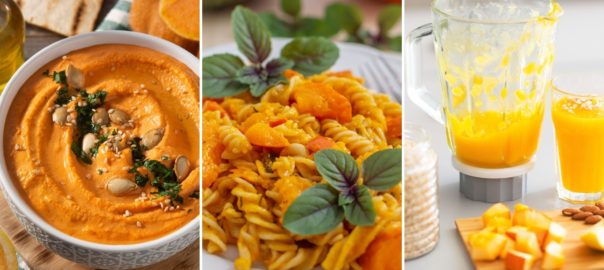
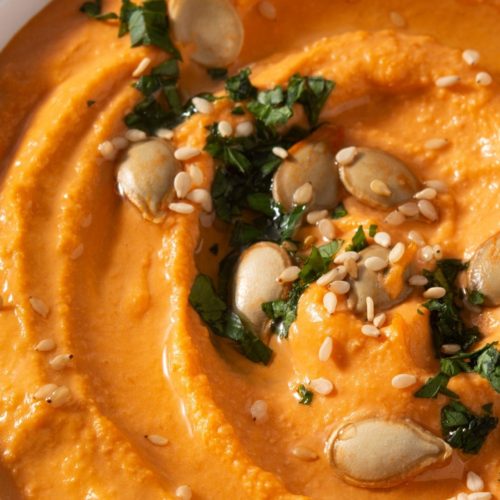
Pumpkin Hummus

Ingredients
  

  • 2 cups cooked chickpeas (or 1 15 oz can organic chickpeas, drained and rinsed)
  • 15 ounces pumpkin puree
  • juice of 2 lemons (about 4 tablespoons)
  • 1/3 cup virgin olive oil
  • 1/2 cup tahini paste
  • 3 cloves garlic finely minced
  • 1/2 tsp cinnamon
  • 1/4 tsp nutmeg
  • 1/4 tsp allspice
  • 1 1/2 tsp sea salt 
  • 2-4 Tbsp chickpea liquid, as needed for consistency

Instructions
 

  • Blend all ingredients except salt and liquid together
  • If needed, add chickpea liquid 1 Tablespoon at a  time for smoothness and consistency
  • Once fully blended add salt to taste
  • Best served at room temperature

Pumpkin Alfredo

Ingredients
  

  • 1 pound gluten-free tagliatelle (my preferred brand is Jovial)|
  • 2 Tbsp organic butter
  • 2 Tbsp gluten-free flour
  • 3 garlic cloves, minced finely
  • 4 cups organic milk
  • 1 cup pumpkin puree
  • 1 tsp finely minced rosemary
  • 1 pinch red pepper flakes (to taste)
  • sea salt and fresh ground pepper to taste
  • shaved parmesan for topping
  • minced rosemary for topping

Instructions
 

  • Cook, drain, and lightly rinse pasta
  • Heat butter in a saucepan, add flour and whisk until combined
  • Add garlic, pepper, rosemary, and milk, reduce heat
  • Whisk all ingredient together until fully combined
  • Add pasta to the sauce and combine, coating noodles well
  • Garnish with extra minced rosemary and shaved parmesan

Superfood Pumpkin Shake

Servings 2

Ingredients
  

  • 1 cup pumpkin puree, cold, not freshly cooked
  • 2 bananas
  • ½ cup plain organic Greek yogurt (full fat if possible)
  • ½ cup unsweetened almond milk (avoid carrageenan)
  • 2 tbsp protein powder
  • 1 tsp honey
  • 1 tsp ground flax seeds
  • 1 tsp bee pollen granules
  • 1 tsp pumpkin pie spice
  • 2 cups ice

Instructions
 

  • Blend well until fully combined
  • If needed add extra liquid to fully blend ingredients together


For a few more Fall posts be sure to check these out:

Six Reasons To Love Adult Coloring Books

When you first think of coloring, you might picture children with bunches of crayons excitedly coloring in books with their favorite cartoon characters. But there’s a growing trend of adults that enjoy coloring. This has brought about the release of more complex coloring sheets and books designed exclusively for adults.

Many adults have discovered that not only is coloring fun, it also has health benefits, too. As a form of self-care (and self-care is one of my "ingredients for a healthy life") coloring books are right up there for a simple, easy way to take a break.  If you’ve been thinking about adding coloring books to your self-care strategy, here are some of the ways this hobby can help support better health:

  1. Stress reliever
  2. Elevates mood
  3. The Un-tech Effect
  4. Improves focus
  5. Anyone can color
  6. Highly portable


1. Stress Reliever


According to a study published in the Art Therapy: Journal of the American Art Therapy Association, coloring in mandala or geometric patterns appears to lower stress and anxiety levels.  

When your body is stressed it produces cortisol.  In small doses this hormone can be beneficial, helping you get through a nerve-wracking speech or boosting your energy when you're in the middle of a crisis such as a car accident. Too much cortisol over an extended period of time can lead to health problems. Problems like type 2 diabetes, obesity, high blood pressure, and anxiety.

While coloring doesn’t prevent you from producing cortisol, it’s believed to help lower your cortisol levels. This may be because coloring allows you to get into the creative zone and focus on something enjoyable, rather than worrying about your problems. This, in turn, can help you to relax and release the tension in your body.

One of the conclusions of the Art Therapy study was that “It seems that the complexity and structure of the plaid and mandala designs drew the participants into a meditative-like state that helped reduce their anxiety.”


2. Elevates Mood


Besides easing stress, coloring can also improve your mood. This could be due in part to the fact that no one is judging your art. In many ways, coloring is a freeing experience for adults. It may also be because coloring can lead to something called flow. 

Developed by positive psychology cofounder, Mihaly Csikszentmihalyi, flow is the concept of a highly focused mental state. When in a state of flow you are removing outside distractions.  Using coloring as something to create that flow, you let go of stress (as mentioned above) and are focusing the simple act of coloring. This can provide space which allows you to unwind.  Your flow state can then boost creativity, productivity, and positivity.


3. The Un-Tech Effect


Let's face it, our lives are immersed in technology. Your phone, your watch, your computer, tablet, and television are all highly technical and always pulling for your attention.  Even our homes are becoming smarter and more high tech. Doorbells, lights, heating systems, refrigerator, and more are requiring us to tap into technology. All of that technology interface can be overwhelming, overstimulating, and somewhat stressful. It feels like you are always surrounded. That's because you are.

Yet with just your imagination, some paper, and a few coloring tools you can set aside some me-time and take a break from all that technology. Your brain will actually function better after a break and you'll feel calmer too.


4. Improves Focus


Another advantage of coloring is that it improves your focus. Many people find that coloring while listening to webinars or lectures makes it easier to absorb the information. Some of this may be due to an innate tendency to be a kinesthetic, or hands-on learner. But even those who aren't typically kinesthetic learners may benefit. Many people find that keeping their hands busy, means their mind is less likely to wander.

Because coloring gives you better focus and more clarity, it can also be a good activity to do before you sit down to set goals or develop new strategies. Many highly creative people, such as Albert Einstein and Thomas Edison, found answers to problems they were working on when they took a break and didn't focus on the problem. The creativity required for coloring may help you think of new ways to tackle your goals and get the results you're looking for.


5. Anyone Can Color 


Many people suppress their artistic impulses telling themselves that they simply aren't creative. The truth is we are all creative. We all have that spark within us. The beauty of adult coloring books is that when you're coloring it's a no pressure situation. You're not expecting to have your coloring pages hung in a famous museum. You're simply coloring. And you don't even have to color inside the lines if you don't want to. You can make green clouds, pink skies, or anything your imagination can conjure up. It's a totally personal choice of what you color, what colors you choose, and how you put everything together.


6. Highly Portable 


Coloring is one of those activities that can be done anywhere. There are even small books or tiny coloring kits that can be tucked into a purse or a backpack to have at the ready. Perfect for long waits at the department of motor vehicles or alone at a coffee shop. Wherever you are and whatever time you have available, coloring can fill in the gaps and give you a healthy break.

If you love to color and are looking for new sources of coloring material be sure to check out my ebook, Mira's Marvelous Mandalas with 55 ready to print beautiful mandala designs to bring you hours of creative fun and mindfulness.

Favorite Instant Pot Tools

I was a little late jumping onto the Instant Pot train, but now I really can't remember what I did without it!  It is my absolute favorite tool in the kitchen. Pressure cooking made easy-as-pie (hmmm... I haven't tried making a pie in my pot yet...)  The ease alone would be enough but Instant Pot takes it even further - a slow cooker, rice cooker, steamer, warmer and sauté pot, and that's just the 6-in-1 model.  The 9-in-1 model also makes yogurt, cooks eggs, sterilizes AND makes cake. All this multi-tasking, no hogging my kitchen counter space - it's a keeper. So I've given my Instant Pot it's very own drawer, to store all its handy accessories.  Here are my favorites.

TEMPERED GLASS LID
A clear glass lid is perfect for when slow cooking, sautéing, keeping food warm, or even serving direct from the pot.
Instant Pot Tempered Glass Lid

STAINLESS STEEL INNER COOKING POT
Having a second inner pot makes it really easy to prepare multiple dishes. I find it especially handy when I’m meal-prepping. I can make a main dish, and then quickly pop in a new inner and make quinoa, rice a veggie and such. It’s almost as handy as having two Instant Pots.
Instant Pot Inner Cooking Pot

SEALING RINGS
The Instant Pot lid sealing ring is made of silicone. It’s really durable and will last you a long time. It can, however, hold onto food odor. I wash mine in my dishwasher after each use. I also periodically “steam-clean” it in the pot - toss a couple cut up lemons and a cup of water into the pot and cook on manual high pressure for fifteen minutes. I do have a second ring to use when I make a neutral or sweet dish and I really want to ensure no savory aromas are transferred.
Instant Pot Sealing Rings

STACKABLE INSERT PANS
Stackable insert pans are great when you have more than one dish you can cook at once – steaming, cooking veggies and rice. Or cooking two dozen hard-boiled eggs at a time. These make reheat leftovers in the Instant Pot so easy and fast, a much better choice than using a microwave.
Stackable Stainless-steel Insert Pans

STEAMER BASKET
A steam basket or rack is essential for Instant Pot cooking. I especially like one with moveable sides so it can adjust and accommodate food of all shapes and sizes. I like the extendable removable handle on this XOX model, it’s handy when lifting hot food from the pot.
OXO Good Grips Stainless Steel Steamer with Handle

TRIVET-RACK-STAND
I use a taller trivet in addition to the trivet that comes with the Instant Pot, so I can cook in several layers. I’ll often cook things like sweet potatoes on the lower level and place an entrée in a pan above on the higher level. If you do this, take care that the height of the tallest item is not higher than the pot’s maximum fill line.
Trivet Rack Stand

HOT POT GRIPPER CLIP
Sort of like a hot pad’s much stronger studier weight-lifter cousin. Just clip the grip end onto the hot pot, or pan or basket and lift it from the Instant Pot. My friend Coleen, an Instant Pot veteran, gave me these when I first got my pot. She was absolutely right about how much I’d love them!
Hot Pot Gripper Clip

CHEESECAKE PAN
Perfect for cheesecake, tarts, quiches and more cheesecake. This pan was designed with Instant Pot cooking in mind, it has a handle for lowering into and lifting out of the pot. The only problem I have found with this pan is that it is too easy to make cheesecake. It's very tempting to have cheesecake every week. LOL
Stainless Steel Cheesecake Pan

YOGURT MAKER CUPS
My Instant Pot doesn’t have the Yogurt function (sad face) so this yogurt maker cup set is on my wishlist for now. When it’s time to give my pot an Instant Pot sister, it will be the yogurt-making 10-in-1 model.

COOKBOOKS: Now that I have an instant pot and love the versatility of this device I realized I needed a couple of cookbooks to help me find delicious recipes as well as instructions for standards like chili. Here are the ones I have: The Ultimate Instant Pot Cookbook  and Dinner In An Instant 

If you loved this list, be sure to check out my Favorite Kitchen Tools list. I've done the research so you don't have to!


Affiliate Disclosure: Recommendations I share on my website may contain affiliate links. If you click through my referral link, at no additional cost to you, I may earn a small commission if you make a purchase. I only recommend products and services I use myself and would share with friends and family. Your purchases from these companies through my links helps me continue to bring you free information on my site.

beaver butt - castoreum

Are You Eating This Ingredient?

Is the “Natural Flavoring” in Your Food Really from a Beaver’s Butt?

You’re probably aware that most modern foods contain flavoring agents that are less than natural and wholesome. What you may not know, though, is that even natural flavorings aren’t necessarily what you think they are. A great example of this is a chemical called castoreum, which under FDA rules can be simply labeled as “natural flavor.” Though it is absolutely natural, castoreum is probably the last thing you’d willingly put on your food. The reason isn’t that it tastes or smells bad, but that it’s sole natural source is, somewhat disturbingly, a beaver’s bottom.

Harvesting, History, and Uses of Castoreum

Castoreum originates in pouches known as castor sacs, which can be found near a beaver’s pelvis and anal gland. Though it may seem disgusting to think of your food being flavored with something that basically comes from a beaver’s butt, castoreum serves several useful functions for beavers themselves. In its raw form, it is a thick, waxy substance that beavers rub onto their fur to lock out water. Thanks to its strong odor, beavers also use castoreum mixed with their urine to mark their territories.

Castoreum can be harvested in two ways, neither of which is particularly easy or convenient. The first method involves killing a beaver and harvesting its castor sacs. Though the sacs are valuable, beavers are rarely killed exclusively for them; instead, fur trappers typically harvest and sell the castor sacs to increase their profits. The second way to harvest castoreum is more disgusting, but also much more humane. When a live beaver is sedated, its anal gland can be “milked” by hand, forcing it to secrete raw castoreum.

No one knows exactly when castoreum’s use as a food additive started, but a 2007 safety review estimated that it had been in use in the food industry for at least eight decades at that point. Its earlier use as a perfume ingredient may have inspired experimentation with it as a flavoring agent. Castoreum is known to be useful in simulating raspberry, strawberry and vanilla flavors.

Perhaps the longest-standing use of castoreum is for medicinal purposes. The secretion appears in Roman medical recipes and its gathering is even mentioned in Pliny the Elder’s Natural History. Today, it is still used by believers in homeopathic medicine as a remedy for everything from tetanus to digestive disorders.

Castoreum Today: Are You Eating Beaver Butt Secretions?

With all of these different uses, you might be wondering just how much castoreum you’ve eaten over the years and how many beavers have had to be milked or killed to produce it. The good news, if you’re currently eyeing everything in your pantry suspiciously, is that castoreum isn’t at all common as a food additive. In the United States, only about 292 pounds of castoreum are used each year. The difficulty of extraction usually makes other flavoring agents much more cost-effective, as evidenced by the fact that 20 million pounds of vanilla is still used in the U.S. food industry each year to provide vanilla flavoring that could, in theory at least, be simulated just as well with castoreum.

With that said, some specialty products have leaned more heavily on castoreum as a flavoring agent over the years. Cigarette manufacturer Philip Morris, maker of the Marlboro brand, is known to have flavored some 400 billion cigarettes with castoreum in 1991. The inclusion of extremely tiny amounts of castoreum was used to make the cigarettes sweeter and better-smelling. Incredibly, the entire production run used just 8 pounds of the substance. So, if you smoked Marlboro cigarettes in the early 1990s, you probably inhaled a minuscule amount of castoreum.

castoreum, beaver butt whiskeyAnother specialty product that has historically used castoreum, and still does to this day, is a Swedish schnapps that is actually supposed to taste like a beaver’s butt. The liquor is referred to as bäversnaps, literally meaning “beaver schnapps” in Swedish. The drink has a strong, musky flavor that is produced by soaking castoreum in high-proof alcohol, which takes on the flavor over time. Though it may not be for everyone, at least bäversnaps uses castoreum openly, rather than labeling it as a “natural flavor.” And an American company is producing a Eau De Musc, a castoreum flavored whiskey. This represents the first time I’ve seen castoreum openly labeled on a food or beverage product. 
So, while the natural flavor in your favorite foods could hypothetically contain castoreum, the odds are that you’ve either never eaten it or have only ever had an extremely small amount. Still, the fact that castoreum was used in the past and is still used in rare cases today is just another reason that you should always make a point of avoiding those ingredients labeled as “natural flavor.” It’s important to know exactly what’s in your food.


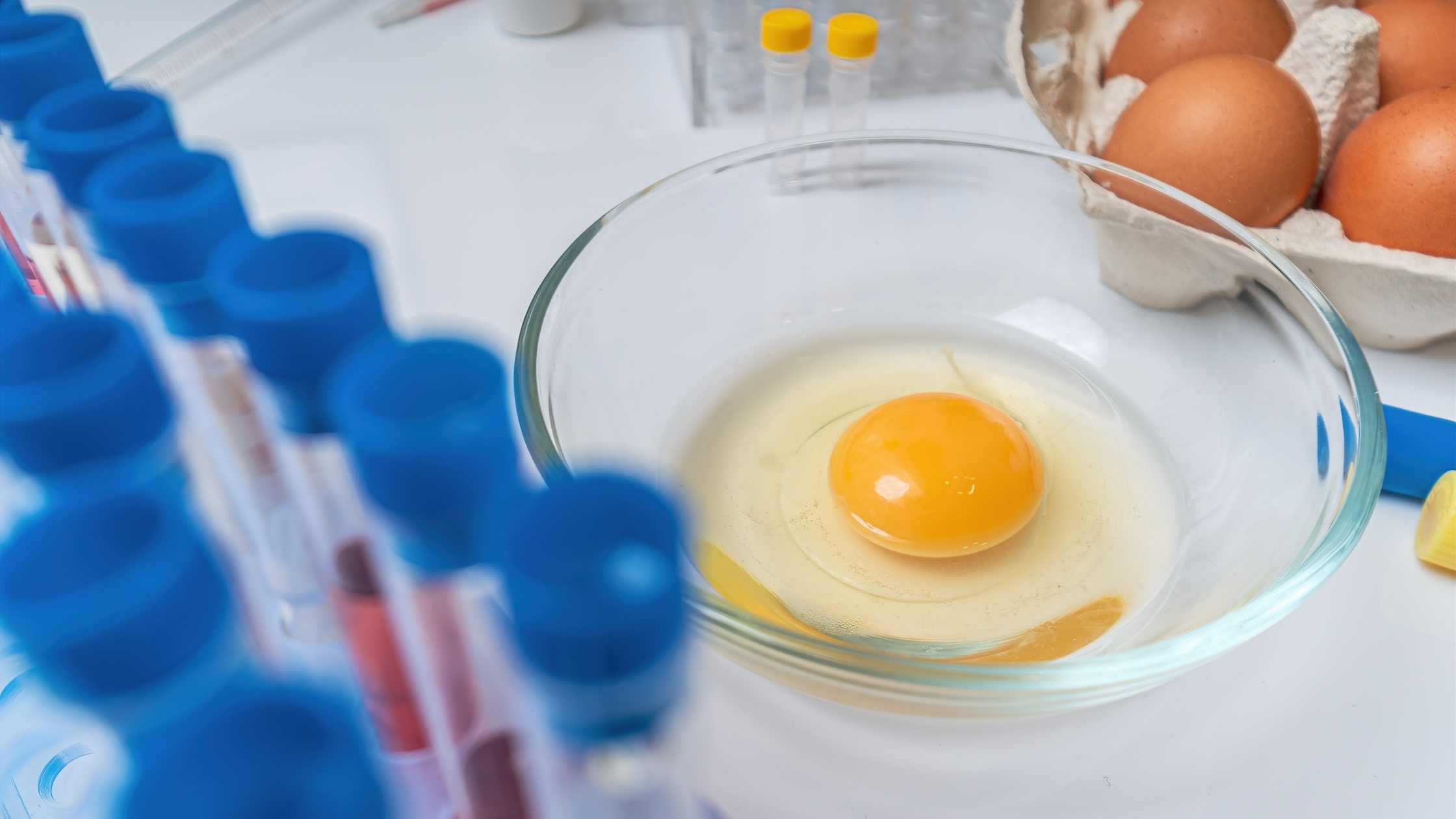
All About Eggs

For the purposes of this article, we are discussing eggs from chickens. Duck is becoming easier to source and can be a preferred source for those allergic to chicken eggs.  The makeup of eggs is approximately 12% fat, 13% protein, 73% water, and the rest a few minerals. It is, however, important to note that the nutritional support from duck, turkey, goose, quail, or any other type of egg can vary slightly from those of chicken.

A favorite food for many people, eggs are easy to prepare and highly versatile. They can be used for any meal of the day, as a quick protein snack, or incorporated into other foods.  At approximately 70 calories each, they are a great source of protein, providing approximately 6g of protein. They are also a good source of beneficial nutrients such as lutein and zeaxanthin as well as iron, choline, selenium, biotin,  B12, and B2.  

Top Health Benefits

In addition to being a great source of protein, eggs provide other health benefits.

  • A good source of cholesterol, which the body needs to make hormones, consuming eggs does not raise blood levels for cholesterol. And pastured or free-range are even better as they can help reduce triglycerides
  • Most people don't get enough choline in their diet. Yet it is vital for liver function as well as nerves and muscle tissue. As listed above, eggs are a good source of choline
  • Supportive for eye health due to high levels of lutein and zeaxanthin

Allergy Symptoms

For a small percentage of the population, eggs are a source of allergic reactions. Approximately 2% of all children have an allergy to eggs. Nearly 70%, however, tend to grow out of the condition by age 16. For those allergic to chicken eggs, there may also be a response to other eggs as well. An allergenic response can include:

  • Asthmatic symptoms or wheezing
  • Diarrhea
  • Digestive upset, cramps, nausea, or bloating
  • Hives
  • Nasal congestion, sneezing, a runny nose, or post-nasal drip
  • Skin irritation or rash

In severe cases of true food allergy, there can be an anaphylactic reaction which might include low blood pressure, faintness, dizziness, or restricted airways. If you suspect an anaphylactic reaction seek medical care immediately. 

For those with a true food allergy, it is important to monitor your reactions as the response can get worse with repeated exposures. 

It is important to be aware that the influenza vaccine is made using a small amount of egg protein and therefore may not be safe for those with this type of true food allergy.

On the Label

Eggs are used in a wide variety of ways. In addition to homemade goods such as omelets or quiche, they are also used as a binder for baked goods, meatloaf, and other foods. However, a wide variety of prepared and packaged foods may also contain eggs as one of their ingredients.  These can include mayonnaise, crackers (such as matzo), noodles, pasta, dressings, sauces, and other condiments.

Because eggs are one of the seven most common food allergens (the others are corn, wheat/gluten, soy, fish, dairy, and nuts) labeling laws require that manufacturers disclose on the label if their product contains eggs.  

Names that appear on the food label that can indicate the presence of eggs include:

  • Anything starting with "ova" or "ovo," such as ovalbumin or ovoglobulin
  • Albumin
  • Globulin
  • Lecithin
  • Livetin
  • Lysozyme
  • Vitellin

Food Intolerance

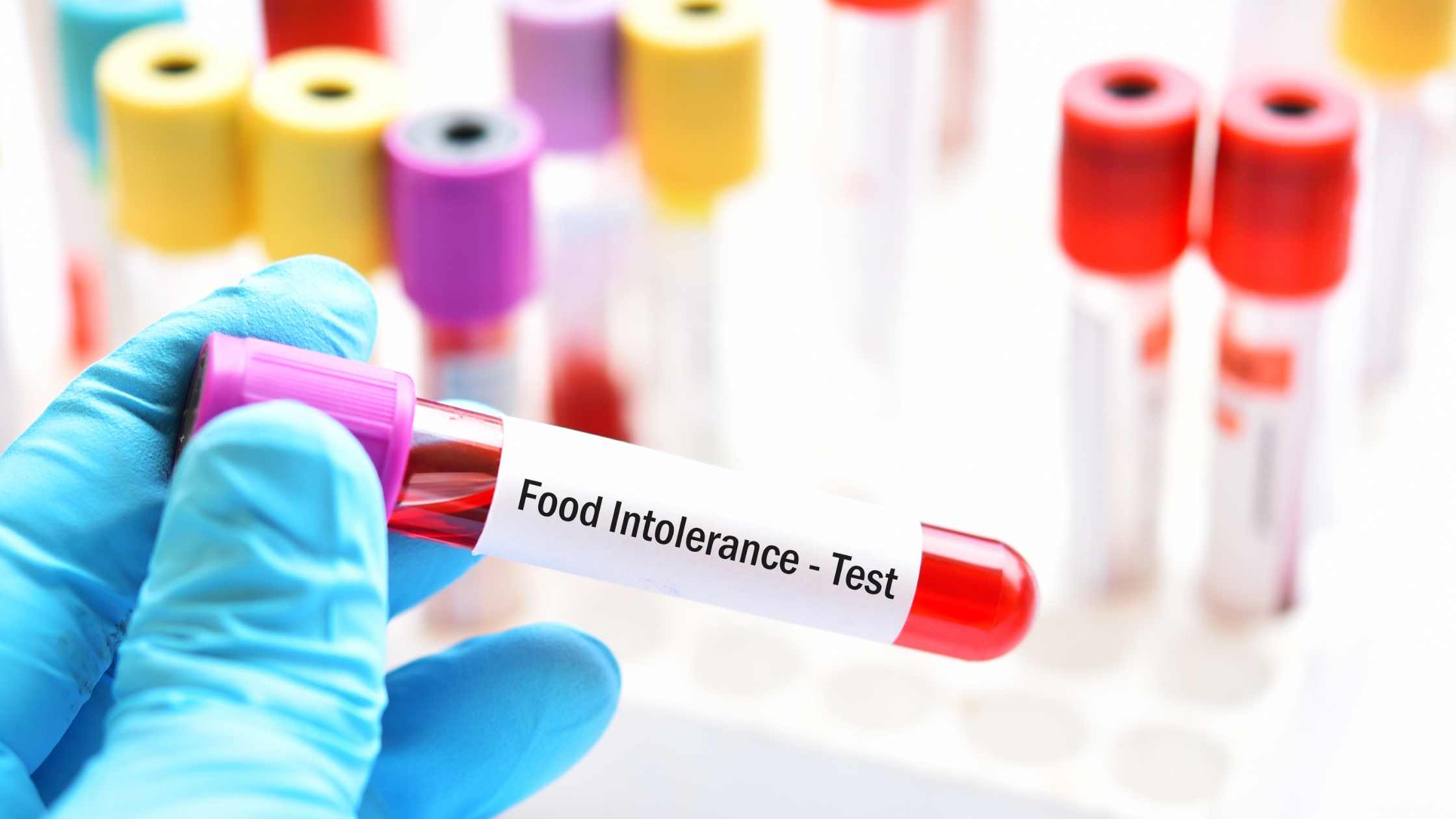
In addition to true food allergies, there is a possibility for people to develop a sensitivity to eggs due to intestinal impermeability, or leaky gut. Testing is the best way to determine if there is any kind of delayed hypersensitivity or food intolerance.

If there is a food sensitivity or intolerance, avoiding eggs for a period of time while adding supportive protocols for the gut is helpful.  The period of time required to avoid eggs can vary depending on the individual, the severity of the intolerance, and compliance with dietary changes.  

If you suspect sensitivity issues using a food journal can help to identify when you eat eggs, or any other items that you suspect an intolerance to, and your physical response. This can then be followed up with a visit to a professional for nutritional support.  If you suspect a true food allergy, working with an allergist or immunologist is recommended.

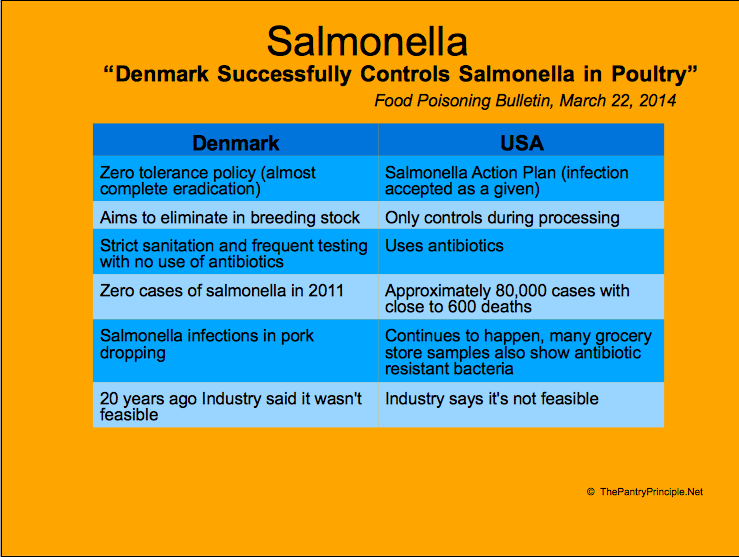
Salmonella & Pasteurized Eggs

On a regular basis, we seem to see articles that bring to light the fact that eggs are still not being appropriately monitored and companies are free to do what they wish.  Unfortunately, egg producers are apparently not required to tell the federal government when they find salmonella, nor are they required to share the names of companies under which they sell their eggs.  

The Agricultural Research Service (ARS) claims that pasteurizing eggs through radio frequency (heating the egg) followed by a water bath to cool it off will be sufficient to kill salmonella.

Given that salmonella comes from the hen laying the eggs doesn't it make more sense to treat the hens so they don't get salmonella? Reducing salmonella at the source not only creates a healthier poultry industry but also reduces health care costs. 

So while the industry may pat themselves on the back for adding another systematic process to food production I have a few issues with this:

  1. I do not consider these eggs to be raw.  Raw means raw, not heated, not radio treated, and heated.  True they are marked ‘pasteurized' but they are not raw.
  2. We are focusing on the wrong side of the equation.  We should be removing salmonella at its source.
  3. We are missing an opportunity to reduce health care costs and save lives by changing how we raise poultry (and in *Denmark, they do it without antibiotics)

*


If you choose to eat raw eggs you may want to consider getting to know your egg farmer and not purchasing from large, confined, commercial egg operations.


Answering Questions About Eggs


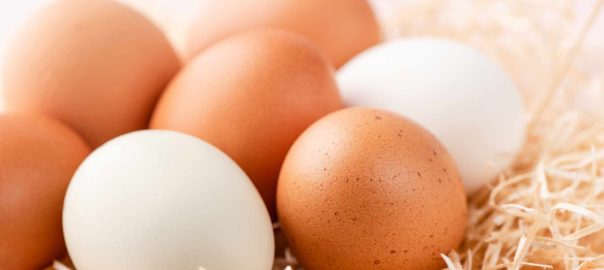
1.  Are brown eggs healthier than white eggs?  No.  The color of the eggshell depends on the breed of chicken.  There is even a breed of chicken called Araucana that produces blue shells on their eggs.

 2. What is the difference between cage-free and free-range chickens?  And are the eggs from one better than the other?  Egg-laying chickens are usually raised in small cages stacked high called battery cages.  The cages are not very big, leaving not enough room for the chickens to spread their wings.  Cage-free means that the chickens are not in cages but are in a large building free to roam around and spread their wings.  Free-range means that the chickens have access to the outdoors.  Unfortunately many times free-range chickens are raised indoors and not granted access to the outdoors until they are several weeks old, at which point they don't go outside anyway.  Although the consumer-intent for free-range eggs is that the chickens are living happy, pastoral lives, running around in the outdoors scratching and eating bugs I don't believe this always happens.  For me, this means that cage-free and free-range are probably similar treatments for the birds and either one is preferable to raising them in small confined cages.  If you are certain that the free-range eggs are indeed from chickens who are running freely outside then those would be the best eggs. 

Free-range pastured, or roaming, eggs, however, are supposed to be from chickens that actually have unrestricted access to the outdoors and run around eating bugs and scratching in the dirt.

 3. Is it worth it to buy organic eggs? Buying organic eggs means that the chickens have not been fed any animal by-products, given hormones, antibiotics or eaten any genetically modified feed.  Additionally, organic eggs are supposed to be from free-range chickens.  There are studies showing the organically raised fruits and vegetables have more nutrients than their conventionally grown counterparts. I have not seen any studies showing that the same is true for organically raised eggs but I feel that it is probably true.

4. Why do they advertise omega-3 eggs and how do they do that? I believe producers are advertising omega-3 eggs because there is a current trend or fad for foods that are enhanced with omega-3, or alpha-linolenic acid (ALA).  Most of us don't get enough of this important essential fatty acid in our diet so producers think (and sadly they're mostly correct) that by advertising in big letters that their product contains ALA will convince many of us to buy it.  How do they get the omega-3's in there?  They feed the chickens a diet that is very high in flaxseeds which are one of the natural sources of ALA.  Walnuts and salmon are two other very good sources.  I personally feel that I would rather eat foods that are naturally high in omega-3's than pay extra for enhanced eggs.

5. Does the color of the yolk mean anything? Free-range chickens who are scratching and eating bugs tend to produce richer colored yolks because of all of the greens they are eating.  However, it is possible to get a more golden color yolk by feeding corn or alfalfa to the chicken; chickens fed wheat will tend to have pale-colored yolks.   It is even possible to get an orange-y color to the yolks by feeding marigold petals to the chickens.  I believe advertisement of yolk color on the package simply means the producer is counting on the consumer to this that this means the egg is fresher or better when what they have done is feed the chicken a diet that changes the yolk color.

6. Why do they advertise vegetarian-fed on the egg carton? Chickens are not by nature vegetarians.  I assume that it is to assure the consumer that the chickens are not being fed any animal by-products.  By natural inclination, chickens eat bugs, worms, and other small animals but if they are not free-range they do not have access to these. But it's important that they are not being given scrap offal, nervous tissue, etc from slaughtered animals as those can carry disease. 

7. I was in France recently and they had their eggs out of the refrigerator in the grocery store. Isn't this unhealthy? France isn't the only country that does this. A lot of countries around the world do it. They're able to leave their eggs out of refrigerated cases because they do not wash and sanitize them as we do in the US. That process removes the protective coating makes the egg more susceptible to bacterial growth.

8. Who is in charge of egg regulations in this country? This is actually a multi-agency responsibility
   -The U.S. Department of Agriculture is responsible for overseeing the health of chickens
   -The FDA is responsible for whole eggs
   -The USDA is responsible for eggs if they are transported or broken (sold as a liquid)
   -The FDA is responsible for eggs sold in retail environments

It’s enough to make anyone’s head spin.

My thoughts on federal agency responsibilities

  1. Monitoring:  For years food manufacturers in all different areas of the industry have claimed that they are perfectly capable of monitoring themselves and that the industry does not require government legislation because the industry is so good as self-monitoring.  Obviously this web of responsibility, consistent contamination issues, and other examples prove that line of thinking to be fallacious.
  2. Consistency:  While I confess to not always being a fan of how the government does business with regards to food and/or nutrition, I believe this situation highlights the need for one agency that oversees all aspects of food.  Bouncing back and forth between agencies leaves too many gaps in the system.  Gaps that manufacturers are only too willing to take advantage of, leaving the consumers as the ones at risk.
  3. Oversight:  On the one hand there is too much transparency to certain parts of the system and too much secrecy regarding others.  Federal agents tell egg producers when they’re coming to visit.  They can allow the producers to suggest dates that might be convenient for their inspection.  How is that helpful?  It's kind of like putting the fox in charge of the henhouse. I think we’re all smart enough to know that you don’t warn someone that you’re coming if you want to check and make sure they’re doing what they are supposed to.  And if, in spite of these pre-arranged visits, the inspectors find problems they don’t tell the public and there are no sanctions?  Then why bother to go in the first place?  And how does this in any way protect the consumer?
  4. Location:  With the vast majority of egg farms located in Iowa this type of situation once again highlights how far removed we are from our food.  I believe it is very important for consumers to consider shopping a little closer to home.  Get to know your local farmer, farmer’s market, or join a CSA. Pay attention to where your food comes from.  Does this mean that you won’t be affected by illness or other diseases?  Honestly no, but I believe your chances will be reduced.  The vast majority of people I know who are farming in more of a small-holding are more conscientious about the quality of their product.  I believe they are not as overwhelmed by the demands of large scale farming which leads to many practices which in turn can make the food chain more susceptible to problems.


[expand title="Sources"]
Effects of omega-3 fatty acids on serum markers of cardiovascular disease risk: A systematic review
Nutrition Facts for eggs
Rethinking dietary cholesterol
Choline: an essential nutrient for public health
Identification of lutein and zeaxanthin oxidation products in human and monkey retinas
[/expand]

iodine-rich foods include shrimp

Do You Need More Iodine?

Iodine is an essential nutrient

In order for your body to keep the thyroid functioning properly while maintaining a healthy metabolism you need iodine. This tiny little gland (located in the neck near the larynx) is part of the endocrine system. It is responsible for producing the hormones that regulate your body’s metabolic rate. It also supports digestive function, heart, muscle, and bone health as well as brain development. The catch is that the body doesn’t make iodine on its own, which means you have to get it through certain foods. Otherwise, you’ll be facing an iodine deficiency, which comes with some undesirable symptoms. So if you want to stay healthy, here’s what you should know about the role of iodine in the body–and how to make sure you get enough of this nutrient.

Symptoms of Iodine Deficiency

First, it’s important to know if you get enough iodine in your diet. Your doctor will be able to test you for iodine deficiency, but you can also pay attention to some telltale signs that you don’t have sufficient iodine in your body. In general, the symptoms all revolve around the thyroid. For example, you might notice goiter, which means your thyroid gland is enlarged.

In addition, if you have an iodine deficiency, you might also have low thyroid levels–or hypothyroidism. The symptoms of this condition include:

  • fatigue
  • dry skin
  • muscle weakness
  • weight gain
  • slower heart rate
  • feeling cold (when others feel the temperature is comfortable or even warm)
  • frequent issues with constipation
  • depression

The symptoms of hypothyroidism in children include slow growth and mental delays. 

Best Food Sources of Iodine

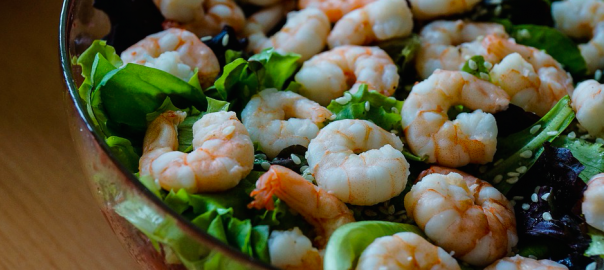
You can prevent the symptoms of low iodine by eating foods rich in this nutrient.The ocean has lots of iodine, which means most seafood has it, too. In particular, you can find iodine in tuna, cod, shrimp, and seaweed. Sea salt, however, is not a rich source of iodine. Because of this, you may be tempted to simply use iodized table salt. Unfortunately, this is sodium chloride which has added iodide, not a naturally occurring, most beneficial form. So while it is recommended that you use sea salt rather than iodized table salt you need to be sure to include iodine rich foods in your diet or add it supplementally. 

Iodine-rich foods include:

  • sea vegetables (kombu, wakame, nori, dulse)
  • fish/seafood (tuna, cod, shrimp)
  • turkey breast
  • navy beans
  • yogurt
  • raw milk
  • eggs
  • potato (with the peel).

It is important to choose the best quality of these items possible in order to support optimal health. Remember to choose organic, pasture-raised, or free-range if possible to avoid added hormones, antibiotics, pesticides, and genetically modified animal feed.

Household Exposures That Block Iodine

Another fact to consider is the role of halogens in the body. Halogens are a group of five chemically similar elements, including chlorine, bromine, astatine, fluorine, and iodine. However, since halogens are so alike chemically, they actually compete with each other in the body, which means they can block your body’s ability to absorb the iodine you get from food. For this reason, it’s important to make sure you get enough iodine and not too high a dose of the other halogens.

If you live in an area with city water you are being exposed to chlorine and fluorine through your water. These halogens compete with iodine for receptor sites on the thyroid. In order to remove chlorine and fluorine in your cooking, drinking, and bathing water you can add filters to your home* including showerhead and bathtub tap filters.

At Home Iodine Test

Now that you know how important iodine is you may be wondering if you have enough in your system (especially if you’re not eating iodine rich foods in your diet). One way to determine what your levels are is to do Iodine Patch Test:

  1. Begin in the morning after showering
  2. Using 2% Tincture of Iodine (easily available at drugstore) paint a 2” x 2” patch on the lower belly or upper thigh
  3. Note the time you painted the patch
  4. Observe the patch over the next 24 hours and record the following
    When the patch begins to lighten: _______ AM / PM
    When the patch disappears completely: ________ AM / PM
    Any description of the patch after 24 hours

The faster the patch disappears the higher your need for iodine is likely to be.

If the patch begins to slightly lighten after 24 hours this is considered a normal result.

If the patch disappears or almost disappears in under 24 hours you would want to increase iodine-rich foods and possibly consider adding supplemental iodine. You are encouraged to talk with a healthcare provider about your iodine levels and how much you need.

Clearly, we all need sufficient levels of iodine in order to stay healthy. Now that you know how to determine if your levels are low, consider eating more iodine-rich foods to make sure you’re not missing out on this important nutrient.


*disclosure