Category Archives: health


Eating More

I recently got asked the question, “How do I eat more fruit and veggies, I don’t think I’m eating enough?”  That’s a good question.  And one that’s faced by a lot of people.  Especially parents who are trying to encourage their children to eat a healthier diet.

One of the best ways I have found to encourage people to eat more fruits and vegetables is to have them on hand and convenient.  This means they are not in your fridge just rotting in the bottom of your crisper drawer.  I frequently encourage people to cut them up, prepare and make containers.  Set them out on the shelf in your fridge and it’s a grab-and-go snack.  They can either be sorted by type of food or you can make “snack packs” with an assortment.  Either way if you’re in the mood to munch and you open the fridge door to see a convient snack right there you may find yourself eating more healthy choices.

Another way is to add veggies to other foods.  You would not believe what gets added to my homemade spaghetti sauce.  Add shredded veggies to a lasagna.  Double the veggies in your omelette or frittata.  What about soups?  Loaded with pureed veggies, especially if it’s a creamy style soup base is an easy way to boost your veggie intake without trying very hard.  The trick is to make sure that you put in things that will not overwhelm your soup.  Sharper tasting foods such as cruciferous vegetables (cabbage, cauliflower, broccoli, etc) or onions may not appeal to some.  Mucilaginous textured foods such as okra may not appeal to others.  Experiment and be mindful of what you are adding in.

Choose seasonal fruits and vegetables.  I can’t stress this enough.  A tomato in season and from a farmer’s market (if possible) tastes like the most delicious, amazing thing.  A tomato in the middle of winter with a waxy coating tastes like cardboard.  When foods are in season, and hopefully local, they are picked close to ripeness.  Otherwise they may be picked early, stored, and then force ripened with ethylene gas.  This forced ripening does not allow the flavor to come through, it just makes it look ripe.  If you’re eating unappealing, non-tasty fruits and vegetables it does not encourage you to want to eat more.  As a side benefit, you really appreciate things when you can only have them in season.

Make different choices when you eat out.  There are tasty ways to add more veggies to your diet when you are eating out which allow you to still enjoy your dining experience but avoid getting bogged down by the simple carbs and other unhealthy choices.

Skip the juice and eat the fruit.  Did you know that it takes an average of 4 oranges to make 8 ounces of orange juice?  That’s a lot of sugar and those extra calories add up pretty quickly.  It would be pretty difficult to eat four oranges in one sitting.  However each orange you eat comes with a significant amount of fiber which helps to slow down the glycemic effect.  The same is true for other juices.  Switch your juice to water (add a few slices of fruit for flavor if you like) and eat the fruit instead.

Keep a food journal.  An 8.5 x 11 sheet of paper folded into quarters gives you 8 spots to write down what you eat each day.  If you’re looking to increase things like water consumption (always a good idea) and fruits and veggies set a goal for yourself and then keep track of it.  By looking back over the week you’ll be able to see if you’re meeting your goal and where you can make changes to increase your consumption a little at a time.

Small changes add up over time.  By making one or two adjustments you may soon find yourself eating more healthy fruits and veggies.

excessive coffee consumption

The Dangers Of Excessive Caffeine Consumption

Yet another caffeinated product has made it's way onto the shelves.  Mostly found in coffee, caffeine can also be sourced from tea and cocoa.  It is often consumed as a beverage.  There is a new caffeinated product which is available as an inhalant.

Seriously?  I've said it before, but I'll say it again.  How much caffeine do people really think they need?  And if they think they need that much they should be looking at what's going on in their lives to re-evaluate.

Sure caffeine can be enjoyable in moderation. But for many people it causes a whole host of issues.  According to Trudy Scott, CNC, in her book, The Antianxiety Food Solution caffeine can cause not only physical symptoms such as an increased heart rate, tremors, and an inability to sleep, but is also linked to anxiety and panic disorders.

And yet manufacturers keep looking for new ways to deliver caffeine. We are being pressured to feel that we need to live life at a faster pace and to push ourselves beyond the limits of health. Caffeine is touted as the way to accomplish that need for more energy. Through marshmallows, gum and mints, popcorn, lollipops, beef jerky, lip balm, soap, stockings, hypercaffeinated shots and beverages (thankfully the caffeinated alcoholic over the counter drinks were banned),* and more it's everywhere.

Moderation is Key When it Comes to Consuming Coffee

I was stunned recently to read in a Good Housekeeping magazine the suggestion that instead of drinking a grande coffee one should simply have several espresso shots throughout the day to keep you pumped up.  This is not a good idea.  The potential to become seriously ill from all of this overconsumption of caffeine is a strong possibility.  I am baffled to understand why we are being pushed so hard to consume a substance which, for many, is so bad for you.  Again I want to state that for those who can consume coffee without ill effect it can be okay in moderation.  However, moderate users are, I believe, far fewer than those who over-consume.   And many do not do well with caffeine at all.

One young man that I am working with gave up his three Monster a day habit.  Reluctantly. Eventually he began to notice that he felt much better, both physically and emotionally. His anxiety was reduced, his thoughts weren't racing as much, and physically he was beginning to feel better than he had in a long while.  All very positive things.  One day he was out with friends and they were all drinking Monsters, so he had one too.  Within a very short period of time he felt his heart racing, his mood changing and, in his words, "I felt like crap."  He was stunned at his body's reaction and wondered how he had ever managed to handle three monsters a day. The answer is he wasn't handling it, he just thought he was.

Be wary of these products, avoid them.  The "energy" you think you gain comes at a price.

*I have not linked to these products as I do not wish to promote them. As of this writing however, they are all real products which are, sadly, easily available.

Walking The Walk

walking | photo: jzlomek

Some of the people I work with want to lose weight.  So we talk not only about what they are eating (and how and why), but about the other aspects of their life.  Are they engaged in some sort of mindfulness practice, do they have good social interactions, are they exercising?

When it comes to exercise often not moving enough is a big problem.  If you don’t like exercise, if you don’t feel well, if you’re very tired it can be difficult to get started.  Then there is the self-created shame factor.  I have many people who tell me they don’t like to go to exercise classes because they feel uncomfortable in a class where everyone knows the moves and/or is thinner/fitter than they are.  While I feel everyone has to start somewhere I certainly understand the uncertainty and hesitation that comes along with starting to change your routine.

In order to encourage people to begin to make small mindful changes we look at the Metabolic Equivalents for how much activity they are getting now.  Then we look for ways to bump it up.  Small, steady changes can have a huge effect.

Just a couple of days ago I was working with someone and made a few of my favorite suggestions to her for getting more activity into your routine.  Take the stairs instead of the elevator, park further away at the grocery store/mall, and if you are watching television walk up and down the stairs (or use a stepper if you don’t have stairs) during the commercials.  This not only gets you moving more, it gets you in the habit of thinking about being more active.

She looked at me and accusingly asked if I did any of those things.  Whoops.  I do choose stairs over elevators as often as possible.  If I have to park further away at the store I don’t mind, but I certainly don’t choose to do it, and often don’t have to.  And I don’t walk up and down stairs when watching television (although I also don’t watch much).

So I have decided to walk the walk.  For the next 30 days I will deliberately choose to park as close to the furthest end of the row as possible when I am going somewhere (bonus:  should be lots of parking, most people don’t choose to do that).  I will also commit to walking up and down stairs if I am watching television and there are commercials.  And I will continue to choose stairs over elevators.  I don’t have a pedometer so I won’t be able to tell you how many extra steps this adds to my daily/weekly routine, but I know that it will be a good thing  And the next time I suggest this to someone if they ask that same question I’ll be able to answer a supportive and affirmative yes.

Diabetes And Diet

There’s been a lot of buzz around the internet the last week about a celebrity chef who has Type 2 diabetes.  This morning the rumors have been confirmed.  Paula Deen spoke with USAToday this morning and shared that she has been struggling with type 2 diabetes for three years.  She’s also inked a new deal with Novo Nordisk, a pharmaceutical company which makes diabetes medication.

First, I’d like to start by saying I’m very sorry to hear of Paula’s diagnosis.  Diabetes can be a challenging disease to deal with and the health complications from it can be very serious.  I hope that she manages to get her diabetes under control and wish her well on this healthy journey.

On the other hand, I’m wondering about how this will change or affect her cooking and the food that she has promoted.  She does say that she and her sons have created diabetic friendly versions of some of her recipes.  And she is exercising and has given up sweet tea.  But she still plans to promote, for the most part, the same type of food.  In the USAToday article they quote Paula as saying she’s not changing her show because of the diagnosis but, “I suspect I’ll stick to my roots but will say a little louder, ‘Eat this in moderation.'”

That’s really not the answer.  Paula Deen is uniquely poised to be a beacon for nutrition education, to help people understand the connection between your food, your thinking about your food, and your health.  To continue to eat food which you know is a major cause of your illness and expect to simply take medication to correct it is not honoring your body.  It’s time to grow up and move past the child-like petulance that says ‘I like this so I’m going to eat it anyway.’  There is so much wonderful food out there, so many flavors, textures, methods of cooking, and more.  There’s no need to limit yourself to one type of cooking, especially if you know it’s making you sick.  As someone who works with food every day she is certainly in a position to make delicious food that is also healthy.

Diabetes is an illness that, for many, responds very well to dietary changes.  Reducing sugars, increasing nutrient density, using healthy fats, etc.  Yes, changing dietary patterns takes some time.  Yes it takes some time for your palate to adjust as well.  But it is possible and it is so very worthwhile.

It is my sincere hope that this is early days yet.  Perhaps now that she is becoming a public face for diabetes and diet Paula Deen will learn to make healthy, delicious changes.  I always say “Eat well to be well.” I hope that she can learn to do this and teach others to do the same.

New Weight Loss Injection

mouse on a wheel | photo: riekhavoc

Word is buzzing about a new hormone that has just been discovered.  Called irisin it’s believed to effectively help shift adipose (fatty tissue) from white fat to brown fat.  Brown fat is desirable because it essentially burns fat.  Babies have a lot of it but it decreases as they grow.  In adults it tends to be concentrated in the upper areas of the chest and neck.

I’m not writing to you about this discovery so that you’ll all want to run out and get some.  I’m writing because I want to warn you.  This is being touted as a possible new weight loss discovery.  From the article I read studies showed that with exercise and irisin there were changes to the body including subcutaneous fat becoming browner, better insulin metabolism, and an increase in energy expenditure (read fat loss).  The results were better in mice than in people but apparently the people results were encouraging enough that, although no one is ready to market anything, there was mention of the possibility of some day creating an injectable version.  Chances are, over time, we’re going to start hearing a lot more about this.

Folks there is no magic pill, potion, or injection that will cause you to lose weight without having to make changes.  The biggest and most positive health changes (which are not always weight loss I might add) come about from changing the diet and changing your level of exercise.  Even small changes can have a big result.  Some pills and potions have had devastating effect on it’s users (remember fen-phen?) while others have simply done nothing.

My suggestion is that you not rely on some apparently magical ingredient to lose weight.  It’s not easy and it takes time but truly the answer is to eat less, eat the right things, and move more.  If you need support that’s fabulous, work with a Health Coach, a Nutrition Professional, a Fitness Coach, a Wellness Coach, if you can do it on your own that’s great too.  Because the simple truth is that the answer doesn’t lie in a pill or an injection.  You cannot continue to eat Krispy Kreme donuts and lie on the sofa watching Law and Order Marathon session and expect to be in good shape or to lose weight.  So now you know the word (irisin), you can ignore it and bypass what I expect to be growing hype.  Focus your energy on you, your health, your journey, in a safe and healthy way.

Ulcerative Colitis On The Rise

My brain is reeling.  The following headline made me shudder. “The Ulcerative Colitis Drug Market Will Increase from $1.7 Billion in 2010 to $3 Billion in 2020 as New Agents Will Offer Additional Lines of Therapy for Moderate to Severe Disease.”  This is only the latest of an increasing number of articles that have come through on my news feed recently.

Sidestepping slightly I will share that I have a personal, vested interest in articles like this.  You see I was diagnosed with UC almost seven years ago.  This was after over 12 years of misdiagnosis with IBS.  Before I learned what was wrong with my digestive system I struggled with some of the less pleasant aspects of UC.  And frequently wondered what was wrong.  Fortunately for me I found answers, especially answers that worked for me, for my bio-individual body.  I also discovered that I’m one of the lucky ones.  I have a mild case.  Mild enough that aside from an occasional flare-up I am able to control my UC through diet.  I have friends who have had to undergo surgery to have large sections of their colon removed.

Because I don’t take medication on a daily basis it’s easy to get cocky sometimes when things are going well.  And the holidays are especially tough with all of the temptations that surround you.  But when I stray from my nutritional plan and routine I know it; my body makes it very clear that I’ve not been paying attention.  Stress is also a huge trigger and I work hard at living a more mindful life, focusing on what’s important to me and how I handle stress.  I like to think that over time I’ve gotten better at it but it is an ongoing process.

So why does that headline above bother me so much (and why am I sharing all of this personal information)?  It bothers me because if you read the article that accompanies it you’ll see that it almost crows about the growth in the market and the need for pharmaceuticals.  Don’t get me wrong I am certainly not advocating that someone who needs pharmaceutical intervention for the UC shouldn’t take it, quite the opposite.  However, phrases such as “promising novel agents” and ” sales of maintenance therapies in 2010 accounted for nearly three-quarters of major-market ulcerative colitis sales” and “will contribute to an increase in sales of maintenance therapies as well as an increase in sales of acute therapies” all point toward a burgeoning market that is being driven toward medication with no effort to look at the underlying causes.  More than a billion dollars in growth over ten years is a powerful market force.

I’m frustrated because in my own journey toward health, and that of clients that I work with, our concerns and questions are often disregarded; we are simply advised to take medication.  My first GI doctor was skeptical when I told him I wanted to change my diet.  But he didn’t stop me and I was able to avoid the need for daily meds.  While I’m certainly not cured, I’m definitely better.  And many people I know with UC lead much more manageable lives (some with and some without medication) by paying attention to their diet and whatever their personal triggers may be (stress being one of the biggest).

If we are experiencing huge growth in the market for this type of a disorder isn’t it worthwhile to look into the root cause?  Sadly I believe the answer is no because then the pharmaceutical industry wouldn’t be able to sell anything, or as much of anything as they are obviously planning on doing now.  Again, I want to make it perfectly clear that I would never, under any circumstances, tell someone to stop taking their medication.  I do, however, question why our current system does not seek answers by looking at the whole picture.  Why the system simply accepts that this, sometimes debilitating, condition is growing by such large numbers.  Shouldn’t we be helping people learn how to better meet the needs of their body rather than throwing medication at the “high unmet need?”  Shouldn’t we be figuring out why so very many people are starting to come down with this disease?

Saving Calories

The New Year has come and gone.  The festivities are over, the days are getting longer and we’re one week into what for many people is the annual self torture of resolutions.  As I’ve mentioned before I really don’t like the word resolution.  It seems hard and finite and often is a rather amorphous concept.  “I resolve to lose 10 pounds”  “I resolve to go to the gym more often”  and other statements.  There’s no strategy of how it’s going to happen, no defined timeline and if you don’t succeed you feel like you’ve failed.

It may seems like splitting hairs but I prefer the term goal.  The goal outlines what you hope to achieve.  And if you don’t quite get there that doesn’t mean you have to give up in dejected defeat.

Because so many people struggle with their weight at this time of year that tends to be one of the more common health goals I hear.  I’d like to start by sharing that weight loss is more than just eating less.  It’s about changing habits, moving more, changing mindsets and, yes, eating less.  But there are ingrained habit that need to change.

Spend some time focusing on mindful eating (chew, be grateful for your food, enjoy your food, take time with your meal, and chew [yes I repeated that one, it’s important and many of use don’t chew enough]).   Mindful eating helps us to better digest our food in so many ways from making sure that we are breaking down the food, getting adequate salivary enzymes, and also having our body in a calm focused place to be able to digest.  Liz Lipski, the Digestive Wellness guru, tells us that we often fuel our bodies the way we fuel our cars….stop, gas, go.  She’s right.  The next time you sit down to a meal stop a moment and recognize how you are eating.  Most of you will discover that you are rushing through your meal and if you take a few extra moments you will feel better and calmer.

Move more.  If you have a car and it just sits in the driveway and never goes anywhere when you eventually need it the tires are cracked and dry, the engine fluids are gummy and don’t lubricate well and the car may not function the way it is supposed to.  That car is a metaphor for our bodies.  Use them and they stay active and functioning.  This is nothing you don’t already know but sometimes we just need a reminder.  Park a little further away at the grocery store.  Take the stairs instead of the elevator.  Sign up for a physical movement class or find a free one on DVD or the internet.  You’ll feel better and your body will be burning calories which can help with weight management.

vegetable broth | photo: Takeaway

I also like give you a few ways to make small measurable food changes that can add up, helping you to shed pounds:

  1. Consider changing your plate size.  We often cue in to the size of the plate to help us determine how much food to put on it.  If you use a smaller plate you often take less food but find yourself just as satisfied.  
  2. Consider changing your plate altogether.  Slimware is a company that sells some really attractive plates that have designs on them that are portion controlled.  This visual cue can help you learn how to choose portion sizes over serving sizes.
  3. Choose salsa instead of queso.  That cheesy dip or melted cheese topping adds up to a lot of calories and a lot of fat.  Substituting salsa for some, or all, of the cheese not only saves calories it adds delicious flavor.  A baked potato with black beans and salsa is one of my favorites and really needs no cheese or sour cream.
  4. Looking for something crunchy?  Forego the corn chips and snack mix.  Try air popped popcorn instead.  With a tiny bit of melted butter or coconut oil, a hint of salt and some spices you’ve got a great crunchy snack that doesn’t have nearly the same caloric count.  Be sure to choose organic popcorn to avoid any potential GM contamination.
  5. Add a cup of soup to your dinnertime routine.  A delicious strong stock with veggies and herbs or even a tomato based veggie soup is a great way to get your digestion going but also to help fill your tummy.   Barbara Rolls, a Ph.D. at Penn State shares that  “Eating a 100-calorie bowl of broth-based soup…at the start of a meal takes the edge off your hunger. Even with the extra course … you are likely to eat fewer total calories during the meal.”
  6. Remember the Three Polite Bite Rule.  If you are going to have dessert have just three polite bites.  You’ll get enough to satisfy that sweet tooth without overdoing the sugar intake.
Step-by-step small meaningful changes can add up to a healthier you.
Interested in making more changes?  Anyone who leaves a comment and their email address on the blog will receive a free copy of my “Eating Out – Eating Healthy” ebook.

Disclaimer: cmp.ly/5

Trans-fat in fast food

Are Trans Fats Shrinking Your Brain?

I hear about this scenario a lot. Not just from families, from anyone who has a hectic, modern, over-scheduled life.  You’re out and about, after a soccer game, running errands, running late after a meeting, and you suddenly realize that you’re hungry. So you decide to stop for a quick bite to eat.  More often than not it’s probably fast food.  While we all know fast food isn’t really good for you, we sometimes for get how often we’re choosing to eat it. Or we think, “Well, I’m in a hurry so it’s okay this one time.”  Truthfully the fast food run is more frequent than most people realize. Especially if they’re not taking the time to journal what and when they eat.  

Trans-fats and brain health

Aside from the poor quality meat, high levels of fat and sodium, and high-calorie intake, it looks like there’s even more reason to avoid that drive-through window. A recent study run by Dr. Gene L. Bowman, an assistant professor of neurology at the Layton Aging and Alzheimer’s Disease Center at the Oregon Health & Science University, found that people with high levels of trans-fats in their blood had lower cognitive performance scores as well as lower brain volume.  While the study was admittedly small and homogenous (100, elderly Caucasians living in Oregon), Dr. Bowman notes that the results of the testing were so clear that this particular pattern should not be ignored.  Testing looked at nutrient levels in the body, cognitive function and included MRI studies.  What does this mean?  In plain English, there was a positive correlation between higher levels of trans-fats and lower brain function and smaller brain size.  That’s a scary thought.

Although trans fats have been removed from the Generally Recognized As Safe (GRAS) list they have not been banned for use in food products. Although at this point just about everyone knows that trans-fats are bad for our heart you’d think that would be enough to convince people to avoid them.  Sadly, that is not the case as evidenced by how many products still contain trans fats.  And with this new research it now it looks like trans fats are also bad for your brain.  This provides even more reason to avoid them.  

Avoiding trans fats 

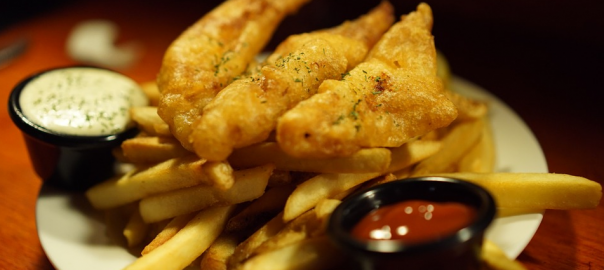
It’s difficult to identify trans fats in fast food, and truthfully most people don’t take the time to look it up on those posted-near-the-bathroom menu charts.  The easiest suggestion is to assume that if it comes from a fast food restaurant and it’s fried there is a high probability that it contains trans fats. It is important to note that although many fast food restaurants are proudly touting no trans-fats in their food.  

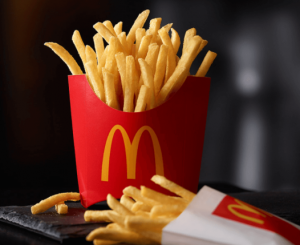
french friesFor example, a large french fries from McDonald’s is technically one serving (so is a small french fries by the way).  That large fries contains 510 calories and 24 grams of fat. That’s 37% of the daily value of fat calories for someone who eats a 2,000 calorie a day diet.


According to the McDonald’s website, 220 of those calories are from fat, 3.5 grams are saturated fats, and there are 0 grams of trans fat.

This is a lie. We know this because of the ingredients list:

Potatoes, Vegetable Oil (Canola Oil, Corn Oil, Soybean Oil, Hydrogenated Soybean Oil, Natural Beef Flavor [Wheat and Milk Derivatives]*), Dextrose, Sodium Acid Pyrophosphate (Maintain Color), Salt. *Natural beef flavor contains hydrolyzed wheat and hydrolyzed milk as starting ingredients.

That hydrogenated oil is a trans fat. So how is McDonald’s allowed to claim 0 trans fats in this single serving of large french fries? This is due to a Federal ruling that allows them to claim no trans fats if there is less than .05 per serving. But remember the changing serving size.  A small is one, a medium is one, and a large is one.  That seems like pretty bad math to me. Because it’s considered one serving they can say 0 grams of trans fats, but it all adds up pretty quickly.

Trans fats at the grocery store 

Fast food is not, alas, the only place that one finds trans-fats.  There are plenty of items on the grocery store shelf that contains them as well.  Look for the words hydrogenated, partially-hydrogenated, olestra, and mono- and di-glycerides. These indicate the presence of trans fats in that food item.  These trans fats are created; they are not from natural sources. There is a small amount of trans fats naturally occurring in beef, lamb, and dairy. But in the case of hydrogenated ingredients, it comes from forcing hydrogen into liquid fats to make them solid at room temperature.
 
So why are trans fats bad for you? For one they raise the level of LDL or “bad” cholesterol in your system.    Unfortunately, they also lower the level of HDL or “good” cholesterol.  Not a good combination.  And as we’ve learned above, avoiding them is important not only for your heart but for your brain as well.
 

Avoiding fast food snacking

So what should you do when you are out and about and need a snack?  There are several options available: 
  1. Have a protein bar available – I almost always have a healthy protein bar in my glove box or purse for an emergency snack.  Look for bars that don’t have a high sugar content and provide balanced proteins and fat.
  2. Stop at a grocery store and buy an apple and some raw nuts.  It’s a delicious and healthy snack.  Often it costs far less than that drive-through meal.  The trick is not to get side-tracked in the grocery store and start to shop for other things.  Treat it like a fast food run, you can always do your grocery shopping later.  
  3. Plan ahead.  If you know you are going to be out and about you can plan ahead and bring food with you.  Using a handy snack container, such as a Laptop Lunchbox, you can pack a healthy snack and skip the trans-fats.
 

Joy Bauer’s Food Cures


Joy Bauer’s Food Cures has been revised and updated; I was fortunate enough to have a copy recently come across my desk.

As those of you reading my blog know, I am a huge proponent of food and it’s ability to help support a healthy body.  We are what we eat; eating whole food and practicing wholesome nutrition goes a long way toward supporting our bodies and in dealing with health issues.

Broken down into several easy to understand categories this book covers the basics of understanding nutrition as well as how to, as Joy puts it, “think like a nutritionist.”  She offers information about how to lose weight and support healthy skin and hair.

Speaking of hair, did you know the average person loses about 100 hairs each day?  It turns out that since hair is made from protein if we don’t get enough we can actually cause the rate of new hair growth to slow down.  In the book Joy points out that hair is a good way to determine overall health and highlights which vitamins (and which foods contain those vitamins) are supportive for healthy hair and nails (which are made from the same hardened keratin protein as hair).  Offering more in-depth health and nutrition support, the book also delves into conditions such as cardiovascular disease, diabetes, migraines, IBS and more.

The book is easy-to-read and laid out with step-by-step encouragement and support to help the reader reach their goals for health.  The book is also sprinkled with lots of call-out boxes which cover the highlights and answer questions that the reader may have.  She includes stories and examples throughout the book which is helpful.  In addition to providing the necessary information to help the reader better understand the basics of their condition and how to best support their body each chapter has a 4-Step Program which reminds the reader of the basics, provides a grocery list, offers some additional suggestions, and then also offers meal plans with some delicious looking recipes.  Her Citrus Smooth-See recipe on page 272 is delicious as is the Vegetable Oatmeal Bisque on page 322.  And the Parmesan Couscous and Ratatouille with Olives, Tomatoes and Fresh Basil on pages 383 (listed below) is a new family favorite.

Joy Bauer’s Food Cures provides what you need to know about healthy eating and whole food nutrition.  It also gives you information to help you understand how to make those healthy changes.

Parmesan Couscous and Ratatouille With Olives, Tomatoes, and Fresh Basil
Makes 3 servings (1 1/2 cups ratatouille and 1 1/2 cups coucous per serving

Ratatouille

1/2 pound kale, stems trimmed, thinly sliced
Kosher salt
1 tablespoon olive oil
1 large yellow squash, cut into small cubes (about 2 cups)
2 medium tomatoes, diced
1/4 cups kalamata or nicoise olives (7 or 8) pitted and chopped
Pinch of ground red papper
1/4 cup whole basil leaves torn

Couscous

1 cup whole wheat couscous
1 cup sugar snap peas, chopped
1 1/4 cups low sodium chicken or vegetable broth, heated
1/2 cup grated Parmesan cheese
Kosher salt
Ground black pepper

To make the ratatouille:
Heat a deep saute pan over high heat
Add the kale, a sprinkle of salt, and 3/4 cup water
Cook, stirring occasionally for 13-15 minutes or until softened
If the kale becomes too dry add more water
Stir in the oil, squash, tomatoes, olives, and red pepper
Cook for 5-6 minutes or until the squash is tender and the tomatoes lose their shape
Remove from the heat and stir in the basil
Set aside

To make the couscous:
In a medium bowl, mix the couscous and sugar snap peas
Pour the hot broth on top, stir at once and cover with aluminum foil
Allow the couscous to rest for 5-6 minutes or until all the water is absorbed and the couscous is soft and fluffy
Fold the cheese into the couscous and season with salt and black pepper

To serve:
Spoon the couscous onto a plate or bowl and serve the ratatouille on top

To learn more about Joy and the concept of food cures visit her website.

Disclosure: cmp.ly/1cmp.ly/5

hygiene hypothesis

The Hygiene Hypothesis

In the United States there seems to be an increasing number of people affected by asthma and allergies.  These conditions are especially prevalent among children.

One reason put forward is that Americans have become more focused on cleanliness, to the point where we have created problems.

Overuse of antibiotic soaps and cleansers has reduced our exposure to pathogens, or germs, in our environment.  Because our bodies have been designed to fight these germs, to develop a healthy immune system, when we severely reduce our environmental exposures it is theorized that our bodies over-react.  They become sensitive to increasingly more substances, most of them environmental or food exposures.  

As odd as it may sound, the research supports this.  Studies show that children who grow up in rural areas, especially non-Westernized countries, with more exposure to a wider range of microbes, have a vastly reduced rate of allergies.

Western Lifestyle, Diet Tied to  Allergies and Intestinal Disease

Of increasing interest to me is the concept that this hyper-clean state that we've created has affected our intestinal health which in turn leads to more problems.  Gary Huffnagle, co-author of The Probiotics Revolution has gone a step further with the hygiene hypothesis and developed a concept that he calls the microflora hypothesis.  He posits that our Western lifestyle and diet have altered our microflora, our ecosystem, and opened us up to more allergies and, by extension, more digestive disorders.  By not gaining exposure to a wider range of microbes we are unable to build an ecosystem that is fully supportive of our overall health.

Part of the reason that this is so fascinating to me is that in working with clients I am also seeing more and more digestive health issues. And I believe the numbers are rising.  More leaky gut, more IBS, IBD, more dysbiosis.  Dr. Liz Lipski, the author of Digestive Wellness, shows, in her work, that the immune system is very strongly tied to digestive function.

Foods to support your gut

In order to support our health, we need to stop killing off our symbiotic partners, those bacteria that inhabit our gut, through the overuse of antibiotics and antibacterial products.  We also need to feed and support these probiotic colonies.  What do they eat? Prebiotics.  Their food comes from insoluble fibers found in our food.  Berries, onions, legumes, oatmeal, and other whole grains support not only the probiotic bacteria but also help maintain good bowel health.  

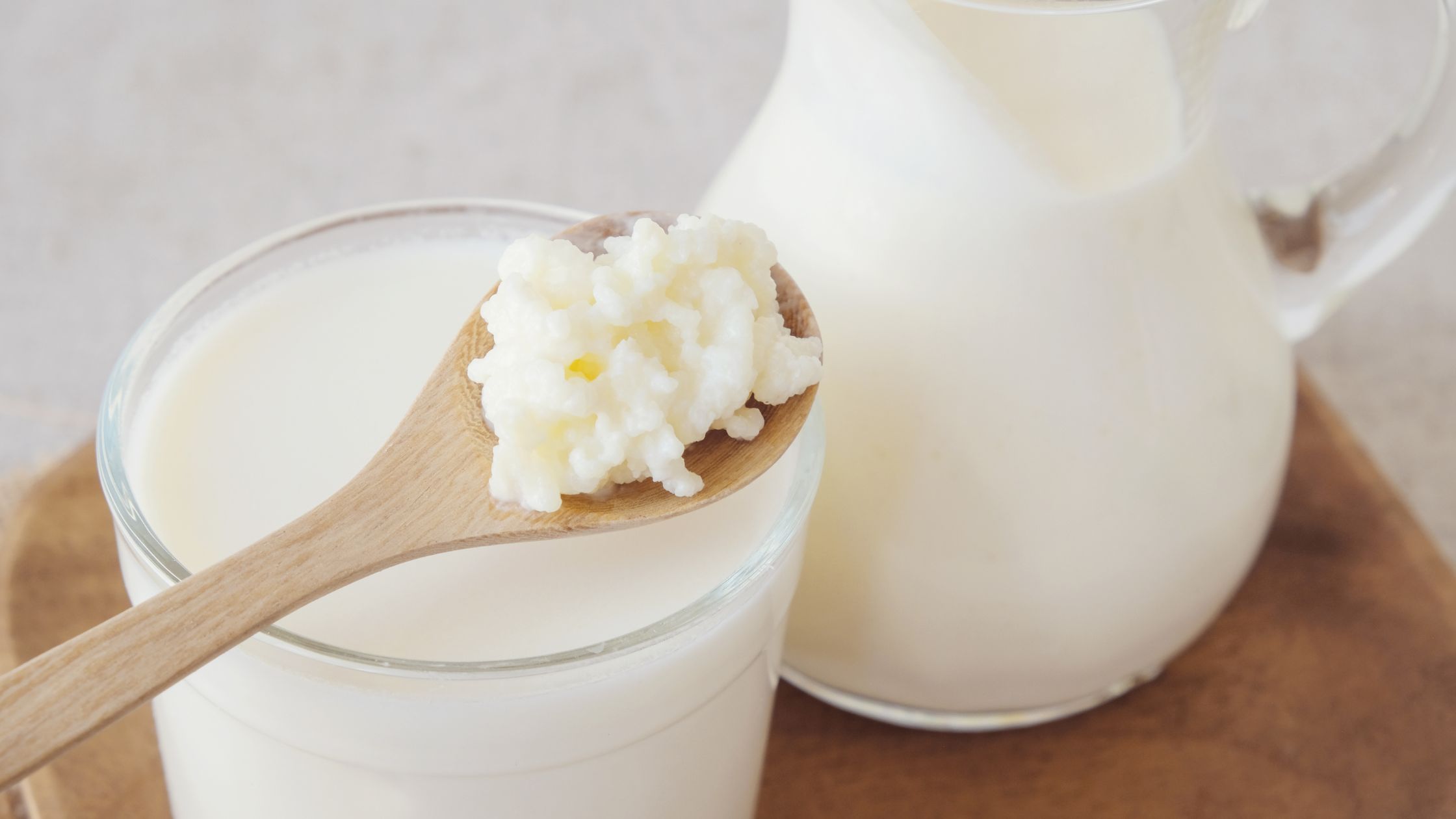
We also need to re-inoculate our systems with a steady supply of healthy bacterial colonies. Those are found in fermented foods such as kefir, kombucha, and kimchi.  You do not need to eat an overwhelming amount of these on a regular basis, but they should be a regular part of your diet.

Research does not, as yet, appear to show how much we can reverse the effect on our immune systems, but we certainly can keep it from continuing to decline.  Dr. Natasha Campbell McBride, speaking at a Wise Traditions Conference in Dallas, stated, "We are a shell, a habitat for our eco-system."  We need to support our ecosystem.  We can also protect future generations by focusing on and acknowledging that the ecosystem needs to be fully supported in order to function properly.

[expand title="Sources"] 

Liu, Andrew H. "Revisiting The Hygiene Hypothesis For Allergy And Asthma". Journal Of Allergy And Clinical Immunology, vol 136, no. 4, 2015, pp. 860-865. Elsevier BV, doi:10.1016/j.jaci.2015.08.012. Accessed 

[/expand]


Interested in knowing what your gut microbiome looks like? Schedule a consult with Mira to learn more.