All posts by Mira


About Mira

Mira Dessy is The Ingredient Guru. A holistic nutrition professional, author, and a popular public speaker, she knows that it's not just what you eat, but what's in what you eat. She is the author of The Pantry Principle: how to read the label and understand what’s really in their food. Dessy is a Board Certified Holistic Health Practitioner whose mission is to educate and empower consumers. She curates the Lean Clean Green Subscription box, the premier, organic, earth-friendly, healthy, sustainable subscription box which can be found online at https://theingredientguru.memberbox.com

A Delicious Twist On Cranberries

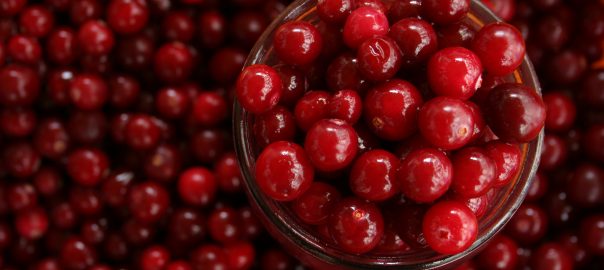
Thanksgiving is just around the corner and as folks begin to plan their holiday menu out comes a wonderful fruit that only seems to make an appearance once or twice a year, cranberries. These deliciously tart fruits are grown on low shrubs in bogs. They’re grown commercially in the Northern US and Canada with most of the crop being turned into juice, craisins (dried cranberries) or canned “sauce.”

It is believed that Native Americans shared the berries with the starving Pilgrims in Massachusetts and this may explain part of its appearance on our Thanksgiving table.

Health Benefits of Cranberries

It is unfortunate that cranberries don’t play a larger role in our diet. These luscious red berries are high in fiber, a great source of vitamin C and also provide a lot of manganese and vitamin K. They are also high in anthocyanins and anti-inflammatory antioxidants. As if that wasn’t enough, their health benefits range from improving cardiovascular health and supporting brain function to helping fight H. pylori and E. coli bacteria in the body.

 
Many folks are familiar with the use of cranberries as a treatment for urinary tract infections. A recent study, published this year, 2009, in the Scandinavian Journal of Nephrology and Urology, found that “daily consumption of concentrated cranberry juice can significantly prevent the recurrence of symptomatic UTIs in children.” It is important to note that this would be 100% cranberry juice with no added sugar, not cranberry juice cocktails which tend to be more popular.

Sweet and Spicy Recipes

This year for Thanksgiving we’re having our traditional cranberry orange sauce which everyone loves. Now that we live in Texas we’re going to add a new tradition and make a cranberry salsa. I bought a large bag of cranberries and will keep the extra (they freeze really well) to use throughout the winter in cranberry muffins, cranberry scones, to use in salads, I even put some in oatmeal with maple syrup for a tangy breakfast treat.
 
If cranberry makes an appearance on your Thanksgiving table, try making your own sauce instead of purchasing the over-processed jellied mass they sell in cans, it’s not a lot of effort and it’s so much tastier.
 
Cranberry Orange Sauce
Print
Ingredients
  1. 1 C. water
  2. 3/4 C. evaporated cane juice crystals
  3. 3 C. cranberries
  4. 1 orange chopped fine (I use a Cuisinart)
  5. generous pinch cinnamon
  6. nutmeg (I use a nutmeg grater and shave several times)
Instructions
  1. bring the water and cane juice to a boil, stirring until crystals are dissolved
  2. reduce to a simmer, add cranberries, orange, and spices
  3. cover and simmer for 25-30 minutes, stirring occasionally, until cranberries pop
  4. remove from heat and let cool to room temperature before serving
Notes
  1. One really delicious way to use leftovers is to add a dollop to a bowl of oatmeal
The Ingredient Guru, Mira Dessy https://theingredientguru.com/
 
Cranberry Salsa
Print
Ingredients
  1. 2 C. fresh cranberries
  2. 2 bell peppers
  3. 3 spring onions, minced
  4. 1/4 C. evaporated cane juice crystals
  5. 3/4 C. fresh cilantro, chopped
  6. juice of one lime
  7. generous pinch sea salt
  8. 1 t. crushed red pepper
Instructions
  1. Put cranberries and peppers into a food processor and chop well
  2. put mixture into a bowl and add remaining ingredients
  3. toss well and let sit at least 2 hours before serving for flavors to blend
Notes
  1. This is a fabulous topping for a warmed brie with organic corn chips
The Ingredient Guru, Mira Dessy https://theingredientguru.com/


Sources

  • Ferrara, P., et al. Cranberry juice for the prevention of recurrent urinary tract infections: a randomized controlled trial in children. Scand J Urol Nephrol. 2009;43(5):369-72
  • Matsushima, M., et al. Growth inhibitory action of cranberry on Helicobacter pylori. J Gastroenterol Hepatol. 2008 Dec;23 Suppl 2:S175-80
  • Zafra-Stone, S., et al. Berry anthocyanins as novel antioxidants in human health and disease prevention. Mol Nutr Food Res. 2007 Jun;51(6):675-83.


No-knead Mesquite Bread

Those inventive folks over at Craftzine.com have come up with a new twist on the, by now, ubiquitous no-knead bread. Laura, one of the Editorial Assistants, found my post about mesquite flour and emailed me to let me know about this really fun article on how to harvest and process mesquite to make the flour. It includes a recipe for No-Knead Mesquite Bread which they said I could share with all of you. Living here in Texas I know we have mesquite, but there isn’t any in my area. I’m going to have to learn to identify it though so that if I find any in my travels I can harvest the pods.

No Knead Mesquite Bread Recipe

3 cups white flour
3 tbls mesquite flour
½ tsp yeast
1 ½ tsp salt
1 ½ cups of water

Mix dry ingredients in a bowl
Add water and mix
Stir with fork (mix will be sticky)
Cover in a bowl, let sit overnight
Place bread dough on cutting board covered with towel for 2 hours
In metal bowl bake in sun oven @ 350 for 1 hour

photo courtesy of: Wendy Tremayne

Strawberry-Colada Scones

Having leftover fresh ground flour from the ricotta pancakes, I decided to make some scones.

Scones are great! Not as dense as muffins, the right size for a snack and, like muffins, very pliable to modification.

Rummaging around the pantry and fridge revealed some strawberry yogurt and the last little bit of shredded coconut so strawberry-colada became the flavor of the day.

Unfortunately, I did not have any fresh or dried strawberries which I think would have made these scones even better; the currants worked well but the scones were a little light in the strawberry flavor.

In the future, I'll make sure to have strawberries available the next time I want to bake these.

In the past when I have made scone recipes using fresh ground flour I find that sometimes they are more dense than I'd like. Wanting to make sure these were light more fluffy I separated the egg. If you are using whole grain flour you may want to do the same.
 

Strawberry-Colada Scones

Ingredients
  

  • 1 C. oat flour
  • 1 C. brown rice flour
  • 1/3 C. evaporated cane juice crystals
  • 2 t. baking powder
  • 1/2 t. baking soda
  • generous pinch of sea salt
  • 1 C. strawberry yogurt
  • 1 egg separated
  • 1/4 C. coconut oil melted
  • 1/2 C. currants
  • 1/2 C. shredded coconut

Instructions
 

  • Preheat oven to 400
  • Beat egg whites until peak forms, set aside
  • Mix together egg yolk, coconut oil and yogurt until fully blended
  • In a separate bowl mix together flour, cane juice crystals, baking powder, baking soda, and salt
  • Add dry mixture to yogurt mixture until just moistened
  • Gently fold in currants and shredded coconut
  • Gently fold in egg whites
  • Drop by tablespoons onto a greased baking sheet
  • Bake 15 minutes or until golden brown
  • Let cool 2 minutes on baking sheet before transferring to rack. Enjoy!

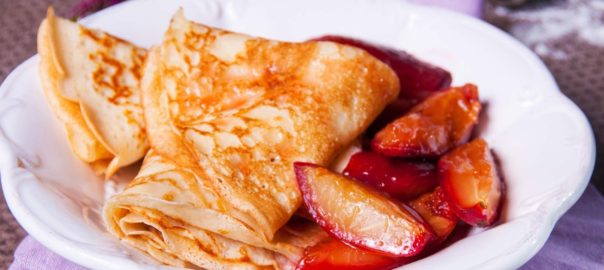
Ricotta Pancakes With Honey Glazed Plums

Cooking and baking is always an adventure. Inspiration is all around you if you are open to it. There's no real explanation for why or how ideas come together but I can honestly say that frequently it's a matter of "oh gosh there's X in the fridge and I better use it up." Then I make something using that ingredient.

Most of the time I make tried and true recipes, either my own or those from trusted cookbooks. Sometimes the inspiration is something I ate elsewhere that I really liked and have been given the recipe. Other times the recipes find me but I somehow can't help playing with them a little bit.

Recipe inspiration

Such is the case with today's breakfast. The inspiration was a click-through Twitter post that brought me to Almost Bourdain's (AB's) blog, which I just discovered and like a lot. He credits his inspiration for this recipe to Bill Granger, I credit my inspiration to him. It's kind of neat how that works, we're all connected by this idea of ricotta in pancakes but we each put a slightly different twist to it; all of them, I'm sure, very delicious.

Substitute with what you have

My changes came about because I am trying to work more with gluten-free recipes lately. These are for a few people I know who are faced with gluten sensitivity. It's also, as always, inspired by what I have on hand.
 
AB's version calls for bananas and honeycomb. I didn't have enough bananas but did have plums. I didn't have any honeycomb either (and I miss my friends from CT who used to supply me with it) but I did have honey. Together with some breakfast sausage this made a great meal and is definitely on the repeat again list. I hope you like it too.
 
Honestly, these were fabulous. I would even consider serving them as a dessert by making the pancakes smaller and putting a dollop of creme fraiche on top with a dusting of cinnamon. Yum!

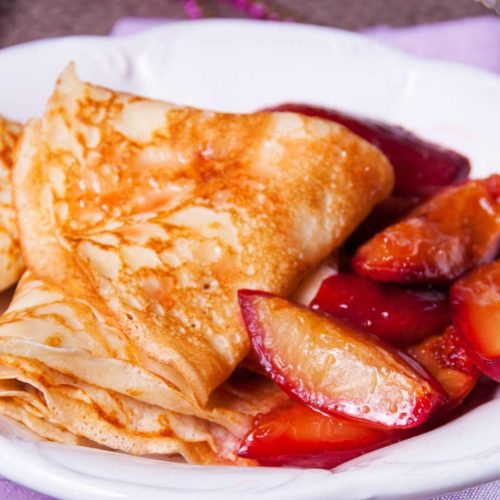
Ricotta Pancakes with Honey Glazed Plums

Indulge your taste buds with these luxurious ricotta pancakes topped with honey-glazed plums. The creamy texture of ricotta cheese combined with the sweetness of honey-glazed plums creates a decadent breakfast treat.

Ingredients
  

  • For the pancakes:

    1 1/3 C. ricotta cheese

    3/4 C. buttermilk (for a little tang to offset the honey glazed plums)

    4 eggs separated

    1/2 C. fresh ground oat flour

    1/2 C. fresh ground brown rice flour

    1 t. baking powder

    1 t. vanilla

    pinch salt

  • For honey-glazed plums:

    2 plums

    2 T. honey

    1/2 t. cinnamon

    2 t. butter

Instructions
 

  • Pancake instructions:
    Beat egg whites until peaks form, set aside
    Mix ricotta, egg yolks, vanilla, and buttermilk together until well blended
    Mix together flours, baking powder and salt
    Gently add flours into ricotta mixture
    Gently fold egg whites into mixture until just blended
    Grop by 1/4 C. measure into medium hot, greased pan
    After 2 minutes flip to cook other side
  • Instructions for plums:
    Cut plums into bite sized pieces
    Toss with honey and cinnamon
    In a medium-hot pan melt butter
    Add plum mixture and stir until plums begin to soften just a little (about 7 minutes)
    Serve pancakes with plums on top


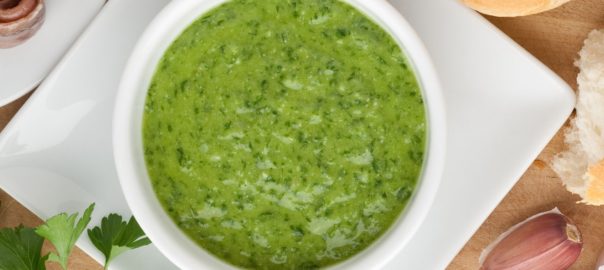
Green Goddess Dressing

When I was a kid we always had Green Goddess in the house, I think it was my father's favorite dressing. Creamy and a little tangy it was great.

Somehow when I got older I never had it in the house. Then I had kids and, like most kids I know, they had an instant love affair with creamy ranch. That and vinaigrette became the house standards. Oh sure, every now and then we'd get wild and throw in French Catalina or a Thousand Island, but most of the time we stuck with our good old standby dressings.

I recently had an excess of parsley; not wanting to freeze it, since frozen tiny packets of herbs tend to get lost in my freezer, I was casting around for an idea when I remembered this dressing. Paging through my favorite cookbook of all times, the 1975 edition of Joy of Cooking, I found a recipe on page 364. I made a few changes based on ingredient availability and personal taste (I do not like anchovies). This is my modified version:

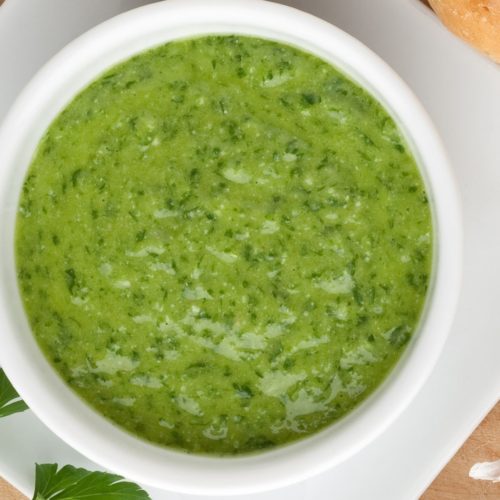
Green Goddess Dressing

Ingredients
  

  • 1 C. mayonnaise
  • 1 minced clove garlic
  • 1/4 C. minced green onions
  • 1/2 C. minced parsley (the original recipe calls for 1/4 C. but I like it with more parsley)
  • 1 T. lime juice (it's supposed to be lemon but I was out)
  • 1 T. tarragon vinegar
  • 1/2 t. salt
  • ground black pepper
  • 1/2 C. yogurt (this is supposed to be sour cream but I was also out of that)

Instructions
 

  • Blend it all together and put in the fridge until ready to use.
    This makes almost a pint, however in addition to a salad dressing, it also makes a delicious dressing for wrap sandwiches.

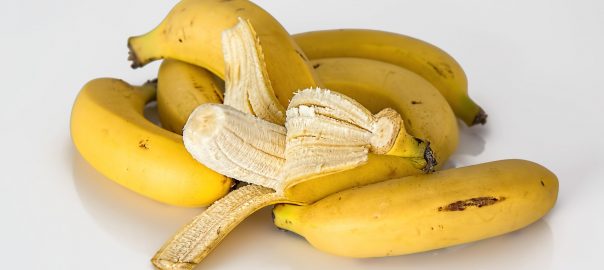
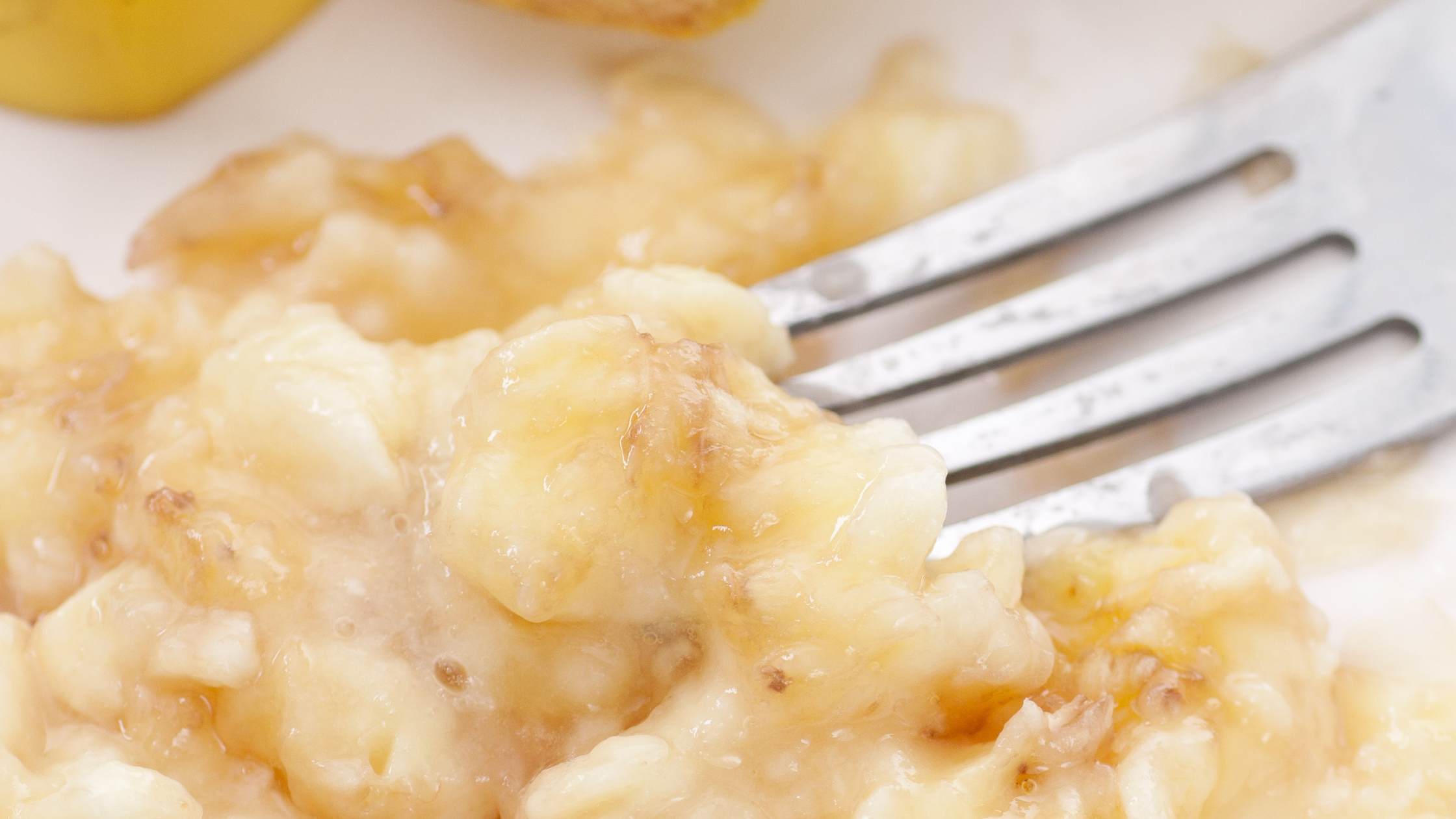
banana

Banana Bonanza

Bananas are a comfort food for almost everyone. Creamy, tasty, and sweet, they are easy to eat. Everyone knows they are good for you (and unlike most other “good for you” foods this does not seem to bother anyone). Everyone also knows that bananas are a very good source of potassium.  Most people, however, don’t realize that there are a number of other healthy reasons to eat bananas.

Why eat bananas

They are high in fiber, in the form of pectin, which is excellent for helping to ease constipation (because of the high potassium content bananas are also a good choice when it comes to replenishing the electrolytes lost due to diarrhea). Bananas also provide a high percentage of our daily amount of vitamin B6, which, according to Phyllis Balch, author of Prescription for Nutritional Healing, “is involved in more bodily functions than any almost any other single nutrient.” B6 is important for the immune, nervous and cardiac systems and is also important for circulatory health. Another helpful component of bananas is something called protease inhibitors; these can be helpful in stopping the bacteria that cause stomach ulcers.

Starch versus antioxidants

Although we are used to seeing only two to three different varieties in the supermarket, there are believed to be around 500 varieties, including plantains. They come in all different colors and sizes. Bananas can be eaten when they are green, providing something called resistant starch which has a fiber-like effect on your system and also helps to promote “good” bacteria. The riper the bananas are when you consume them, the more antioxidants they provide, making them a great all-around fruit.
 

How to freeze bananas

Most people do not like to eat very ripe bananas. When the fruit starts to get spotted on the outside they are frequently considered to be “over-ripe” although this is usually not the case. But if you won’t eat them the issue becomes what to do with them.  If they are too ripe for your palate and you are not in the mood to bake you can freeze them.
 
If you want to use bananas in smoothies you can peel them and then freeze them. Be sure to lay them flat while freezing to make it easier to remove from the container and throw into your blender.
 
If they are going to be used in baking you can simply freeze them peel and all. I would, however, suggest still bagging them together. Otherwise, you wind up with a rather large collection of frozen bananas in all corners of your freezer (ask me how I know this LOL).  Freezing bananas in the peel is fabulous because when you are ready to use them you simply let them thaw on the counter. After they thaw you can snip the end off the banana and let it “goosh” into your mixing bowl where it will incorporate itself very nicely into the batter.

Banana Pecan Chocolate Bundt Bread

Today I happened to have 5 very ripe bananas and decided that it was a good day to bake. The following recipe is modified from one originally given to me by my friend Theresa. She got it from her grandmother, the family name for it was 1940’s Banana Bread. The basic recipe is the same, I’ve merely changed the flour to gluten-free, the sugar to evaporated cane juice, and added pecans, chocolate chips, and a little vanilla to make a wonderfully tasty banana bread. Theresa bakes hers in loaf pans but I love making this in a bundt for that little extra touch.
 
4-5 ripe bananas
2 eggs
2 C. gluten-free flour (such as Pamela’s)
1 C. evaporated cane juice crystals
2 t. baking soda
1 t. vanilla
1/2 C. chopped pecans
1/2 C. chocolate chips
 
preheat oven to 325 degrees F
grease a bundt pan and set aside
in a large mixing bowl mix bananas together
beat in eggs one at a time
add in flour, sugar and baking soda until well incorporated
add in vanilla, pecans and chocolate chips until well incorporated
pour batter into bundt pan
bake 1 hour or until cake pick inserted into batter comes out clean
remove cake from oven and let sit 10 minutes on cake rack
invert to release cake from bundt pan and let cool completely
 

Changing A Recipe

For many people learning to cook is a fun activity; often it's something you learn when you're growing up. In the beginning you learn by simply following the recipes.  That's why baking is sometimes equated to science, it has to do with the exactness of the recipes. That science-type focus can make it difficult to understand what to do when it comes to changing a recipe though.

Why do you need to know how to change your recipes?  Maybe you've run out of certain ingredients, or, need to make dietary changes to your recipe. Making these substitutions is not always easy and actually can be somewhat challenging.  You need to understand the differences between ingredients, which can be subtle and often requires trial and error.

Below are some guidelines to help you get started when it comes to switching up your ingredients.

Baking soda or baking powder?

Before we get into the substitutions I feel it's important to clarify the difference between baking soda and baking powder.  A lot of people think they're interchangeable. They can be but you need to be aware of how they each function in order to know if the substitution will work. Some recipes may call for both while other recipes may call for just one of them.

Baking soda, also known as sodium bicarbonate, requires acidity plus heat in order to create the rising action. However, this means that when you're using baking soda you need to be able to pop the recipe into the oven as soon as possible after mixing to take maximum advantage of the rising ability.

Baking powder, on the other hand, is essentially baking soda pre-mixed with an acidifying agent such as cream of tartar plus a drying agent, or starch, of some kind.  Single-acting baking powder becomes active immediately after it is mixed with liquid. So the batter does need to be put into the oven as soon as possible.

Double-acting baking powder has a split reaction, partly when the liquid is added, and then a second reaction when the batter is exposed to heat in the oven. Because of this, recipes using double-acting baking powder can be held aside for a short while before you bake them. 

Baking powder can be a good substitute for baking soda.  If you only have baking soda and need baking powder you'll need to add 2 parts cream of tartar to 1 part baking soda; as an example, 1 teaspoon cream of tartar plus ½ teaspoon baking soda creates the correct ratio.

Substitutions

I've made some great doorstops/hockey pucks in my time by switching everything in a recipe and not understanding where or how I needed to make further changes. Keeping notes along the way is important. It can help you understand the evolution of your recipe and help prevent those inedible disasters.

I will share from personal experience that if you try to change everything at once you may find that you get an unpleasant result, so be careful when swapping.  I usually change the flour first, then the fat, then the sugar.

Sugars

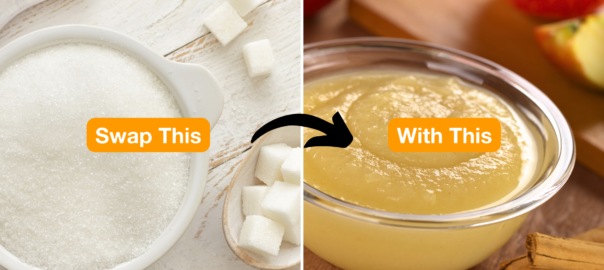
changing a recipe - substitutes for sugar

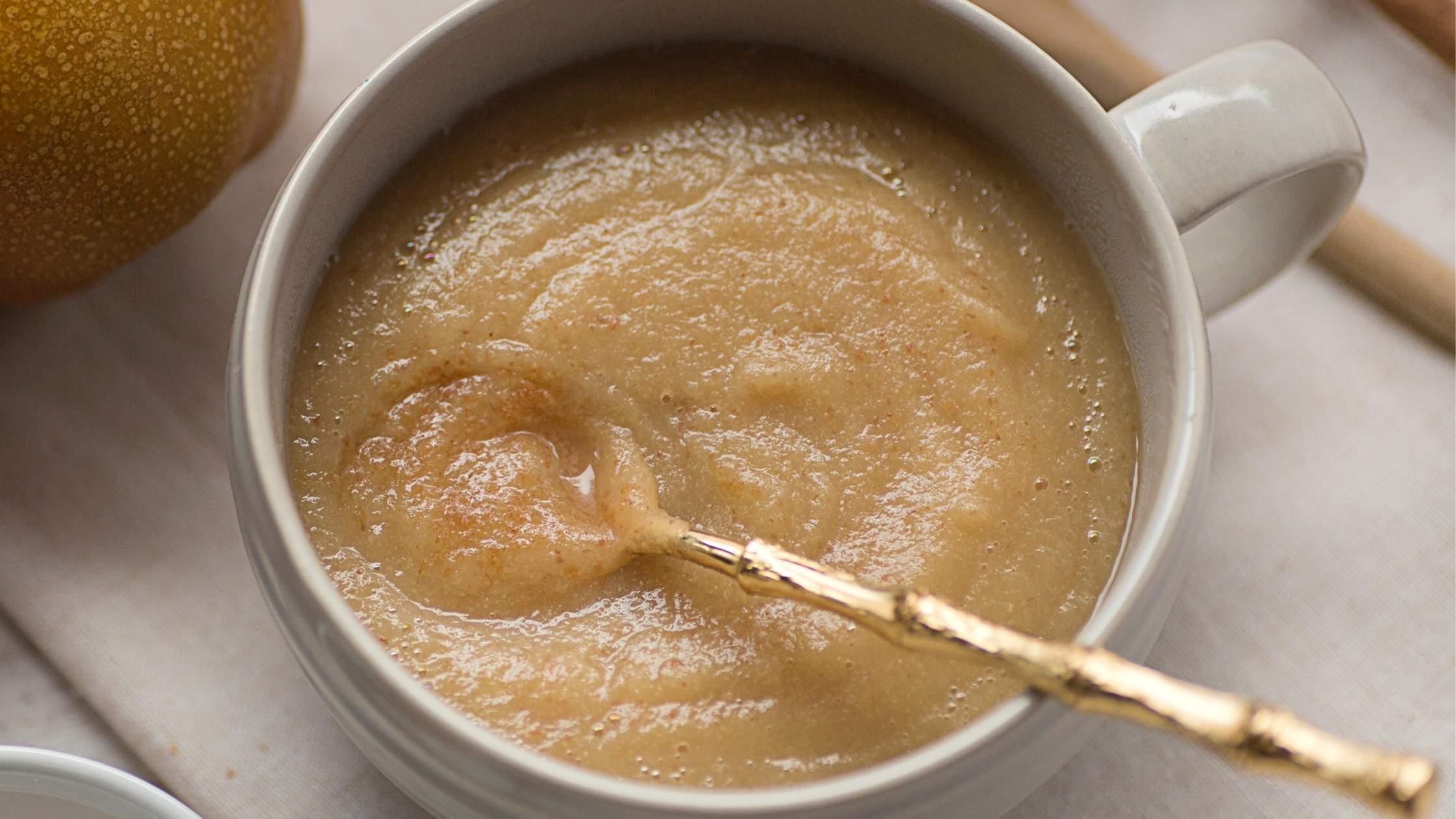
1 cup of sugar substitute 1 cup of applesauce

You'll need to reduce the liquid  in the recipe by ¼ cup – good for cookies, muffins, and quickbreads

2 Tablespoons sugar → ½ teaspoon vanilla extract

Good for any baked goods, up to 4 tablespoons of sugar

1 cup sugar → 2 Tablespoons stevia powder or 1 teaspoon liquid stevia

The recipe may need further modification to make up for the loss of the volume of sugar

Flour/Starch

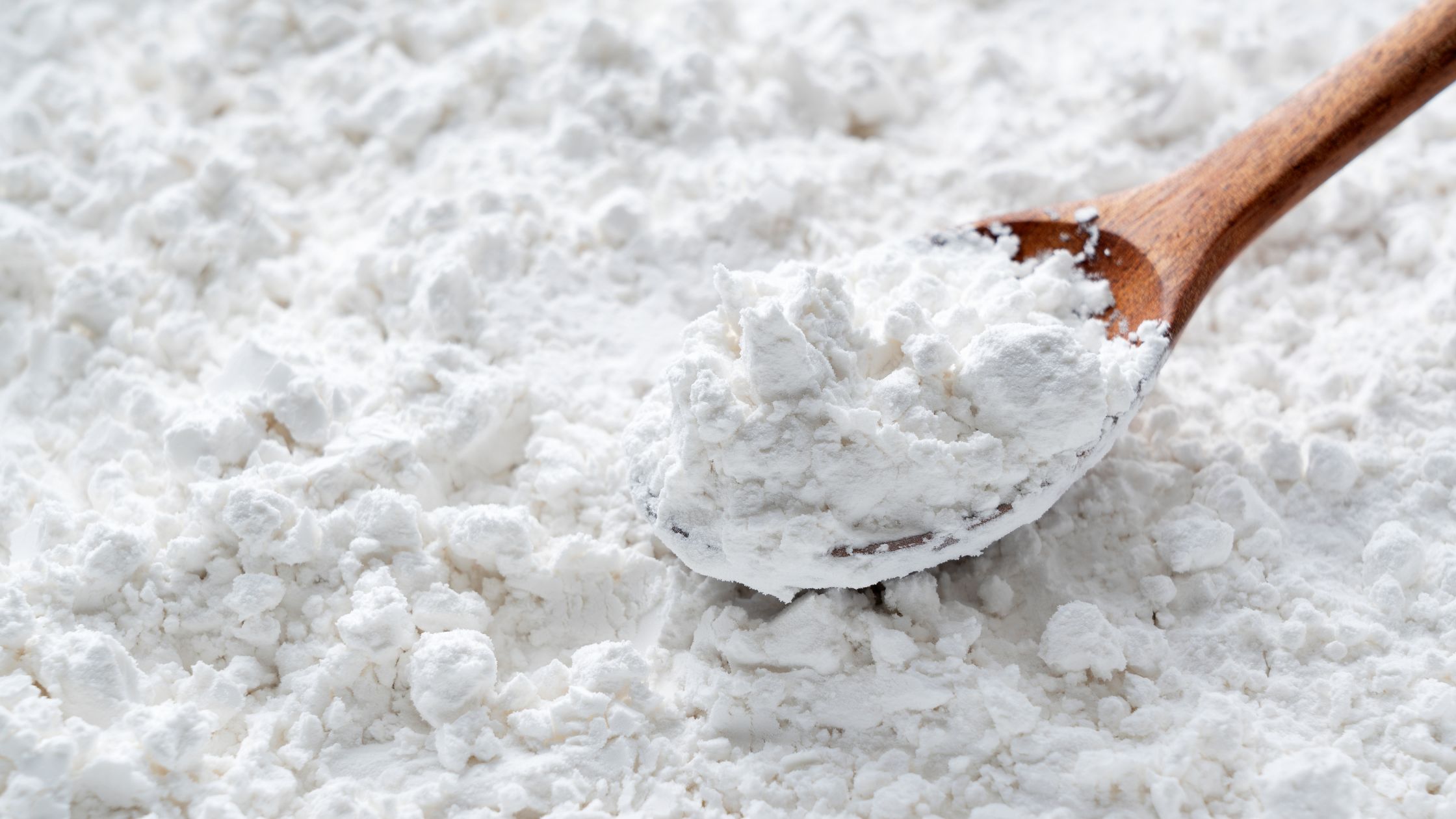
changing a recipe - substitutes for flour

7/8 cup white flour → 1 cup whole wheat flour

You may need  to let the batter sit for a few minutes to allow the extra fiber to absorb some of the liquid in the recipe

1 cup white flour → 1 cup mashed black beans

Wonderful in brownies

1 cup white flour → 1 cup nut flour + ½ teaspoon baking soda or baking powder

1 cup white flour → 1/3 cup coconut flour + 1 egg + a splash of water

Good for pancakes, cookies, and cake

1 cup white flour → 1 cup gluten-free flour blend

Depending on the recipe you may need to add tapioca starch or xanthan gum to make up for the loss of gluten

Fat and Dairy

changing a recipe -- substitutes for fat & dairy

1/2 cup oil or butter → ½ cup applesauce

Good for muffins or quick breads

1 cup butter → ¾ cup prunes + ¼ cup boiling water blended together

Good for brownies and other chocolate-flavored baked goods

1 Tablespoon butter → 3 Tablespoons ground flax seeds + 1 Tablespoons water

Let the mixture sit for  8-10 minutes to thicken before adding to the batter

1 cup oil or butter → 1 cup mashed banana

Good in brownies, muffins, or cookies

1 cup buttermilk or kefir → 1 cup whole milk + 1 Tablespoon fresh lemon juice

Let the mixture sit for at least 5 minutes to sour

1 cup milk → ½ cup evaporated milk + ½ cup water blended together

If you need a slightly thicker consistency you can use a little more evaporated milk and a little less water

Eggs

The video below is a great resource for how to make substitutions for eggs.


No Artificial Colors In Kraft Foods Overseas: Why Not In The U.S.?

My latest column as the Houston Holistic Health Examiner addresses the growing concern over Kraft Foods Inc.'s use of artificial colors in their U.S. products, despite removing them in places like Europe and Australia.

Consumers in these regions expressed outrage after studies revealed the harmful health effects of artificial colors. This isn’t a new issue. In a paper I previously wrote on artificial colors, I referenced a study from 1968 by Dr. Benjamin Feingold, which detailed how food additives can trigger allergic reactions in children.

Unfortunately, Dr. Feingold’s research wasn’t enough to convince food manufacturers at the time. Now, 40 years later, Kraft has finally started removing these chemicals—but only in certain countries. The U.S., along with many developing nations, is still waiting. It's hard not to assume that this decision is motivated by profit, showing a concerning disregard for the health of their consumers.

Taking Action

MomsRising.org is an organization dedicated to promoting a healthy, family-friendly America. They are currently campaigning to pressure Kraft into removing artificial additives from U.S. products. You can support this effort by signing their petition or writing a letter to Kraft yourself.

Below is my letter to Ms. Rosenfeld, CEO of Kraft Foods:

"As a Nutrition Educator and the mother of two children who are sensitive to food coloring I am pleased to see that you have removed the artificial colorants and aspartame from your products sold in other countries. I feel that this was a responsible decision made in reaction to the demands of your consumers which highlights that KraftFoods has the ability to effect change in partnership with the requests of it's consumers. I am stunned, however, by your decision to continue to use these very chemical additives in the U.S. version of the same products.

There are a number of studies which underscore the health risks posed by synthetic additives, especially when it comes to the developing bodies of young children, a prime market for many of your products. Given the overwhelming reach of your company into the pantries across this country and around the world I would think that a response to such consumer requests should have prompted a revision in your manufacturing processes across the global market instead of merely in a few countries.

There is no need whatsoever for these ingredients, and indeed they are harmful to your consumers. I urge you and your company to be a responsible member of the global community, to care about the health of those who buy your products and make the same change that you did in Europe, Australia and other countries by removing artificial colorants, aspartame and other unhealthful chemical additives to the foodstuffs that you sell, not only in the United States, but around the world.


Carbonated Water

In response to a recent post my Aunt wrote and asked, “What do you advise about carbonated water? I prepare a drink for treats–carbonated water over ice cubes topped off with a splash of home brewed mint extract (made by filling a bottle with sprigs of fresh mint, filling with boiling water, letting it stand until it all cools down, fishing out the then wilted mint leaves, topping off the extract bottle with cool water, covering and keeping it refrigerated), a splash of apple juice and a wedge of sliced lemon.”

This sounds like a really tasty treat and a very healthy beverage choice as long as the apple juice is 100% juice with no high fructose corn syrup. I remember drinking a mint water/water/lemon concoction when I visited which was delicious and the apple juice sounds like a really nice touch. As soon as my mint, currently struggling in the Texas heat, gets big enough I’ll have to start making my own mint extract to have on hand.

I did want to take this opportunity to explain the differences between the different types of carbonated waters out there. This explanation assumes that these are plain, unflavored versions of the different waters.

Seltzer water is simply water to which carbonation has been added. The carbonation is caused by adding pressurized carbon dioxide gas to the water. You can make your own seltzer water, very inexpensively, at home using a soda maker.

Club soda, sometimes also called soda water, is very similar to seltzer but frequently contains added sodium, either in the form of table salt, sodium citrate, sodium bicarbonate, potassium bicarbonate, potassium sulfate, or disodium phosphate. Sodium levels vary depending on the manufacturer. For anyone watching sodium intake it is important to read the label when purchasing this product.

Tonic water is also a carbonated beverage and usually has a slightly bitter taste. This is from the quinine used to flavor it. Quinine was believed to to be helpful in treating malaria but was so bitter that it could not be drunk by itself and was put into a “tonic”. Apparently there is not enough quinine in tonic water to be medicinally effective. Most tonic waters are flavored with either lemon or lime and have sugar in them. The labels I saw indicated 80 calories and 21.6 g of sugar per 8 ounces making this not a good beverage choice for regular consumption.

If you have a healthy beverage recipe that you’d like to share please leave a message in the comments. It’s always nice to try new flavors.


photo courtesy of freefoto.com

Natural Window Cleaner And Weed Killer You Can Make At Home

My friend Tracy recently asked, "I'm looking for a natural window cleaner as well as a natural weed killer. Do you have any proven concoctions you would like to share? I'd love to give up the Windex, and pulling weeds around the pool patio -- well, let's just say there must be a better way!" Luckily, there is a better way, and surprisingly, you can use the same key ingredient for both (with some disclaimers).

Natural Window Cleaner

For windows, the classic vinegar and water solution works wonders. I use ¼ cup white vinegar mixed with 2 cups of water in a spray bottle. This simple solution leaves mirrors, glass, and chrome streak-free and sparkling clean. You can easily make a variety of effective household cleaners using common ingredients. For more great DIY cleaning recipes, check out Women's Voices for the Earth, where you'll find everything from all-purpose cleaners to drain openers.

Natural Weed Killer

Weeds are a bit trickier. A study by the University of Wisconsin-Madison Department of Horticulture found that vinegar (acetic acid) is effective as a weed killer, but a stronger 20% solution works best. Most household vinegar is only 5%, making the 20% solution harder to find for regular home use.

However, I’ve successfully used a mixture of vinegar, liquid soap, and water to kill weeds—especially in areas like brick pathways, where you want to avoid harming nearby plants. Be careful with this spray, as it affects most plants it touches. A single application usually kills the plant, though plants with fuzzy leaves seem to be more resistant. For weeds with thick roots, like dandelions, multiple applications may be necessary to fully weaken and eliminate them.

Here’s the formula I use:

  • 1 part dish soap
  • 2 parts vinegar
  • 2 parts water

For a small batch, mix ½ cup dish soap, 1 cup vinegar, and 1 cup water.

It feels great to use simple, natural ingredients that work without resorting to harsh chemicals that are harmful to both you and the environment.