All posts by Mira


About Mira

Mira Dessy is The Ingredient Guru. A holistic nutrition professional, author, and a popular public speaker, she knows that it's not just what you eat, but what's in what you eat. She is the author of The Pantry Principle: how to read the label and understand what’s really in their food. Dessy is a Board Certified Holistic Health Practitioner whose mission is to educate and empower consumers. She curates the Lean Clean Green Subscription box, the premier, organic, earth-friendly, healthy, sustainable subscription box which can be found online at https://theingredientguru.memberbox.com

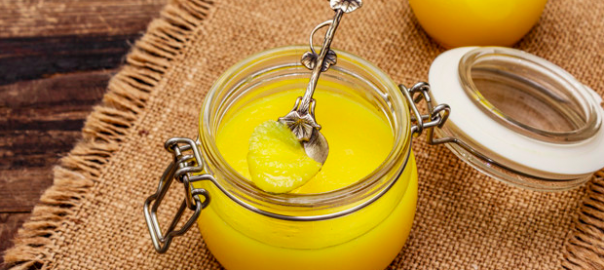
making ghee

Making Ghee

Cooking with ghee

When looking for healthy fats to cook with my favorite choices are olive oil, coconut oil, avocado oil, butter, and ghee. I really like using ghee because it has a wonderful sweet flavor and it’s easy to use.  

Originating in India, ghee is simply clarified butter. In other words, butter that has been gently cooked to a point where the moisture evaporates and you can separate out the milk solids. Because it doesn’t have the milk solids to go rancid, ghee can last for a very long time at room temperature (a good thing here in Texas where butter left on the counter would turn liquid and then go bad in very short order).  Ghee also has a higher smoke point than butter (485 F for ghee vs. 350 F for butter) making it a really good all-around fat for sauteeing, baking, and roasting.

Nutrition facts 

  • Ghee can be a healthy choice for many people lactose intolerance. This is because all of the milk-fat solids have been separated out. 
  • Grass-fed dairy has higher levels of Conjugated Linoleic Acid (CLA). This means when using grass-fed butter to make ghee, it also has higher levels of CLA. Studies have shown that CLA 
  • Ghee, especially when made from grass-fed butter, is very high in the fat-soluble vitamins A, E, and K. These vitamins are important for the immune system, supportive for your metabolism, and beneficial for teeth and bones.
  • CLA is very helpful for reducing inflammation, making it a good choice to add it to your diet. 
  • CLA appears to be cardioprotective with results showing “improved aortic sinus atherosclerosis
  • Studies have shown CLA to be helpful for weight loss
  • Studies have also indicated that it can be anticarcinogenic

How to make ghee

The better the quality of your butter the better flavor your ghee will have. My recommendation is to use unsalted butter from pastured or free-range cows that have been grass-fed (in other words, no grains in their diet). 16 ounces of butter will yield approximately 12 ounces of ghee.  The most important thing to remember is that you need to watch it the entire time because it goes from being done to burnt in a snap.  

  • Put your unsalted butter into a thick bottom pan and cook on medium heat until it starts to boil 
  • It will start to foam and crackle as the milk solids condense and the water boils off. If you want you can turn it down just a smidge at this point
  • I scrape off the milk solids foam because I save it as a treat for my dogs but most folks just leave them because they will eventually settle to the bottom of the pot  
  • After approximately 15-20 minutes you will see that the ghee is a clear golden color and the dark brown milk solids are on the bottom of the pot.  This is where you need to be careful. You want to make sure all the ghee is clarified and you can see all the way to the bottom of the pot
  • Remove the ghee from the heat and strain. I use a fine-mesh strainer lined with two paper coffee filters into a measuring cup
  • Let the ghee sit for about 10 minutes and then pour it into a clean glass jar to finish cooling
  • It can be stored at room temperature for the softest, best use consistency

While it is possible to make ghee using your oven or your slow cooker, those both take significantly more time. This is such a simple process and doesn’t take very long. In my opinion, it’s worth it to simply do the traditional stovetop method

How to use ghee

There are any number of delicious ways to add ghee to your diet. Here are a few of my favorites. If you want to temper the flavor of the ghee a little you can mix it half and half with coconut oil. Once you start using ghee you’ll discover how much you enjoy it. You may even find yourself adding it to almost everything. 

  • A teaspoon in a cup of tea or coffee for a wonderful flavor and energy boost. Ghee is also a-maz-ing when you put a dollop into a cup of hot chocolate. 
  • If you love a hearty breakfast with overnight oats or some other grain, ghee can be a wonderful topping with a little cinnamon and some chopped nuts
  • Add just a little to cooked vegetables to give them a delicious finish. I find it’s best to add the ghee before any last seasonings or herbs
  • It’s also great for mashed vegetables like sweet potatoes, turnips, or other root vegetables
  • Amazing on a muffin or a slice of zucchini bread, I find the caramel-y flavor of ghee better than butter for these snacks
  • Speaking of snacks, ghee is amazing on popcorn
  • When baking you can substitute equal parts ghee for any recipe calling for butter

Given the health benefits, and the delicious nutty flavor, it makes sense to add ghee to your real food diet as an option for a nourishing fat.

[expand title=”Sources”] 

Ha, YL, et al.Anticarcinogens from fried ground beef: heat-altered derivatives of linoleic acid. Carcinogenesis. 1987 Dec;8(12):1881-7

Kanter, JE, et al. 10,12 Conjugated Linoleic Acid-Driven Weight Loss Is Protective against Atherosclerosis in Mice and Is Associated with Alternative Macrophage Enrichment in Perivascular Adipose Tissue. Nutrients. 2018 Oct 3;10(10). 

Zulet, MA, et al. Inflammation and conjugated linoleic acid: mechanisms of action and implications for human health. J Physiol Biochem. 2005 Sep;61(3):483-94

[/expand]

.

Chayote Squash

I recently had a wonderful sandwich made with a soft cheese and raw chayote squash on a crusty french bread.  The crisp fresh flavor of the chayote complimented the soft cheese and gave the sandwich a wonderful consistency.


Chayote (pronounced chai-oh-tee) is a member of the curcurbitaceae family, which also includes melons, cucumbers, and squash.  Sometimes call a pear squash it can be eaten either raw or cooked.


Nutritionally it is an excellent addition to your diet, being very low in calories, only 25 per cup, with a high level of vitamin C, folate, and manganese (a mineral that is important for bone growth).  That one cup also provides a modest amount of protein and 2 grams of fiber.  It is believed to have diuretic properties and apparently there are Central American cultures that use it to treat kidney stones and other urinary disorders.


Currently at their peak they can be added to a wide range of raw salads or cooked dishes.  Consider trying this wonderful recipe from Epicurious.


When choosing a chayote in the grocery store or farmer’s market make sure to choose a firm unblemished fruit.


photo courtesy of David Monniaux | Wikimedia Commons

Magazines

Recently a few people have asked me what magazines I read to stay on top of food news and holistic living.  With lots of different magazines out there it’s difficult to subscribe to too many of them yet everyone wants good information.  Here are a few of my favorites, I think you’ll like them too:

1.  Clean Eating – This is my favorite magazine.  Filled with lots of good information and delicious recipes, it even comes with a two week menu and shopping list available online for each issue.  The information is straightforward and easy to follow.

2.  Body & Soul – Another great resource, this magazine provides not only great articles about healthy living but also great tips and sidebars.  There’s a lot of information about integrative health and stress relief, something we all need in today’s high pressure lifestyle.

3.  Yoga – I love yoga, I think it’s a great practice for health, balance, flexibility, core strength and relaxation.  The articles in this magazine are always interesting and the routines they provide are well photographed.  Apparently you can get this during the month of April, two years for the price of one.

4. Vegetarian Times – I really enjoy this magazine.  I’m always looking for great ways to incorporate more veggies into my diet.  Even if you are not a vegetarian there are so many fabulous recipes and great seasonal articles that this is a magazine that I think is well worth reading.

5.  EatingWell – Another great magazine loaded with articles about healthy eating and cooking with menus and nutrition information.

I hope you’ll consider giving one or more of these magazines a try.  I’d also love to hear what your favorites are.

Praying Mantis Adventures

I’m so excited because there is a new crop of baby praying mantis in our neighborhood. The kids across the street were lucky enough to get a praying mantis egg casing. It just hatched revealing an enormous number of babies from the case. The kids let the mantises go in the garden and I’m hoping that a lot of them will survive to populate the area.

Praying mantises are great for the garden. They are carnivores, eating beetles, roaches, grasshoppers, even moths and moth larvae. All things that are very destructive to the garden. While they only live for one season if you’re lucky enough a fully mature female will lay an egg casing in your garden and the cycle can start all over again.
As you can see from the picture (which I took, I’m so happy that one actually came out well), they are very small. They were less than 24 hours old when I took the picture and about the size of a grain of rice (if rice had long cricket-y legs that is).
Welcome to the neighborhood guys! Hope you find lots to eat.

Okra And Remembering To Read The Labels

I have a confession to make. I don’t much like okra. Maybe it’s from growing up in the northeast where I was not really exposed to it much as a child. Whatever the reason I mostly find it unappealing. I have discovered that I can tolerate it steamed, I despise it cooked, boiled, or fried. However, it’s not half bad when it’s pickled. It’s a pity that I don’t like it more because it’s low in calories, high in fiber, has a modest amount of protein, and provides vitamins A and C as well as iron and calcium.

Okra also has a mucilaginous quality that helps to escort cholesterol and bile acids out of the body. As an alkaline food it is also believed to help heal intestinal ulcers and be useful in the treatment of IBS.

When I was at the grocery store today I happened to spy a jar of pickled okra on the shelves. Since this is my least objectionable way to eat it I decided to try it again, scooped up a jar and finished my grocery shopping.


Unfortunately I ignored my own advice and I did not stop to read the label. After getting home I did read the label and it turns out these pickles contain polysorbate-80. I refuse to eat any ingredient that has a number (nature doesn’t number food). According to my Consumer Dictionary of Food Additives polysorbate-80 is an emulsifier “associated with the contaminant 1,4 dioxane, known to cause cancer in animals.” It is also “widely used in baby lotions, cold creams, cream deodorants, antiperspirants, suntan lotions and path oils.”

I’m not sure why these pickles need to be emulsified but I certainly don’t care to eat an ingredient also used in lotions and potions like cold cream. This serves as a personal reminder to ALWAYS read the label.

Needless to say I will be returning this to the store. I wonder what the counter clerk will say/think when I explain why I’m bringing it back.

photo courtesy of: Gerard Cohen | Wikimedia Commons

Colors And Fats

Jen wrote in with a comment and a couple of questions:

A friend shared a recipe with me for rainbow pancakes. It was pretty horrifying with tons of artificial colors. I am disappointed how my son’s class is drawn to the colors when choosing food at the class parties.”

I agree, rainbow pancakes would be horrifying (as are rainbow sprinkles, cookies, anything made with artificial colors). We are biologically drawn to eat a colorful range of foods. Unfortunately manufacturers have figured this out and turned it to their advantage. It’s not a bad thing to want colorful fruits and veg, what’s bad is when that instinct is transformed by modern “science” to include processed foods.

Back in 2007 the BBC published a news article highlighting findings from the University of Southampton, a leading research–led university in Southampton, England, that shows a link between artificial colorants, temper tantrums, allergic reaction, and poor concentration in children. This study supports the findings of Dr. Ben Feingold, a prominent pediatrician and allergist who was Chief of Allergy at the Kaiser Permanente Medical Center in San Francisco. In 1968 Dr. Feingold published a paper “Recognition of Food Additives as a Cause of Symptoms of Allergy.” Throughout his career he would continue to publish articles and work in clinical practice encouraging families to remove additives from their diet. The Feingold Association was founded in 1976 and continues to support a diet that eliminates artificial ingredients, flavorings, colorants, and preservatives. Dr. Feingold claimed that 30-50% of his hyperactive patients showed an improvement in behaviors after colorants were removed from their diet.

It is possible to make food colorings from readily available plant sources such as beets for a red tint, spinach for a green tint, carrots for orange, or saffron for yellow, however homemade colors tend to be rather muted. If a purchased product is considered more desirable there are several sources of plant based food dyes such as Seelect, an organic tea company located on the web at http://www.seelecttea.com, Nature’s Flavors, which offers organic food coloring, many of which are kosher, vegan and gluten-free, located at http://www.naturesflavors.com, or India Tree, which sells natural food coloring, natural color sugar and other products through commercial outlets.

“I also have two food questions. I’ve been hearing buzz words like “good fat” and “bad fat”. I actually heard people in the store talking about it while looking at the information on the back of a food package, which I was very pleased to observe but didn’t have the courage to ask what’s the difference?

Good fats are fats that your body knows how to use and can efficiently work with. Bad fats are fats that are difficult for your body to process and clog your system. Good fats include things like olive oil, grapeseed oil, and coconut oil. Bad fats are things like margarine, crisco, hydrogenated and trans-fats.

“I think the answer might also relate to another question I have. What is better for you, olive oil or smart balance buttery spread. Olive oil has 14 grams of fat per TBS and the butter spread has only 5 grams per TBS. I would think that the olive oil is better for you since it’s the least processed but, I just can’t get that “5” out of my head. It’s less than half of the fat from the olive oil. I’m thinking this is an example of good fat vs. bad fat but which is better? Does it change your choice if your trying to stay on a low fat diet?

Olive oil is much better for you. Although it has more fat it is a good fat. Not only that you have to look at fat in context. A fair percentage of our brain is made of fat cells. Fatty acids (from good fats) help make DHA (docosahexanoic acid) which allows the brain to grow and create the cells you need to think. Also the myelin sheathing that surrounds our nervous system is made of fat, helping to keep them healthy so they can transmit nerve impulses.

We need fat to be healthy, without it our bodies cannot absorb and process fat soluble vitamins (A, K, E). Eating good fats also helps to promote saiety or fullness; too little fat and we can get dry scaly skin, dry hair, bruise more easily, take longer to heal wounds, and be less cold tolerant.

If you’re interested there is a very good book called “Eat Fat to Lose Fat” by Sally Fallon and Mary Enig. It’s a pretty straightforward book and easy to understand.

Thanks for the questions!
Be well.

Fairground Food

Walking around the fairgrounds at the Houston Livestock Show and Rodeo all my senses are assaulted; the flashing lights, the booming pounding music, the loud chatter of the crowds, and the smells of fairground food. Fried food, smoked food, barbeque, spun sugar, all swell around me creating an almost hypnotic state.

 
As I look around at the food choices on offer I am amazed at what I see. Batter-dipped cheeseburgers, fried with a generous topping of powdered sugar. Blooming onions, chicken-fried bacon (you know you’re in the South when you find chicken-fried anything), 2-lb jumbo smoked turkey legs, cheesecake dipped in chocolate. There was even one stand that was offering gator and pork-a-bob (not sure what that is but not sure I want to know either). The beverage choices were similarly calorie-laden, gallons of sweet tea, frozen drinks, and colas, not to mention all of the alcoholic options available.
 
It was a day of fun, enjoyment and enthusiasm at the Rodeo. Unfortunately it was readily apparent that for large numbers of people at the rodeo a steady diet of saturated fats, over-sugared, over-salted food is the norm. I think of fairground food as something that, while never the best choice, would be a occasional treat (and I did enjoy that cheesecake although I only ate half of it as the serving was overly generous and extremely rich). It is sad to realize that for many people, although they don’t eat fairground food on a regular basis, this style of eating is their daily habit. Rich, fatty, salty, sugary foods that have dulled their palate. That appeal to the childlike habit of comfort foods. As a culture I believe we have come to a point where many of us have lost our taste for whole foods. For healthy, fresh foods that contain the nourishment our body demands.
 
I’m certainly not trying to be a killjoy and demand that no one ever enjoy these fairground treats. We live in the real world and an occasional indulgence is certainly not unreasonable. What is difficult is when we allow these occasional treats and this unhealthy eating habit to become the norm.
 
Start now; make it a point to eat whole foods, low processed, fresh and in season. Eat more fruits and vegetables in a rainbow of colors. Reduce the palate-numbing, non-nutritive indulgences to an occasional treat. It’s time to educate yourself and your children about healthy choices, everyone will be better off for it. Remember, eat well to be well.
 
Chicken-fried bacon photo courtesy of Cara Fealy Choate | Wikimedia Commons
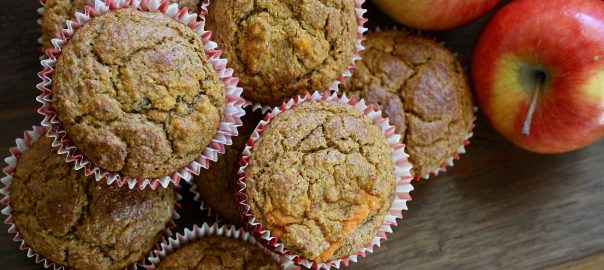
Muffins

Musings On Leftovers

Today’s blog entry is a guest post written by my Aunt Carol (and yes that’s capitolized because I think she’s “just capital”). She’d sent these musings to me as an email but I loved it so much I wanted to share her thoughts with all of you. With her permission here they are:

Your article on sequential eating is an affirmation of the way that I’ve been cooking all my adult life.

Mystery Dinners

When our children were small I used to save the empty trays from tv dinners, putting leftover entree portions in the main compartments, add some frozen vegetables, half a baked potato, leftover pie filling in the dessert compartment, etc. I would serially fill the various compartments when I’d have the appropriate leftovers. Then cover each tray with aluminum foil* – I did not mark what was inside, who had the time for nice details like that? 🙂 When Yosef and I went out to dinner, our kids had the treat of choosing a “mystery tray” – a wholesome form of gambling (but pretty safe because they were meals that they already liked anyway) and each one would be getting something different. The babysitter would heat them up and our kids had exciting meals, telling us the next morning what each one had had (I never heard about trades, though that might have been possible).

I imagine that like you, most of your readers, still having one or more children living at home, prepare meals for families. As an older widow with occasional guests, I often freeze part of the cooked ingredients for a recipe before assembling let’s say half of the total recipe, I also freeze individual portions of stews or soups, or what will in future be pot pies or Shephard’s pies, so that they’ll be ready for the crust or mashed potato topping when I am making those things for other meals.

Quiche

The dishes that I do not like to freeze and defrost later are quiches (they get soggy and the vegetables get too soft when frozen, defrosted then reheated). I make mine crustless, just rubbing a bit of butter around the bottom of the round flat pan, to grease it, sprinkling on a layer of bread or toast crumbs before adding the sauteed vegetables, grated cheese, and then the custard. I try to plan to first serve this entree when I have guests coming over. However since this is an easy and favorite dish with me, I sometimes grate different kinds of cheese (another good use for leftovers) on different portions. I usually cut my quiche into wedges and may decide that half will be cheddar, and half Swiss, etc. I change the side dishes during the subsequent days — a baked potato, reheated grain with spices, or different salads. This makes for a tasty variety and is an easy way to use up leftovers.

Sharing Leftovers

What is even more delightful is that I have a friend to whom I often give a portion or two of something tasty that I have prepared; she does the same with me. This way we both have more variety in our meals. What I give to her often becomes a treat for lunch at home, before she leaves to teach at the university; what she gives to me becomes a delicious, surprise dinner. As you can anticipate–we also share many recipes, enjoying one an other’s tastes in food and both being whole grain, organic food enthusiasts. Many people think of inviting friends over for a meal, but sharing dishes to be eaten at home is also a generous, friendly gesture and fits well into the full life of commitments that many of us choose these days. It does not replace sharing sit down meals with guests, it’s rather a personal-catering-with-love, service.

I want to explain that it’s not a one-on-one direct exchange–I give her A so she gives me B. Rather when, for example I baked muffins (and I’d been explaining to her son the difference between cupcakes which are a new treat to most Israelis – a few enterprising women have even opened successful delivery of home-baked cupcakes for special events services- and muffins), I saved and froze a few of my last batch of corn muffins that contain niblets. Then when I baked oat-berry muffins with raisins and maple syrup, I packaged up a few of each, along with a baked apple and some chestnuts and gave them to her when we next met.

A few days later when we again met she brought me a wedge of a delicious cake she’d baked that contained chunks of apple and some grapes in the batter and gave me a jar of her homemade granola – which I plan to sprinkle on a sliced banana, top with yogurt then enjoy for breakfast.

Savoring the cake with a cup of tea, enjoying this breakfast gift, these are, to me, like little hugs.

I found the part about cupcakes and muffins interesting. Who knew that there were people who didn’t know about cupcakes?  And I love muffins. They’re actually one of my favorite ways to use up leftover food items; I’m a fan of both savory and sweet muffins. The most genius way ever to make muffins is using Amy Dacyzyn, The Tightwad Gazette’s, amazing recipe

Basic Muffin Recipe
Print
Ingredients
  1. 2 to 2-1/2 cups grain
  2. 1 cup milk (or other liquid)
  3. Up to 1/4 cup fat
  4. 1 egg
  5. Up to 1/2 cup sweetener
  6. 2 tsp. baking powder
  7. 1/2 tsp. salt
  8. Up to 1-1/2 cups additions
Instructions
  1. Grain: Use 2 to 2-1/2 cups of white flour.
  2. Or substitute oatmeal, cornmeal, whole-wheat flour, rye flour, or flake cereal for 1 cup of the white flour.
  3. Or substitute 1 cup leftover cooked oatmeal, rice, or cornmeal for 1/2 cup of the white flour and decrease liquid to 1/2 cup.
  4. Milk: Use 1 cup. Or substitute buttermilk or sour milk (add a tablespoon of vinegar to 1 cup milk).
  5. Or substitute fruit juice for part or all of the milk.
  6. Fat: Use 1/4 cup vegetable oil or 4 Tsp. melted butter or margarine.
  7. Or substitute almond for part or all of the fat.
  8. The fat can be reduced or omitted with fair results if using a wet addition.
  9. Egg: Use 1 egg. Or substitute 1 heaping T. of ground flaxseed and 1 T. of water.
  10. If using a cooked grain, separate the egg, add the yolk to the batter, beat the white until stiff, and fold into the batter.
  11. Sweetener: Use between 2 Tsp. and 1/2 cup sugar.
  12. Or substitute up to 3/4 cup brown sugar.
  13. Or substitute up to 1/2 cup honey or molasses, and decrease milk to 3/4 cup.
  14. Baking Powder: Use 2 tsp. If using whole or cooked grains or more than 1 cup of additions, increase to 3 tsp.
  15. If using buttermilk or sour milk, decrease to 1 tsp. and add 1/2 tsp. baking soda.
  16. Salt: Use 1/2 tsp., or omit if you have a salt-restricted diet.
  17. The following ingredients are optional.
  18. Additions can be used in any combination, up to 1-1/2 cups total.
  19. If using more than 1 cup of wet additions decrease the milk to 1/2 cup.
  20. Dry Additions: Nuts, sunflower seeds, raisins, coconut, etc.
  21. Moist Additions: Blueberries, chopped apple, freshly shredded zucchini, shredded carrot, etc.
  22. Wet Additions: Pumpkin puree, applesauce, mashed, cooked sweet potato, mashed banana, mashed cooked carrot, etc.
  23. If using 1/2 cup drained, canned fruit or thawed shredded zucchini, substitute the syrup or zucchini liquid for all or part of the milk.
  24. Spices: Use spices that complement the additions such as 1 tsp. cinnamon with 1/4 tsp. nutmeg or cloves.
  25. Try 2 tsp. grated orange or lemon peel.
  26. Jellies and Jam: Fill cups half full with a plain batter.
  27. Add 1 tsp. jam or jelly and top with 2 more Tsp. batter
  28. Non-sweet Combinations: Use only 2 Tsp. sugar and no fruit.
  29. Add combinations of the following: 1/2 cup shredded cheese, 2 Tsp. grated onion, 1/2 cup shredded zucchini, 2 Tsp. parmesan cheese.
The Ingredient Guru, Mira Dessy https://theingredientguru.com/
I love hearing these musing on ways to share food and ways to make our leftovers more interesting.  If you have ideas about that I’d love to hear them.

*These days we know that aluminum foil is not a great choice for food contact. It does happen to be, however, a great way to protect foods in the freezer. My suggestion is to put a layer of parchment paper or freezer paper on top of the food and then wrap it in aluminum foil.  Remove both the paper and the foil before reheating.

Homemade Rolls


Susan asked, “
I wondered if you might have a resource for homemade wheat rolls (or other dinner-y kind of breads) that could be made up to a certain point and then frozen. So that you could make up a whole bunch when you have time, and then just cook a few at a time when you want them. I’ve been googling and haven’t really come up with anything. We’re trying to accommodate the starch eater/cravers in the household while substituting for healthier alternatives. Thank you very much for any ideas.

I don’t have any whole grain par-baked bread recipes. Part of the difficulty, as I find it, is that working with whole grains changes the gluten structure, the higher fiber retards the rise. So when I try to par-bake and freeze the rolls they never rise right. Freezing the unbaked dough is tough because the freezing process kills the yeast and the thawing bread never seems to rise correctly, adding extra yeast doesn’t work because then you’re starting all over again.

My suggestion would be to find a whole grain bread recipe that you like and make rolls, soft bread sticks, even slice the loaf after baking, and freeze the results. You can thaw them for those that want it and then warm it up in the over for that “fresh-baked” aroma and warmth.


photo courtesy of Fir002 | Wikimedia Commons
How to use Leftovers - Mira Dessy, The Ingredient Guru

Top Tips For Sequential Eating Or How To Use Leftovers

Although I am a fan of leftovers others in the house are less excited by the repetition of certain dishes. Being a big fan of not wasting food, and a new fan of Jonathan Bloom’s blog Wasted Food I try to look for creative ways to repackage if you will, the offerings at the dinner table.

One way to do this is to take a moment and plan your menu, seeing what can be re-created from what you have already made. Here are a couple of examples of planning meals so that you are using leftovers for the next meal. I should note, by the way, that my favorite method is to turn dinner foods into breakfast foods as it makes food prep in the morning – a typically hectic time – a little easier.
 
The best and easiest sequential plan is to roast a chicken.  Leftovers can be turned into a different dish, such as a pot pie. And the bones, of course, get turned into a delicious nourishing broth.
 
Making Tuscan Stew with polenta for dinner typically means there is leftover polenta. I take that polenta, pan fry it, top it with an over easy egg, top that with some homemade mushroom marinara and it becomes breakfast. Since polenta is made with stoneground, or fresh ground, corn meal, it’s a delicious way to add some fiber to your morning and help get you off to a good start. Pan frying the polenta gives a nice change to the texture and provides a tasty base to the egg and sauce. And in case you’re wondering, the Tuscan Stew by itself is delicious as leftovers and I typically have it for lunch the next day.
 
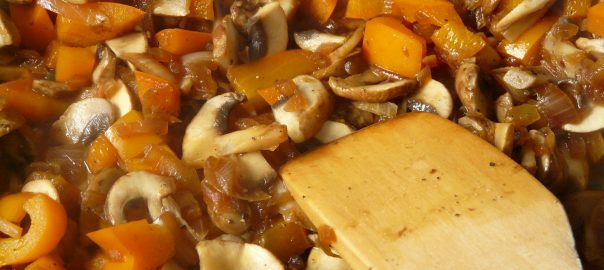
One of my favorite dinners is from my Fast Fun Freezer Meals. It’s sauteed sausage, onions, and peppers. The leftovers usually get turned into an omelet in the morning. Adding leftover veggies or dinner dishes into omelets, frittatas, or an egg scramble of some kind is a great way to utilize them. All the prep and cooking is done, which makes breakfast cooking a snap. 
 
For dinnertime leftover usage we can get creative by rummaging through the fridge. Soup and/or chili is a great way to incorporate a lot of little-bit leftovers. Adding fresh sauteed onions, a tasty broth or sauce, and making sure the spice combinations go together well (in the case of soup, curry does not pair well with Italian spice, I’m just saying…) you can hide almost anything. Add in a salad and it’s a whole new meal.
 
Last but not least is the shepherd’s pie trick; you can hide almost anything under that crust. Taking your leftovers, combining them with added vegetables, if needed, under a mashed potato or sweet potato crust which is then baked in the oven, you’ve got a new meal that doesn’t take a lot of time, saves money (because you’re not throwing out ingredients) and keeps everyone from getting bored with the same old leftovers.
 
Taking a few minutes to plan your meals will save you time and money while still allowing you to provide delicious and nutritious meals for your family.