All posts by Mira


About Mira

Mira Dessy is The Ingredient Guru. A holistic nutrition professional, author, and a popular public speaker, she knows that it's not just what you eat, but what's in what you eat. She is the author of The Pantry Principle: how to read the label and understand what’s really in their food. Dessy is a Board Certified Holistic Health Practitioner whose mission is to educate and empower consumers. She curates the Lean Clean Green Subscription box, the premier, organic, earth-friendly, healthy, sustainable subscription box which can be found online at https://theingredientguru.memberbox.com

Another Helping Of Meat Glue?

First it was pink slime. And no matter what anyone says I do not believe that is something that should be considered fit for human consumption. But I’ve already written about that.  Now we have meat glue as an adulterant in the food supply.

What is meat glue?

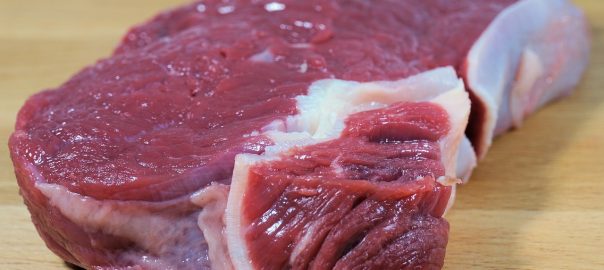
Approved for human consumption by the FDA, allowed in Canada, and defended by the American Meat Institute it is made from something called Microbial Transglutaminase (mTG).  mTG is made utilizing Streptoverticillium mobaraense which is a micro-organism that secretes mTG. (For a more extensive explanation visit the American Society for Microbiology.)  Used to put together pieces of meat, this powder can be used to make them look like a better cut of meat. It is also used to improve the texture of certain foods.

According to my research, mTG, or meat glue, can be found in processed meat and other foods such as imitation crabmeat, fish products, constituted “chicken breast”, and processed meats such as hot dogs, chicken nuggets, and ham products.  However it’s not just used for meats; mTG can also be used in those food products where a gelling process is needed such as cheeses, jellies, yogurts, or frozen desserts.  Additionally mTG can also be used to increase volume and texture in breads. gluten free products such as pasta and baked goods.  

One complaint is that producers may be selling cheaper cuts of meat as a higher grade because it looks like something it’s not. This is a valid point; it would definitely be a reason to get upset for being overcharged by a producer making cheap cuts of meat pieces look like a very expensive filet.  Searching the web it appears that one area where this may happen is buffet restaurant settings.  Those places where you can get as much filet mignon as you want for one low low price.  Apparently there’s a reason that price is so low; it may not be what you think it is.  I want to point out, in all fairness, that there is a big kerfluffle about this issue but so far I have not found any legal cases where a producer or seller is being charged with this practice.

Health issues

The health challenge is potentially different.  The use of meat glue means that there could be a higher risk for bacterial contamination due to the increased number of surfaces.  The more surfaces, the more area for bacteria to live.  For those consumers who like their meat less well done this creates more risk.  If the meat is not fully cooked (i.e., rare rather than well done) the joined parts may not reach a temperature capable of killing bacteria. With the new meat nutrition labeling requirement we should be able to see if mTG is used on the meat at the grocery store.  However, I have yet to see a single package that is using this new labeling.

According to Dr. Peter Osborne, gluten expert and author of No Grain, No Pain, mTG treated dairy is a problem for those with gluten sensitivity issues.  This is because the immune system registers mTG treated dairy as a form of gluten.  This means that for those who struggle with gluten sensitivity, if you feel like you’ve been “glutened” you may also need to consider dairy as a possible source of contamination.

Made by Ajinomoto, the same company that makes MSG, I would like to point to a few other health issues that concern me.   This ingredient comes with a dose of maltodextrin and sodium caseinate.  Maltodextrin is corn based so there is probably some GMO exposure as the use of organic corn would not make financial sense.  Sodium caseinate is a milk protein  and according to Truth In Labeling always has free glutamic acid making it a form of MSG.  Additionally there is a possibility that the milk used to obtain the protein has rBGH in it, a hormone that makes cows give more milk.  That’s a whole blog post in and of itself, but the bottom line is you don’t want to consume rBGH.  The issue at hand is the possible reaction to corn or dairy that could be brought about by ingestion of meat in those with high level food sensitivities.

Avoiding meat glue

How to avoid meat glue?  That appears to be a little trickier.  It makes sense to be extra diligent about reading labels at the grocery store lately.  However, as yet, I have not seen mTG listed on any ingredient labels.  For meat products I believe the answer to be the purchase of organic meat or to buy from a trusted source.  It is important to note that Kosher meat is not exempt from the use of meat glue as there is a kosher version available.  Otherwise, until meat labeling actually happens, and unless they include mTG on the label, you won’t know.  For other products I don’t have an answer at the moment.  Purchasing organic dairy, which I recommend anyway, is a good option.  But until this product is properly labeled or removed from the food supply we may not know if we are ingesting it.

 

meditation

Meditation For Children (and Adults)

May is National Meditation Month. Recently I saw this article online, Why Our Children Should Be Taught To Meditate In School.  This falls into the ‘why didn’t I think of that’ category.  If I had known or thought about this I would have encouraged my children to learn how to meditate when they were younger.

Moving faster

In our ever-increasing-speed society children are being encouraged toward more distractibility, more tools, more stimulation.  There’s no down time.   Although he never really said it, Gandhi is attributed with saying, “There’s more to life than increasing it’s speed.”  Whether Gandhi said it or not it is a valuable sentiment.  Somehow, unfortunately, I don’t think our modern society is listening.

Everywhere we turn we are surrounded by messages that urge us to move faster, be more productive, encourage speed over mindfulness. There’s even a saying that highlights this point…”That’s so [insert number] seconds ago.”  I know it’s meant to be amusing but it highlights the problem that we face staying focused in our daily lives.  Everything is presented as needing to be instant, now, online, immediately.  It’s no wonder that rates of hypertension are rising among our young people.  They’re being stressed, pressured, and sped up beyond reasonable limits.  I personally believe this to be true for adults also.

Slowing down

Instead of joining in to the overwhelming frenzy for fast everything,  perhaps we need to re-evaluate things and slow down just a bit.  If we taught kids how to meditate in school it’s possible that their minds could stop spinning to frantically.  They could learn how to recenter themselves and focus.  And what a great tool to be able to take forward into adulthood.

Part of the problem is that those stressful and overwhelmed feelings don’t stop just because we become adults. Indeed for some adults it’s even worse. And we do it to ourselves. We allow ourselves to be sucked into the pressures and the stress that leave us feeling overwhelmed. What if instead of giving in we slowed  down. What if we made a choice to make a change?  For those of us who are already adults and feeling overwhelmed?  Stop for a moment.  Take a few deep breaths.  That in and of itself is a good beginning.  Need some guided resources?  Below are a few to get you started

Meditation Resources

       Websites:

       Audio:
       DVDs:

      APPs:

  • Calm – Meditation to Relax, Focus, and Sleep Better
  • Headspace – Guided Meditation and Mindfulness
Treasure those small quiet moments.  Seek them out.  Teach your children to do the same.  I think the world will be a better place if we do.


Breast Is Best

breastfeeding | photo: Jerry Bunkers

With all of the recent hullabaloo about breastfeeding because of the recent cover on Time magazine I wanted to share a few thoughts.

My kids are grown and I am no longer breastfeeding. While I did not breastfeed them for the extended periods of time mentioned in that article, I certain support those who can and do.

I am upset about the picture chosen but I am sure it was chosen for shock value.  No one I know has their child stand on a chair to breastfeed.  It is a cuddly, bonding experience.  The magazine cover is very militant in attitude (down to the cammo pants the child is wearing) and does not look comfortable or close knit for either one of them.  I think it gives people the wrong attitude about breastfeeding in general and extended breastfeeding in particular.

 Not every mother is able to breastfeed, but this post isn’t about that. It’s about how important breastfeeding is and how we need to get over ourselves and our squeamishness about it.  In other parts of the world breastfeeding is encouraged and is practiced for extended periods of time.  Here we get too wrapped up in the fact that these are breasts which are seen as a primarily sexual part of the body.  But while playing with boobies can be fun, let’s remember that their primary function is to feed an infant.  Something that our bodies can do so very well and with wonderful purpose.

In our country the formula companies push their product over breastfeeding.  Not because their product is better (it isn’t) but because that’s what makes them money.  They have subsidies, spending our tax dollars, to back their product and get it into the hands of new mothers making it seem like a positive choice.  Combine this with what appear to be our general uncomfortableness with the concept of breastfeeding in public and far too many people feel that this is somehow a shameful practice.  One that perhaps should be carried out furtively. In dark corners.  Under blankets.  I believe this seemingly prim attitude toward breastfeeding needs to stop.  Let’s be healthy, supportive, nurturing, and above all, nourishing for our babies.

The truth is that breastfeeding is the best, most positive first option for babies and young children.  For newborns, breast milk is the only way that immunoglobulins are passed from the mother to her baby.  Specifically IgE which is the one that regulates certain allergies, and IgA, which protects the lining of the intestines.  Both are critical to our lifelong health.  Sadly the lack of both is on the rise in our country with a corresponding increase in the number of children with allergies and other health issues.

Breastfeeding is also good for the mother.  It releases oxytocin which is a hormone that promotes relaxation; in other words it can help lower stress.  Other studies show that women who breastfeed have a lower incidence of breast cancer.  Two great benefits for mom while simultaneously providing lifetime benefits for baby.

When I was pregnant my mother gave me a copy of The Womanly Art of Breastfeeding.  It was a great book, I learned a lot from it, and I believe it helped to get me and my first child off to a good start.  I want to encourage others to read it, to share it to help themselves and others.  I want to encourage people to seek out their local La Leche League, to learn more about breastfeeding, and to find friends and support for themselves and their family.  

Most importantly, I want to encourage people to breastfeed their babies.

disclaimer: cmp.ly/5

The Whole Food Guide For Breast Cancer Survivors

For all of those out there who have survived breast cancer there is now a book, The Whole Food Guide For Breast Cancer Survivors, that goes beyond primary treatment and survival.  With the information in this book you can learn how to support your body, to be can be healthy and strong using nutrition and a holistic health focus.

Covering a wide variety of topics including environmental risk factors, understanding hormones, glucose and metabolism, chemical exposures, and even a thorough explanation of those nutrients and foods which are highly supportive to health, this book covers the broad spectrum of what you need to know.  Providing background material and in-depth studies the work is well-supported and scientifically grounded.

Written in a straightforward and easy to understand manner the book provides a solid foundation of knowledge for anyone wanting to gain a deeper understanding of how their food affects their body and their health when breast cancer is involved.  It also includes a wide variety of delicious recipes, the foundations of eating for health, a sample meal plan, and ideas for incorporating these healthy and delicious food choices into your diet.

It isn’t, however, just a discussion of nutrients and chemicals; the book also points out various types of therapy, diagnostic tools, and laboratories that offer additional or alternative treatments for breast cancer.  There are educational resources including books and support organizations.  The resource section even lists a number of retreats that are specifically for breast cancer patients, survivors, and some are also for family members.

If you or someone you love is a breast cancer survivors, this book would be a great resource.  But it’s not just for survivors, it would also be an excellent roadmap for those who may discover that they are at risk for breast cancer.

disclaimer: cmp.ly/5, cmp.ly/1, cmp.ly/6

Ct Governor Goes Against Citizens

I was stunned to receive an email from the Institute for Responsible Technology (IRT).  In the email they shared that Connecticut, which was poised to become one of the first States to approve Mandatory Labeling for GMO, had an abrupt reversal by the Governor and his attorneys.  According to IRT an overwhelming number of Connecticutians and a majority of legislators were in favor of this labeling.  The Governor, however, has removed a section of the bill that would require the labeling and the bill, in effect, has no power.

I grew up in Connecticut.  My husband and I moved back there a couple of times when the situation permitted.  Although I now live in Texas and love my life here, when people ask me where I am from, the answer is Connecticut.  I was pleased to see that this small State (third smallest in the nation) was poised to make such a historical, watershed moment happen.  And then it didn’t.  It makes me wonder who else was present in that room with Governor Malloy and his legal staff.

I wrote to the Governor because I want him to know that this is wrong.  We have the right to know what’s in our food.  We are demanding to know what’s in our food.  Because I believe in and want this mandatory labeling to happen I am sharing my letter:

Re:  GMO Labeling


Dear Governor Malloy, 


As a former resident of Connecticut I was excited and proud to see the State that I consider my home state to be on the forefront of this important issue.  I confess that I personally do not like or agree with the use of GMO products.  However I also feel that it is important to clearly label these products so that those of us who want to know can be aware of it’s presence in our food.


This current situation reminds me of the of the issue with labeling of rBST milk when there was an enormous legal battle against farmers and dairy producers who wanted to mark their milk as free of this hormone.  Ultimately they were allowed to mark their products as free of this added hormone along with a disclaimer which stated “No significant difference has been shown between milk derived from rbST-treated and non-rbST-treated cows.”  The consumers, however, were able to make a decision on their own because they knew what was in their food.


Monsanto is responsible for rBST.  They are also the largest single GMO producer in the world.  I believe their goal is to prevent people from knowing which foods contain this manipulation because their corporate profit line is believed to be far more important that the rights of consumers who want to know.


Governor Malloy, I urge you to stand up for the rights of those you represent and allow this legislation in it’s original form to pass.  It is your responsibility as their elected official to represent that overwhelming majority of your citizens who want to know.


Sincerely,


Mira Dessy

Fitness Fun For Kids With Busy Parents

family fitness | photo: Evil Erin

This is a guest post by Jeff Wise, the founder of My Family Exercise. Jeff believes, as I do, that family fun and exercise is important for the health of all members of the family.  He has created a line of ebooks and a Kids Health Club membership site to help children and parents decrease stress and improve physical fitness in a fun way.  For more information about Jeff and his programs you can visit his kids health and fitness blog or for daily advice follow Jeff on Twitter.
Even for a family like mine, with a stay at home mom and a work at home dad, life is still quite busy. There are errands, events, trips, and schooling just to name a few of the daily activities. Even if the whole family is home all day there are any number of things to do around the house every day with cleaning, laundry, and did I mention kids? Put it all together and it can sometimes be a challenge to get fitness on the calendar.

We are a very health conscious family; having studied health, nutrition and fitness for many years. We want to be able to serve one another and our community for many years to come. This means we’ve got to eat healthy foods daily and participate in regular exercise. I’ve found some really easy and fun fitness activities for kids that we, as parents, can teach our children while we’re having fun too. You may look at some of these activities and consider them normal, or see them as nothing new. However they may be new ideas for your kids and these activities will encourage physical exertion and family fun.

Fresh air and sunshine, combined with physical activities, make for happy, healthy kids. I’m all for traditional exercises for kids but there are other opportunities as well:
1. Find a public playground – Kids love playgrounds and so do parents. It’s a great chance for kids to climb, slide, run and use their imaginations. Playgrounds can also give parents a little mental and physical break (as long as the kids are old enough to play without parental supervision).

2. Stroll through your neighborhood – If you haven’t figured it out yet, the walking possibilities are endless for families. After a busy day, this option is the most accessible. It can easily be done after dinner. And, since you’re not going far from the house, you can really do it throughout the year.

3. Go ice or roller skating – This activity helps with coordination and muscle strength. It also gets kids’ heart rates up. Just make sure they wear safety padding.

4. Set up a relay race in your home or outside – Designate a starting and ending point. Have them run around furniture, crawl under tables or jump over objects. The path can change with each race.

5. Do yard work together – Kids can really learn the value of hard labor by working in the yard. Teach them how to pull weeds, plant flowers and even mow the lawn. My favorite idea is something I hope to start soon now that warmer weather is coming. How about planting and working on an organic vegetable garden? Not only do you get the benefit of exercise and outdoor activity, think of all the delicious vegetables you’ll get to enjoy.

Again, these may seem normal and not traditional in the exercise sense, but kids love it and it keeps them active; something we want on a regular basis. Your kids aren’t going to do pushups and other traditional exercises (which they may see as boring) every day so why not have fun with these fitness activities for kids?

Make a date with your kids and plan an activity each week. Be sure to put it in writing; as busy parents it’s easy to forget or put something off unless it’s written down right in front of us.

Should You Care About Alkaline Beverages?

Because the first thing you drink every day is really important why not start with something that's going to be good for your health?
 
When working with clients, I regularly remind people to start their day with an alkalizing beverage.  This invariably brings up the question, "What is an alkalizing beverage and why do I need to drink it?"
 

Second question first. Your body does better when it is in a more alkaline state. If you happen to remember from your high school biology class, a pH of 7.0 is base or neutral. You should be somewhere between 7.2-7.4 in order to be healthy.  When your body is in a more acidic state you can potentially be prone to illness.  


Effects of PH imbalance 


Maintaining an acidic body state for a long period of time can cause a wide variety of illnesses such as headaches, inflammation, bloating, acne, hair or nails that break easily, and other symptoms.

Because the body seeks balance, if it is too acidic it will pull minerals from your bones and from muscle tissue.  Eventually, you can experience a significant depletion of minerals.


How to maintain PH balance


However, simply drinking alkalizing beverages isn't enough. You actually need to consume a more alkaline diet.

Our modern American diet tends to be highly acidic, especially when it's high in processed foods and animal products. So in order to shift away from high acidity, it's a good idea to include more alkalizing foods in your diet. 

Ideally, most people appear to do best when they consume a diet that is 60-70% alkalizing foods.  This includes:

In addition to making sure you add alkalizing foods to your diet, it can be a good idea to start the day with an alkalizing drink. 

However, it's important to know that just drinking alkaline water isn't going to alkalize your body.  Studies indicate that drinking alkaline water does not increase body pH.

That doesn't mean there aren't any benefits though.  Drinking naturally alkaline water may help decrease the enzyme that can cause acid reflux. Other research seems to indicate that drinking alkaline water may be beneficial for people with conditions such as diabetes, high cholesterol, and/or high blood pressure.


What is an alkalizing beverage? 


Rather than simply drinking alkaline water, consider having a glass of water with 1-2 tablespoons of lemon juice or raw apple cider vinegar. If you're not used to the tartness of either of these you may have to work up to it by starting with 1 teaspoon in a glass of water and increasing a teaspoon at a time.   

Adding a greens powder to water or a morning smoothie is another way to get an alkalizing beverage into your day.  Another option would be to drink kombucha or water kefir, either plain or adding a healthy slug to water glass.  This can be a great start to the day and one that has the added benefit of probiotics to further support gut health.


Vinegar and lemons are acidic so how can they be alkalizing?


 It's one of the odd properties of acid-alkaline balance.  Yes, we do consider them to be acidic however their ash, or residue after they have been broken down, is alkaline.  That makes them alkalizing food.  This alkalizing effect is also found with limes and grapefruits however not with oranges.

If you want to test to see whether your specific body state is more alkaline or more acidic you can purchase a First Morning Urine Ph Kit.These strips test either urine or saliva (urine is generally considered to be a better indicator).  If you are interested in changing your diet you could also consider getting a copy of The Joy in Living The Alkaline Way.  Both the pH Test Kit and the book are available online at Better Lab Tests Now. 

Simply enter the word Alkaline into the search bar to get a free copy of the book, order the test kit, plus find more information about alkalizing.

So yes, it's a good idea to start your day with an alkalizing beverage and drink for your health. And then evaluate your diet to add more alkalizing foods.


Sources


"Alkaline Water: Better Than Plain Water?". Mayo Clinic, 2021, https://www.mayoclinic.org/healthy-lifestyle/nutrition-and-healthy-eating/expert-answers/alkaline-water/faq-20058029. 

Koufman, Jamie A., and Nikki Johnston. "Potential Benefits Of Ph 8.8 Alkaline Drinking Water As An Adjunct In The Treatment Of Reflux Disease". Annals Of Otology, Rhinology & Laryngology, vol 121, no. 7, 2012, pp. 431-434. SAGE Publications, doi:10.1177/000348941212100702.

"Preliminary Observation On Changes Of Blood Pressure, Blood Sugar And Blood Lipids After Using Alkaline Ionized Drinking Water--《Shanghai Journal Of Preventive Medicine》2001年12期 ". En.Cnki.Com.Cn, 2021, http://en.cnki.com.cn/Article_en/CJFDTOTAL-SHYI200112005.htm.

Michelle Liew, B.A. "15 Signs Your Body Has Too High Acidity Levels And How To Fix It". Life Advancer, 2016, https://www.lifeadvancer.com/body-high-acidity-levels/. 


Basil mania

Basil Mania

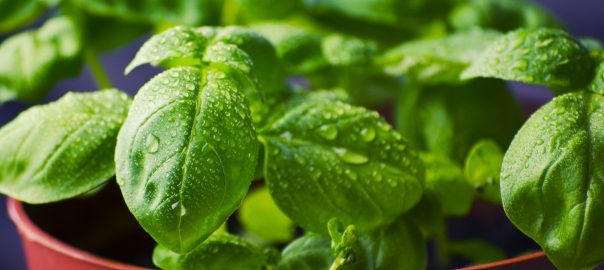
Bay-sil, bah-sil, whatever you call it, it’s one of the most fragrant and delicious herbs around.  High in vitamin K, basil also has some healthy properties to it’s oil which is anti-bacterial and also highly anti-inflammatory.  These properties combine to make it a very heart-healthy herb to include in your diet. Recently I went to The Arbor Gate nursery and took their Basilmania class.  Starring Chef Chris Crowder and Herbal Expert Ann Wheeler it was an information packed event.

It turns out that there are a vast number of different varieties of basil.  According to Ann there are 64 native species of basil, however we now have hundreds of varieties because it is a “promiscuous cross polinator.”  I also learned that pepper basil is the only one which does well in the shade.  Three years ago I was given a gift of pepper basil from my friend Paula and it has indeed done well on the shadier west side of my house.  Now, due to rather mild winters, it’s still going strong.  And it does indeed taste like a pepper plant.  The one basil which I was really taken with while at the nursery was the lime basil.  It is so powerfully fragrant and the leaves so deliciously citrus-y that I kept wanting to nibble at it.

In addition to talking about basil, there were demonstrations of different recipes using it.  Recipes mentioned included adding basil to tartelettes, a bellini, a vegetable mousse and more.  Here’s one recipe created by Chef Chris Crowder shared from The Arbor Gate website:

Frozen Basil Strawberry Mousse

2 tablespoons roughly chopped fresh basil
1/4 cup sugar plus 1/3 cup
3 cups quartered strawberries
1 1/4 cups heavy cream
1 tablespoon fresh lemon juice
1  tablespoon unflavored gelatin
1/3 cup sliced strawberries, for garnish
1 tablespoon chiffonade of fresh basil, for garnish

Process the basil and the 1/2 cup sugar in a blender or small food processor and pulse until combined, stopping to scrape down the sides as needed. Place quartered strawberries in a medium bowl and sprinkle with the basil sugar. Allow the mixture to stand for 20 minutes.

Cut parchment paper into 5 long strips, about 2-inches wide and 12-inches long. Wrap one strip of parchment around the top of a 3-ounce ramekin and secure with string or tape to form a collar that extends above the top of the ramekin. Repeat with the remaining 4 strips and ramekins. Set aside.

Whip the heavy cream until soft peaks form and refrigerate until ready to use.

Combine the lemon juice with 3 tablespoons of water and the gelatin in a small bowl. Allow gelatin to soften, about 5 minutes. Place the macerated berries and sugar in a blender or food processor and puree until smooth. Pour mixture through a fine-mesh strainer and press to release the juices; you will need about 1 1/4 cups of the strained juice. Discard the pulp and seeds.

In a small, heavy saucepan, combine 1/4 cup of the strawberry puree and the 1/3 cup sugar over medium heat, stirring to dissolve the sugar. Just before the mixture begins to boil, remove the syrup from the heat and stir in the gelatin mixture until well incorporated and dissolved.

Combine the gelatin mixture with the remaining strawberry puree in a medium bowl. Set the medium bowl inside a large bowl filled with ice water. Stir the strawberry mixture until cooled and syrupy.

Fold the reserved whipped cream into the syrup mixture, gently but thoroughly, until well incorporated and the mixture is one solid color. Fill the prepared molds with the strawberry mousse, cover, and freeze until firm, at least 4 hours.

Allow mousse to stand at room temperature for about 10 minutes before serving. Remove the parchment paper from the molds and garnish with fresh sliced strawberries and basil.

However you pronounce it (and whether you think it’s an -erb or a herb) basil is a delicious plant which definitely deserves to be made into more than just pesto.

Nutri-washing

fast food | photo: cohdra

McDonald’s has just launched something they are calling the McDonald’s Nutrition Network.  Yes, THAT McDonald’s.  The one that sells fries and burgers and other foods that are generally not associated with a healthy diet.  The company is offering $5,000 grants in the New York/New Jersey area to fund nutrition programs.

Their claim?  They are simply trying to better serve their clients.  My take?  If you have read Appetite for Profit: How the food industry undermines our health and how to fight back (and if you haven’t you should, it’s a great book) you’ll understand that McDonald’s is simply creating a great opportunity to do some self-promotion, misdirection, and try to make themselves look good in the eyes of the general public. By creating this type of a program they can claim to be doing all sorts of good things; to be responsible partners in providing nutrition education, support health programs, etc.  It’s the nutritional version of green-washing (making things appear greener, or more eco-friendly than they really are).

I’m sure there are strings attached to those $5,000 grants.  I’m also sure that McDonald’s isn’t going to change how they do business.  They will continue to sell these unhealthy foods because, at the end of the day, that’s what makes them money.  These grants are a drop in the bucket, one that they can afford to drop because of the positive publicity and public image they are hoping to create.

If McDonald’s really wanted to make substantive changes to support nutrition and nutrition programs they would change the food they have in their restaurants.  They would change where they source their food from.  They would create a new, environmentally conscious, health conscious, nutritionally balanced menu.  They have the world’s greatest delivery system and deepest, most entrenched global business model.  They could be agents for amazing change.  But they won’t.  Because the bottom line is about profit.

So before you get all excited about how they appear to be in supporting nutrition, stop and think about if they’re really making any changes.  Don’t listen to what they’re saying, look at what they’re doing.

Going Walden

I spent the weekend in the woods.  Maybe not really “going walden” but certainly headed in that direction.  It was a holiday of sorts, a get-away from my often hectic and over-scheduled life.  It was amazing, restorative, thought-provoking, and, most importantly, fun.  I disconnected from technology leaving behind my laptop, connectivity tools, news feed, and all social media.  While I did bring my cell phone that was for practicality reasons and I chose not to take or make any calls all weekend.  What did I do?

I laughed more in those 48 hours than I believe I have laughed in the last three months.  We’re not talking polite chuckles or giggling either.  We are talking deep belly laughs, huge guffaws with a group of women all similarly roaring with laughter.  We were the noisiest campsite there and we were not constrained.

I reconnected.  Many of the women on this trip are friends who I adore.  They are fascinating, interesting, vibrant, intelligent, amazing people.  But we are all so busy with the demands of our modern lives that we promise ourselves in passing we will get together for that lunch or tea or whatever.  And yet somehow we don’t manage to find the time.  This weekend we had nothing but time.

I ate very well.  Hats off to Colleen, our organizer and her sous chef, Natalie.  With four gluten-intolerant campers and one vegetarian out of nine women they pulled off a tasty, delicious, satisfying menu for everyone.  They did it without going overboard either.  It was simple, delicious, and unfussy.  While we all know food tastes much better around a campfire, I am a firm believer that it also tastes much better when it comes from whole foods.  Our menu was dinner: taco bar, breakfast: scrambled eggs and fruit, lunch: veggies and dips with fruit and gluten free cookies, dinner: cuban beans and cornbread with gluten free smores (gotta have those), breakfast: leftovers and fruit.  Yes, there were M&M’s and chips and other foods there as well, but the menu was predominately simple, whole foods.

I reconnected with nature.  I had forgotten how restorative this is for the soul.  Yes, I go out in my garden, yes I take my dogs for walks through the woods, yes I look for opportunities to put my feet in the dirt.  But this was in the middle of a gorgeous state park with no distractions, hardly any traffic, and a quietude that just does not exist in my backyard.  There was wildlife all around us (we were fortunate to have Helen with us who is a birder and quite knowledgeable) and we saw deer, turtles, alligators, birds, bunnies, interesting bugs and more.  There was a lot of tree hugging (literally and figuratively) going on; I even had the opportunity for a most delicious, restful nap under a sprawling tree with a light breeze.

I remembered my appreciation for the basics.  Sleeping on a mat on the floor reminded me that I am fortunate enough to have a bed at home (and a quite comfy, large, well decorated one at that).  Having a public restroom available I was appreciative for the running water in the toilets, the sinks and the showers.  I was appreciative for all of the tax dollars and use-contributions that pay to maintain the state park system.  I also appreciated the quiet, the lack of distractions and the ability to slow down, even if just for that moment.

This is part of holistic living.  We need to find that balance; to find those moments in our lives that speak to us.  To be more than a particular aspect of our being — wife, mother, daughter, committee-member, professional, caregiver, insert-your-hat-here.  To let go of some of that, even if just for a short while, and plainly be ourselves.

And how was your weekend?