All posts by Mira


About Mira

Mira Dessy is The Ingredient Guru. A holistic nutrition professional, author, and a popular public speaker, she knows that it's not just what you eat, but what's in what you eat. She is the author of The Pantry Principle: how to read the label and understand what’s really in their food. Dessy is a Board Certified Holistic Health Practitioner whose mission is to educate and empower consumers. She curates the Lean Clean Green Subscription box, the premier, organic, earth-friendly, healthy, sustainable subscription box which can be found online at https://theingredientguru.memberbox.com

Preparing An Emergency Food Supply, Long-term Food Storage 

Pandemic, natural disasters, and terrorist attacks often come with little to no warning. To weather the storm, stocking up NOW would be a wise idea.

Some food, if properly sealed and stored correctly, can last for years. According to ready.gov, it is important to stock canned foods, dry mixes, and other staples that do not require refrigeration, cooking, water, or special preparation.

I’ve listed below necessary items for your emergency supply plan -- food, water, and other essentials -- to help you build your survival kit. 

Preparing an emergency food supply

As we all know, global crises like COVID-19 can easily disrupt the food supply. Planning to have at least a 14 day supply of food can help you build an emergency stockpile in your home.

Keep food that:

  • Has a long storage life
  • Requires little or no cooking, water, or refrigeration
  • Meets the needs of family members who are on special diets
  • Meets pets’ needs
  • Are not very salty or spicy, as these foods increase the need for drinking water, which may be in short supply
  • Have no artificial ingredients, MSG, unpronounceable chemical names, etc.

Note: Read the labels. Just because this is emergency planning doesn’t mean that you want to buy those kits with all the cruddy ingredients in it!

Recommended emergency food items

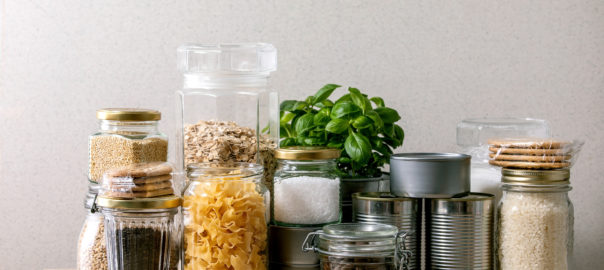
It should be understood that you only want to store what your family will eat. For example, don’t buy canned lima beans if no one eats them. Here’s what you should store in your pantry:

  • Ready-to-eat canned meats, fruits, vegetables
  • Protein or fruit bars
  • Dry cereal or granola
  • Nut or seed butter
  • Dried fruit
  • Canned juices
  • Non-perishable milk
  • High-energy foods
  • Food for infants (if you have one in your home)
  • Comfort/stress foods

How to store emergency food

Certain storage conditions may enhance the shelf life of foods. The ideal location is a cool, dry, and dark place. The most suitable temperature is 40° to 70°F.

  • Store foods away from ranges or refrigerator exhausts. 
  • Store food away from petroleum products. Some food products absorb their smell.
  • Items stored in boxes or in paper cartons will keep longer if they are heavily wrapped or stored in waterproof, airtight containers.
  • If you have extra space in your freezer, fill it with bags of water. This can help keep food cold if the power goes out. If you need to leave, it will provide ice for the trip. 

Also read Guide To Freezing Food: What You Can And Can’t Put In The Freezer to learn more on how long you can keep food in the freezer and food safety during power outages.

Essential tools and items for food preparation

Having the following items available will help you to prepare meals safely:

  • Cooking utensils
  • Knives, forks, and spoons
  • Paper plates, cups, and towels
  • A manual can- and bottle-opener
  • Heavy-duty aluminum foil
  • Wax paper and/or parchment paper
  • Propane gas or charcoal grill; camp stove
  • Extra water to be able to rehydrate dehydrated food
  • Fuel for cooking, such as charcoal 

Preparing an emergency water supply

Water can be a critical item, especially for those on a well without power. Do not store water in the plastic containers they come in (those leaks — ask me how I know that — one soggy closet floor later). Use an aquatainer, they’re made for longer-term water storage. 

  • Requirements are 1 gallon of water per day for each person and each pet for cooking and drinking. Also, store an additional gallon per person for sanitary needs.
  • Store at least a 3-day supply of water for each person and each pet. Try to store a 2-week supply if possible.
  • Observe the expiration date for store-bought water
  • Store a bottle of unscented liquid household chlorine bleach to disinfect your water and to use it for general cleaning and sanitizing.

Note: As much as possible, do not drink liquid that can dehydrate the body; i.e.,  caffeine, soda, and alcohol.

Recommended items for emergency supply kit

Aside from the food, water, and other items for food preparation, here are other recommended items to include in your family’s emergency supply kit:

  • Battery-powered or hand-crank radio and a NOAA Weather Radio with tone alert
  • Flashlight
  • First aid kit
  • Extra batteries
  • Whistle (to signal for help)
  • Dust mask (to help filter contaminated air)
  • Plastic sheeting and duct tape (to shelter in place)
  • Moist towelettes, garbage bags and plastic ties (for personal sanitation)
  • Wrench or pliers (to turn off utilities)
  • Local maps
  • Cell phone with chargers and a backup battery
  • Glow stick for pets’ collar (so you don’t trip over them at night)
  • List of important addresses and phone numbers
  • Gas refill (always refill your tank if you are at ½)

Join my Exclusive Community: The Kitchen Table!

Join me and an empowering community dedicated to your health journey!
 
  • Access to masterclasses on gut health, migraine management, and preparedness pantry.
  • Library with all my ebooks covering holistic health topics.
  • Engaging monthly book club discussions.
  • Specialized modules to enhance your wellness journey.
  • Interactive calls for personalized guidance.
  • Comprehensive community support
Don't miss our limited-time 70% off sale this 2024! Join us today!

Sources: 


Guide To Freezing Food: What You Can And Can’t Put In The Freezer

Did you know that the United States is the global leader in food waste? In fact, nearly 40% of the US food supply is wasted each year. That’s approximately 133 billion pounds and $161 billion worth of food.

According to the US Department of Agriculture (USDA), food spoilage is one of the main reasons why Americans throw out food. So how do we tackle food waste? The USDA suggests improving labeling, food storage, cooking methods, among others. 

To help with the movement against food waste, let’s talk about one of the greatest inventions that can help avoid spoilage– the freezer!

Here’s some food for thought: freezing is one of the oldest and safest methods to preserve food, with no chemical preservatives needed. However, many of us are not sure how to properly freeze food.

Which food is safe to freeze? How long can you freeze food? Is it okay to refreeze thawed meat?

Print and stick these guidelines on your fridge door for every family member’s reference: 

Food you can freeze


Truthfully, You can freeze almost any food, except for canned food or eggs in shells . Canned foods may be frozen once the food is out of the can. 

  • Baked goods – Be sure to wrap it in parchment paper before you wrap it in plastic or foil. If possible, consider storing in glass containers.
  • Cheese – If it is brick or shredded cheese, such as cheddar, Colby, Monterey Jack
  • Dairy – Be aware that cottage cheese, cream cheese, sour cream, etc. can be a little more liquidy after thawing.
  • Raw eggs – It is not safe to freeze raw eggs in the shell.  Eggs can be frozen either just the yolks beaten together, just the whites beaten together, or yolks and whites beaten together and then put in the freezer. Frozen whites will not loft after thawing. Be sure to label your package with the number of eggs. These are best for omelets, quiche, or baking.
  • Guacamole – Be prepared to eat it all when you thaw it because it turns brown pretty quickly (i.e., freeze in small containers).
  • Herbs (fresh) – Wash and dry thoroughly before freezing. You can also mince and put into an ice cube tray with some oil to make herbed oils for cooking or roll into butter and freeze this compound butter for cooking.
  • Honey – Theoretically, honey lasts a v-e-r-y long time, so there’s no need to do that.
  • Hummus – Fresh hummus is so much better.
  • Jam – Most jams are store-bought and shelf-stable. Otherwise, I’m assuming that you’re making your own and simply don’t want to process it. In that case, make sure there is some expansion room at the top of the container (this is called headspace).
  • Margarine – You can freeze it, but I DON’T recommend eating margarine! 
  • Cow milk – Pour a little out of the container to allow for freezer expansion
  • Nuts – A freezer is a perfect place to store them because they don’t go rancid quickly from all of their natural oils.
  • Orange juice – Although it freezes better (i.e., won’t separate as much) in smaller containers, it needs to be stirred to bring back together after thawing.
  • Salsa – You need to make sure there’s a little space at the top of the jar for the salsa to expand. Thaw fully and stir to combine before eating.
  • Wine – Technically yes, it supposedly does well in ice cube trays. I’ve had mixed success with this. My recommendation is to get a mother of vinegar, a vinegar crock, and use leftover wine for making vinegar instead.

Food you shouldn’t freeze


Some foods don’t freeze well, such as mayonnaise, cream sauce, and lettuce. Cooked meat tends to dry out when frozen, so raw meat and poultry will maintain their quality longer in the freezer.

  • Almond milk – It separates, and the texture is pretty gross!
  • Coconut milk – It’s best for baking or including in something else. I don’t like the way it tastes/feels after it’s been frozen
  • Deep-fried food – You’ll lose that nice crisp and make them soggy
  • Cream-based products such as sour cream – The texture will change. Frozen sour cream is best used in cooked dishes
  • Mayonnaise – The texture can be a bit off after it’s frozen. But mayonnaise is so easy to make at home that I suggest having the ingredients on hand rather than freezing it.
  • Soft cheese – Brie and camembert can be technically frozen, but their consistency changes after thawing. Goat cheese seems to freeze okay, but the flavor may change slightly.
  • Cooked pasta – If it’s not al dente, it could become mushy and disintegrate when you reheat it
  • Gravy – As long as it is flour-based. Cream or milk-based gravies will not freeze well
  • Vegetables with high water content – These foods can become soggy and water-logged when thawed.
  • Salad – Does not freeze well

How long can you keep food in the freezer?


According to FoodSafety.gov, “frozen foods stored continuously at 0 °F or below can be kept indefinitely.” Note that the guidelines for freezer storage below are for quality only. 

  • Hotdogs, bacon, sausage – 1-2 months
  • Luncheon meat – 1-2 months
  • Hamburger and other ground meats – 3-4 months
  • Fresh beef, lamb, and pork – 4-12 months
  • Cooked, store-wrapped ham – 1-2 months
  • Fresh whole chicken –  One year
  • Raw eggs – One year
  • Soups and stews – 2-3 months
  • Leftovers, such as cooked meat and poultry – 2-6 months

Food Safety During Power Outage


During a power outage, the refrigerator can keep the food safe for up to 4 hours. It’s safe to discard refrigerated perishable food such as meat, poultry, fish, eggs, and leftovers after 4 hours to avoid food poisoning. 

You may also want to keep a nickel in your freezer to let you know just how much the contents thawed during a power outage. Put a cup of water in the freezer. Once it’s frozen place a nickel on top of it.  If the power goes out the nickel let’s you know if your food stayed frozen. When you look at the cup after a power outage if the nickel is below the surface of the ice (or even, sadly, at the bottom of the cup) that let’s you know your freezer defrosted significantly and the items in it thawed and then refroze. They are most likely no longer safe to eat and should be thrown out. ⁠

Easy & healthy freezer meal recipes


If you’re looking for ideas on how to fill your freezer, refer to my Fast Fun Freezer Meals class. Get the information and recipes you need to prepare for a week’s worth of dinner — ready to put in the freezer in less than 90 minutes!

Do you have freezing or any food-related questions? Follow me on Instagram @theingredientguru; I’d be glad to reply to your comments! 


Sources:

  •  https://www.foodsafety.gov/food-safety-charts/cold-food-storage-charts
  • https://www.usda.gov/foodwaste/faqs
  • https://www.fsis.usda.gov/wps/portal/fsis/topics/food-safety-education/get-answers/food-safety-fact-sheets/safe-food-handling/freezing-and-food-safety

Canning 101: A Guide To Preserving

The basics of canning and where to get canning supplies

From toilet paper to flour, to Dr. Pepper, the COVID-19 pandemic has set off a series of unfortunate events that resulted in product shortages worldwide. 

The latest coronavirus shortage? Canning supplies.

According to an article in the Washington Post, the popularity of this “pandemic-fueled pastime” is leading to a shortage of jars, lids, and other canning supplies. 

If you’re interested in the art of canning, here’s how to get started and where to get your materials. 

Getting Started: The Three Canning Methods

There are three canning methods: water bath, pressure canning, and dry canning. Knowing the difference between the three processes will help you can the food you want to preserve correctly.

Water bath

Water bath is a low-temperature canning process ideal for high-acid food and recipes. It works by having the jar submerged into a stock pot filled with boiling water and “bathed” for a period of time. 

The rationale behind water bathing addresses several factors--the temperature achieved  (100 C or 212 F) can kill off yeasts, molds, and bacteria that cause spoilage; the seal prevents air or any bacteria from re-entering the jar; and will drive the acid into the food to permeate thoroughly and prevent the growth of the bacteria.

Although tomatoes, for instance, are considered an acid food, some are known to have pH above the required level. Remember that the lower the pH, the higher the acid. It can be lowered and safely processed in a boiling-water canner to incorporate the correct acid measure. 

Here are other food and recipes ideal for this process: 

  • Jams, jellies
  • Pickles, relishes
  • Tomatoes, salsa
  • Chutneys, sauces,
  • Vinegar, condiments

Pressure canning

Pressure canning is a high-temperature canning process ideal for preserving low-acid food. Using a pressure canner (no it’s not the same thing as a pressure cooker) kills food-borne bacteria because it reaches 240 degrees F and forms a vacuum seal to prevent spoilage.

The basic rule is all low acid food must be processed in a pressure canner, not in a boiling water bath, to kill botulism bacteria that can be eliminated by temperature hotter than the boiling water. 

This technique is required to preserve foods and recipes like:

  • Vegetables
  • Soup
  • Meat, poultry, seafood
  • Low acid salsa - like peach or pineapple
  • Chili

Dry Canning

Dry canning is also a preservation method. Done by placing the jars in a heated oven, usually at 200 degree F. You’ll know the jars are sealed when they “pop”, like in traditional canning. 

As the name implies, it is only for food with a moisture content of under 10 percent, as greater than the recommended moisture may cause bacteria to thrive. 

The heat from the sealed jar kills any insects that might be present and secures the jars just like water bath and pressure canning do. 

This method works well with the following dry goods:

  • Dry beans
  • Grains
  • Pasta
  • Rolled oats
  • Dehydrated products 

What you’ll need

While canning is a good way to preserve an overabundance, it does require an investment in supplies.Here are some of the materials I personally recommend:

This is a 5-piece canning tool set of great value. What I love about this is it comes with magnetic lid lifter and bubble remover that I find very useful.

Most canning kits come with a plastic funnel. Pouring hot liquids into plastic is not a good idea. Although glass funnels are available they’re a little more fragile than the metal ones.

You should use this if you’re going to make applesauce and grape jelly. This makes it super easy to make grape jelly without worrying about the skins. 

Just throw everything in there and then run it through the strainer. A cone strainer is perfect for baby food, sauces, and purees. It also does a bang-up job on mashed potatoes.

  • Wide-mouth jars

I have come to prefer wide mouth jars. They’re easier to fill, empty, clean, and just seem more versatile. It’s a personal preference. Buy some of each, and see what you like best.

You can NOT can in a pressure cooker! Only in a pressure canner. That includes your Instant Pot. Unless it’s one of the newer ones that actually has a pressure canning feature. 

And, PSA, old fashioned recipes that say you can water bath green beans if you do them long enough are not, according to online resources, correct. You run the risk of botulism and other toxins. Please be safe, and use the right tools for the job.

Where to get your supplies

There’s a bit of controversy in the home canning realm about reusing commercial jar lids. The official USDA position on that is that it is not safe, and you cannot guarantee a good seal. For the few pennies that it costs to buy lids, I believe it’s worth it to get a good seal by purchasing new lids.

Canning Recipes

In addition to my much-loved and tattered copy of the Ball Blue Book, these are my favorite cookbooks on preserving and canning:

Are you excited to start your “pandemic canning”? I would love to see it! Please use the hashtag #theingredientguru or tag me @theingredientguru on Instagram so I can follow your canning journey. You can also share this article with your family and friends to help them get started. Enjoy!

Want more preserving books? Check out these..

[expand title="Sources"]

Andress, Elizabeth. “History, Science and Current Practice in Home Food Preservation.” Webinar. 27 February 2013. At 1:20:30. Accessed September 2020.

National Center for Home Food Preservation http://www.uga.edu/nchfp/how/can_home.html

How to Can Anything http://www.pickyourown.org/allaboutcanning.htm

Canning & Freezing http://lancaster.unl.edu/food/foodpres.shtml

PickleThis.Com http://picklethis.com/

Canning Info Warehouse (pressure canning) - http://canninginfowarehouse.com/Pressure.html

[/expand]

Pot Pie Makeover

The comfort of pot pie

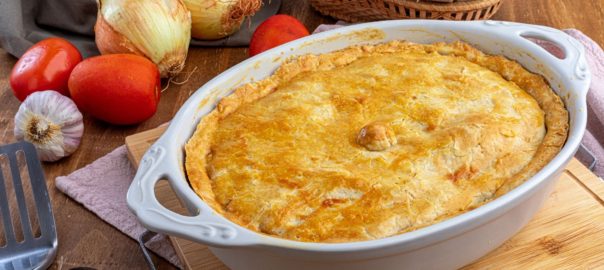
One of my favorite meals is pot pie.  When the weather gets cold and wintry, there is nothing more warming and delicious than a pot pie.  It’s also a wonderful convenience dish. Filled with meat and vegetables, it’s a meal in one dish.

What’s in the box?

For many people pot pie is something that comes in a box from the freezer section at the grocery store. While certainly convenient, these tend to come with a variety of ingredients that are not a great choice. Here, for example, is the ingredient list from

Stouffer’s White Meat Chicken Pot Pie:
Water, Chicken Meat White Cooked, Flavor(s) Chicken, Chicken Powder, Chicken Broth Dehydrated,
Food Starch Modified, Carrageenan, Cellulose Gum, Dextrose, Flavor(s), Salt, Whey Protein
Concentrate, Mono and Diglycerides, Cream Whipping, Apple(s), Flour Bleached Enriched, Wheat
Flour Bleached Enriched, Carrot(s), Celery, Chicken Fat, Egg(s) Yolks Dried, Niacin, Milk Non-Fat
Dry, Onion(s), Peas, Polysorbate 80, Iron Reduced, Salt, Sodium Citrate, Chicken Base, Contains BHA,
Contains BHT, Canola Oil, Caramel, Corn Syrup Solids, Lard, Maltodextrin, Riboflavin (Vitamin B2),
Soy Lecithin, Thiamine Mononitrate (Vitamin B1), Corn Starch Modified

44 ingredients! Going through this list one by one would be a rather long endeavor so I’ll skip to the chase and point out that there are GMO’s, lots of chemicals, known carcinogens, possible MSG, probably pesticides, and potentially heavy metals in this box.  There’s also a nasty ingredient called carrageenan which can cause intestinal distress and has some other unpleasant side effects. Not very tasty in my book.

So what’s the answer?  

For me it’s making my own pot pie.  14 simple real food ingredients (15 if you include the seasoning on the meat).

Before when making pot pies I used to cook a chicken or a turkey and then dice up the leftover meat to use in a pot pie.  Certainly a convenient way to make use of the leftover meat, but rather time consuming.  Recently I had an epiphany.  Why not shred the meat instead.  I theorized that the shredded meat would be just as nice in the pot pie, but could potentially be made much easier than having to roast a bird, carve off the meat and then cut it up.

Using my crockpot, one of my favorite kitchen appliances, I made shredded meat overnight.  I actually wanted to try making pot pie and chili with shredded meat so I cooked enough meat for both dishes.  Using two turkey breasts and six chicken thighs (to get a good mix of white and dark meat), I put them in the crockpot with seasonings (I used Kirkland’s No Salt Seasoning and some fresh ground pepper) and 1/4 cup of nourishing broth.  I let it cook on low all night.  In the morning when I got up the meat was fully cooked and so tender that it shredded without any difficulty simply using two forks.  

Sidenote:  I use my crockpot overnight on a fairly regular basis.  I figure just because I’m asleep doesn’t mean my crockpot can’t be working for me.  Nourishing broth, soaking beans, overnight cereal, marinara sauce, all kinds of things work well in the crockpot overnight to be ready to use when you wake up in the morning.

Updating your pot pie

As much as I like pot pie, over the years I’ve become less and less enamored of the idea of eating my meals encased in a crust of dough, especially a gluten based dough.  Although it’s possible to make gluten-free pie crust, I’m not very good at it (and not particularly interested in spending the time on it these days).  So I’ve come up with an alternative.  I make dumplings and serve that as the top “crust.”  It’s delicious without being overwhelming in the way of simple carbs. It also requires a little less labor.  The dumplings are great because they provide just the right amount of toothsomeness to the pot pie; the right balance to top off the delicious filling.

Here’s my basic-ish recipe for a pot pie.  This recipe is for mushrooms and peas because that’s what I had on hand when I made it last.  Usually the vegetable part of a pot pie is somewhat flexible which is one of the things that makes it such a wonderful dish to have in your repertoire. The recipe does include bone broth which makes it tastier and more nourishing.  Enjoy!

GF Dumpling Pot Pie
Print
Ingredients
  1. Gluten Free Dumpling Crusted Pot Pie
  2. 10-12 baby bella mushrooms, cleaned and sliced
  3. 2 T. organic butter
  4. 1/4 C. gluten free flour (these days I'm using Namaste and really like it)
  5. 1 C. nourishing broth
  6. 2 C. whole fat organic milk
  7. 1 heaping t. dried onion
  8. 1/2 t. dried thyme
  9. 1 t. sea salt
  10. 3 C. shredded chicken
  11. 2 C. peas, frozen or fresh
Instructions
  1. Preheat oven to 400F
  2. Grease a 2 quart casserole dish
  3. Melt butter in a large sauce pan
  4. Add mushrooms and stir gently until mushroom soften
  5. Add flour and toss gently, coating mushrooms
  6. Add broth and milk, stirring well to incorporate fully and bring to a boil
  7. Reduce heat and add onions, salt, and thyme, cook 5-7 minutes until sauce begins to thicken
  8. Add meat and peas
  9. Top with dumpling crust
  10. Bake 30-35 minutes
The Ingredient Guru, Mira Dessy https://theingredientguru.com/
GF Dumpling
Print
Ingredients
  1. 1 cup gluten free flour
  2. 2 t. baking powder
  3. 1 t. dried parsley
  4. 1/2 t. dried dill
  5. 1/2 t. fresh ground black pepper
  6. generous pinch sea salt
  7. 1/4 cup organic butter
  8. 1/2 cup whole fat organic milk
Instructions
  1. Combine flour, baking soda, and seasonings mixing well
  2. Slice butter into thin pats and then blend into flour mixture until it resembles cornmeal
  3. Add in milk and combine fully until it forms a dough
  4. Drop by tablespoonfuls onto top of filling
The Ingredient Guru, Mira Dessy https://theingredientguru.com/

The Health Benefits Of Blueberries

Nutrient Dense and Delicious

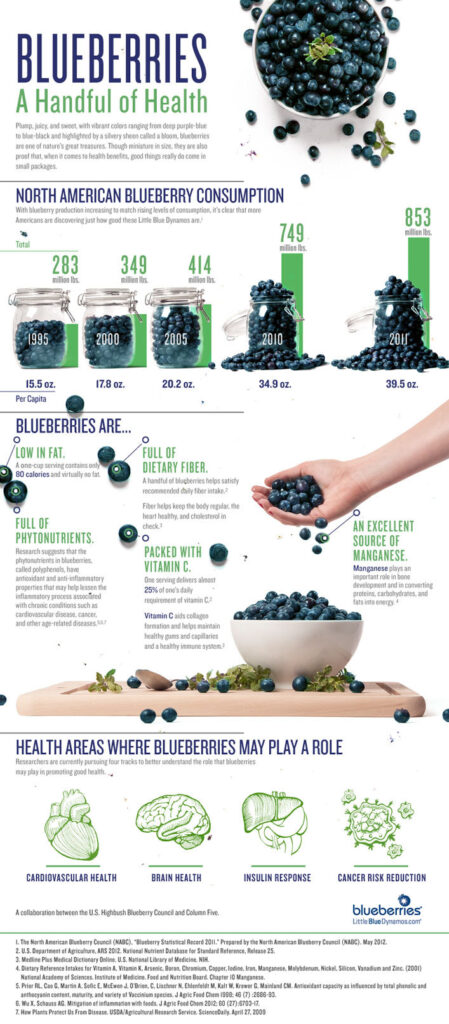
When it comes to clean eating and nutrient dense food choices, blueberries are at the top of the list. They’re a really good source of fiber, manganese, vitamins C, K, and a great source of antioxidants. Berries have been shown to be beneficial for cardiovascular health, supporting beneficial blood pressure levels, and to help improve insulin sensitivity. There is also evidence that eating blueberries can be supportive for cognitive health.

Another very important health benefit of eating blueberries is their high levels of pterostilbene and resveratrol. These are referred to as stilbenoids and this class of phytonutrient has been shown to be chemoprotective as well as to have tumor suppressant properties. In other words, these compounds may help lower your risk for getting cancer.

And, last but certainly not least, blueberries are also a low glycemic fruit. So not only are they tasty and nutrient dense, they have a lot of reasons to make them a healthy choice to add to your diet. Like many summer fruits, they do freeze well. This means you can buy them fresh in season (which is also less expensive) and freeze them to enjoy later.

Dirty Dozen Warning

Blueberries areoften found on the Environmental Working Group’s Dirty Dozen list. This list highlights the 12 fruits and vegetables that are most likely to retain high levels of pesticide residue. Chemicals that are known to be carcinogenic, neurotoxins, suspected hormone disruptors, and other toxins that are potential developmental or reproductive hazards. Some of the pesticides used are also known to be bad for honey bees.

These toxic pesticides cannot simply be washed off. The only way to avoid them is to buy produce that is grown without using them. Fortunately the rules of organic farming prohibit the use of these pesticides. So in order to avoid this type of chemical contamination it is recommended that you purchase Dirty Dozen produce items as organic rather than conventional.

One additional benefit of buying organic blueberries is that studies have shown those that are organically grown are higher in antioxidants and flavonoids. Another reason that organic is the healthier choice.

Recipes

Although they’re certainly delicious by the handful or sprinkled onto a salad or a dessert, blueberries can be added to a number of recipes. Here are two of my favorites to get you started.

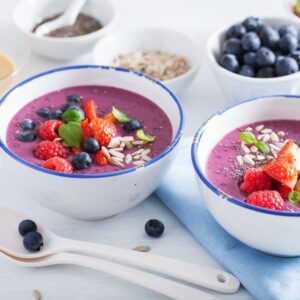
Blueberry Flax Smoothie Bowl

Smoothie bowls are a wonderful way to eat a smoothie. Rather than sucking it through a straw, you can add some crunchy, tasty bits to the top and eat it with a spoon. It’s also a great alternative to ice cream. Adding a coconut oil and the handful of spinach bumps up the nutrition just a bit. This recipe makes two servings, one for you and one to share.

Ingredients
  

  • 1 frozen banana
  • 1/2 cup frozen blueberries
  • 1 cup coconut milk
  • small handful of organic baby spinach
  • 1 tablespoon coconut oil, melted
  • 2 teaspoon ground flax
  • 1 teaspoon bee pollen
  • Toppings:

    2 tampons cacao nibs

    1 teaspoon goji berries

    1 teaspoon coconut flakes, uncultured and unsweetened

    1 teaspoon hemp seeds

    few blueberries

Instructions
 

  • Place all ingredients into a high-power blender and blend on high until thoroughly combined. If needed add a little more coconut milk, or water, to continue blending.
  • Pour the mixture into two bowls and sprinkle with toppings.

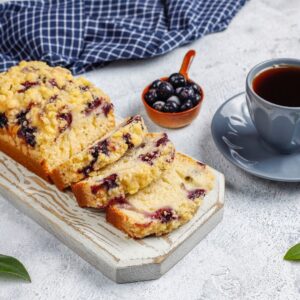
Gluten Free Blueberry Coffee Cake

Coffee cake is a tasty afternoon snack. Perfect when visiting with a friend or as part of an afternoon snack. Not too sweet, this recipe is also a wonderful addition to a Sunday brunch board. For a refreshing twist add lemon zest instead of cinnamon for the topping.

Equipment

  • Preheat oven to 350 F
grease and flour a 9 x 9 baking pan

Ingredients
  

  • 1 cup buckwheat flour


  • 1 cup gluten-free oat flour (if needed you can blend old fashioned oats in the blender to make a flour from them)


  • 1 cup evaporated cane juice crystals
  • 
1 teaspoon baking powder


  • 1/2 teaspoon sea salt


  • 1/4 teaspoon baking soda


  • 1 cup blueberries


  • 4 tablespoons butter, cold


  • 1/2 cup Greek yogurt
  • 
1/2 cup unsweetened almond milk

  • 
1 large egg


  • 1 teaspoon pure vanilla extract
  • topping:

    1/2 cup gluten free rolled oats

    1 teaspoon cinnamon

    1/2 cup evaporated cane juice crystals

    1/4 cup chopped walnuts

    1 teaspoon pure vanilla extract

Instructions
 

  • Mix together all of the dried ingredients

  • Shred butter into flour mixture using the large side of a box grater

  • Mix butter into the flour mixture with your hands until the mixture resembles coarse crumbs

  • Add blueberries and toss well to coat
  • 
In a separate bowl mix together yogurt, almond milk, egg, and extract, blend well

  • Pour liquid ingredients into dry ingredients and quickly blend together, do not over mix the batter
  • 
In a separate bowl mix together topping ingredients

  • Spread topping evenly on the coffee cake
  • 
Bake for 25-30 minutes until the top of the coffee cake springs back lightly when tapped

  • Remove from oven and cool
  • 
Serve warm or room temperature

Don’t forget to check out more tasty blueberry recipes below
July national blueberry month
Blueberry Mojito Mocktail

[expand title="Sources"]

Kosuru R, Rai U, Prakash S, et al. Promising therapeutic potential of pterostilbene and its mechanistic insight based on preclinical evidence. European Journal of Pharmacology, Volume 789, 15 October 2016, pages 229-243.
Krikorian R, Shidler MD, Nash TA et al. Blueberry Supplementation Improves Memory in Older Adults. J Agric Food Chem. 2010 April 14; 58(7): 3996-4000. 2010.
Kursvietiene L, Staneviciene I, Mongirdiene A, et al. Multiplicity of effects and health benefits of resveratrol. Medicina, Volume 52, Issue 3, 2016, pages 148-155.
Mayumi, D, et al. Effects of blueberry and cranberry consumption on type 2 diabetes glycemic control: A systematic review, Critical Reviews in Food Science and Nutrition, 13 Feb 2018. 59:11, 1816-1828
Miller, K, et al. Bioactive Compounds of Strawberry and Blueberry and Their Potential Health Effects Based on Human Intervention Studies: A Brief Overview. Nutrients 2019, 11(7), 1510.
USDA Food Data Central - https://fdc.nal.usda.gov/fdc-app.html#/food-details/786762/nutrients
Wang, SY, et al. Fruit Quality, Antioxidant Capacity, and Flavonoid Content of Organically and Conventionally Grown Blueberries. J. Agric. Food Chem. 2008, 56, 14, 5788–5794. Publication Date:July 1, 2008.
What’s On My Food - http://whatsonmyfood.org/food.jsp?food=BB
Wood, E, et al. Blueberries and cardiovascular disease prevention.

[/expand]

Turn Your To-Do List Into A Ta-Da List

I’m a fan of using a bullet journal. It really helps me to stay on track, keep thoughts organized, and is a flexible planner for how my brain works.

One thing I have in my journal is a Ta-Da List — a rolling list of what I did/completed each day. It’s not a To-Do list. It only gets written after things are done. And there are a couple of reasons why.

1. It allows me to see where my time went and, if needed, to adjust my schedule.

For example, at one point I saw that I was getting a lot of unscheduled phone calls (when I have phone calls or meetings I log them plus the amount of time I spent on the call). I then shifted to make Tuesday and Thursday morning phone call times and started telling everyone.

I also set a mental limit on how long I would be on the phone for unexpected phone calls. Letting the caller know that “I’m at work and only have 15 min”. It really helped. Like many in this group, often those who have my phone number seem to think, even though they know I’m self-employed, that I’m always available.

2. I also evaluate other tasks to see if there is a way to improve or make them more efficient.

If there are certain tasks that are repetitive can I automate them? Are there things that I am doing that might be better to assign to a team member? Are there hints I do that I just shouldn’t be doing at all m

3. I can see how long certain tasks actually take.

I use the Pomodoro method to notate how many units each task took. I tend to suffer from what I call time suck disorder. I don’t always realize how long things are going to take. Time management and time flow awareness are one of the difficulties faced by people with ADD. It can get in the way of productivity and a balanced focus. So it’s challenging when I plan for something that doesn’t happen in the time frame I’ve allotted. My Ta-Da list reminds me of what I did get accomplished and has helped me learn to shift my time thinking.

4. I get the satisfaction of getting things done and seeing them in the list.

All too often, when I was doing only a traditional To-Do list, I would be discouraged. Yes, I got things done, but the number of unchecked boxes was overwhelming. Now, borrowing from Brendan Burchard’s High-Performance Planner (which I still use every day also) I track the three most important things that have to be done for the day. This means no. Ore endless to-do lists. It forces me to focus on what HAS to be done. The rest of it is being aware of what I’m doing.

In my opinion, using a Ta-Da List has made my life much more streamlined, easier to pivot where needed, and less stressful.

Who in this group also uses a bujo?

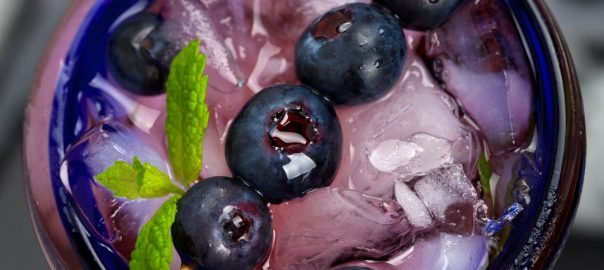
Blueberry Mojito Mocktail Recipe

There’s something really refreshing about a cool crisp summer drink. Especially one that highlights the fabulous flavor of blueberries. At this point in my life, I choose to no longer drink alcohol (not that I ever drank that much to begin with). It turns out lots of people feel the same way I do and are choosing to eschew the alcohol.

But while more people are drinking less, there aren’t that many delicious choices for us. So I came up with this fruity, sparkling mocktail recipe. I think it’s perfect that it uses blueberries because July happens to be National Blueberry Month. If you really want to mix things up you can substitute raspberries or white peaches for the fruit and make a red, white, and blue mocktail bar to share with the family.

Blueberry Mojito Mocktail

Servings -9

Ingredients
  

  • 8 oz Kevita brand Lime Mojito Coconut sparkling drink

  • 3 Tablespoons simple syrup (recipe below)
  • 3-4 fresh mint leaves
  • 1 heaping tablespoon fresh fruit (dice the peaches if using)
  • Crushed ice

Instructions
 

  • Place fresh fruit in the bottom of a tall glass
  • Add crushed ice
  • Mix together Kevita and simple syrup and pour over ice
  • Garnish with mint leaves
    Enjoy!

Fruit Syrup

Ingredients
  

  • 1 cup fruit (blueberries, raspberries, or diced white peaches), mashed
  • 1 cup organic cane juice crystals
  • 1 cup water

Instructions
 

  • Place all ingredients in a small saucepan
  • Bring to a boil
  • Reduce to medium heat and cook, stirring frequently, until sugar is dissolved
  • Let cool to at least room temperature before using

Delicious in more than just beverages, blueberries are a fabulous, healthy fruit. Learn more about them here plus grab a great muffin recipe.

July Is National Blueberry Month

Blueberry season is here! And there is nothing more fabulous than having fresh blueberries to eat.  They’re so wonderful that they even have an entire month devoted to them; July is National Blueberry Month.

Just by themselves, blueberries are a wonderful snack.  In a fruit salad, they are amazingly tasty.  Baked into a myriad of treats such as muffins, cobblers and pies they are indescribably delicious.

Blueberry Basics

Blueberries are native to North America and related to cranberries, another distinctive North American fruit.  They are high in antioxidants; anthocyanin which is beneficial for collagen especially as it relates to capillary and vascular support, and ellagic acid which is helpful in protecting against cancer.  Blueberries are also rich in vitamin C, manganese and are a good source of fiber.  Studies show them to be effective in helping to protect against Age Related Macular Degeneration (ARMD), colon cancer, and ovarian cancer.

Organic or conventional?

Domestic, conventionally grown blueberries have been found to have over 40 different pesticide residues. Some of these pesticides are known or potential cancer-causing agents, others are suspected to be hormone disruptors or neurotoxins. Unfortunately, a number of them are also toxic to honeybees (required to pollinate the blueberries, go figure). This means that when buying blueberries it’s important to choose organic over conventional.

Some years the pesticide level is high enough that blueberries are a part of the Environmental Working Group’s Dirty Dozen [https://www.ewg.org/foodnews/full-list.php] list. Other years they aren’t in the top twelve. However, even if they’re not on the top twelve list, they’re still close to it. Buying organic means that you do not have the high levels of pesticides often found in conventional produce.

If you’re fortunate enough live near a pick-your-own, organic/sustainable/regenerative agriculture blueberry farm it can be the work of a morning to pick several pounds. Blueberries freeze quite well; that one day of hot sweaty work can yield a year-long bounty of delicious treats.

How to eat blueberries

“By the handful fresh out of mama’s picking bucket.”

Sun-ripened, fresh off the bush blueberries are bursting with flavor and definitely hard to pass up. When my children were little and we used to go blueberry picking I used to joke that it was a good thing I was a fast picker. With three little girls who all LOVED blueberries, their picking efforts often meant serving as tasters to make sure what was going into mama’s bucket passed inspection.

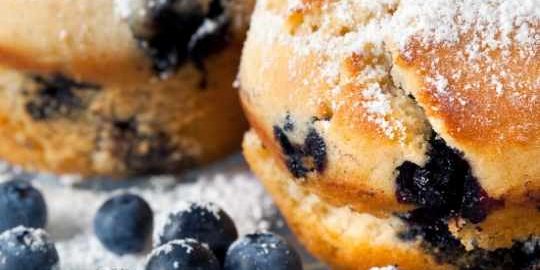
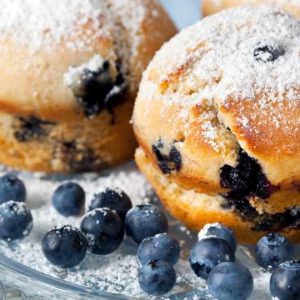
This is one of the first recipes I make each year after going blueberry picking (once my family is done plundering the basket). These muffins make a great snack and always go quickly in my house. They’re moist, super tasty, and, if you’re trying to make them last, they do freeze well.

Best Blueberry Muffins

Ingredients
  

  • 1 cup gluten-free oatmeal1 cup gluten-free flour
  • 1 teaspoon lemon zest
  • 1/2 cup pecans, chopped
  • 1 teaspoon baking powder
  • 1/2 cup organic whole milk
  • 1/4 cup organic sour cream
  • 2 tablespoons melted organic coconut oil
  • 1/2 cup honey (use raw and local)
  • 1 cup blueberries

Instructions
 

  • Preheat oven to 350 F
  • Grease muffin tin
  • In a large bowl mix together dry ingredients
  • Add milk, sour cream, coconut oil, and honey, blending well
  • Fold in blueberries
  • Divide mixture into muffin tins
  • Bake 15 minutes or until done

For another delicious blueberry recipe check out these mojitos.

Refreshing Recipes To Celebrate National Avocado Day

Avocados are more than simply a delicious and creamy fruit. They’re actually a wonderfully healthy addition to any clean eating nutritional plan.

Avocado nutrition profile


Avocados are an excellent source of fiber, pantothenic acid, vitamin K, copper, and folate. They are also a good choice for getting your potassium. Believe it or not, one serving of avocado has more potassium than a serving of banana.

One of the biggest benefits of avocados is that they are a very healthy source of beneficial monounsaturated fatty acids. This helps you to absorb more nutrients, like fat-soluble vitamins (A, D, E, and K). Fat is also important for helping your body to absorb carotenoids found in things like dark leafy greens. All of which makes adding avocado on your salad (and in other dishes) a really good choice.

Health Benefits of Avocados


Avocados have been shown to be good for heart health. Studies indicate that eating avocados can help to lower cholesterol. And eating them may also increase HDL (High-Density Lipoproteins, the “good” cholesterol) while reducing LDL (Low-Density Lipoproteins, the “bad” cholesterol), and triglycerides.

Another health benefit of avocados is their antioxidant benefits for eye health. They provide zeaxanthin and lutein which may reduce the risk of developing cataracts or macular degeneration.

Contrary to popular beliefs about their fat content, eating avocados may actually help with weight management. This is because the healthy fat and fiber in avocados can help you to feel full after eating. It may also help decrease the desire to overeat. And, if that’s not enough, this high fiber and healthy fat profile may also help to balance blood sugar. This is encouraging for those who want to add avocados as part of a weight management plan.

Celebrate Avocados


Chock full of nutrients and so very delicious, there are a lot of tasty ways to add avocados to your meal planning. I’m talking more than just using it for a salad or making guacamole and chips. Here are three amazing recipes to help you think differently about avocados and get more avocado goodness into your diet.

Avocado Kiwi Bowl

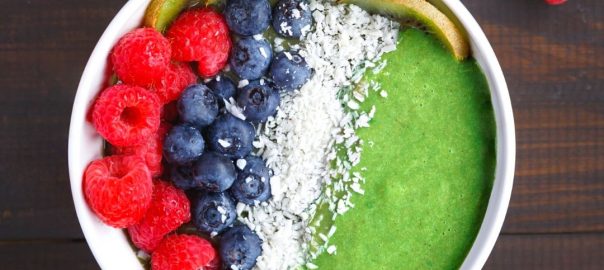
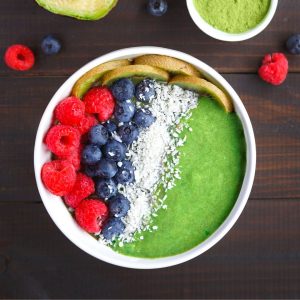
Everyone loves smoothies. They're a quick and easy way to get a lot of nourishing ingredients. In my opinion smoothie bowls are even better you can include some yummy toppings. Here's a simple and tasty bowl that's sure to be a summertime hit.

Ingredients
  

  • 1 cup kale leaves
  • 1 cup coconut milk
  • 1 small banana
  • 1/2 avocado
  • 1/2 cup ice
  • 1 tbsp maple syrup or honey
  • 1/2 cup raspberries
  • 1 diced kiwi fruit
  • 1 tsp hemp seeds

Instructions
 

  • Put the coconut milk into the blender
  • Add the avocado, ice, kale, and 1/2 of the banana
  • Blend until fully combined
  • Top with raspberries, the other half of the banana- sliced, and sprinkled with the hemp seeds
    Enjoy!

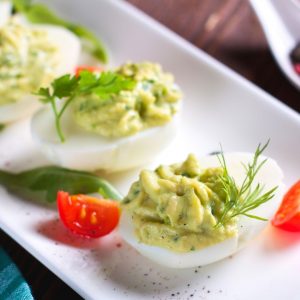
Avocado Deviled Eggs

Who doesn't love deviled eggs? They're always a hit at any social gathering. If you're looking for a way to make your deviled eggs stand out try this tasty twist.

Ingredients
  

  • 8 large eggs

  • 2 medium

    avocados


  • 1 tbsp lemon juice
  • 
1½

    tbsp

    
avocado mayonnaise*

  • ½ tsp garlic powder
  • 
½

    tsp

    
onion powder

  • ½ tsp paprika
  • 
½

    tsp

    
crushed red pepper flakes (optional)

  • 3 tbsp fresh parsley
  • minced
 sea salt and fresh ground black pepper, to taste


Instructions
 

  • Place eggs in a large pot, cover by an inch or two cold water and bring to a rolling boil
  • Cover and turn off heat
  • Let the eggs sit, covered, for 11-12 minutes
  • Drain the eggs and rinse in cool water
  • Peel eggs and slice in half lengthwise

  • Remove the yolks and place in a small mixing bowl
  • Arrange the egg whites on a plat
  • To the yolks add avocado, lemon juice, avocado mayonnaise, garlic powder, onion powder, paprika, and red pepper (if using)
  • Season to taste with sea salt and fresh ground black pepper
  • Mash all ingredients together until well combined
  • Spoon one tablespoon of mixture into each egg half
  • Top with fresh parsley
    Can be served immediately or refrigerated to serve later
    Enjoy!

Notes

*If you do not have avocado mayonnaise [link: https://amzn.to/3fMziWM] you can use regular mayonnaise. However, the flavor of the avocado mayonnaise improves the taste of these eggs

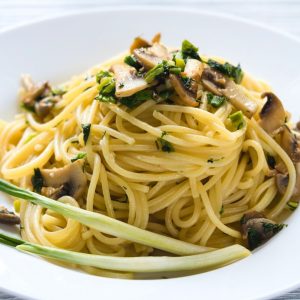
Avocado Carbonara

Who doesn't love a good carbonara recipe? The use of avocado in this dairy-free version is delicious and creamy without, well, the cream. And serving it over zoodles makes this a veggie-rich dish anyone would love.

Ingredients
  

  • 1 medium-sized ripe avocado
  • 1/2 cup lemon juice
  • 3 cloves garlic
  • pinch of salt
  • 1/4 cup parsley
  • 1/4 cup basil
  • 2 tbsp olive oil
  • 1/3 cup raw pepitas
  • 1/2 cup baby portabella mushrooms, cleaned, sliced
  • 1 tbsp extra virgin olive oil
  • 1/4 cup pomegranate arils (optional)
  • ground pepper
  • 2 zucchinis - zoodled

Instructions
 

  • Cook the pasta
  • Place zucchini into a colander
  • Drain pasta into zucchini
  • Rinse and set aside
  • In a separate pan saute mushroom slices in olive oil
  • When done take off the heat and set aside
  • Place lemon juice, garlic and olive oil in a food processor or blender, blend until smooth
  • Add avocado, parsley and basil, process until smooth
  • Gently fold together the sauce, pasta, and zucchini
  • Garnish with mushrooms, pepitas, and pomegranate
    Serve and enjoy!

[expand title=”Sources”]

Alvizouri-Muñoz, M et al. “Effects of avocado as a source of monounsaturated fatty acids on plasma lipid levels.” Archives of medical research vol. 23,4 (1992): 163-7.

Carranza, J et al. “Efectos del aguacate sobre los niveles de lípidos séricos en pacientes con dislipidemias fenotipo II y IV” [Effects of avocado on the level of blood lipids in patients with phenotype II and IV dyslipidemias]. Archivos del Instituto de Cardiologia de Mexico vol. 65,4 (1995): 342-8.

Delcourt, Cécile et al. “Plasma lutein and zeaxanthin and other carotenoids as modifiable risk factors for age-related maculopathy and cataract: the POLA Study.” Investigative ophthalmology & visual science vol. 47,6 (2006): 2329-35. doi:10.1167/iovs.05-1235

Khachik, F et al. “Identification of lutein and zeaxanthin oxidation products in human and monkey retinas.” Investigative ophthalmology & visual science vol. 38,9 (1997): 1802-11.

López Ledesma, R et al. “Monounsaturated fatty acid (avocado) rich diet for mild hypercholesterolemia.” Archives of medical research vol. 27,4 (1996): 519-23.

Wien, Michelle et al. “A randomized 3×3 crossover study to evaluate the effect of Hass avocado intake on post-ingestive satiety, glucose and insulin levels, and subsequent energy intake in overweight adults.” Nutrition journal vol. 12 155. 27 Nov. 2013, doi:10.1186/1475-2891-12-155

[/expand]

Avocado Carbonara Recipe courtesy of Linda Rosario

Healthy At Home Journaling Prompts

Journaling for better health

If you’re looking to improve your health and wellbeing there may be a strategy to help that you’re overlooking. Journaling. It turns out that there are a lot of ways that using a journal can be good for you. It can be a supportive strategy for stress relief, help you work out problems, boost your memory, and has also been shown to be good for mental health.

Does journaling really help?

There are a lot of studies that have been done around the idea of journaling and its benefits. Here are just a few ways that it can be helpful for you:

  • Health benefits – a study of undergraduate college students found that journaling increased wellbeing, decreased illness, and, over time, even helped to decrease the ill effects of dealing with trauma
  • Improves cognitive function – writing, as opposed to typing, has been shown to improve your ability to acquire, process, and recall information. One article found that writing was useful when it came to learning both math and science. 
  • Better learning skills – according to research published in Psychological Science students who wrote longhand, as opposed to those who typed using laptops, were better able to learn material. Journaling can be a way of recording and deepening your understanding of yourself and/or what you’re writing about.
  • Remember significant events – life can be very full and there are lots of distractions. Journaling about moments, events, or people that are noteworthy or important to you can be a way to create an accurate accounting of what you want to remember accurately.
  • Organizing your thoughts – sometimes there’s so much going on that it can be difficult to keep all of your plans and goals clearly in mind. Writing it down can be a positive way to stay on track. Plus writing down your goals increases your chances of succeeding at them.
  • Better healing – studies have found that journaling can have a positive impact on how well the body heals. According to the research this includes healing from IBS, asthma, rheumatoid arthritis, and wound healing.
  • Improves mental health – studies have found a positive shift in mental state among those who journaled, this included those with cancer, Parkinson’s, and other health conditions.

Give it a try

With all these benefits from journaling you’re probably curious as to whether or not it could work for you. Why not give it a try?  History is filled with people who journaled – Beatrix Potter, Marie Curie, Benjamin Franklin, Thomas Edison, Lewis Carroll, Leonardo Da Vinci, Mark Twain and so many others. They wouldn’t have journaled if they didn’t get at some benefit out of it.

Take advantage of the fact that this is a low-cost, easy to do activity that can be good for your health. Spend the next 30 days engaged in a journaling practice and see how you feel at the end. Chances are you’ll notice some benefits and want to keep going.  

I don’t know what to write

If you’re stuck for something to journal about I’ve got your covered.  Here are 50 topics, pick one at random and spend a few minutes each day journaling about it. 

1. What does it mean to you to be healthy?
2. What have been your biggest health struggles while being at home?
3. How has your mental health been?
4. What has been giving you anxiety?
5. What are your biggest fears during quarantine?
6. How has your physical health changed?
7. What weight trends have you noticed recently?
8. How has your diet changed since spending more time at home?
9. What is causing you the most worries?
10. How has your exercise routine changed?
11. Are there any home workouts you have tried?
12. Pick at least 3 new at-home workouts you can try in the next week.
13. Pick an exercise you can do with others you live with.
14. What do you think is the most important aspect of nutrition?
15. What are some healthier food items you can add while at home?
16. To improve your nutrition, try adding some structure to your day, then journal about your experience.
17. How have your cravings changed since you have been home?
18. Do you feel you are a boredom eater?
19. Have you noticed any emotional eating tendencies?
20. Go outside to walk and get fresh air, then journal how you feel afterwards.
21. What is a way you can embrace and take advantage of being at home?
22. What are the main sources of your stress lately?
23. What are some stress-relieving activities you have tried?
24. What hobbies have been keeping you busy?
25. How are you dealing with your kids’ health and wellness while being at home more often?
26. In what ways are your kids getting exercise?
27. How are you focusing on proper nutrition for your kids?
28. Try creating a new daily routine that encourages healthy habits.
29. What are 5 things you miss from before you were quarantined?
30. What are 5 things you look forward to when things get back to normal?
31. Name 5 people you can’t wait to spend more time with.
32. What are 5 things you can be grateful for right now?
33. Make a list of healthy snacks you can add to your diet.
34. How have you been socializing lately?
35. List some ways you can reach out to people more.
36. What is something you have always wanted to try?
37. If your productivity is suffering, what are some reasons you think that is?
38. Give yourself a break – what are some things you believe you have done right?
39. List self-care activities you have participated in it while being at home.
40. List some NEW self-care activities for your shelter-in-place time?
41. What is a creative activity you can try while being at home?
42. List the main things that have been on your mind lately.
43. When you think of how you spend your time when you are bored, what comes to mind first?
44. When the shelter in place orders are lifted, what is a way you can get out more?
45. How has quarantine changed your mindset?
46. What do you think you took for granted before quarantine?
47. Have you read any books while in isolation?
48. How do you think life will be different moving forward.
49. What are some changes you have made that have improved your health so far?
50. List 10 ways you can be physically and mentally healthier while at home.

Feel free to share this post, and list of ideas, with the people you love and enjoy journaling! 

[expand title=”Sources”] 

King, L. A. (2001). The Health Benefits of Writing about Life Goals. Personality and Social Psychology Bulletin27(7), 798–807.

Mueller, P. A., & Oppenheimer, D. M. (2014). The Pen Is Mightier Than the Keyboard: Advantages of Longhand Over Laptop Note Taking. Psychological Science25(6), 1159–1168.

Murphy, M. Neuroscience Explains Why You Need To Write Down Your Goals If  You Actually Want To Achieve Them. Forbes. April 15, 2018.

Willis, J. The Brain-Based Benefits of Writing for Math and Science Learning. Edutopia.org. July 11.2011. Accessed June 5, 2020.

[/expand]