All posts by Mira


About Mira

Mira Dessy is The Ingredient Guru. A holistic nutrition professional, author, and a popular public speaker, she knows that it's not just what you eat, but what's in what you eat. She is the author of The Pantry Principle: how to read the label and understand what’s really in their food. Dessy is a Board Certified Holistic Health Practitioner whose mission is to educate and empower consumers. She curates the Lean Clean Green Subscription box, the premier, organic, earth-friendly, healthy, sustainable subscription box which can be found online at https://theingredientguru.memberbox.com

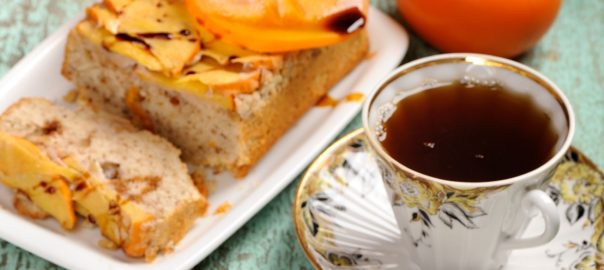
Persimmon Tea For Acid Reflux


Persimmons are a beautiful, fragrant, sweet berry available in the Fall.  Some varieties can be eaten while still slightly firm although most varieties taste best when allowed to ripen to an almost mushy consistency. Dried persimmons are a way to enjoy this delicious treat throughout the year and are available at Asian markets.

Commonly offered after traditional Asian meals as a digestion aid, persimmon tea, sometimes called "persimmon punch," also alleviates the symptoms associated with gastroesophageal reflux disease or GERD. GERD symptoms occur when stomach contents rise into the esophagus, which produces irritation.

Acid reflux sufferers often experience varying degrees of heartburn, a feeling that food remains stuck in the region of the sternum, or nausea and regurgitation after meals. Various factors contribute to GERD including a hiatal hernia or a weakened sphincter between the stomach and esophagus. Certain medications, obesity or pregnancy may also create the condition.

Persimmons are known, not only for their antimicrobial properties, but also contain vitamins A, C, and ten different minerals. The tea, made from simple ingredients consisting of persimmons, ginger, cinnamon, and sugar, offers a number of health benefits that include diminishing flatulence and the discomfort that accompanies GERD.

Making the tea merely requires boiling the persimmons, adding the spices and sugar, and cooling the mixture. Some believe the secret of the remedy lies in the cinnamon and ginger components of the tea.

Cinnamon originated in China and using the bark as a spice and health remedy dates back thousands of years. The popular spice offers anti-inflammatory and antimicrobial properties as well as providing it's antacid properties, relieving excess gas and calming diarrhea. Ginger also has a long history in alternative medicine for relieving nausea and having anti-inflammatory properties.

Persimmon Tea

Ingredients
  

  • 2 quarts water
  • 3 cinnamon sticks
  • 2 tablespoons of fresh ginger root, sliced
  • 1 cup dried persimmons
  • 3 tablespoons evaporated cane juice crystals

Instructions
 

  • Simmer the water, cinnamon sticks and ginger in the saucepan for approximately 45 minutes.
  • Add the persimmons and cane juice crystals.
  • Simmer for an additional 15 minutes.
  • Remove from heat and allow the mixture to steep for one hour.
  • When cooled, strain the liquid, discarding the solid ingredients.
  • Refrigerate the concentrated tea and enjoy as needed, hot or cold.

Many people enjoy drinking the concentrated tea while others add a few tablespoons of the liquid to other beverages, which also provides symptomatic relief. Individuals suffering from acid reflux typically consume three to four ounces of persimmon tea before or with meals and before going to bed. The sweet, spicy flavor of the tea appeals to many and GERD suffers appreciate the beverage's calming effects.

This simple home remedy remains worth a try for people plagued with the discomfort associated with gastric disorders. Some claim that including persimmon tea with an acid reflux diet and lifestyle modifications may reduce the need for prescription medications however GERD patients should consult with their primary care provider before eliminating any prescription medications.


Rowena Kang is a writer and the Outreach Director for the Morgan Law Firm, a firm that represents clients going through a divorce in Austin.


National Caregiver’s Month – Part 1

November is National Caregiver’s Month.  A time to focus on those who care for others, expecially if that caregiver is ourselves.  Dr. Vicki Bradley has created Self-Care Reminders for Caring Professionals and Family Caregivers to focus on those very special people.  She has generously offered to write a four-part series about self-care and we’ll be sharing it on the blog throughout the month.  

“Filling up Our Giving Wells”

The metaphor of a Well has helped hundreds of people in my workshops (and me!) imagine caring for ourselves, so we can better care for others. This is the way it works: If our Wells are empty, then we don’t have much to give to others. If our Wells are full, then we can do great things for them. And, by the way, we have also found that caring for ourselves makes us happier, too! The following two self-care reflections use the Well metaphor to encourage caregiver self-care. Both reflections are adapted from my book, Self-Care Reflections.

Continuum of Self-Care

I offer the following options as a way to assess our own self-care. Remember, our family members need us (and we’re worth it). Our self-care matters!

“Empty Well” – Loss of Self
Signs – No good well-filling ideas; belief that there is no time to care for self
Feelings – resentful, depressed, pessimistic

“Half Full Well” – Struggling to Care for Self
Signs – May have good self-care ideas, but difficult to implement or remember
Feelings – tired, cranky, overwhelmed

“Full Well” – Self-Caring
Signs – “Self-care” flows in and “giving” flows out in equal measure
Feelings – grateful, happy

Where are you on the continuum of self-care?
If you want a “fuller Well” keep reading . . .

Tiny Buckets We may be worried that taking care of ourselves will be too time-consuming or difficult. However, some of the simplest ways to refill our Wells can be thought of as “tiny buckets.” Tiny buckets do not carry much water, but they are easy to carry. In other words, we can easily do simple things each day to care for ourselves. For example, I love being prepared to write at a moment’s notice. I really do like to write. A technologically-advanced gadget cannot fill this role in my life. I keep pens and scratch paper everywhere – on my desk, on the kitchen table, in my purse, and in my car. Any time I have an idea or remember something I need to do, I just write it down. I have a system that works for me. This “tiny bucket” really makes me feel good! Small things don’t take much time and can easily become part of our routine. Small ways of caring for ourselves can be easily implemented. All of the small ways to care for ourselves do add up to a fuller Well!

What are your “tiny buckets”?

The mission of Self-Care Reminders is to encourage caring professionals and family caregivers to care for ourselves, so we can better care for others (and we’ll be happier, too). Contact Vicki to purchase the book Self-Care Reflections, or a set of Self-Care Option Cards, or to schedule a “Filling up Our Wells” workshop.

Quitting Smoking (the Holistic Way)

The Great American Smokeout is on November 15th this year.  Created in 1977, this is a day set aside as a national effort toward encouraging and supporting people to quit smoking.  Today’s article is written by Alex Kerwin, a creative writer from Michigan.  In addition to his work as a guest writer, Alex works closely with Best Drug Rehabilitation, helping people find drug rehab programs to aid in their recovery.

There are plenty of studies linking cigarettes to various diseases and health problems, and many people have surely witnessed disturbing ads on TV, which illustrate the dangers of cigarettes by featuring former smokers who use tracheotomy devices to speak or bear scars from removal of a diseased lung. It’s clear that smoking is bad for our health. This increased awareness hopefully sparks more people to quit the habit, but the process is no doubt a test of determination and will power. Focusing on a holistic plan that emphasizes nutrition and exercise can help ease the process of kicking cigarettes to the curb—for good.

Many smokers fear that quitting will cause weight gain. Smoking cigarettes burns an extra 200-250 calories per day, depending on the number of cigarettes and the smoker. This can slightly elevate their metabolism. Nicotine also acts an appetite suppressant, so smokers tend to eat less. Quitting smoking can easily pack on the pounds for smokers who grab a cigarette because they’re stressed or want to feel calm. They may replace smoking with food, and since starchy and sweet foods that are high in carbohydrates increase serotonin levels, just like nicotine, quitters-in-progress can make the mistake of turning to unhealthy foods to get a similar fix.

In 2007, Duke University Medical Center conducted a study that showed dairy products, vegetables and fruits can help break the smoking habit. Nineteen percent of participants reported that dairy products worsened the taste of cigarettes, 14 percent had a similar effect with non-caffeinated beverages, and 16 percent reported the effect with vegetables and fruits. However, alcohol, caffeinated beverages and even meat, enhanced the flavor of cigarettes.

With the average person gaining four to ten pounds after quitting smoking, choosing low-glycemic foods that are filling and help regulate blood sugar levels can help control weight. Foods rich in fiber, such as fruits, vegetables, and nuts, along with lean, protein-rich sources such as beans, fish and egg whites, can result in a satisfying meal that’s low in bad fats and high cholesterol. Providing the body with proper nutrition from natural foods boosts antioxidants, aiding the immune system that might have been damaged by smoking.

Smoking is both physically and emotionally addictive, which only increases the difficulty of quitting. However, a smoker can choose from several options to help gain support in their journey. Consulting a doctor on a regular basis to help with exercise and nutrition plans or joining a support group can aid in recovery. Choosing to participate in a holistic drug rehab program is also beneficial, as these programs emphasize a detoxification process through proper nutrition, exercise, and spiritual exploration to help understand emotions and deal with stress. By discovering what led the person to smoke in the first place, they might be less likely to relapse and start again.

It’s important to remember that quitting is a process—be patient with your body and allow it to detoxify the natural way. Avoid crash diets and give your body time to restore its balance so it can provide for you in the future. By getting in tune with your body and your mind, you’ll appreciate the benefits of quitting smoking even more and realize that cigarettes are part of a problem, not a solution.

photo: Challiyil Eswaramangalath Vipin

Gmo: What You Need To Know

As election day draws nearer there is an enormous amount of attention being paid to what the voters will do at the polls.  California is in the forefront of the move to label GMOs in food.  Other states have considered it but as of yet none have actually passed such a bill.  The general thinking is that if one state passes this legislation manufacturers will be forced to change all of their labeling nationwide in order to not have to create two forms of packaging.

The battle has been heated and intense with both sides contributing money to try to reach out to California voters and garner their support.  The chain of food ownership has become startlingly clear as the Cornucopia Institute put together this infographic showing who contributed what to the campaign.  Consumers were truly able to see that although companies like Cascadian Farms Organic, Larabar, and Kashi have a reputation as being consumer friendly and producing clean products, they are in fact owned by major corporation such as Kellogg and General Mills.  These giant food producers have a vested interest in maintaining our state of ignorance and have contributed hundreds of thousands of dollars to try to convince consumers to vote against GMO labeling.

This is not just an issue that we face here in the US.  All over the world governments and consumers are rethinking the use of GMO.  Just last month Russia suspended the use of GMO corn after a controversial French study showed ill effects in lab animals.  This study has since been brought into question however many of the issues it raised are valid and warrant further study.

This is not, however, the first time that there have been issues with GMO corn.  Back in 2005 there was a German study which showed severe health effects and damage to the liver and kidneys causing the German government to call a halt to the use of the corn.  A 2009 study done in Austria showed that there was a link between GMO crops and a decline in human fertility.

In August of this year two Australia farmers began to travel around New Zealand educating farmers against GMO crops.  As is the case here in the US, those that do not want GMO crops have no recourse if their fields are “accidentally” contaminated.  However there is no way for them to protect against wind, flood, and animals carrying seed.  All of these are potential methods of contaminating crops.  Monsanto has a known reputation for suing farmers for theft if their fields become contaminated, even if this contamination is against the wishes of the farmer.  The only way to protect against GM is to keep it out of the country.

In this video (1.5 hours but worth watching) Jeffrey Smith, the Executive Director of the Institute for Responsible Technology talks about GMO crops and their effects.

You can also watch the movie The World According to Monsanto to learn more.

If you want to read further about GMOs consider the following books:

At this point it may be difficult to stop the spread of GMO crops.  I believe it should be stopped and I believe it should be eradicated to the best of our ability.  But even more importantly I believe that we should have the right to know what’s really in our food.  I will be watching the election to see what happens in California.  I will be hoping that Californians lead the way in supporting our right to know what’s in our food.

photo: faul

Five Fabulous Fall Foods

Summer, that season of fresh salads, greens, berries, and melons all bursting with healthful vitamins and nutrients, has passed. Autumn, however, also please our palates, providing us with different gifts of nature. There are many seasonal fruits and vegetables, which are just as tasty as summer while delivering different health benefits. Here are some fabulous fall foods (depending on your location) and their health benefits.

Tomatoes – This berry provides high lycopene content, that rare plant pigment which imparts their red color to tomatoes and other fruits . According to several studies lycopene can prevent cancer, lower cholesterol, and appears to protect us from harmful ultraviolet radiation. In addition to lycopene, tomatoes are high in potassium, fiber and vitamin C, helps to strengthen the immune system before the influenza season.

Cabbage – High in fiber, which supports digestion, can lower cholesterol, and provides cardio-protective benefits, cabbage is also rich in antioxidants which can protect the body against many types of cancer (including breast, prostate and ovarian cancers). Another benefit of this versatile benefit is that cabbage juice has long been known for it’s healing effects on stomach ulcers.

Persimmon – Another berry, persimmons are high in fiber, and antioxidants. They also provide vitamins A, C, D, iron, potassium, calcium, copper, magnesium, manganese, and iodine. Persimmons can provide a fair number of health benefits from lowering blood pressure to being cardioprotective to it’s anti-tumor benefits. However, persimmons are also high in glucose and sucrose making them a poor choice for those suffering from diabetes.

Turnips – A root vegetable containing potassium, magnesium, sulfur, iron, sodium, iodine and manganese, turnips are anti-cancerous while their high fiber content make them a great choice to lower cholesterol and support a healthy digestive system. One of the great things about turnips are that you can eat the greens as well as the roots, making them a versatile food to add to your diet. And those greens are just as loaded with nutrients as the roots, containing vitamins A, C, K, and folate. Turnip greens are even high in calcium making them a good choice to support bone health.

Beetroot – Another root vegetable which has edible greens, beets are highly anti-inflammatory and support detoxification in the body. Beetroot is high in folate, manganese, fiber, potassium, and vitamin C while the greens are a great source of lutein and zeaxanthin, two phytonutrients which are especially supportive of eye health. While almost all products can be found in stores throughout the year, for freshness and higher nutritional content it is important to eat seasonally.

Adding these autumnal foods to your diet is not only tasty and easy, it’s also good for you.

Korah Morrison has been working as a freelance writer for over 2 years. She writes essays on various topics at Essay-Point.com and loves her work.

photo:  Jean-Pol Grandmont

Un-Stuffed Cabbage Casserole

This post, and delicious recipe, are from my friend Robin Horn over at Seasonal Eating.  A foodie from a very young age, Robin lives in Santa Cruz, California, and is a proponent of seasonal eating and CSAs.  

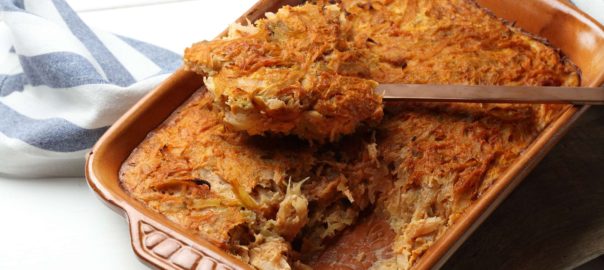
Cabbage is coming into season and there are so many delicious ways to serve it.  While I love stuffed cabbage I confess that the time it takes to make all those little rolls (especially compared to how quickly they get scarfed down) is somewhat of a deterrent.  This seems like a tasty solution, and since it makes 12 servings it would be great for a big family gathering (or for delicious leftovers).

Someday I will make stuffed cabbage leaves, the delicious galumkis that my mother and grandmother used to make…sort of. The family recipe was never written down, so this is a project for when time, patience, and creativity are simultaneously expanded.

In the meantime, working on my cooking goal of exploring my Polish cooking roots, I found a Weight Watchers stuffed cabbage casserole, and set out to make a no-beef, more easily prepared version.

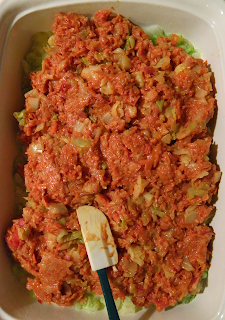
Because the original recipe had a number of cabbage leaves wrapped around one mound of filling, it was tricky to cut and serve—and to fill in the first place. So, I simply chopped all of the cabbage and put half in the filling and half beneath the filling, where all the juices from the filling drip down deliciously.

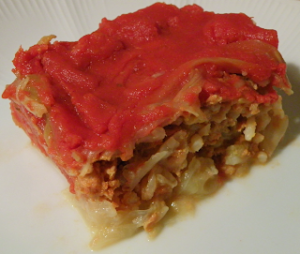
I topped the filling with a thin tomato sauce. Originally I tried a layer of cabbage on the top, but the tomato sauce dried out instead of flavoring the cabbage. So I replaced this layer with a few thin cabbage strips. The meat and rice filling right below the tomato sauce draw the tomato flavor down into the casserole because the uncooked rice is “thirsty.”

While not as time-consuming as stuffed cabbage leaves, there are many steps in this recipe and it must cook for 1½  hours. Just like stuffed cabbage, the leaves must be precooked. Save time by having two people chop veggies, measure and mix meat filling ingredients,  make the sauce, and assemble the layers.

You can use lean ground beef in this recipe if you prefer. I added paprika from my family recipe. You could choose various herbs, garlic powder, and/or a hint of cayenne. If you’re braver than I am, you can blend the meat mixture with your hands, like my Mom did. It’s faster, and if I’d had some latex gloves, I would have tried it.

 
Note from Mira:  I find it's simple to mix meat mixtures like this in my blender.  And since I'm often working with cold ingredients I don't get that chilled effect on my hands which I find unpleasant.


Un-Stuffed Cabbage Casserole

Servings 12

Ingredients
  

  • 2 ½ lbs. cabbage
  • 1 lb. ground turkey
  • 2/3 cup shredded carrot
  • ½ cup minced onion
  • ½ cup brown rice
  • ½ tsp. salt
  • 1½ tbsp. paprika
  • 1 large egg
  • 1¼ cup chicken or veggie broth
  • 24 oz jar tomato sauce
  • 2 tbsp. wine vinegar
  • 2 tsp. sugar
  • olive oil for greasing pan

Instructions
 

  • Bring a large pot of water to a boil.
    Remove 3 outer leaves from cabbage to make the strips of cabbage for the topping. 
    Cut remaining cabbage into quarters without removing core.
    Boil each quarter cabbage in water until tender, about 5 minutes. 
    Drain well and cool. 
    Chop cabbage quarters into ½ inch dice, discarding cores. 
    Boil the 3 cabbage leaves in water 3 - 4 minutes, until tender. 
    Remove with slotted spoon, drain and cool. 
    Cut out rib and make ½ inch strips of soft parts. 
    Dice ribs with quarter cabbages.
  • Preheat oven to 350 degrees F.
  • Put ground turkey into bowl and break up into pieces with wooden spatula. 
    Mix in carrot, onion, rice, salt, and paprika. 
    Beat egg together with ¼ cup broth till smooth. 
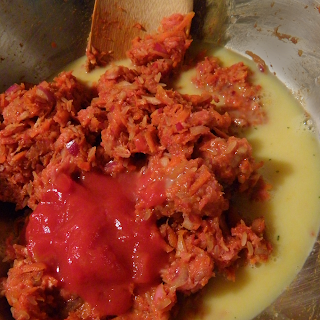
    Add this mixture and ½ cup tomato sauce to meat mixture and beat till evenly blended.
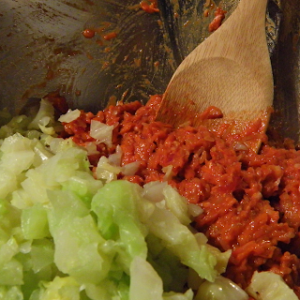
    Mix in half of the cooked chopped cabbage evenly. To make the sauce, combine the remaining tomato sauce with wine vinegar and sugar.
  • Lightly oil a 9” x 14” baking pan. 
    Spread the remaining half of the cabbage in the bottom of the pan. 
    Pour the remaining (1) cup of broth around the edges of the pan. 
    Spoon on the meat mixture. 
    Smooth out with a rubber spatula to make an even layer. 
  • Place the cabbage strips across the top, leaving space between them.
    Pour tomato sauce over top of meat mixture and cabbage strips and spread into even layer.
  • Bake for 1½  hours. 
    Let stand at least 20 minutes before serving so liquid is absorbed.

Swiss Chard Two Ways

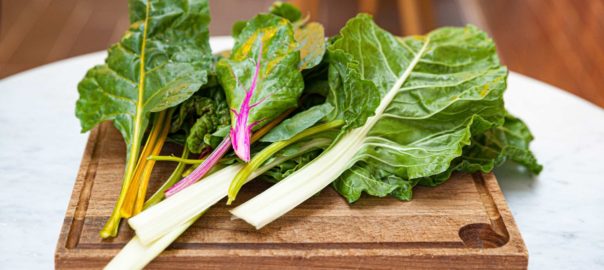
The other night I picked the last of my Swiss chard from our garden for dinner. It's one of my favorite dark leafy green vegetables. Antioxidant-rich, loaded with vitamins K, A, and C, Swiss chard also provides a healthy dose of magnesium.

Often when we eat it I make simple sauteed greens. This time, however, I wanted to do something different and came up with these two recipes, using the entire leaf. 

Although most people throw out the stems, they are delicious and can be cooked in a variety of ways. These are the two recipes I created using all of the Swiss chard. I can't wait to plant more and enjoy this again.

Braised Carrots and Swiss Chard Stems

Ingredients
  

  • ½ onion, diced
  • 8 carrots, sliced into ½ inch pieces
  • Stems from Swiss chard, cut into ½ inch pieces
  • 2 tablespoons butter
  • ¼ cup water
  • Sea salt and fresh ground pepper to taste

Instructions
 

  • In a large pan melt butter
  • Saute onions until starting to turn golden color
  • Add carrots and Swiss chard stems
  • Stir to coat with butter
  • Add water and bring to a boil
  • Reduce heat and cover
  • Cook until carrots are tender (about 15 minutes)
  • Add salt and pepper to taste

Creamed Swiss Chard

Ingredients
  

  • Large bunch of Swiss chard
  • ½ cup boiling water
  • ½ onion, diced
  • 1 clove garlic, pressed
  • 2 tablespoons butter
  • ½ cup organic sour cream
  •  ½ cup organic whole milk
  • sea salt and fresh ground nutmeg to taste

Instructions
 

  • Trim stems from Swiss chard
  • Cut leaves into 1” pieces
  • Wilt in boiling water until limp
  • In a large saucepan melt butter
  • Saute onions and garlic until onions start to turn golden color
  • Whisk sour cream and milk together
  • Pour over onions and heat until just starting to bubble
  • Add wilted Swiss chard leaves
  • Bring to a boil, stirring frequently
  • Reduce heat to just under boiling
  • Cook 5-7 minutes until sauce thickens slightly
  • Add sea salt and fresh ground nutmeg to taste

Updating Pbj

When I was a kid one of my favorite sandwiches was a peanut butter and jelly sandwich.  My preferred version was the ones I got at my friend Donna’s house where her mom used a creamy peanut butter.  I don’t remember the brand but I remember preferring it to the all natural, fresh ground peanut butter we had at home.  She also used squishy white bread (probably Wonderbread) which I never got at home and adored.   Donna and I would make our sandwiches with enormous amounts of peanut butter and a large heaping of jelly (usually grape) oozing out of the edges of the sandwich.  We would lick the edges to “clean it up” and then bite into a sandwich so thick and sticky that our mouths were somewhat gummed shut.

Over time my tastes have changed and that pbj has gone through several modifications over the years.  At one point I was making ezekiel bread; grinding the grains and legumes myself to make the flour before I baked the bread.  This deliciously robust-flavored bread happens to make a fabulous, filling choice.  I also, over time, lowered the amount of sugar, salt, and added fat in my peanut butter by making different choices.  Then, eventually, I switched altogether and began to use fresh ground almond butter from the machine at my grocery store.  I find it amusing that although I thought the fresh ground peanut butter of my youth was not that good, I’ve come full circle and now love the crunchiness and true flavor of fresh ground nut butter.  And while I love jam it’s usually either handmade or a purchase that is whole fruit, no added sugar or other chemical ingredients.  But even that has now changed and I often find myself mashing up fresh berries with a tiny drizzle of honey as the “jelly” in my sandwich.

These days, due to digestive challenges, I find I do better avoiding gluten and so, unable to, as yet, make a good gluten free ezekiel-style bread I am using a brown rice bread which is very satisfying.  But I’ve changed the sandwich again and now often have it open face using one slice of bread, some almond butter (just almonds, nothing else), a few mashed berries, that drizzle of honey and it’s just as satisfying and comforting as the pbj of my youth.

I suspect that because the changes were gradual and because they were choices that I made, this seems perfectly reasonable to me.  I’m equally certain that if I had abruptly changed from that fluffy air bread, sugar-laden, oily peanut butter, and over-processed grape jelly to today’s version I would not have been a happy camper.   While I know it’s not the sandwich of my youth, it’s what I reach for when I want that kind of food.

Our food is what we think of it and how we see those emotional connections and associations.  What have you changed and yet it’s still the same?

photo: Renee Comet

Cookie Contest

We’re having a contest!

I was so excited about reaching the funding goal for my book, The Pantry Principle: learning to read the label and understand what’s really in your food, that I created a new cookie. Now I’m looking for a name and I’ve decided to ask for your help.

I’m asking you to submit your ideas for names for the cookie, you can leave a comment below. I’ll collect all the suggestions for one week. At the end of the week I’ll create an online poll and open it up to votes. The winning cookie namer gets bragging rights and their name suggestion printed in my book. As an added bonus, I will bake them a batch of cookies and personally deliver or mail (U.S. and Canada only) them to you.

The main ingredients, in no particular order, are:

flour
eggs
coconut oil
raisins
oatmeal
shredded coconut
and sucanat

Have fun!

I’m looking forward to seeing what creative ideas come out of this.

National Honey Month

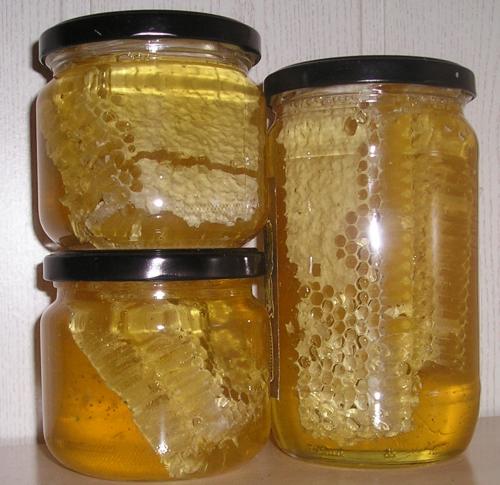
September is National Honey Month.  That sweet, drippy, delicious treat.  Honey comes in many different flavors depending on where the bees collected the nectar.  Monofloral honey such as orange blossom, tupelo, buckwheat or clover may be more expensive due to the difficulty of limiting the bees access.

While there are lots of different ways to use honey, one popular usage at this time of year is to make Honey Cake.  This dessert is typically served for the Jewish New Year,  Rosh Hashanah.  This year the holiday starts at sundown on Sunday, September 16.

Honey is often seen as a healthier alternative to sugar although it is important to note that it is still a sweetener, is fairly high in fructose (approximately 38%), and should be consumed in moderation.

Raw, local honey is considered by many to be the best form.  Raw honey is not heated or pasteurized, therefore the enzymes remain intact.  It is also considered more desirable by those who have allergies as it appears to be helpful in reducing allergic symptoms and chronic sinusitis.  Local honey has regional pollens in it making it beneficial for helping with local pollen allergies.  One new study even suggests that honey has potential as an additional therapy for “the management of chronic diseases associated with oxidative stress.”

photo: akarlovic